
Best Hypoallergenic Dog Foods List
I didn’t even know dog food allergies were a thing until my dog started itching nonstop. At first, I thought it was seasonal, then maybe fleas, then maybe stress.
We changed shampoos, tried supplements, even blamed the weather. Nothing helped. It wasn’t until my vet casually asked, “What protein is he eating?” that the lightbulb finally went on.
Switching to hypoallergenic dog food didn’t fix things overnight, but within a few weeks, the scratching eased, the ear infections stopped, and his coat looked healthier than it had in months.
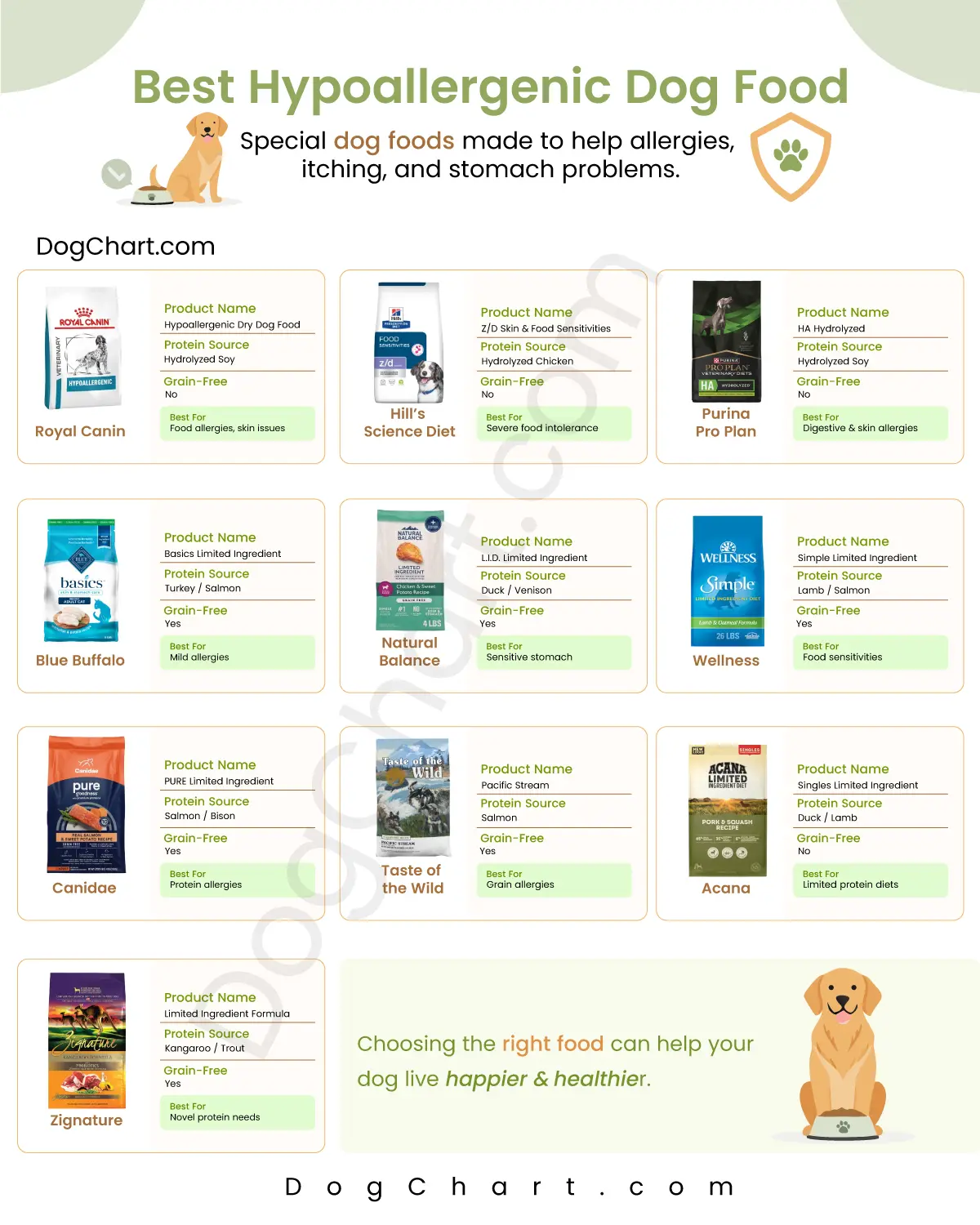
Table of Contents
What Is Hypoallergenic Dog Food?
Hypoallergenic dog food is designed to reduce the risk of allergic reactions by eliminating common trigger ingredients.
Most formulas use simplified ingredient lists, alternative protein sources, or proteins that are broken down so the immune system doesn’t react to them.
It’s not a cure-all, but for dogs with food sensitivities, it can make a noticeable difference in comfort and overall health.
| Brand Name | Product Name | Protein Source | Grain-Free | Best For |
| Royal Canin | Hypoallergenic Dry Dog Food | Hydrolyzed Soy | No | Food allergies, skin issues |
| Hill’s Science Diet | Z/D Skin & Food Sensitivities | Hydrolyzed Chicken | No | Severe food intolerance |
| Purina Pro Plan | HA Hydrolyzed | Hydrolyzed Soy | No | Digestive & skin allergies |
| Blue Buffalo | Basics Limited Ingredient | Turkey / Salmon | Yes | Mild allergies |
| Natural Balance | L.I.D. Limited Ingredient | Duck / Venison | Yes | Sensitive stomach |
| Wellness | Simple Limited Ingredient | Lamb / Salmon | Yes | Food sensitivities |
| Canidae | PURE Limited Ingredient | Salmon / Bison | Yes | Protein allergies |
| Taste of the Wild | Pacific Stream | Salmon | Yes | Grain allergies |
| Acana | Singles Limited Ingredient | Duck / Lamb | No | Limited protein diets |
| Zignature | Limited Ingredient Formula | Kangaroo / Trout | Yes | Novel protein needs |
How Hypoallergenic Dog Food Works
Food allergies happen when a dog’s immune system overreacts to certain proteins.
Hypoallergenic diets work by either removing those proteins entirely or altering them so they’re less likely to trigger a response.
Some diets use novel proteins your dog has never eaten before, while others use hydrolyzed proteins that are broken into tiny pieces the immune system can’t recognize as allergens.
Common Food Allergies in Dogs
Despite popular belief, grains aren’t usually the main culprit. Most food allergies come from proteins. Common triggers include:
- Chicken
- Beef
- Dairy
- Eggs
- Wheat
- Soy
Signs Your Dog Needs Hypoallergenic Food
Food allergies don’t always show up as digestive problems. Many dogs display skin-related symptoms instead.
Signs include chronic itching, red or inflamed skin, frequent ear infections, paw licking, hot spots, and inconsistent stool.
If your dog also fits into categories like best non shedding dogs or dogs suitable for apartment living, allergies can be easier to miss because shedding and outdoor exposure are lower.
Benefits of Hypoallergenic Dog Food
The biggest benefit is relief. Less itching, fewer ear infections, and improved digestion are common improvements.
Many owners also notice better energy levels, shinier coats, and fewer vet visits. Over time, feeding the right food can improve a dog’s quality of life significantly.
Ingredients to Avoid in Dog Food for Allergic Dogs
If allergies are suspected, these ingredients are often best avoided:
- Chicken meal
- Beef byproducts
- Artificial colors
- Artificial preservatives
- Corn and wheat fillers
Reading labels becomes important when managing food sensitivities.
Best Ingredients in Hypoallergenic Dog Food
High-quality hypoallergenic foods often contain:
- Novel proteins (duck, venison, rabbit)
- Single carbohydrate sources (sweet potato, peas)
- Omega-3 fatty acids
- Limited ingredient formulas
- Easily digestible fibers
These ingredients support skin health and gut balance.
Types of Hypoallergenic Dog Food
Limited Ingredient Diet (LID)
LID foods keep things simple. Fewer ingredients make it easier to identify triggers and reduce immune reactions.
Novel Protein Dog Food
These diets use proteins your dog hasn’t eaten before, lowering the chance of an allergic response.
Hydrolyzed Protein Dog Food
Proteins are broken down into microscopic pieces that the immune system can’t recognize as allergens.
Grain-Free Hypoallergenic Dog Food
Helpful for dogs with grain sensitivities, though grains are not always the problem.
Veterinary Prescription Hypoallergenic Diets
Used for severe allergies and elimination trials, often recommended by vets.
Best Hypoallergenic Dog Food for Puppies
Puppies need hypoallergenic formulas that still support growth and development. Look for balanced calcium, DHA, and gentle proteins to support immune and joint health early on.
| Brand | Product | Protein Source | Protein % (Approx.) |
| Hill’s Science Diet Puppy Sensitive Stomach & Skin | Chicken | ~24–26% | Gentle digestion, omega‑fatty acids |
| Royal Canin Puppy Hypoallergenic | Hydrolyzed Protein | ~24–28% | Hydrolyzed formula for food sensitivities |
| Purina Pro Plan HA Hydrolyzed Puppy | Hydrolyzed Soy | ~25–28% | Designed for food allergies |
| Natural Balance L.I.D. Puppy | Duck | ~28–30% | Limited ingredients, single protein |
| Wellness Simple Limited Ingredient Puppy | Turkey | ~28–30% | Easy digestion, fewer allergens |
| Canidae PURE Puppy LID | Salmon, Chickpeas | ~30–32% | Limited ingredient formula |
| Zignature Puppy Limited Ingredient | Turkey | ~30–32% | Single animal protein diet |
Best Hypoallergenic Dog Food for Adult Dogs
Adult dogs benefit from stable protein sources, skin-supporting fats, and formulas that prevent flare-ups without sacrificing nutrition.
| Brand | Product | Protein Source | Protein % (Approx.) |
| Hill’s Science Diet Adult Hypoallergenic | Hydrolyzed Protein | ~24–28% | Sensitive digestion formula |
| Royal Canin Adult Hydrolyzed | Hydrolyzed Soy | ~24–28% | Reduces allergy triggers |
| Purina Pro Plan HA Hydrolyzed Adult | Hydrolyzed Soy | ~25–28% | Highly digestible proteins |
| Natural Balance L.I.D. Adult | Venison | ~28–30% | Limited ingredient diet |
| Wellness Simple Limited Ingredient Adult | Lamb | ~28–30% | Easy on stomach |
| Canidae PURE Adult | Salmon & Chickpea | ~30–32% | Limited ingredients |
| Zignature Limited Ingredient Adult | Kangaroo | ~30–32% | Novel protein source |
Best Hypoallergenic Dog Food for Senior Dogs
Senior dogs often have slower digestion and weaker immune systems. Hypoallergenic foods for seniors focus on joint support, easy digestion, and inflammation control.
| Brand | Product | Protein Source | Protein % (Approx.) |
| Hill’s Science Diet Senior Hypoallergenic | Hydrolyzed Protein | ~24–28% | Gentle on aging digestion |
| Royal Canin Senior Hydrolyzed | Hydrolyzed Soy | ~24–28% | Designed for sensitivity |
| Purina Pro Plan Senior HA Hydrolyzed | Hydrolyzed Soy | ~25–28% | Senior digestibility support |
| Natural Balance L.I.D. Senior | Duck | ~28–30% | Limited ingredient diet |
| Wellness Simple Limited Ingredient Senior | Turkey | ~28–30% | Senior sensitive stomach |
| Canidae PURE Senior | Salmon & Chickpeas | ~30–32% | Joint & digestion support |
| Zignature Limited Ingredient Senior | Trout | ~30–32% | Novel proteins, limited allergens |
Best Hypoallergenic Dog Food for Small Breeds
Small breeds often have sensitive stomachs and skin. Smaller kibble sizes and calorie-dense nutrition work best here.
| Brand | Product | Protein Source | Protein % (Approx.) |
| Blue Buffalo Basics Small Breed | Turkey | ~28–30% | Limited ingredient formula |
| Natural Balance L.I.D. Small Breed | Duck | ~28–30% | Single animal protein |
| Wellness Simple Small Breed | Lamb | ~28–30% | Easy digestion |
| Canidae PURE Small Breed | Salmon & Chickpeas | ~30–32% | Limited ingredient formula |
| Zignature Small Breed | Kangaroo | ~30–32% | Novel protein for allergies |
| Merrick Limited Ingredient Small Breed | Salmon | ~32–34% | High quality single protein |
| Instinct Limited Ingredient Small Breed | Turkey | ~30–32% | Grain‑free, limited ingredients |
Best Hypoallergenic Dog Food for Large Breeds
Large breeds benefit from formulas that support joints and reduce inflammation while avoiding common allergens that can worsen skin issues.
| Brand | Product | Protein Source | Protein % (Approx.) |
| Hill’s Science Diet Large Breed Hypoallergenic | Hydrolyzed Protein | ~24–28% | Sensitive digestion, large breed |
| Royal Canin Large Breed Hydrolyzed | Hydrolyzed Soy | ~24–28% | Reduces allergen risk |
| Purina Pro Plan Large Breed HA Hydrolyzed | Hydrolyzed Soy | ~25–28% | Digestible proteins |
| Natural Balance L.I.D. Large Breed | Lamb | ~28–30% | Limited ingredient formula |
| Canidae PURE Large Breed | Salmon & Chickpeas | ~30–32% | Limited ingredient diet |
| Zignature Large Breed Limited | Trout | ~30–32% | Novel proteins for allergies |
| Wellness Simple Large Breed | Turkey | ~28–30% | Single protein, grain‑free |
Wet vs Dry Hypoallergenic Dog Food
Choosing between wet and dry hypoallergenic dog food isn’t about which one is better, but which one fits your dog’s needs and lifestyle.
Dry hypoallergenic food is usually more affordable, easier to store, and helps with dental health by reducing plaque buildup.
It’s a solid everyday option for dogs without dental issues and for owners who prefer convenience.
Wet hypoallergenic food, on the other hand, is often more appealing to picky eaters and easier to digest.
Dogs with poor appetites, dental pain, or digestive sensitivity may do better on wet food. It also provides extra hydration, which can help dogs prone to urinary or kidney issues.
Many owners find that a mix of both wet and dry gives the best balance of nutrition, taste, and practicality.
Homemade Hypoallergenic Dog Food (Pros & Risks)
Homemade hypoallergenic diets can be appealing because you control every ingredient that goes into your dog’s bowl.
This makes it easier to avoid known allergens and tailor meals specifically to your dog’s sensitivities. Many dogs also enjoy the freshness and taste of home-cooked food.
However, the risks are real. Homemade diets can easily become nutritionally unbalanced if not properly planned.
Dogs need specific levels of calcium, phosphorus, vitamins, and fatty acids, and missing even one can cause long-term health problems.
How to Switch Your Dog to Hypoallergenic Food
Switching dog food too quickly is one of the most common reasons owners think a new diet doesn’t work.
A gradual transition is essential. Start by mixing a small amount of the hypoallergenic food with your dog’s current food, then slowly increase the new food over 7–10 days.
How Long Does Hypoallergenic Dog Food Take to Work?
For most dogs, noticeable improvement appears between 4 and 8 weeks. In some cases, full skin recovery can take up to 12 weeks.
Consistency is critical during this time. Even a small exposure to an allergen can reset progress and make it seem like the food isn’t helping.
Hypoallergenic Dog Food Cost Comparison
Hypoallergenic foods usually cost more due to higher-quality ingredients and specialized processing. Prescription diets tend to be the most expensive.
| Type of Hypoallergenic Food | Average Monthly Cost | Best For |
| Limited Ingredient (Dry) | $40–$70 | Mild allergies, budget-conscious owners |
| Novel Protein Diet | $60–$100 | Dogs with common protein allergies |
| Hydrolyzed Prescription Diet | $90–$150 | Severe or diagnosed food allergies |
| Wet Hypoallergenic Food | $80–$130 | Picky eaters, digestion issues |
| Homemade (Vet-Supervised) | $70–$120 | Controlled elimination diets |
Common Mistakes When Feeding Hypoallergenic Dog Food
One of the biggest mistakes owners make is unintentionally sabotaging the diet. Feeding flavored treats, dental chews, or even certain medications can reintroduce allergens and trigger symptoms again.
Many people also switch foods too often, never giving a diet enough time to work.
Myths About Hypoallergenic Dog Food
A major myth is that grain-free automatically means hypoallergenic. In reality, most food allergies come from proteins, not grains.
Another common misconception is that hypoallergenic food is only for dogs with severe allergies.
In truth, dogs with mild sensitivities, chronic ear infections, or recurring skin issues can also benefit.
Some owners believe hypoallergenic food is a lifetime commitment for every dog.
While some dogs do need it long-term, others can eventually reintroduce certain ingredients once triggers are identified. Hypoallergenic food is a tool, not a one-size-fits-all solution.
Vet Advice: When to Choose Prescription Diets
If symptoms are severe or persistent, prescription diets help pinpoint allergens and manage complex cases.
This is especially important for dogs already dealing with lifestyle stressors like being best apartment dogs for full time workers, where health stability matters more.
FAQs
How do I know if my dog has a food allergy?
Persistent itching, ear infections, and digestive issues are common signs.
Can hypoallergenic food cure allergies?
No, but it can manage symptoms effectively.
Is grain-free always hypoallergenic?
No, protein sources matter more than grains.
Can I give treats on a hypoallergenic diet?
Only if they use the same protein source.
Do all dogs benefit from hypoallergenic food?
No, it’s best for dogs with diagnosed or suspected sensitivities.