
Chihuahua Body Language
When my Chihuahua tilts her head and stares at me with those big, curious eyes, I know she’s not just being cute, she’s talking to me in her own way. Over the years, I’ve learned to read her body language like a second language.
The subtle wag of her tail when she’s content, the low growl when she’s unsure, or the way she curls up tightly beside me after a long day, every movement has meaning.
Understanding Chihuahua body language is essential for any owner who wants to build a stronger bond with their pet. These little dogs may be small, but their emotions are anything but subtle.
From playful zoomies across the living room to the confident stance, chihuahua personality and behavior reflects their unique personality and temperament. Whether you’re watching a male chihuahua body language or a shy pup hiding behind your leg, learning their signals helps you understand what they truly feel, happiness, fear, excitement, or even love.
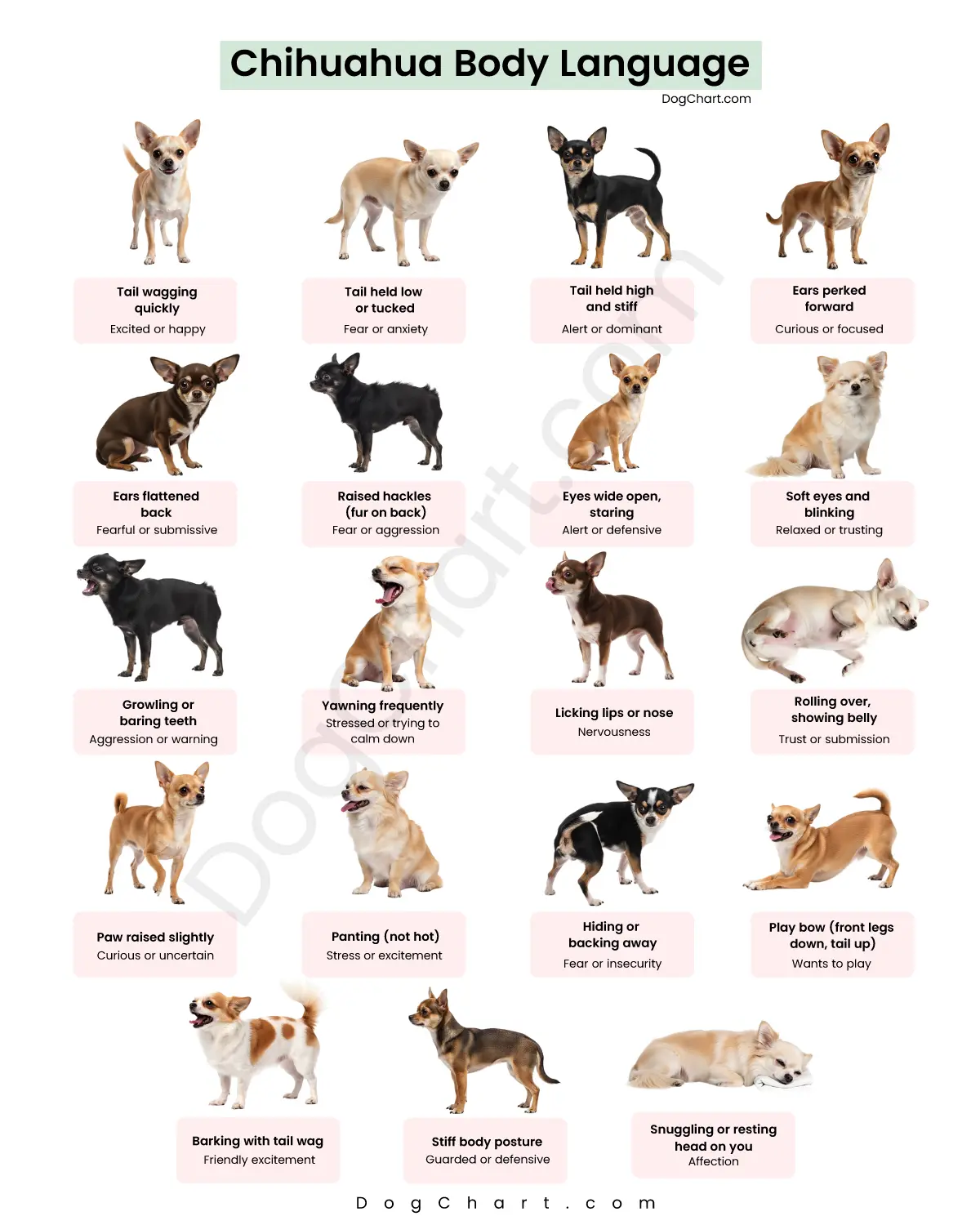
Table of Contents
Why Understanding Chihuahua Body Language Matters
Chihuahuas are incredibly expressive dogs that use their entire body to communicate. From their perked-up ears to the way they position their tails, each signal gives you clues about how they’re feeling or what they want.
Learning to interpret these signals doesn’t just make life easier, it strengthens trust and helps you respond better to their needs. Whether you’re reading Chihuahua body language talking patterns or noticing shifts in Chihuahua behavior, this awareness prevents misunderstandings and promotes a happier, calmer home.
| Body Language / Sign | Meaning | Behavior Description |
| Tail wagging quickly | Excited or happy | Usually greeting someone or anticipating play or food. |
| Tail held low or tucked | Fear or anxiety | Feels scared, insecure, or threatened. |
| Tail held high and stiff | Alert or dominant | Standing tall, confident, possibly guarding territory. |
| Ears perked forward | Curious or focused | Paying close attention to sounds or movement. |
| Ears flattened back | Fearful or submissive | Trying to avoid confrontation or feeling threatened. |
| Raised hackles (fur on back) | Fear or aggression | Sign of stress, nervousness, or potential aggression. |
| Eyes wide open, staring | Alert or defensive | May be anxious or preparing to react. |
| Soft eyes and blinking | Relaxed or trusting | Comfortable and calm, especially around owner. |
| Growling or baring teeth | Aggression or warning | Feels threatened — stop approaching. |
| Yawning frequently | Stressed or trying to calm down | Common in anxious or overstimulated situations. |
| Licking lips or nose | Nervousness | A calming signal; may indicate discomfort. |
| Rolling over, showing belly | Trust or submission | Indicates comfort or asking for affection. |
| Paw raised slightly | Curious or uncertain | Deciding how to respond to something new. |
| Panting (not hot) | Stress or excitement | Could be anxious or overly stimulated. |
| Hiding or backing away | Fear or insecurity | Needs reassurance or space. |
| Play bow (front legs down, tail up) | Wants to play | Inviting you or another dog to playtime. |
| Barking with tail wag | Friendly excitement | Happy to see someone, eager for attention. |
| Stiff body posture | Guarded or defensive | Warning signal — do not provoke. |
| Snuggling or resting head on you | Affection | Seeking comfort and showing love. |
How Chihuahuas Communicate Through Body Language
Chihuahuas rely on a mix of posture, facial expression, tail movement, and even ear position to express themselves. Unlike words, their communication is constant and honest.
Key cues include:
- Tail position: Raised or tucked
- Ears: Forward, sideways, or pinned back
- Eyes: Soft gaze or wide stare
- Posture: Relaxed or tense stance
- Sounds: Growls, whines, or gentle barks
Common Chihuahua Body Language Signals Explained
Chihuahuas may be tiny, but they’re some of the most expressive dogs around. They use their entire body to communicate emotions, from happiness and curiosity to stress or fear.
Learning to understand Chihuahua sign language not only helps you respond to their needs in the moment but also contributes to their overall well-being and lifespan.
Happy Chihuahua Signs
A happy Chihuahua is full of energy and warmth. You can see their joy in the bounce of their step and the sparkle in their eyes. Their tail usually wags in short, quick motions, and they might nuzzle you or roll over for belly rubs. Sometimes, they’ll even make little chirping noises when excited, a sure sign that they’re feeling secure and loved.
Playful Chihuahua Behavior
When your Chihuahua is feeling playful, they’ll show it with exaggerated body language. Expect quick movements, little hops, and what’s known as the play bow, when they lower their front paws and keep their tail wagging high. Their eyes might look wide and bright, and they’ll sometimes bark in short, sharp bursts, inviting you to join the fun.
Playful Chihuahuas often grab toys, chase shadows, or dash in circles, it’s their unique way of saying they’re having fun. Engaging with them during this time not only burns off energy but also strengthens your emotional connection.
Relaxed and Comfortable Body Language
A relaxed Chihuahua is calm and content. You’ll notice their ears resting in a neutral position, their tail hanging naturally, and their body posture loose and easy. They may slowly blink, sigh, or stretch before curling up beside you for a nap.
This type of body language shows your Chihuahua feels safe in its environment, something that comes from consistent care, affection, and trust. A relaxed male Chihuahua might even sprawl on his back without fear, while a female Chihuahua often prefers to rest beside her owner or on a cozy blanket.
Nervous or Fearful Chihuahua Signs
Chihuahuas can be sensitive to loud noises, new people, or unfamiliar environments. When nervous, their body language changes instantly, they may tuck their tail tightly between their legs, lower their body, flatten their ears, or start trembling. Some may even lick their lips repeatedly or yawn, classic stress signals.
It’s important not to punish or scold them during these moments. Instead, speak softly and remove the source of stress when possible. Over time, gentle reassurance will help your Chihuahua feel more secure in new situations.
Aggressive or Defensive Chihuahua Body Language
Though small, Chihuahuas have big attitudes, and when they feel threatened, they don’t hesitate to show it. Signs of defensive or aggressive behavior include baring teeth, growling, raised hackles (the fur on their back), and stiff posture. Their eyes may narrow, and their tail could stand high and rigid.
This kind of behavior doesn’t always mean they’re mean, it’s often rooted in fear or territorial instincts. Early training, socialization, and patience can help reduce these reactions and encourage calm, confident behavior.
Submissive or Anxious Postures
When a Chihuahua feels uncertain or intimidated, their entire body softens and lowers to convey submission. They might crouch, tuck their tail tightly between their legs, or roll slightly onto their side to avoid confrontation. Their ears usually flatten against their head, and their eyes may look away to prevent direct contact.
Submissive behavior in Chihuahuas is not always about fear, sometimes it’s a sign of respect toward you or another dog. Gentle encouragement, rather than over-comforting or punishment, helps them regain confidence. Owners who recognize these cues early can better prevent anxiety-driven behaviors from escalating.
Tail Movements and Their Meanings
A Chihuahua’s tail is one of its most expressive features, acting as a built-in emotional meter. Whether they’re confident, excited, or uneasy, the tail gives away their true mood instantly.
| Tail Position | Meaning | Body Language Context | Typical Emotion | Owner Response |
| High and Wagging | Excited and alert | Upright ears, forward stance | Happiness | Engage playfully |
| Low but Wagging Slowly | Curious or cautious | Ears tilted, soft eyes | Uncertain interest | Encourage gently |
| Tucked Under Body | Nervous or scared | Flattened ears, trembling | Fear | Offer comfort calmly |
| Still and Horizontal | Focused or alert | Eyes fixed, body stiff | Guarded | Observe quietly |
| Relaxed and Neutral | Comfortable | Loose posture, soft eyes | Contentment | Maintain calm environment |
Ear Positions and What They Indicate
The ears of a Chihuahua act like emotional antennas, picking up cues and signaling moods long before they bark or move.
| Ear Position | Interpretation | Paired Behavior | Emotional State | Owner Action |
| Erect and Forward | Focused, curious | Alert posture | Interest | Provide stimulation |
| Flattened Back | Submissive or afraid | Tail tucked | Anxiety | Reassure gently |
| Relaxed and Neutral | Calm and content | Soft eyes | Comfort | Continue bonding |
| One Ear Up, One Down | Mild confusion | Head tilt | Curiosity | Use gentle tone |
| Constant Twitching | Overstimulated | Restless pacing | Stress | Remove triggers |
Eye Contact and Facial Expressions in Chihuahuas
A Chihuahua’s eyes can tell you more than words ever could. Wide, bright eyes usually indicate excitement or alertness, while narrowed or squinting eyes suggest calmness or trust.
Dilated pupils can signal fear or over-arousal, especially in tense environments. Some Chihuahuas will also wrinkle their forehead or raise their brows to express curiosity or concern, subtle cues that experienced owners learn to read over time.
| Facial Expression | Meaning / Emotion | Description |
| Relaxed face, soft eyes, closed mouth | Calm & Content | The Chihuahua feels safe, relaxed, and happy. |
| Open mouth, tongue out, relaxed ears | Playful & Friendly | Inviting play or interaction; typical “happy dog” look. |
| Ears up, eyes focused, mouth closed | Alert & Curious | Observing surroundings or reacting to a new sound/sight. |
| Ears slightly back, eyes wide, mouth tight | Worried or Unsure | Feels uncertain or mildly anxious about the situation. |
| Ears pinned back, showing teeth, wrinkled nose | Aggressive or Defensive | Warning to back off — dog feels threatened or cornered. |
| Eyes half-closed, soft expression, slow blink | Trusting & Relaxed | Content, calm, and comfortable around you. |
| Eyes wide, pupils dilated, tense mouth | Fear or Startled | Feels scared, anxious, or overstimulated. |
| Licking lips or flicking tongue | Nervous or Submissive | Attempting to self-soothe or show non-aggression. |
| Raised eyebrows or tilted head | Confused or Curious | Trying to understand a new sound or command. |
| Mouth slightly open, panting lightly | Excited or Warm | Mild excitement or cooling off after activity. |
| Wrinkled forehead, tight jaw | Stressed or Uncomfortable | Indicating tension or discomfort. |
| Eyes averted, turning head away | Submissive or Avoidant | Trying to avoid conflict or calm the situation. |
| Squinting eyes, soft grin | Affectionate & Gentle | Relaxed and expressing affection or comfort. |
| Snarling or baring teeth | Warning / Ready to Bite | Clear sign of aggression — do not approach. |
Vocal Sounds and Their Connection to Body Language
Chihuahuas often talk with their whole body, combining sounds and gestures to communicate exactly how they feel. Understanding the link between tone and posture helps you respond better to their emotional needs.
- Soft whines – Seeking attention
- Sharp barks – Alert or protective
- Low growls – Defensive warning
- Excited yips – Playful invitation
- Gentle grumbles – Mild irritation
How to Respond to Your Chihuahua’s Body Language
Reacting appropriately to your Chihuahua’s signals strengthens your bond and helps build trust. When your dog displays calm or happy behavior, respond with praise, gentle words, or a treat. If you notice signs of stress, such as trembling or a tucked tail. avoid forcing interaction and instead give them space.
Chihuahuas are emotionally intuitive dogs; they pick up on your tone and energy. Staying relaxed and consistent will help them mirror your calmness. With time, they’ll learn that you’re a safe and steady presence in any situation.
Common Mistakes Owners Make When Reading Body Language
Many Chihuahua owners misread signals by interpreting them through human emotion rather than canine instinct. For instance, mistaking a tucked tail as guilt rather than fear, or thinking a stiff posture means confidence instead of stress.
Another common mistake is ignoring subtle cues, like lip-licking, yawning, or turning away, which are early signs of anxiety. Overlooking these can lead to behavioral issues or miscommunication. The best approach is to watch your Chihuahua’s entire body, not just one part, to understand the full emotional message.
FAQs
How do I know if my Chihuahua is scared or just cautious?
Look for trembling, tucked tail, and flattened ears, these indicate fear. Cautious Chihuahuas usually stay alert but don’t shrink away.
Why does my Chihuahua stare at me so much?
Eye contact can be a sign of affection and trust. If combined with relaxed posture, it means your Chihuahua feels bonded and secure.
Are male Chihuahuas more aggressive in body language than females?
Not necessarily. Males may be more territorial, while female chihuahua body language often displays subtle dominance through posture or stillness.
What does it mean if my Chihuahua’s tail is still while barking?
It could indicate they’re alert or on guard. Assess their overall posture, if stiff, they might be defensive rather than playful.
Can Chihuahuas understand human body language?
Yes. They are highly observant and can pick up emotional cues from your tone, gestures, and posture especially when you remain consistent.