
Best Companion Dogs
When life gets overwhelming, there’s something so special about coming home to a wagging tail and soft eyes that say, I’ve got you. Dogs don’t care if you’ve had a bad day, spilled coffee on your shirt, or missed a deadline, they just want to be near you.
That’s the type of love and companionship I feel with my pup and you can feel it too by finding the best companion dogs.
Whether you live alone, have a busy household, or simply crave a loyal friend to share your days with, some breeds are naturally more in tune with human emotions. They don’t just offer love, they provide comfort, calm, and emotional balance.
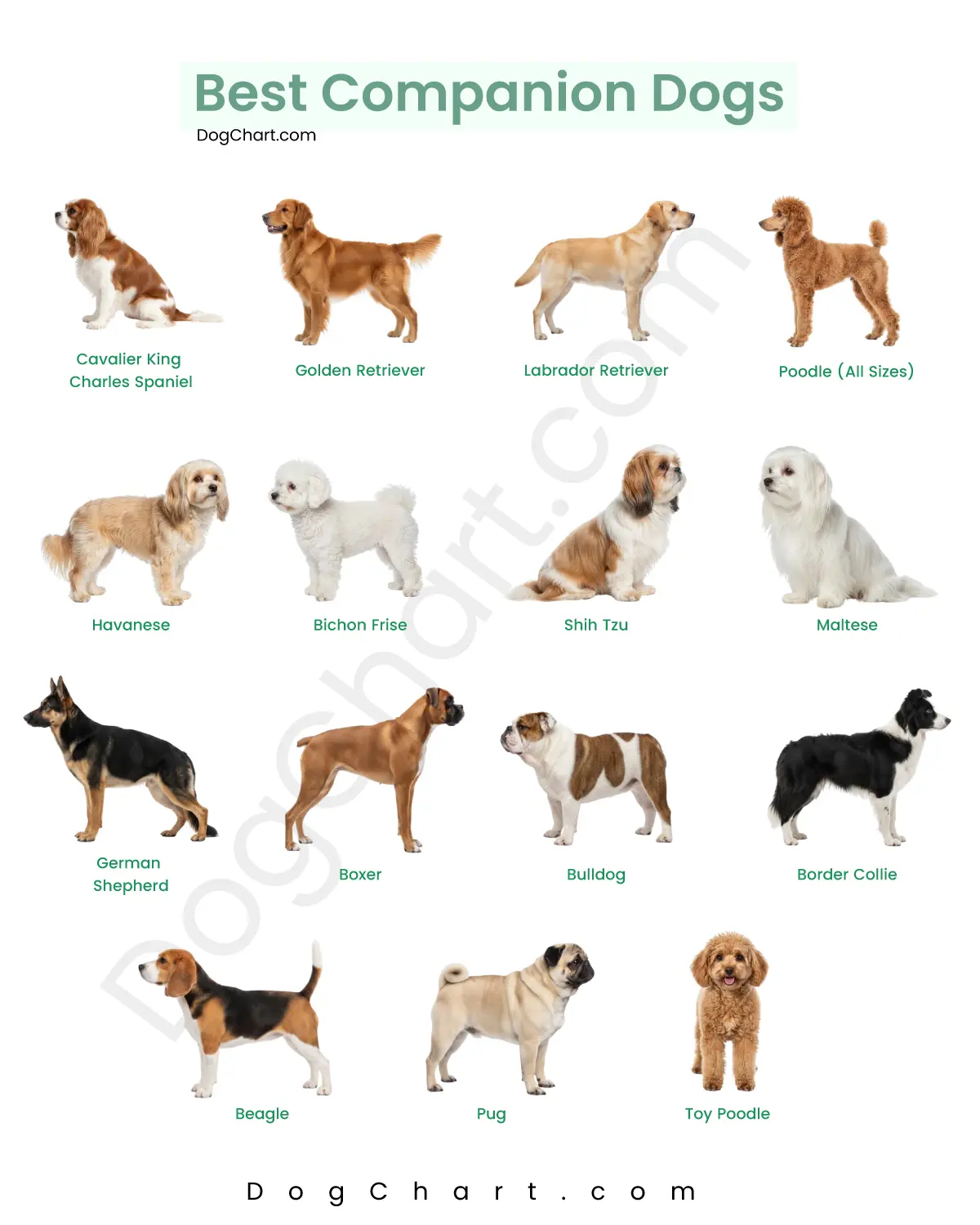
Table of Contents
Best Companion Dogs
The best companion dogs are those that thrive on human interaction. They’re affectionate, calm, and empathetic, the kind of pups that follow you from room to room or curl up beside you when you’re feeling low.
Breeds like the Cavalier King Charles Spaniel, Pug, and Havanese are classic examples. They’re small enough to fit in any home but big enough in heart to fill it completely.
| Breed | Personality | Why They’re Great Companions |
| Cavalier King Charles Spaniel | Gentle, loving | Loyal lapdog; thrives on human affection |
| Golden Retriever | Friendly, patient | Reliable, affectionate, great with everyone |
| Labrador Retriever | Outgoing, loyal | Perfect mix of energy and love |
| Poodle (All Sizes) | Intelligent, social | Adapts easily to any home or lifestyle |
| Havanese | Cheerful, affectionate | Perfect small companion dog |
| Bichon Frise | Playful, gentle | Great for families or singles |
| Shih Tzu | Calm, cuddly | Excellent indoor companion |
| Maltese | Sweet, loyal | Perfect lapdog and emotional support pet |
Best Companion Dogs for Men
The best companion dogs for men tend to match personality and lifestyle. Active guys might love breeds like Labrador Retrievers or Boxers, who enjoy outdoor adventures and exercise. For those who prefer quiet evenings, breeds like the Basset Hound or Bulldog are affectionate, calm, and easy to care for, perfect for laid-back companionship.
| Breed | Why They’re Ideal for Men |
| Labrador Retriever | Active, loyal, friendly – perfect outdoor buddy |
| German Shepherd | Strong, protective, and devoted |
| Boxer | Energetic, confident, loyal |
| Bulldog | Chill, easygoing, and loyal to one person |
| Border Collie | Smart, active, perfect for training and exercise |
| Golden Retriever | Reliable and affectionate without being clingy |
| Beagle | Playful and low maintenance for busy lifestyles |
Best Companion Dogs for Seniors
The best companion dogs for seniors are gentle, low-maintenance, and full of heart. Seniors often appreciate dogs that are easy to train, not overly energetic, and love a slow walk or afternoon nap.
Breeds like the Shih Tzu, Maltese, or Cocker Spaniel offer unconditional affection without overwhelming activity levels.
| Breed | Why They’re Great for Older Adults |
| Maltese | Gentle, affectionate, easy to handle |
| Cavalier King Charles Spaniel | Small, quiet, loves cuddles |
| Havanese | Friendly, easygoing, non-shedding |
| Shih Tzu | Calm and loves to stay close |
| Pug | Comical, low-maintenance, affectionate |
| Toy Poodle | Smart, small, and easy to train |
| Bichon Frise | Gentle and cheerful personality |
Best Companion Dogs for Women
Many women naturally connect with emotionally intuitive breeds, dogs that sense mood shifts and offer affection without being clingy. The best companion dogs for women include breeds like the Golden Retriever, Poodle, and French Bulldog.
They’re affectionate, loyal, and confident enough to offer comfort while fitting easily into modern lifestyles.
| Breed | Why They’re Ideal for Women |
| Golden Retriever | Loyal, loving, and easy to bond with |
| Cocker Spaniel | Sweet, loyal, and gentle |
| Maltese | Small and affectionate companion |
| Havanese | Adaptable, sociable, and adorable |
| French Bulldog | Cute, quiet, and perfect for apartments |
| Poodle (Miniature) | Smart, low-shedding, great for companionship |
| Cavalier King Charles Spaniel | Gentle and devoted |
Best Companion Dogs for Kids
When it comes to families, the best companion dogs for kids are gentle, patient, and playful. Breeds like Beagles, Cocker Spaniels, and Miniature Poodles form strong bonds with children and thrive on being part of daily family life.
They can handle the chaos, love playtime, and offer endless cuddles, all while teaching kids empathy and responsibility.
| Breed | Why They’re Great with Children |
| Golden Retriever | Patient, affectionate, loves to play |
| Labrador Retriever | Friendly and energetic family favorite |
| Beagle | Gentle and fun-loving |
| Cocker Spaniel | Soft-natured and playful |
| Poodle (Miniature) | Smart and gentle temperament |
| Bichon Frise | Small, affectionate, non-shedding |
| Cavalier King Charles Spaniel | Calm and loving with children |
Best Companion Dogs for Anxiety
For anyone dealing with anxiety, certain dogs can make an incredible difference. The best companion dogs for anxiety are calm, emotionally sensitive, and naturally comforting. Breeds like the Cavalier King Charles Spaniel, Poodle, and Bichon Frise excel here, they sense distress quickly and respond with quiet presence and affection.
These breeds don’t just distract you from anxious moments, they ground you. Petting their soft coat, watching their steady breathing, or feeling their warmth helps bring a sense of peace no therapy session can quite match.
| Breed | Why They Help with Anxiety |
| Cavalier King Charles Spaniel | Naturally empathetic and affectionate |
| Labrador Retriever | Gentle and comforting presence |
| Poodle | Intelligent and emotionally aware |
| Maltese | Calming lapdog, perfect for soothing stress |
| Havanese | Loyal, social, and loving |
| Golden Retriever | Empathetic and affectionate |
| Corgi | Cheerful and emotionally expressive |
Best Dog Breed for Emotional Support
The best dog breed for emotional support isn’t about size or looks, it’s about temperament and emotional intelligence. Breeds like the Labrador Retriever, Pomeranian, and Goldendoodle are known for their comforting nature and ability to connect deeply with humans.
An emotional support dog isn’t trained to perform specific tasks like a service dog, but they naturally provide stability and love. The right emotional support dog can lower stress levels, reduce loneliness, and even encourage healthier habits like walking and socializing.
| Breed | Why They Excel as ESAs |
| Labrador Retriever | Kind and affectionate; forms deep bonds |
| Golden Retriever | Calm, empathetic, and easy to train |
| Poodle (All Sizes) | Hypoallergenic and highly intuitive |
| Cavalier King Charles Spaniel | Small, gentle, perfect lap companion |
| Havanese | Naturally cheerful and comforting |
| Border Collie | Emotionally intelligent and attentive |
| Maltese | Small, affectionate, and people-focused |
Low-Maintenance Companion Dogs
If you want a loyal dog without the high upkeep, low-maintenance companion dogs are ideal. Breeds like the Chihuahua, French Bulldog, and Boston Terrier require minimal grooming, adapt easily to small spaces, and have relaxed temperaments.
They’re great for people with busy lives or smaller homes, affectionate enough to keep you company but independent enough to handle a few hours alone.
| Breed | Why They’re Easy to Care For |
| Bulldog | Low energy, minimal exercise needs |
| Pug | Low grooming, very affectionate |
| Beagle | Low coat care, loves companionship |
| Chihuahua | Tiny, easy to manage |
| French Bulldog | Quiet and minimal grooming |
| Shih Tzu | Calm personality; adaptable to small homes |
| Boston Terrier | Short coat, simple grooming |
Easiest Companion Dogs to Train
For first-time dog owners, having a breed that’s quick to learn makes bonding so much easier. The easiest companion dogs to train include the Poodle, Papillon, and Mini Schnauzer. These breeds love pleasing their owners and pick up commands with minimal repetition.
Because they’re intelligent and people-focused, training sessions often feel more like play than work. It builds trust and strengthens your bond, which is exactly what makes them fantastic companions.
| Breed | Why They’re Easy to Train |
| Poodle | One of the smartest breeds; quick learner |
| Labrador Retriever | Obedient and eager to please |
| Golden Retriever | Calm and highly trainable |
| Corgi | Quick learner with strong focus |
| Cavalier King Charles Spaniel | Responsive and loving |
| Papillon | Small but incredibly smart |
| Havanese | Intelligent and social learner |
Emotional Connection: Why Dogs Make the Best Companions
The connection between dogs and humans runs deeper than simple affection. Studies show that spending time with dogs releases oxytocin, the love hormone, in both species. This is why petting your dog feels comforting, it’s literally changing your brain chemistry.
Companion dogs also provide emotional regulation, they help you calm down faster, handle stress better, and reduce feelings of loneliness. For people who live alone, they provide structure and a sense of purpose. For families, they add warmth and unconditional love that brings everyone closer.
Ultimately, a good companion dog doesn’t just fill your home, they fill your heart.
How to Choose the Right Companion Dog
When choosing your companion dog, think less about appearance and more about lifestyle compatibility. Ask yourself:
– How much time can I dedicate to walks, grooming, and play?
– Do I prefer a calm cuddler or an energetic partner?
– Am I looking for emotional support, or more of a family friend?
Matching your energy level to your dog’s is key. A high-energy person might bond best with an active breed like a Labrador, while someone craving calm may find peace with a Bichon Frise or Cavalier. If possible, spend time volunteering at shelters or fostering before adopting, sometimes, the perfect dog finds you.
Final Thoughts
The best dog breed for emotional support isn’t about popularity or looks, it’s about connection. Whether it’s a cuddly Maltese, an affectionate Pug, or a soulful Golden Retriever, the right dog will intuitively understand your moods and routines.
They won’t judge you, they won’t interrupt, and they won’t ever stop being there. These loyal companions remind us daily that love doesn’t have to be complicated, sometimes, it just has to wag its tail and look at you with unconditional trust.
FAQs
What’s the difference between a companion dog and an emotional support dog?
Companion dogs offer comfort through friendship, while emotional support dogs are recognized for helping with mental health needs.
Can any breed be a companion dog?
Yes. Any breed, purebred or mixed can be a companion if their personality fits your lifestyle.
Which breeds are most emotionally intuitive?
Labradors, Cavaliers, and Poodles are often praised for their emotional awareness.
Are small or large dogs better for emotional support?
It depends on your space and needs. Small dogs offer convenience, large dogs provide strong physical comfort.
Can I train my existing dog to be an emotional support animal?
Absolutely with consistent socialization, patience, and nurturing, most dogs can become comforting companions.