
Dog Ear Cropping Chart
When I saw a Doberman with cropped ears, I remember being surprised at how different it looked from the floppy-eared puppies I had seen before. The sharp, upright ears made the dog look more alert, more serious, even a little intimidating. At the time, I didn’t really understand what ear cropping was or why people chose to do it.
Fast forward a few years, when a friend of mine got a Cane Corso puppy. She started asking around about ear cropping because she wanted her dog to have that traditional look.
That’s when I dove into researching everything about it, what the procedure involves, why some owners do it, the pros and cons, and of course, how cropping styles differ from breed to breed. I also realized just how controversial the practice is, and how opinions are sharply divided.
Some owners swear by it, saying it maintains breed standards and reduces ear injuries in working dogs. Others see it as an outdated, painful, and purely cosmetic procedure. And then there are the legal questions, in some countries, ear cropping is completely banned, while in others it’s still fairly common.
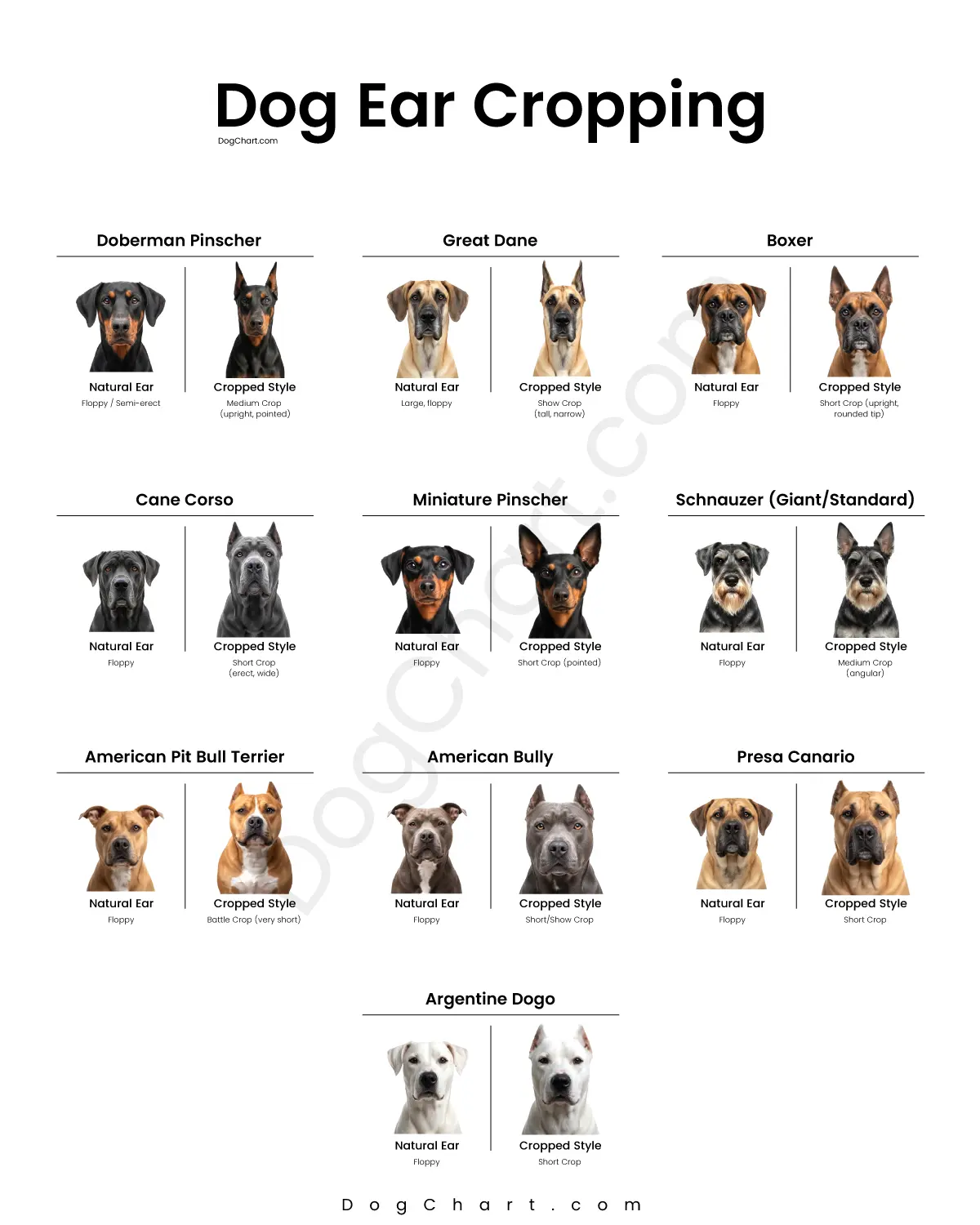
Table of Contents
What is Dog Ear Cropping?
Ear cropping is a surgical procedure that involves trimming and reshaping a dog’s outer ear, usually so it stands upright rather than flopping naturally. It has its roots in history.
Centuries ago, ear cropping was done on hunting and working dogs to prevent long ears from tearing in fights or getting injured in the field. Breeds like Dobermans, Boxers, and Great Danes carried this tradition, and over time, the look became part of their breed identity.
The process itself is performed under anesthesia. A vet surgically removes part of the ear flap (the pinna), and then the ears are taped or posted to encourage them to stand upright as they heal. Depending on the style of crop, the ears may end up short and compact, medium and balanced, or long and elegant.
In modern times, ear cropping is mostly cosmetic. Some owners want their dog to look alert or fit the traditional standard for their breed. But many veterinarians and animal welfare organizations argue that it’s unnecessary, since most dogs no longer have the working roles that cropping was originally intended for.
Dog Ear Cropping Chart
A dog ear cropping chart is a helpful reference that shows different crop styles and sizes based on breed. For example, Dobermans may have a show crop that’s tall and narrow, while Pit Bulls often get a shorter, wider crop. These charts also compare different lengths, short, medium, long and their effect on the dog’s overall look.
They’re especially useful if you’re talking with a vet or breeder about what you want, because just saying I want cropped ears, isn’t enough. Without a clear chart or photo reference, results can vary widely.
| Breed | Natural Ear Type | Common Cropped Style | Notes |
| Doberman Pinscher | Floppy / Semi-erect | Medium Crop (upright, pointed) | Most recognized cropped ear look |
| Great Dane | Large, floppy | Show Crop (tall, narrow) | Extra tall crop in show lines |
| Boxer | Floppy | Short Crop (upright, rounded tip) | Historically cropped for protection |
| Cane Corso | Floppy | Short Crop (erect, wide) | Working dogs often cropped |
| Miniature Pinscher | Floppy | Short Crop (pointed) | Gives alert expression |
| Schnauzer (Giant/Standard) | Floppy | Medium Crop (angular) | Traditional European style |
| American Pit Bull Terrier | Floppy | Battle Crop (very short) | Illegal in many countries |
| American Bully | Floppy | Short/Show Crop | Often cosmetic |
| Presa Canario | Floppy | Short Crop | Used in working lines |
| Argentine Dogo | Floppy | Short Crop | Hunting tradition |
Pros and Cons of Dog Ear Cropping
Like most controversial topics, ear cropping has two sides. To make an informed decision, it helps to weigh both.
Pros of Ear Cropping:
- Traditional breed look: Certain breeds have long been associated with cropped ears, and many owners want their dog to fit that image.
- Appearance of alertness: Cropped ears give a sharp, upright, watchful look.
- May reduce injury in working dogs: Dogs used in protection or guarding may avoid ear tears during work.
- Possible ear health benefits: Some owners believe cropped ears improve airflow and reduce infections, though studies are mixed.
Cons of Ear Cropping:
- Surgical risks: Like any operation under anesthesia, there’s risk involved.
- Pain and stress: Recovery can be uncomfortable for the dog.
- Primarily cosmetic: In most modern households, cropping serves no functional purpose.
- Long aftercare: Ears need taping, cleaning, and months of monitoring.
- Legal and ethical issues: Banned in many countries, controversial in others.
| Pros | Cons |
| Maintains traditional breed appearance | Painful recovery process |
| Upright, alert look | Surgical and anesthesia risks |
| May reduce injuries in working dogs | Considered cosmetic by most vets |
| Possible airflow benefits | Risk of infection or complications |
| Accepted in some show standards | Illegal or discouraged in many regions |
When Can I Crop My Dog’s Ears?
Timing is everything. Ear cropping is almost always done on puppies between 7 and 12 weeks old. At this stage, their cartilage is soft, making it easier for the ears to heal and stand upright.
Waiting too long makes the process more difficult, and results are less predictable. Most vets won’t crop past 16 weeks, because by then the ears are too set in their natural position. Check for
- Legality: Check your country or state laws first.
- Vet experience: Not every vet performs cropping, and results vary widely.
- Aftercare commitment: Expect weeks or months of taping and vet visits.
- Permanent decision: Once done, you can’t reverse it.
Dog Ear Cropping Sizes
Cropping size refers to how much of the ear is removed. Different sizes create very different looks:
| Crop Size | Description | Common Breeds |
| Short Crop | Only a small portion removed. Ears stand short and wide. | Pit Bulls, American Bullies |
| Medium Crop | Balanced look — about half the ear removed. Most natural appearance. | Dobermans, Boxers |
| Long Crop | Leaves most of the ear, creating a tall, elegant profile. | Great Danes, Dobermans |
| Battle Crop | Extremely short, ears barely visible. Historically used in fighting dogs. | Pit Bulls (not recommended today) |
Dog Ear Cropping Styles
Beyond size, cropping also has stylistic variations. These influence the final look more than you might expect.
| Style | Look | Breeds Often Using It |
| Show Crop | Long, narrow, and elegant. Designed for conformation shows. | Dobermans, Great Danes |
| Pet Crop | Medium length, practical and balanced for family pets. | Dobermans, Boxers, Corsos |
| Battle Crop | Very short, wide stance. Creates a tough look, but controversial. | Pit Bulls (historical use) |
| Short Crop | Compact, upright, slightly rounded. | American Bullies, Pit Bulls |
| Custom Crop | Tailored style requested by the owner. Varies greatly. | Mixed and working breeds |
Recovery and Aftercare for Cropped Ears
The surgery is just the beginning. Aftercare is a long, delicate process. Without it, ears often flop instead of standing upright.
What Aftercare Involves:
- Bandaging/posting: Ears are taped to a frame or posts for weeks or months.
- Cleaning: Daily cleaning around the incision to prevent infection.
- Vet check-ups: Regular appointments to monitor healing.
- Medication: Pain relief and sometimes antibiotics.
- Time commitment: It can take 6–12 months before ears are fully “set.”
Owners need to be realistic about whether they can commit to this process. It’s not just a one-time procedure, it’s a long-term responsibility.
Cropped Ears Ethical Considerations
This is where debates get heated. Many argue ear cropping is outdated, unnecessary, and cruel. Others see it as an important part of breed tradition.
Points to Consider:
- Laws: Banned in much of Europe, Australia, and parts of Canada. Still legal in much of the U.S.
- Veterinary stance: Most vet associations discourage cropping unless medically necessary.
- Public opinion: Increasingly against cropping, seeing it as cosmetic rather than functional.
- Shows: Some allow cropped ears, others are moving toward natural standards.
Ultimately, it’s up to the owner but the decision should be informed, thoughtful, and in the dog’s best interest.
FAQs
What is the best age to crop a dog’s ears?
The best time is between 7–12 weeks old. At this stage, the cartilage is still soft enough to shape properly. If you wait past 16 weeks, the ears may never stand correctly, no matter how much posting or taping is done.
Keep in mind that not every vet performs the surgery, and those who do may have their own preferred age window. Always discuss timing in detail with your vet before making a decision.
Does cropping a dog’s ears have any medical benefits?
This is one of the most debated questions. Some owners and breeders claim cropped ears improve airflow and reduce the risk of infections, but scientific studies don’t strongly support that claim.
Floppy-eared breeds like Cocker Spaniels have higher infection rates due to ear shape, but breeds like Dobermans and Boxers aren’t typically prone to infections whether cropped or not. For most dogs, cropping is cosmetic, not medical.
How long does it take for cropped ears to heal?
Initial healing of the incision usually takes 10–14 days. But the full process of getting ears to stand can take 6–12 months depending on the crop style, the breed, and how well aftercare is managed.
During this time, ears may need repeated posting and taping, regular cleaning, and vet check-ups. Owners need to be patient and consistent, or the ears may flop permanently.
How much does dog ear cropping cost?
Costs vary widely depending on your location, the vet’s experience, and the crop style. On average, you can expect to pay anywhere from $150 to $800. Some vets charge extra for aftercare appointments, posting supplies, or medication. In areas where cropping is rare, prices may be higher since fewer vets perform the procedure. Always ask for a full cost breakdown up front.
Is ear cropping legal everywhere?
No. Ear cropping is banned in many countries, including most of Europe, Australia, and parts of Canada. In the U.S., it’s still legal in most states, but public opinion is shifting, and some veterinarians refuse to perform it.
Breed standards in dog shows also vary, some still allow cropped ears, while others are moving toward natural looks. Before considering cropping, check local laws and talk with your vet about whether it’s legal and ethical where you live.