
Havanese Growth Stages
When I first brought home my Havanese puppy, Milo, he could easily fit in the palm of my hand. His tiny paws, button nose, and soft whimpers made him seem so fragile that I was afraid to even pick him up at times. Over the months, I watched him transform, his wobbly steps turned into confident strides, and his baby fur grew into a silky, luxurious coat.
Each growth stage brought something new: his first bark, his first tail wag, and eventually, his boundless bursts of energy around the living room. Raising a Havanese is a heartwarming experience, and understanding their growth stages helps ensure you give them the right care, nutrition, and attention as they mature.
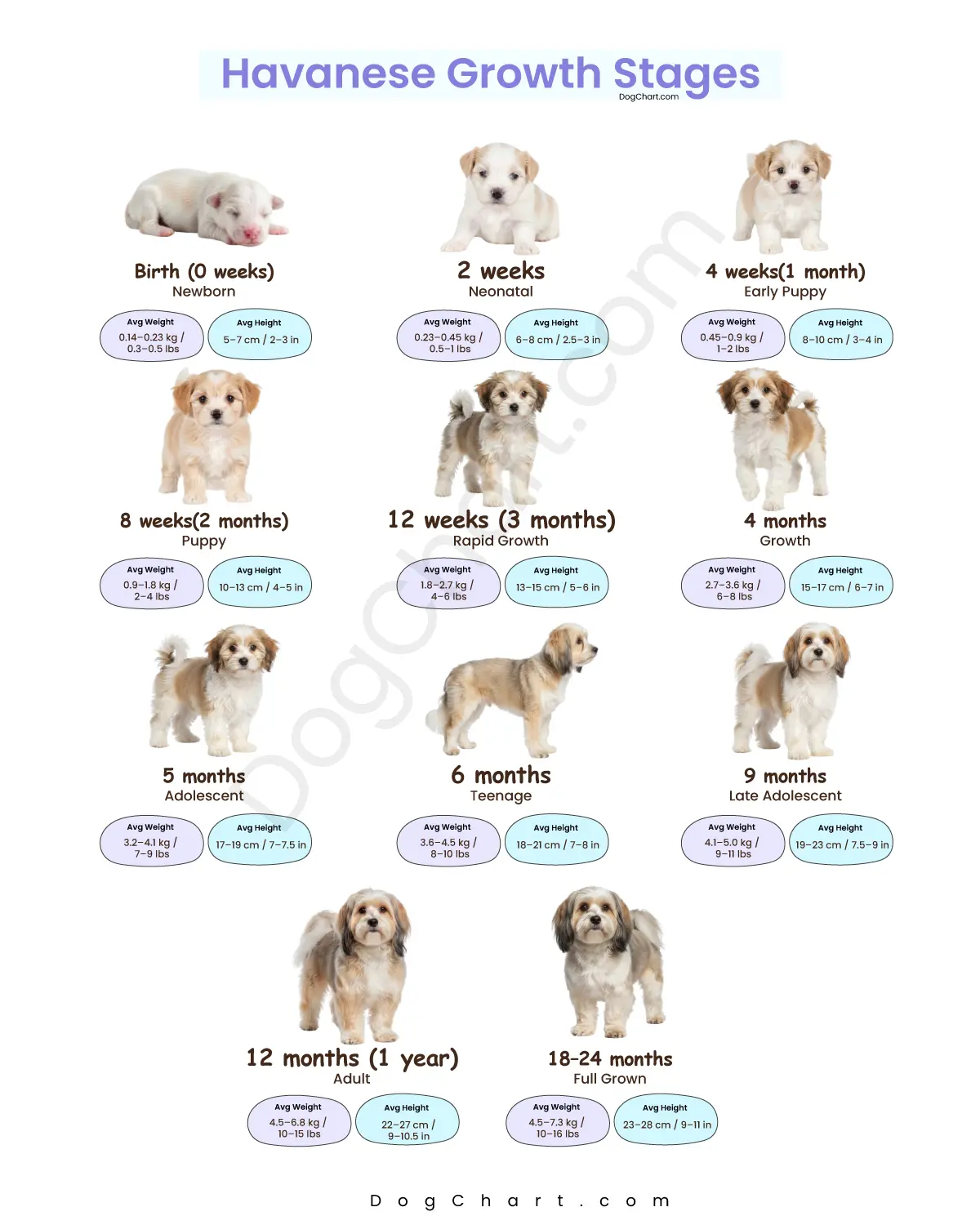
Table of Contents
Havanese Growth Stages Chart
The Havanese growth stages chart helps track your dog’s physical and behavioral development from birth to adulthood. Since every puppy grows at a slightly different pace, this chart offers a helpful reference to understand what’s normal at each milestone from newborn to fully grown and all about height and weight by age
| Age | Average Weight (kg / lbs) | Average Height (cm / in) | Growth Stage | Notes |
| Birth (0 weeks) | 0.14–0.23 kg / 0.3–0.5 lbs | 5–7 cm / 2–3 in | Newborn | Very small and fragile; depends on mother’s milk. |
| 2 weeks | 0.23–0.45 kg / 0.5–1 lbs | 6–8 cm / 2.5–3 in | Neonatal | Eyes open, slow movement begins. |
| 4 weeks (1 month) | 0.45–0.9 kg / 1–2 lbs | 8–10 cm / 3–4 in | Early Puppy | Starting to walk and explore. |
| 8 weeks (2 months) | 0.9–1.8 kg / 2–4 lbs | 10–13 cm / 4–5 in | Puppy | Can start solid food; social training begins. |
| 12 weeks (3 months) | 1.8–2.7 kg / 4–6 lbs | 13–15 cm / 5–6 in | Rapid Growth | Active and playful stage. |
| 4 months | 2.7–3.6 kg / 6–8 lbs | 15–17 cm / 6–7 in | Growth | Developing adult coat. |
| 5 months | 3.2–4.1 kg / 7–9 lbs | 17–19 cm / 7–7.5 in | Adolescent | Becoming more energetic. |
| 6 months | 3.6–4.5 kg / 8–10 lbs | 18–21 cm / 7–8 in | Teenage | Reaching 70–80% adult size. |
| 9 months | 4.1–5.0 kg / 9–11 lbs | 19–23 cm / 7.5–9 in | Late Adolescent | Coat fully developed. |
| 12 months (1 year) | 4.5–6.8 kg / 10–15 lbs | 22–27 cm / 9–10.5 in | Adult | Reaches full height and weight. |
| 18–24 months | 4.5–7.3 kg / 10–16 lbs | 23–28 cm / 9–11 in | Full Grown | Weight stabilizes; full maturity achieved. |
Havanese Growth Stages
A Havanese puppy passes through several unique stages of growth, each shaping its physical and emotional traits. From a tiny newborn to a confident adult, these stages reflect key milestones in their journey. Understanding them helps you provide the best nutrition, training, and social experiences for your pup.
Newborn to 2 Weeks – The Early Stage
During this stage, the Havanese puppy is completely dependent on its mother. Their eyes and ears are closed, and they spend most of their time sleeping and nursing. Growth is primarily focused on gaining strength and body warmth.
| Age | Average Weight | Key Development | Care Tips |
| 1–2 days | 100–200g | Eyes closed, limited movement | Keep warm and close to mother |
| 1 week | 200–300g | Begins to twitch during sleep | Ensure constant nursing |
| 2 weeks | 300–400g | Eyes start to open | Avoid handling too much |
3 to 8 Weeks – Rapid Growth Phase
The most exciting period begins as the puppy becomes more curious and playful. Teeth start to appear, and they begin to walk, bark, and explore. Early socialization with littermates and humans is vital.
| Age | Average Weight | Key Development | Care Tips |
| 3 weeks | 400–600g | Learns to walk | Provide a safe play area |
| 5 weeks | 600–900g | Starts eating soft food | Begin gentle handling |
| 8 weeks | 1–1.2kg | Fully alert and playful | Introduce crate training |
2 to 6 Months – Puppy Development
This stage focuses on rapid growth, both mentally and physically. The Havanese learns commands, builds social skills, and continues teething. Consistent training and playtime are crucial now.
| Age | Average Weight | Key Development | Care Tips |
| 2 months | 1.5kg | Learns name recognition | Begin obedience training |
| 4 months | 2.5kg | Teething phase begins | Provide chew toys |
| 6 months | 3.5–4kg | Active and curious | Socialize with other pets |
6 to 12 Months – Adolescent Stage
Your Havanese is now full of personality. This is the teenage phase where independence and mischief increase. Hormonal changes can influence behavior, so consistent training is essential.
| Age | Average Weight | Key Development | Care Tips |
| 7 months | 4–4.5kg | Increased confidence | Continue obedience training |
| 9 months | 4.5–5kg | Reaches sexual maturity | Schedule spay/neuter consult |
| 12 months | 5–6kg | Approaches adult size | Encourage regular activity |
1 Year and Beyond – Adult Havanese
Once your Havanese reaches one year, they transition into adulthood. They have a full coat, stable temperament, and established routine. Regular vet visits and balanced diets keep them healthy.
| Age | Average Weight | Key Development | Care Tips |
| 1 year | 6–7kg | Fully grown body | Maintain consistent diet |
| 2 years | 6–8kg | Settled temperament | Continue regular exercise |
| 3 years+ | 7–8kg | Mature adult | Schedule annual vet checkups |
Havanese Growth Chart by Age
A Havanese growth chart by age helps pet owners monitor how their dog matures over time. It provides a reference for average weight, height, and physical milestones from birth to adulthood. While every Havanese grows at a slightly different pace, these averages give a helpful benchmark to ensure your pup is on track.
Male Havanese Growth Chart
Male Havanese dogs tend to be slightly heavier and larger than females. They often develop broader frames and stronger builds by the time they reach adulthood.
| Age | Average Weight | Height | Growth Milestone |
| 8 weeks | 2–3 lbs | 5–6 in | Active play begins |
| 4 months | 5–7 lbs | 7–8 in | Rapid muscle growth |
| 6 months | 7–9 lbs | 8–9 in | Coat thickens |
| 12 months | 9–13 lbs | 9–11 in | Fully grown male |
Female Havanese Growth Chart
Female Havanese are slightly lighter and smaller but equally strong and agile. They often develop a more refined frame with delicate facial features.
| Age | Average Weight | Height | Growth Milestone |
| 8 weeks | 1.8–2.5 lbs | 4–5 in | Begins socializing |
| 4 months | 4–6 lbs | 6–7 in | Active and playful |
| 6 months | 6–8 lbs | 7–8 in | Growth slows slightly |
| 12 months | 8–11 lbs | 8–10 in | Adult size reached |
Factors That Affect Havanese Growth
Several factors influence how quickly or slowly a Havanese puppy grows. Understanding these can help owners tailor care, diet, and exercise to promote healthy development.
Genetics: A puppy’s parents greatly affect its size and growth rate. Havanese from smaller parents tend to remain petite, while those from larger lines grow faster.
Nutrition and Diet: High-quality puppy food rich in protein and fat supports muscle and bone growth. Avoid overfeeding, as excess calories can lead to obesity.
Exercise and Activity: Regular but moderate exercise keeps bones strong and helps manage healthy weight. Too much activity too soon can strain developing joints.
Health and Medical Factors: Illness, parasites, or hormonal imbalances can slow growth. Regular vet visits ensure issues are caught early.
How to Know If Your Havanese Is Growing Properly
Your Havanese should gain steady weight and show active curiosity without appearing bloated or weak. Smooth coat texture, firm muscle tone, and alert behavior are indicators of healthy development. If your puppy lags behind growth milestones, consult your vet to rule out nutritional or genetic concerns.
When Do Havanese Stop Growing?
Most Havanese reach their full height by 8 to 10 months but continue filling out until 12 to 14 months. Their coat also matures around this time, becoming fuller and silkier. While growth slows significantly after one year, minor body changes can continue into their second year.
Tips to Maintain Healthy Growth in Havanese Puppies
A balanced diet, daily play, and regular vet checkups are essential for proper growth. Feed your puppy at consistent times, keep treats in moderation, and encourage positive reinforcement-based training. Grooming also plays a part, a healthy coat often reflects good nutrition.
Common Growth Problems in Havanese
Havanese puppies may face issues such as underweight growth, stunted development, or joint problems. Poor diet, overexertion, or untreated health conditions are common causes.
Keeping track of your puppy’s weight and visiting the vet regularly ensures these problems are caught early and managed effectively.
FAQs
At what age do Havanese puppies stop growing?
Most Havanese puppies reach their full size between 12 to 14 months. However, they may continue to fill out and gain slight muscle mass until about 18 months of age.
How much should a Havanese weigh at 6 months?
At 6 months, a healthy Havanese typically weighs between 6 to 9 pounds, depending on genetics, diet, and activity level.
Why is my Havanese smaller than average?
Some Havanese grow slower due to genetics, nutrition, or minor health issues. As long as your puppy is active, eating well, and maintaining a steady growth rate, small variations are normal.
Do male Havanese grow larger than females?
Yes, male Havanese are usually slightly bigger, weighing around 1–2 pounds more than females once fully grown.
How can I help my Havanese puppy grow strong and healthy?
Feed a high-quality puppy diet, encourage daily playtime, ensure regular vet checkups, and avoid overfeeding or excessive exercise during early growth stages.