
Havanese’s Weight Chart
Every Havanese owner knows how easy it is to be charmed by those expressive eyes and fluffy coats, so much so that we sometimes forget how important it is to monitor their weight.
My interest in understanding Havanese weight began when a friend’s cheerful little dog started slowing down and avoiding her usual games. At first, everyone thought it was just a phase, but a quick trip to the vet revealed she was several pounds overweight, quite a bit for her small frame.
That experience made me realize how crucial it is to track a Havanese’s growth and maintain a balanced diet and lifestyle. Their small size means even minor weight fluctuations can have a big impact on their health, energy, and mobility.
From puppyhood to adulthood, understanding what’s normal for your dog’s body is essential to keeping them happy, healthy, and full of life.
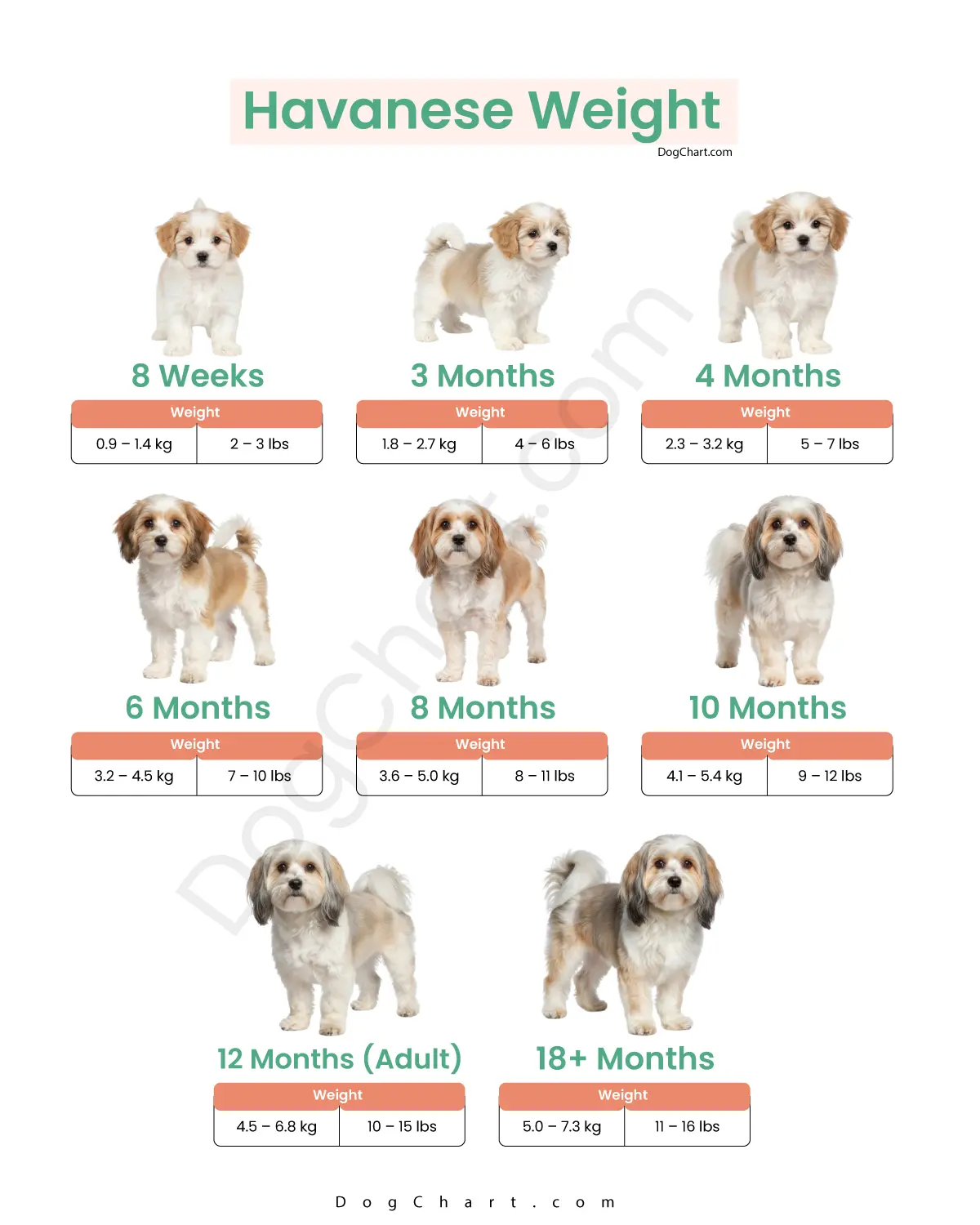
Table of Contents
Understanding the Havanese Weight Chart
The Havanese, known for its cheerful personality and silky coat, is a small but sturdy toy breed. Monitoring your dog’s weight throughout its life is vital to ensuring it stays healthy and active.
Because Havanese dogs can easily gain or lose weight due to diet or lifestyle, a structured weight chart helps owners track growth milestones and maintain the right balance between nutrition and exercise.
| Age | Average Weight (lbs) | Average Weight (kg) | Growth Stage | Description |
| 8 weeks | 2 – 3 lbs | 0.9 – 1.3 kg | Early Puppy | Small and delicate, rapid growth begins |
| 3 months | 4 – 6 lbs | 1.8 – 2.7 kg | Puppy | Developing muscle and coordination |
| 6 months | 7 – 10 lbs | 3.1 – 4.5 kg | Adolescent | Growth slows, bones strengthen |
| 9 months | 9 – 12 lbs | 4.0 – 5.4 kg | Late Puppy | Near adult size, needs stable diet |
| 12 months+ | 10 – 14 lbs | 4.5 – 6.3 kg | Adult | Fully grown and weight stabilizes |
Havanese Weight Chart by Age
A detailed Havanese weight chart by age helps owners understand how their pup’s weight should progress from birth through adulthood. By comparing weekly or monthly weight changes, you can ensure that your dog is on track and address any nutritional or health-related issues early on.
| Age | Weight (kg) | Weight (lbs) | Growth Stage |
| 8 Weeks | 0.9 – 1.4 kg | 2 – 3 lbs | Newborn Puppy |
| 3 Months | 1.8 – 2.7 kg | 4 – 6 lbs | Early Growth |
| 4 Months | 2.3 – 3.2 kg | 5 – 7 lbs | Fast Growth |
| 6 Months | 3.2 – 4.5 kg | 7 – 10 lbs | Adolescent |
| 8 Months | 3.6 – 5.0 kg | 8 – 11 lbs | Teen Stage |
| 10 Months | 4.1 – 5.4 kg | 9 – 12 lbs | Near Full Grown |
| 12 Months (Adult) | 4.5 – 6.8 kg | 10 – 15 lbs | Adult |
| 18+ Months | 5.0 – 7.3 kg | 11 – 16 lbs | Fully Mature |
Havanese Puppy Weight
Havanese puppies are tiny bundles of energy with big appetites for play and companionship. During their first six months, their weight can double or even triple as they develop stronger bones, muscles, and coordination. It’s crucial to provide high-quality, small-breed puppy food formulated with balanced nutrients to support steady growth.
At around eight weeks, most Havanese puppies weigh between 2 to 3 pounds, but by the time they reach six months, their weight typically ranges between 7 and 10 pounds. Consistent feeding routines and portion control help prevent overeating, which is common in this playful breed.
Male Havanese Weight Chart
Male Havanese dogs tend to be slightly larger and heavier than females. A male Havanese weight chart can help track expected milestones throughout different life stages, ensuring your dog remains fit and lean.
| Age | Height (cm) | Height (in) | Weight (kg) | Weight (lbs) |
| 8 Weeks | 12 – 15 cm | 5 – 6 in | 1.1 – 1.6 kg | 2.5 – 3.5 lbs |
| 3 Months | 15 – 18 cm | 6 – 7 in | 1.8 – 2.7 kg | 4 – 6 lbs |
| 6 Months | 18 – 23 cm | 7 – 9 in | 3.2 – 4.5 kg | 7 – 10 lbs |
| 9 Months | 20 – 25 cm | 8 – 10 in | 4.1 – 5.4 kg | 9 – 12 lbs |
| 12 Months | 22 – 27 cm | 9 – 11 in | 5.0 – 6.8 kg | 11 – 15 lbs |
Female Havanese Weight Chart
Female Havanese are typically lighter and smaller than their male counterparts, but they share similar growth patterns. A female Havanese weight chart allows owners to monitor development accurately, helping maintain a balanced diet and optimal health for their furry companions.
| Age | Height (cm) | Height (in) | Weight (kg) | Weight (lbs) |
| 8 Weeks | 10 – 13 cm | 4 – 5 in | 0.9 – 1.4 kg | 2 – 3 lbs |
| 3 Months | 13 – 17 cm | 5 – 6.5 in | 1.4 – 2.3 kg | 3 – 5 lbs |
| 6 Months | 16 – 21 cm | 6 – 8 in | 2.7 – 4.1 kg | 6 – 9 lbs |
| 9 Months | 18 – 23 cm | 7 – 9 in | 3.6 – 5.0 kg | 8 – 11 lbs |
| 12 Months | 20 – 25 cm | 8 – 10 in | 4.1 – 5.9 kg | 9 – 13 lbs |
Factors That Affect Havanese Weight
A Havanese’s weight can fluctuate due to several factors, and understanding these helps owners keep their dogs in peak condition. While genetics set the foundation, diet, exercise, and health all play a crucial role in determining how much your dog weighs throughout its life.
Genetics
Some Havanese lines are naturally smaller or larger depending on their breeding background. If your pup’s parents were petite, chances are it will also have a lighter frame. Conversely, a lineage of sturdier Havanese may result in a more muscular, heavier build.
Diet and Nutrition
Nutrition directly affects your dog’s body weight and overall health. Feeding your Havanese a diet rich in lean protein, healthy fats, and complex carbohydrates helps maintain muscle tone while preventing fat buildup. Overfeeding or giving too many treats can quickly lead to obesity, a common issue in toy breeds.
Exercise Level
Although Havanese dogs are small, they need regular activity to stay fit. A sedentary dog burns fewer calories, leading to gradual weight gain. Daily walks, playtime, and mental stimulation are essential for maintaining the right weight balance.
Health Conditions
Certain medical conditions, such as thyroid imbalances, digestive issues, or hormonal changes, can affect metabolism and lead to sudden weight changes. Regular vet visits and annual check-ups can help detect and address these issues early.
How to Tell If Your Havanese Is Overweight or Underweight
Determining whether your Havanese is at a healthy weight requires both observation and touch. You should be able to feel the ribs beneath a thin layer of fat, not too prominent, but not buried under excess padding either.
An overweight Havanese may have a rounded belly, less visible waistline, and reduced energy. Conversely, an underweight one may show visible ribs, hip bones, and experience fatigue or poor coat quality. Keeping track of their body condition score (BCS) can help maintain an ideal weight range throughout different life stages.
Underweight vs Overweight Havanese Signs
Spotting early signs of unhealthy weight helps prevent long-term health issues like joint strain or diabetes.
Underweight Havanese:
- Visible ribs or spine
- Low energy or lethargy
- Dull or brittle coat
- Slow growth in puppies
Overweight Havanese:
- Round body shape, less visible waist
- Shortness of breath after light activity
- Reluctance to exercise
- Difficulty jumping or climbing
Exercise and Activity Requirements
While the Havanese is an adaptable indoor breed, it still thrives on daily physical and mental stimulation. Consistent activity helps maintain proper weight, strengthens muscles, and keeps the mind sharp.
| Age Group | Daily Exercise Time | Type of Activity | Indoor Play | Outdoor Play | Description |
| Puppy (0–6 months) | 15–25 mins | Short play sessions | Moderate | Limited | Frequent but gentle exercise |
| Young Adult (6–18 months) | 30–45 mins | Walks + games | Active | Moderate | Builds stamina and focus |
| Adult (1–7 years) | 45–60 mins | Walks, fetch, agility | Active | Active | Maintains ideal weight and tone |
| Senior (7+ years) | 20–30 mins | Gentle walks | Light | Minimal | Prevents stiffness and obesity |
When to Worry About Havanese Weight Changes
If your Havanese gains or loses weight suddenly, it could indicate an underlying problem. Sudden weight gain might point to overfeeding or low thyroid activity, while unexpected weight loss could signal digestive issues, parasites, or dental problems.
Track weight changes monthly and consult your vet if there’s a variation of more than 10% from their average weight. Early intervention can prevent serious health complications later.
How to Maintain a Healthy Weight for Your Havanese
Maintaining a healthy weight involves consistent effort across nutrition, exercise, and routine care. Feed your Havanese measured portions of high-quality food designed for small breeds, and avoid free-feeding. Regular walks, mentally engaging toys, and active playtime will also help burn excess calories.
Keep up with regular vet visits for weight monitoring and dietary recommendations. A fit Havanese is not only healthier but also happier, with a longer, more energetic life.
FAQs
What is the ideal weight for an adult Havanese?
Most adult Havanese weigh between 10–14 pounds, depending on genetics, gender, and build.
How can I tell if my Havanese is overweight?
If your dog’s waistline is hard to see and you can’t feel the ribs easily, it’s likely overweight.
Can neutering or spaying affect my Havanese’s weight?
Yes. After neutering or spaying, metabolism slows slightly, so diet and exercise should be monitored carefully.
How often should I weigh my Havanese?
Puppies should be weighed weekly, while adults can be checked monthly to ensure steady, healthy weight.
What foods help maintain a healthy Havanese weight?
Choose high-protein, low-fat dog foods designed for toy breeds, preferably grain-free and balanced for small dogs.