
Senior Dog Foods List- Feeding a Dog Through Their Golden Years
I didn’t really think much about senior dog food until my dog started slowing down. Walks got shorter, naps got longer, and suddenly he was gaining weight even though nothing else had changed.
At first, I chalked it up to age and figured it was normal. But when joint stiffness and occasional stomach issues popped up, I realized his food probably needed to change too.
Switching to a senior-specific diet wasn’t about spoiling him, it was about keeping him comfortable, mobile, and feeling good in his later years.
Once I made that shift, the difference in energy and digestion was hard to ignore.
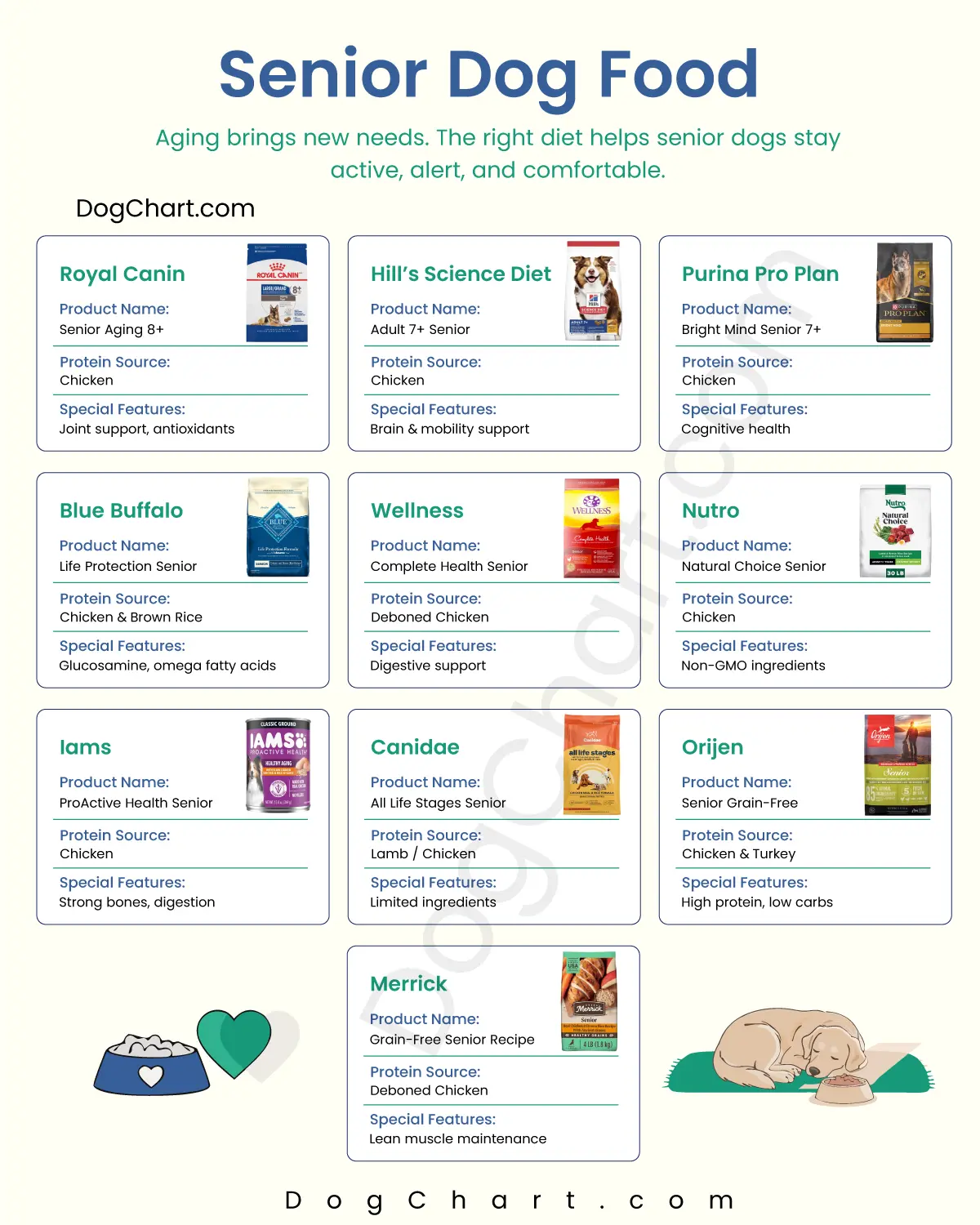
Table of Contents
What Is Senior Dog Food?
Senior dog food is specifically formulated to support dogs as they age and their bodies change.
As dogs get older, their metabolism slows, their joints stiffen, and their digestive system often becomes more sensitive.
Senior formulas adjust calorie levels, protein quality, and nutrient balance to help maintain muscle, manage weight, and support overall comfort.
It’s not about feeding less food, it’s about feeding the right food for this stage of life.
| Brand Name | Product Name | Protein Source | Special Features | Best For |
| Royal Canin | Senior Aging 8+ | Chicken | Joint support, antioxidants | Senior dogs 8+ |
| Hill’s Science Diet | Adult 7+ Senior | Chicken | Brain & mobility support | Aging dogs |
| Purina Pro Plan | Bright Mind Senior 7+ | Chicken | Cognitive health | Senior mental alertness |
| Blue Buffalo | Life Protection Senior | Chicken & Brown Rice | Glucosamine, omega fatty acids | Joint health |
| Wellness | Complete Health Senior | Deboned Chicken | Digestive support | Sensitive seniors |
| Nutro | Natural Choice Senior | Chicken | Non-GMO ingredients | Weight control |
| Iams | ProActive Health Senior | Chicken | Strong bones, digestion | Everyday senior care |
| Canidae | All Life Stages Senior | Lamb / Chicken | Limited ingredients | Food sensitivities |
| Orijen | Senior Grain-Free | Chicken & Turkey | High protein, low carbs | Active senior dogs |
| Merrick | Grain-Free Senior Recipe | Deboned Chicken | Lean muscle maintenance | Aging active dogs |
When Should a Dog Switch to Senior Dog Food?
There’s no universal age when every dog should switch to senior food. Small breeds may not need it until age 8–10, while large and giant breeds often benefit as early as 5–7 years.
Signs that it may be time include weight gain without dietary changes, reduced activity, joint stiffness, digestive changes, or dental issues.
A vet check can help confirm whether the switch makes sense based on your dog’s health and lifestyle.
How Senior Dog Food Differs From Adult Dog Food
Senior dog food usually contains fewer calories to prevent weight gain, higher-quality protein to maintain muscle mass, and added nutrients like glucosamine, chondroitin, and omega-3s for joint and brain health.
Fiber content is often higher to support digestion, while sodium and phosphorus may be reduced to protect heart and kidney function.
Adult food focuses on maintenance, while senior food focuses on preservation and comfort.
Nutritional Needs of Senior Dogs
Older dogs need a careful balance of nutrients rather than extreme changes. Protein remains essential but should be highly digestible.
Healthy fats support skin, coat, and cognitive function. Antioxidants help combat inflammation and aging-related cell damage.
Vitamins like E and B-complex support immune health and energy levels, while minerals must be carefully balanced to avoid overloading aging organs.
Benefits of Feeding Senior Dog Food
Feeding senior dog food can help manage weight, reduce joint discomfort, improve digestion, and support mental sharpness.
Many owners notice better mobility, fewer stomach upsets, and improved coat condition after switching.
While it won’t reverse aging, the right diet can slow age-related decline and keep dogs feeling comfortable and active longer.
Key Ingredients in Senior Dog Food
Look for real, named proteins like chicken, turkey, fish, or lamb. Omega-3 fatty acids support joints and brain health.
Glucosamine and chondroitin help maintain cartilage. Easily digestible carbs like brown rice or oats provide steady energy, while antioxidants from fruits and vegetables support immune health.
Ingredients to Avoid in Senior Dog Food
Avoid foods with excessive fillers, artificial colors, chemical preservatives, and unnamed meat byproducts.
High sodium levels can stress the heart, while overly fatty formulas may lead to weight gain. Excess phosphorus can be hard on aging kidneys, especially in dogs already prone to renal issues.
Best Senior Dog Food for Small Breeds
Small senior dogs often live longer than large breeds, but they’re more prone to dental issues and weight gain.
Foods with smaller kibble sizes, calorie control, and easy-to-digest ingredients are ideal.
Many small-breed seniors also live in tighter spaces and have lower daily activity levels, making them best apartment dogs and portion control and balanced nutrition even more important.
| Brand | Product | Protein Source |
| Nutro Ultra Senior Small Breed | Chicken, Lamb, Salmon | Tailored for small breed metabolism |
| Hill’s Science Diet Senior Small & Mini | Chicken | Supports mobility & digestion |
| Royal Canin Small Aging 12+ | Chicken | Small jaw kibble, joint care |
| Blue Buffalo Life Protection Small Senior | Chicken & Brown Rice | Antioxidants & omega fatty acids |
| Wellness Complete Health Small Breed Senior | Deboned Chicken | Digestive + immune support |
Best Senior Dog Food for Medium Breeds
Medium breeds benefit from balanced formulas that support joints without excessive calories.
Look for moderate protein, joint supplements, and fiber to maintain digestion and mobility as activity levels decline.
| Brand | Product | Protein Source |
| Hill’s Science Diet Senior 7+ | Chicken | Balanced senior nutrition |
| Purina Pro Plan Bright Mind Adult 7+ | Chicken | Cognitive & joint support |
| Blue Buffalo Life Protection Senior | Chicken | Joint health + antioxidants |
| Nutro Natural Choice Senior | Lamb | Healthy weight & digestion |
| Orijen Senior Grain-Free | Chicken & Turkey | High protein, low carbs |
Best Senior Dog Food for Large Breeds
Large breed seniors need strong joint support and careful calorie control.
Their size puts extra stress on hips and knees, so glucosamine, chondroitin, and omega-3s are especially important.
Controlled calcium and phosphorus levels also help protect bones and organs.
| Brand | Product | Protein Source |
| Royal Canin Large Aging 8+ | Chicken | Bone & joint formula |
| Hill’s Science Diet Large Breed Senior | Chicken | Controlled calories |
| Blue Buffalo Life Protection Large Senior | Chicken & Brown Rice | Glucosamine for joints |
| Purina Pro Plan Large Breed Senior | Chicken | Muscle maintenance |
| Canidae All Life Stages Large Senior | Lamb / Chicken | Limited ingredient formula |
Best Senior Dog Food for Giant Breeds
Giant breeds age faster and often struggle with mobility. Senior food for them focuses heavily on joint health, lean muscle maintenance, and digestive support.
Calorie control is crucial to reduce strain on joints and the heart.
| Brand | Product | Protein Source |
| Hill’s Science Diet Giant Breed Senior | Chicken | Digestive & joint support |
| Royal Canin Giant Adult 8+ | Chicken | Heart & bone support |
| Blue Buffalo Life Protection Giant Senior | Chicken & Brown Rice | Glucosamine & omega fatty acids |
| Nutro Ultra Giant Senior | Chicken, Lamb | Lean muscle & digestion |
| Orijen Senior Grain-Free | Chicken & Turkey | High protein senior support |
Best Senior Dog Food for Weight Management
Older dogs often gain weight even when eating the same amount. Weight-management senior foods reduce calories while maintaining protein to prevent muscle loss.
Added fiber helps dogs feel full without overeating.
| Brand | Product | Protein Source |
| Hill’s Science Diet Adult Perfect Weight | Chicken | Weight control + senior support |
| Purina Pro Plan Weight Management | Chicken & Rice | Lean muscle support |
| Blue Buffalo Life Protection Weight Control | Chicken | Reduced calories |
| Nutro Ultra Weight Management | Turkey | Healthy weight + senior nutrition |
| Iams Healthy Weight Mature | Chicken | Fiber for satiety |
Best Senior Dog Food for Joint Health
Joint-focused senior foods include glucosamine, chondroitin, MSM, and omega-3 fatty acids.
These nutrients help reduce inflammation, support cartilage, and improve mobility, especially for dogs with arthritis or stiffness.
| Brand | Product | Protein Source |
| Hill’s Science Diet Joint Support | Chicken | Glucosamine & chondroitin |
| Royal Canin Senior Joint Care | Chicken | Targeted joint formula |
| Blue Buffalo Life Protection Large Senior | Chicken | Glucosamine + omega-3 |
| Nutro Ultra Senior | Chicken, Lamb, Salmon | Natural anti-inflammatories |
| Purina Pro Plan Bright Mind Senior | Chicken | Cognitive + joint support |
Best Senior Dog Food for Sensitive Stomachs
Senior dogs with digestive issues benefit from limited-ingredient formulas, novel proteins, or easily digestible grains.
Probiotics and prebiotic fibers help maintain gut health and reduce bloating or diarrhea.
| Brand | Product | Protein Source |
| Hill’s Prescription Diet i/d | Chicken | Digestive health formula |
| Purina Pro Plan Sensitive + Skin | Salmon | Gentle digestion |
| Wellness Simple Limited Ingredient Senior | Turkey | Single protein, easy digestion |
| Natural Balance L.I.D. Senior | Duck | Limited ingredients |
| Canidae PURE Senior | Salmon & Chickpea | Limited ingredient, sensitive dogs |
Best Senior Dog Food for Dental Health
Dental-friendly foods use kibble designed to reduce plaque buildup or softer textures for dogs with missing teeth.
Some senior dogs do better with a mix of dry and wet food to balance oral health and comfort.
| Brand | Product | Protein Source |
| Hill’s Science Diet Oral Care | Chicken | Dental support kibble |
| Royal Canin Dental Diet | Chicken | Special kibble texture |
| Purina Pro Plan Dental Health | Turkey | Helps reduce tartar |
| Blue Buffalo Dental Health | Chicken | Crunchy texture + antioxidants |
| Iams Dental Health Senior | Chicken | Promotes clean teeth |
Wet vs Dry Senior Dog Food
Dry senior dog food works well for most older dogs because it’s affordable, easy to store, and supports dental health.
That said, many senior dogs develop sensitive teeth or reduced appetite, which is where wet food shines.
Wet senior food is softer, more aromatic, and easier to chew, making it a good option for dogs with dental pain or picky eating habits.
Some owners even rotate textures to keep meals interesting, especially for hypoallergenic dogs
Homemade Senior Dog Food: Pros & Cons
Homemade diets allow full control over ingredients and can be helpful for dogs with multiple health conditions.
However, they carry a high risk of nutritional imbalance if not properly formulated. Without veterinary guidance, homemade senior diets can lead to deficiencies or excesses that worsen health problems.
Grain-Free Senior Dog Food: Is It Safe?
Grain-free senior food can be helpful for dogs with true grain sensitivities, but it’s not necessary for most dogs.
Some grain-free diets have been linked to heart issues when poorly formulated, so quality and balance matter more than avoiding grains entirely.
How Much Should You Feed a Senior Dog?
Portion size depends on size, activity level, and health status. Senior dogs often need fewer calories but still require sufficient protein.
Feeding guidelines are a starting point, but adjustments should be based on body condition, not just age.
Senior Dog Feeding Schedule
Many senior dogs do better with two smaller meals per day rather than one large meal. This helps digestion, stabilizes blood sugar, and reduces strain on the stomach and joints.
How to Transition Your Dog to Senior Food
Transition gradually over 7–10 days by mixing increasing amounts of senior food with the old diet. A slow switch reduces digestive upset and allows your dog’s system to adjust comfortably.
Common Health Issues in Senior Dogs and Diet Solutions
Arthritis benefits from joint-support nutrients, kidney disease requires controlled protein and phosphorus, and cognitive decline may improve with omega-3s and antioxidants.
Diet plays a major role in managing age-related conditions.
Vet Advice: When Prescription Senior Dog Food Is Needed
Prescription diets are recommended for dogs with diagnosed conditions like kidney disease, diabetes, or severe obesity.
These foods are medically formulated and should only be used under veterinary supervision.
Senior Dog Food Cost Comparison
| Type of Senior Dog Food | Average Monthly Cost | Best For |
| Standard Senior Dry Food | $40–$60 | Healthy aging dogs |
| Premium Senior Food | $60–$90 | Joint & digestion support |
| Wet Senior Food | $80–$120 | Dental or appetite issues |
| Prescription Senior Diet | $100–$160 | Medical conditions |
| Homemade (Vet-Guided) | $70–$130 | Complex dietary needs |
Common Mistakes When Feeding Senior Dogs
Overfeeding, ignoring weight gain, and delaying dietary changes are common mistakes.
Another issue is assuming senior dogs need less protein, when in reality they need better protein. Failing to adjust diet as health changes can speed up decline instead of slowing it.
FAQs
At what age is a dog considered a senior?
Small breeds around 8–10 years, medium breeds 7–9 years, and large breeds as early as 5–7 years.
Do senior dogs need less protein?
No. Senior dogs need high-quality, easily digestible protein to maintain muscle mass.
Can I mix adult and senior dog food?
Yes, especially during transition periods, but long-term feeding should match your Senior dog’s age and health needs.
Is wet food better for senior dogs?
It depends. Wet food helps with hydration and chewing, while dry food supports dental health.
Should all senior dogs eat prescription food?
No. Prescription diets are only necessary when a dog has a diagnosed medical condition.