
Weight Loss Dog Food: Helping Your Dog Shed Pounds Safely
When I first noticed my dog gaining extra weight, I realized it wasn’t just about appearances, it was affecting his energy and overall health.
My vet recommended a structured diet combined with exercise, which led me to explore weight loss dog food options.
I discovered there are different formulas designed for adults, seniors, and dogs of all sizes, helping manage weight while keeping nutrition balanced.
Transitioning him to the right food made a visible difference within a few weeks, and now he’s more active, happier, and healthier.
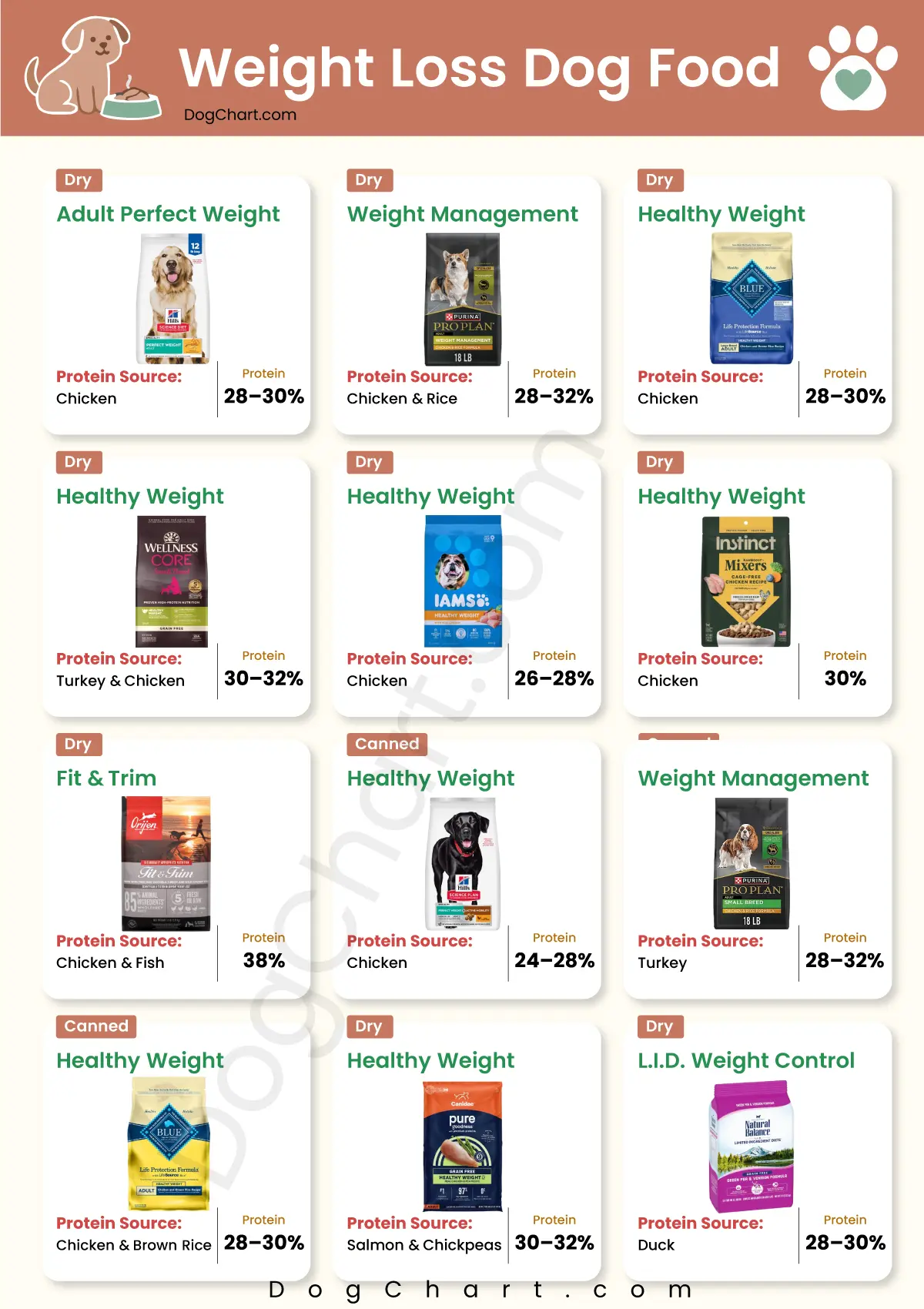
Table of Contents
Types of Weight Loss Dog Foods
Weight loss dog food comes in several varieties depending on calorie content, protein levels, and ingredients. Key types include:
- High-Protein Weight Loss Dog Food:
Builds and maintains lean muscle while reducing fat.
- Low-Fat Weight Loss Dog Food:
Reduces calorie intake while keeping the dog satisfied.
- High-Fiber Weight Loss Dog Food:
Helps dogs feel full for longer, reducing overeating.
- Grain-Free Weight Loss Dog Food:
Ideal for dogs with grain sensitivities or allergies.
- Prescription Weight Loss Diets:
Medically formulated for dogs with obesity-related health issues.
Best Weight Loss Dog Food for Adult Dogs
Adult dogs require a balanced formula that maintains energy levels while helping shed excess weight.
Look for foods that are high in protein, moderate in fat, and include fiber to promote satiety. Avoid foods with fillers and excessive carbohydrates, which can slow down weight loss.
| Brand | Product | Protein Source | Approx. Protein % |
| Hill’s Science Diet | Adult Perfect Weight | Chicken | 28–30% |
| Purina Pro Plan | Weight Management | Chicken & Rice | 28–32% |
| Blue Buffalo | Life Protection Healthy Weight | Chicken | 28–30% |
| Wellness | CORE Healthy Weight | Turkey & Chicken | 30–32% |
| Nature’s Variety | Instinct Healthy Weight | Real Chicken | 30% |
Best Weight Loss Dog Food for Senior Dogs
Senior dogs need fewer calories but higher joint-supporting nutrients like glucosamine and chondroitin.
Many senior weight loss dog foods are formulated to protect joint health, support mobility, and prevent age-related obesity while keeping protein at a level suitable for maintaining lean body mass.
| Brand | Product | Protein Source | Approx. Protein % |
| Hill’s Science Diet | Senior Healthy Weight | Chicken | 26–28% |
| Purina Pro Plan | Senior Weight Management | Turkey & Rice | 28–32% |
| Blue Buffalo | Life Protection Senior Healthy Weight | Chicken | 26–30% |
| Wellness | Complete Health Senior | Deboned Chicken | 28–30% |
| Canidae | PURE Senior | Salmon & Chickpeas | 30–32% |
Best Weight Loss Dog Food for Small Breeds
Small breed weight loss foods are calorie-controlled yet energy-dense to meet the needs of tiny dogs with fast metabolisms.
Look for smaller kibble sizes for easier chewing and digestion.
| Brand | Product | Protein Source | Approx. Protein % |
| Blue Buffalo | Life Protection Healthy Weight Small Breed | Chicken | 28–30% |
| Canidae | PURE Small Breed Healthy Weight | Salmon & Chickpeas | 30–32% |
| Wellness | CORE Healthy Weight Small Breed | Turkey & Chicken | 30–32% |
| Instinct | Healthy Weight Small Breed | Real Chicken | 30% |
| Iams | Healthy Weight Small Breed | Chicken | 26–28% |
Best Weight Loss Dog Food for Medium Breeds
Medium-sized dogs benefit from weight loss formulas that support active lifestyles while reducing fat intake.
High protein and fiber help maintain muscle mass and keep them feeling full between meals.
| Brand | Product | Protein Source | Approx. Protein % |
| Purina Pro Plan | Weight Management Medium | Chicken & Rice | 28–32% |
| Hill’s Science Diet | Adult Perfect Weight Medium | Chicken | 28–30% |
| Blue Buffalo | Life Protection Healthy Weight Medium | Chicken | 28–30% |
| Wellness | CORE Healthy Weight Medium | Turkey & Chicken | 30–32% |
| Nature’s Variety | Instinct Healthy Weight Medium | Chicken | 30% |
Best Weight Loss Dog Food for Large Breeds
Large breeds require joint support and slower-calorie formulas to avoid rapid weight gain and strain on bones.
Ingredients like glucosamine, chondroitin, and omega-3 fatty acids are particularly important.
| Brand | Product | Protein Source | Approx. Protein % |
| Hill’s Science Diet | Large Breed Perfect Weight | Chicken | 28–30% |
| Purina Pro Plan | Weight Management Large | Turkey & Rice | 28–32% |
| Blue Buffalo | Life Protection Healthy Weight Large | Chicken | 28–30% |
| Wellness | CORE Healthy Weight Large | Turkey & Chicken | 30–32% |
| Nutro | Healthy Weight Large Breed | Turkey | 26–28% |
Weight Loss Dog Food Without Chicken
Some dogs are allergic or sensitive to chicken, so many brands offer novel protein weight loss formulas like lamb, salmon, or turkey. These diets help with weight management while avoiding allergens.
Dry vs Canned Weight Loss Dog Food
Both dry and canned weight loss dog foods have benefits.
Dry Food: Longer shelf life, helps with dental health, and allows precise portion control.
Canned Food: More palatable, higher moisture content helps hydration, and often contains higher protein.
Most dogs can thrive on either, or a combination depending on preference and veterinary guidance.
High Protein Weight Loss Dog Food
High protein weight loss dog food is ideal for dogs who need to maintain or build lean muscle while losing fat.
Proteins provide the essential building blocks for muscle tissue, keeping your dog strong and energetic during weight management.
Many high-protein formulas use animal-based proteins such as chicken, lamb, fish, or turkey, which are more digestible and nutrient-rich than some plant proteins.
Low Fat Weight Loss Dog Food
Low-fat weight loss dog foods are formulated to reduce calorie intake while still providing essential nutrients.
Fat is calorie-dense, so limiting it helps your dog shed pounds safely without feeling hungry or deprived.
Many low-fat diets are paired with fiber to improve satiety, so your dog feels fuller on smaller portions.
These foods are excellent for less active or older dogs who may struggle to burn excess calories.
Even in low-fat formulas, it’s important that your dog still receives healthy fats like omega-3 and omega-6 fatty acids for skin, coat, and joint health.
Avoid low-fat options that compromise protein or add unnecessary fillers, as these can slow metabolism and reduce lean muscle mass.
High Fiber Weight Loss Dog Food
High fiber weight loss diets are designed to make your dog feel full longer, naturally controlling appetite and helping reduce snacking or begging.
Ingredients like pumpkin, sweet potato, beet pulp, and brown rice are common fiber sources that support digestion and gut health while promoting weight loss.
Fiber also stabilizes blood sugar levels, which can be particularly helpful for dogs prone to obesity or diabetes.
High-fiber weight loss foods are a gentle and sustainable option for dogs of all sizes, supporting healthy digestion while preventing overeating.
Pairing high-fiber food with regular exercise ensures optimal fat loss and overall well-being.
Grain-Free Weight Loss Dog Food Options
Grain-free weight loss dog foods are ideal for dogs that have sensitivities or allergies to common grains like wheat, corn, or soy.
These formulas still deliver essential protein and fiber, often using novel ingredients like lentils, peas, quinoa, or chickpeas.
Grain-free options can help reduce digestive upset, improve coat health, and prevent allergic reactions while keeping calorie content suitable for weight loss.
While grain-free doesn’t necessarily mean lower in calories, many formulas are carefully balanced to support safe and sustainable fat loss.
Always consult your vet before switching to a grain-free weight loss diet to ensure it meets your dog’s nutritional needs.
FAQs
How long does it take for a dog to lose weight with weight loss dog food?
It depends on age, breed, and initial weight. Most dogs show gradual progress in 6–12 weeks.
Can puppies be on weight loss diets?
Puppies should not be on strict weight loss diets. Only reduce portions under veterinary supervision if necessary.
Should I mix dry and canned weight loss dog food?
Yes, mixing can improve palatability and provide moisture, but ensure the total calories remain controlled.
Can overweight dogs eat grain-free weight loss dog food?
Absolutely, especially if they have sensitivities or allergies.
How do I prevent my dog from regaining weight after losing it?
Continue portion control, monitor activity, and gradually transition to a maintenance diet after reaching ideal weight.