
Royal Canin vs Blue Buffalo Dog Food – Detailed Comparison
Over the years, I’ve watched different dogs in my life respond very differently to food, even when the label looked perfect on paper.
One thrived on a veterinary-recommended formula, while another developed digestive issues until we switched brands. That experience made one thing clear: dog food isn’t about hype, it’s about fit.
Two names that come up again and again in these conversations are Royal Canin and Blue Buffalo. Both brands have loyal followings, strong reputations, and very different philosophies.
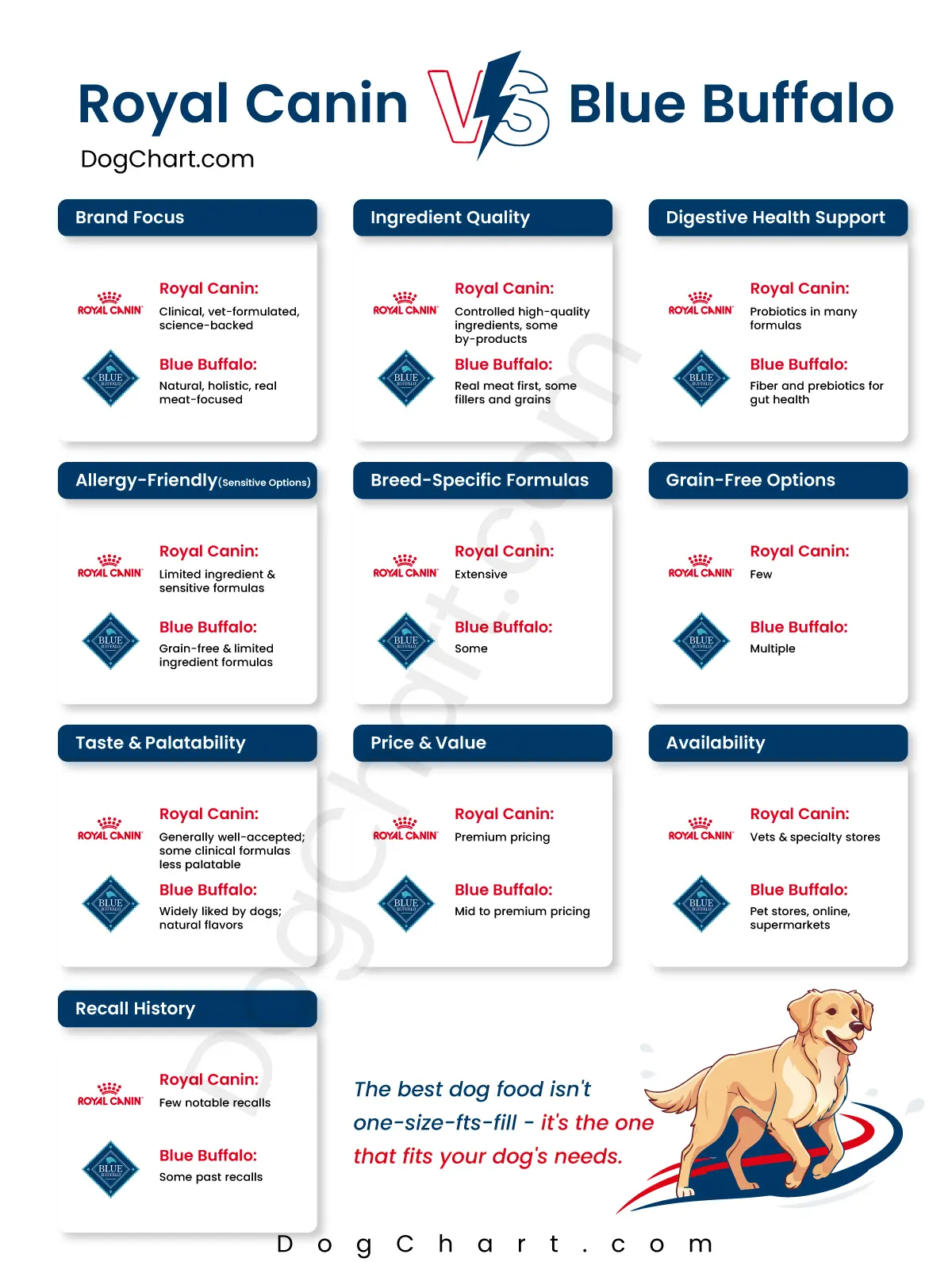
Table of Contents
Royal Canin vs Blue Buffalo Dog Food
| Category | Royal Canin | Blue Buffalo |
| Brand Focus | Clinical, vet-formulated, science-backed | Natural, holistic, real meat-focused |
| Ingredient Quality | Controlled high-quality ingredients, some by-products | Real meat first, some fillers and grains |
| Digestive Health Support | Probiotics in many formulas | Fiber and prebiotics for gut health |
| Allergy-Friendly / Sensitive Options | Limited ingredient & sensitive formulas | Grain-free & limited ingredient formulas |
| Breed-Specific Formulas | Extensive | Some |
| Grain-Free Options | Few | Multiple |
| Taste & Palatability | Generally well-accepted; some clinical formulas less palatable | Widely liked by dogs; natural flavors |
| Price & Value | Premium pricing | Mid to premium pricing |
| Availability | Vets & specialty stores | Pet stores, online, supermarkets |
| Recall History | Few notable recalls | Some past recalls |
Royal Canin vs Blue Buffalo: Formulas
Royal Canin is built around precision nutrition. Its formulas are designed with specific breed sizes, life stages, and even medical needs in mind.
The ingredient list may look clinical, but each component serves a functional purpose, digestibility, joint support, or stool quality.
Blue Buffalo, on the other hand, markets a natural, ingredient-first philosophy. Real meat is emphasized, along with fruits, vegetables, and antioxidant blends.
lue Buffalo offers more variety in ingredient styles (grain-free, limited ingredient, high-protein), appealing to owners focused on whole-food aesthetics.
In short: Royal Canin focuses on nutritional engineering, while Blue Buffalo focuses on ingredient transparency and natural appeal.
Puppy Formulas: Royal Canin vs Blue Buffalo
Puppies need carefully balanced protein, calcium, DHA, and calories to support rapid growth without stressing joints.
Royal Canin puppy formulas are extremely targeted, tailored by breed size and growth rate.
Blue Buffalo puppy foods emphasize real meat and DHA from fish oil but offer fewer size-specific formulas.
| Feature | Royal Canin Puppy | Blue Buffalo Puppy |
| Protein Source | Chicken, poultry meals | Deboned chicken, fish |
| DHA Support | Yes (precise dosing) | Yes (fish oil) |
| Breed Size Options | Small, Medium, Large | Limited size options |
| Digestibility | Very high | Moderate–high |
| Best For | Controlled growth | Natural ingredient focus |
Adult Dog Food Comparison
Adult formulas must balance maintenance energy, muscle health, and long-term digestion.
Royal Canin adult foods are structured for predictable results, ideal for dogs with sensitive digestion.
Blue Buffalo adult formulas offer more protein variety and lifestyle options (active, weight control, grain-free).
| Feature | Royal Canin Adult | Blue Buffalo Adult |
| Protein Level | Moderate, precise | Moderate–high |
| Formula Variety | Size & breed-based | Lifestyle-based |
| Fiber Balance | Highly controlled | Variable |
| Ingredient Style | Functional | Natural |
| Best For | Consistency | Ingredient preference |
Senior Dog Food Comparison
Senior dogs need joint support, controlled calories, and easy digestion. Royal Canin senior foods focus heavily on joint health, cognitive support, and kidney-friendly nutrition.
Blue Buffalo seniors emphasize antioxidants and lean protein but may not suit dogs with sensitive systems.
| Feature | Royal Canin Senior | Blue Buffalo Senior |
| Joint Support | Advanced | Moderate |
| Calorie Control | Yes | Yes |
| Digestibility | Very high | Moderate |
| Antioxidants | Added | LifeSource Bits |
| Best For | Aging sensitivities | Active seniors |
Royal Canin vs Blue Buffalo: Flavors
Royal Canin keeps flavors simple, chicken, poultry, lamb, because consistency matters more than variety.
Blue Buffalo offers a wider flavor range including salmon, duck, turkey, and beef, which appeals to picky eaters.
| Aspect | Royal Canin | Blue Buffalo |
| Flavor Variety | Limited | Wide |
| Protein Rotation | Minimal | Extensive |
| Palatability | Consistent | Often higher |
| Novel Proteins | Rare | Common |
| Best For | Sensitive digestion | Picky dogs |
Royal Canin vs Blue Buffalo: Pros and Cons
When comparing Royal Canin and Blue Buffalo, the biggest difference lies in philosophy rather than quality.
Royal Canin’s greatest strength is its scientific precision. Every formula is developed with targeted nutrient ratios, controlled fiber levels, and specific kibble shapes designed to improve digestion and dental health.
Blue Buffalo, on the other hand, excels in ingredient transparency and variety. Its formulas emphasize real meat as the first ingredient, along with fruits, vegetables, and antioxidant-rich LifeSource Bits.
| Brand | Pros | Cons |
| Royal Canin | Vet-backed, precise | Less “natural” appeal |
| Breed-specific | Limited flavors | |
| Blue Buffalo | Real meat focus | Can cause sensitivities |
| Ingredient transparency | Less precise formulas |
Which Brand Suits Active Dogs?
Active dogs burn calories quickly and need sustained energy without digestive upset. Blue Buffalo’s higher-protein and wilderness lines often suit high-energy, athletic dogs, especially those doing agility or hiking.
Royal Canin also works well for active dogs, but more for structured activity levels like working breeds that benefit from consistent energy release rather than spikes.
Which Brand Suits Picky Eaters?
Picky eaters often prefer Blue Buffalo due to its stronger aromas, varied proteins, and textured kibble.
Royal Canin can still work, but it relies on palatability engineering rather than ingredient novelty. If a dog refuses food easily, Blue Buffalo usually wins this category.
When Blue Buffalo Makes Sense
Blue Buffalo is a strong choice when your dog tolerates richer, protein-forward diets well and does not have a history of chronic digestive issues.
It works particularly well for active dogs, dogs with high energy demands, and those that thrive on meat-heavy formulas.
Owners who prioritize recognizable ingredients and prefer foods that resemble a “whole food” diet often feel more confident choosing Blue Buffalo.
When Royal Canin Makes Sense
Royal Canin is often the better option when a dog needs stability, consistency, and precision.
Dogs with sensitive stomachs, frequent loose stools, or food intolerances typically respond well to Royal Canin’s controlled formulations.
Its breed-specific diets are particularly beneficial for dogs with known genetic traits, such as joint issues, digestive sensitivity, or unique jaw structures, that benefit from tailored nutrition.
Royal Canin also makes sense when veterinary guidance is involved.
Blue Buffalo vs Royal Canin: German Shepherds
German Shepherds need joint support, digestive care, and controlled fat.
| Feature | Royal Canin GSD | Blue Buffalo |
| Joint Support | Excellent | Moderate |
| Digestibility | Very high | Variable |
| Protein Balance | Controlled | Higher |
| Stool Quality | Consistent | Inconsistent |
| Best Choice | Royal Canin | — |
Blue Buffalo vs Royal Canin: French Bulldogs
French Bulldogs are prone to allergies and digestion issues.
| Feature | Royal Canin Frenchie | Blue Buffalo |
| Kibble Shape | Specialized | Standard |
| Gas Reduction | Yes | No |
| Allergy Control | Strong | Moderate |
| Digestibility | Excellent | Moderate |
| Best Choice | Royal Canin | — |
Final Thoughts
There is no universal winner in the Royal Canin vs Blue Buffalo dog food debate. Royal Canin excels in scientific precision and predictability, while Blue Buffalo appeals to owners who value ingredient variety and natural sourcing.
The right choice depends on your dog’s digestion, activity level, breed, and personal response, not marketing claims.
FAQs
Is Royal Canin better than Blue Buffalo?
Not universally. Royal Canin is better for sensitive or breed-specific needs; Blue Buffalo suits dogs that tolerate richer ingredients.
Do vets prefer Royal Canin?
Yes, many vets recommend Royal Canin due to clinical testing and consistency.
Is Blue Buffalo too rich for some dogs?
It can be, especially for dogs with sensitive stomachs.
Can I switch between the two brands?
Yes, but transitions should be gradual over 7–10 days.
Which is better for allergies?
Royal Canin’s hydrolyzed or breed-specific lines are often safer.