
Chihuahua Breeds Color Chart
A few summers ago, I attended a local pet fair where a small group of Chihuahuas instantly caught my attention, not because of their size, but because of the dazzling variety of their coat colors. Some shimmered in shades of cream and fawn, others glowed in chocolate or sleek black, and a few flaunted rare patterns I hadn’t seen before.
Talking to the breeders and owners, I learned how diverse Chihuahua breeds can be in both color and personality. That day sparked my curiosity about what each coat shade and pattern means, from genetics to health implications, and how color variation gives every Chihuahua its unique charm.
Whether you’re an enthusiast, breeder, or soon-to-be owner, understanding Chihuahua breeds color with pictures adds a new layer of appreciation for these bold little dogs.
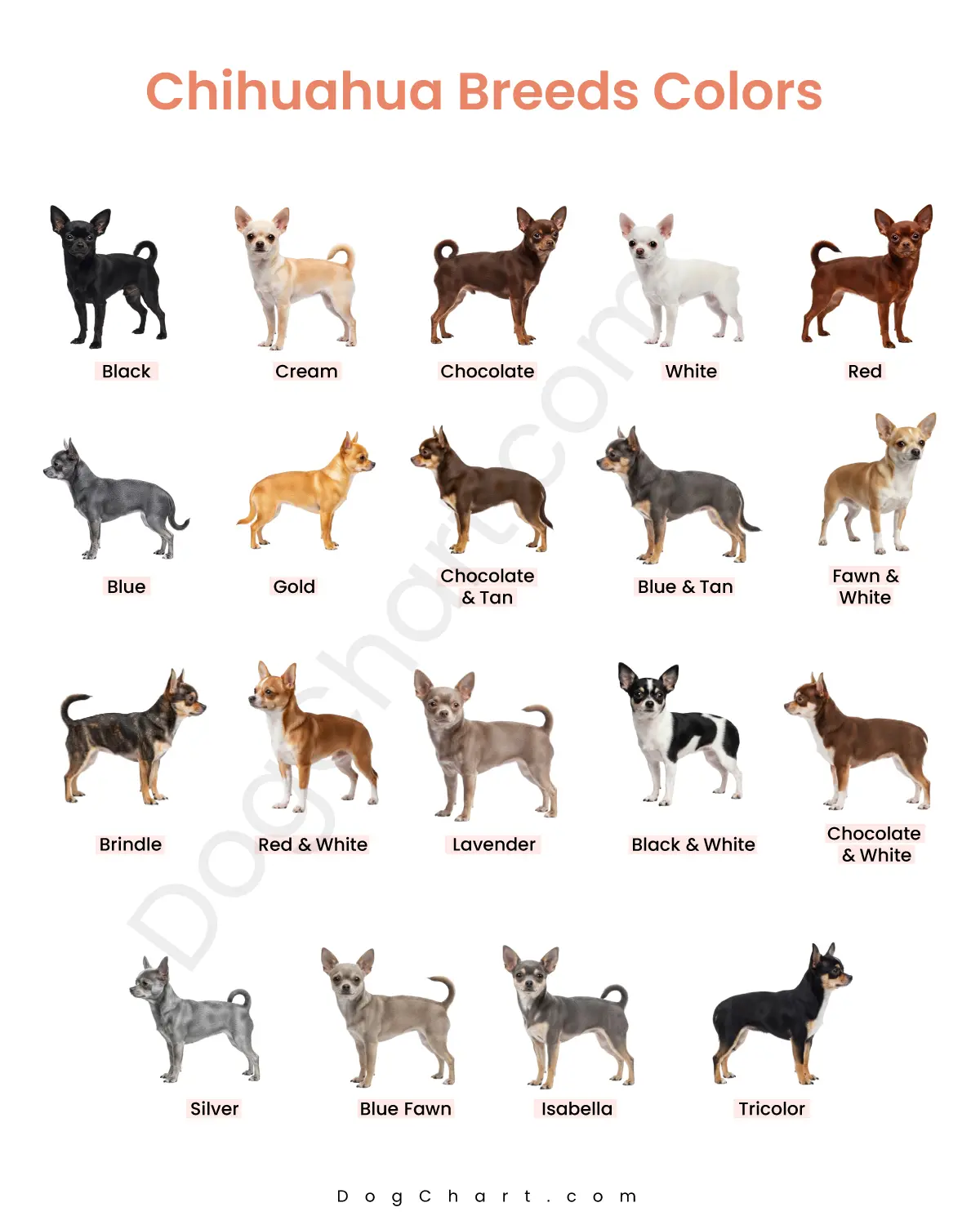
Table of Contents
Chihuahua Colors Chart
When it comes to Chihuahua breeds, color diversity is one of the most striking features. Their coats can range from solid hues to intricate blends, with shades influenced by genetics, coat type (smooth or long-haired), and even diet or age.
| Color Type | Color Name |
| Black | Solid black coat, sleek and glossy |
| White | Pure white or creamy white fur |
| Chocolate | Deep brown shade, often with lighter highlights |
| Cream | Soft off-white or pale yellowish tone |
| Red | Warm reddish-brown color |
| Blue | Grayish-blue tint caused by dilution of black pigment |
| Gold | Shiny golden hue with warm undertones |
| Chocolate & Tan | Brown base with tan points |
| Blue & Tan | Rare blue coat with tan accents |
| Fawn & White | Soft beige with white patches |
| Black & White | Distinct tuxedo-like color pattern |
| Red & White | Reddish coat with white markings |
| Chocolate & White | Brown coat with white areas |
| Brindle | Tiger-striped pattern, often brown with black streaks |
| Lavender | Soft lilac-gray tone, extremely rare |
| Silver | Light gray metallic coat with shine |
| Blue Fawn | Fawn with a subtle bluish undertone |
| Isabella | Diluted chocolate, giving a pale gray-brown look |
| Tricolor | Combination of three colors — usually black, white, and tan |
Common Chihuahua Coat Colors
Chihuahuas most often display familiar and widely loved shades like fawn, black, white, and tan. These colors are easy to spot at breeders and dog shows and form the foundation of the breed’s recognizable appearance. Despite being common, each shade can vary in tone, from pale cream to deep chocolate, creating endless combinations.
| Color | Description | Coat Type Commonality | Rarity | Notes | Example Variation |
| Fawn | Classic light tan shade | Smooth & Long | Common | Warm tone, soft coat | Light beige to golden |
| Black | Deep and glossy | Smooth | Common | Strong contrast with eyes | Jet black or charcoal |
| White | Clean and bright | Long-haired | Common | Often seen in show dogs | Snow white or ivory |
| Tan | Warm brown undertone | Smooth | Moderate | Common in mixes | Golden tan |
| Chocolate | Rich brown hue | Long-haired | Moderate | Can darken with age | Milk to dark chocolate |
Rare Chihuahua Colors
Some Chihuahua colors are extremely rare, often the result of unique genetic combinations or recessive traits. These rare hues, like blue, lavender, or merle, are cherished for their distinct look but may also come with special care needs. Understanding these shades helps owners recognize both their beauty and the genetic nuances behind them.
| Color | Description | Genetic Origin | Rarity | Care Tips | Visual Traits |
| Blue | Steel-gray or silver tone | Diluted black gene | Rare | Sensitive skin | Shiny gray coat |
| Lavender | Light purple-brown tint | Diluted chocolate | Very Rare | Sun protection | Soft pastel coat |
| Merle | Speckled pattern | Merle gene mix | Rare | Eye checks needed | Dappled coat |
| Brindle | Tiger-stripe pattern | Dominant gene | Rare | Regular brushing | Striped coat |
| Lilac | Silvery-brown shade | Genetic dilution | Very Rare | Gentle grooming | Pale gray-brown |
Chihuahua Coat Patterns Explained
Beyond solid colors, many Chihuahuas feature distinct coat patterns that make them truly one-of-a-kind. Patterns like spotted, piebald, or sable give a touch of flair and individuality to each dog. These designs are determined by pigment distribution during coat growth and can change slightly as a dog ages.
| Pattern | Description | Rarity | Common Colors Seen With | Maintenance | Notes |
| Spotted | Random patches of color | Common | White, fawn, tan | Easy | Often covers ears or back |
| Piebald | White base with large color patches | Moderate | Black, brown | Medium | Genetic pattern |
| Sable | Black-tipped hairs | Moderate | Fawn, red | Low | Gives shaded effect |
| Masked | Dark facial area | Moderate | Tan, cream | Easy | Similar to pugs |
| Tricolor | Mix of three colors | Rare | Black, tan, white | High | Highly valued |
Solid Color Chihuahuas
Solid-colored Chihuahuas, though simple, have a timeless appeal. Their coats show a single consistent shade from nose to tail, often paired with expressive eyes that enhance their personality. These dogs are favorites in shows due to their uniform look and the way a single tone highlights their petite frame.
| Color | Appearance | Popularity | Coat Type | Grooming Need | Example |
| Red | Bold and shiny | Moderate | Smooth | Weekly | Copper red |
| Cream | Soft and pale | Common | Long-haired | Moderate | Light ivory |
| Black | Glossy jet shade | Common | Smooth | Low | Midnight black |
| Chocolate | Warm brown | Moderate | Long-haired | Medium | Deep cocoa |
| Blue | Cool steel-gray | Rare | Smooth | Moderate | Silver-blue |
Bi-Color and Tri-Color Chihuahuas
Bi-color and tri-color Chihuahuas are among the most visually striking variations in the breed. Unlike solid-colored coats, these dogs display a unique blend of shades that highlight their lively personalities and expressive features.
| Color Type | Description | Common Color Combos | Coat Type | Rarity | Maintenance | Example |
| Bi-Color | Two main colors | Black & Tan, White & Fawn | Smooth | Common | Low | White body, tan face |
| Tri-Color | Three visible colors | Black, Tan, White | Smooth or Long | Moderate | Medium | Black coat with tan legs & white chest |
| Chocolate & White | Rich brown and white mix | Chocolate & Cream | Long-haired | Moderate | Medium | Deep chocolate patches |
| Blue & Tan | Cool gray-blue with tan | Blue & Tan | Smooth | Rare | Moderate | Silver body, tan legs |
| Red & White | Vibrant and warm | Red & White | Long-haired | Common | Low | Fiery red with white belly |
| Black, White & Tan | Classic tri-color | Black, Tan, White | Smooth | Rare | Low | Tricolor face markings |
Merle Chihuahua Pattern
The merle pattern in Chihuahuas is one of the most distinctive, and controversial, variations.
| Pattern | Description | Base Colors | Eye Color | Rarity | Health Concerns | Grooming Needs |
| Blue Merle | Silver-gray base with darker spots | Blue, Gray | Blue or Mixed | Rare | Possible vision issues | Medium |
| Chocolate Merle | Brown base with tan speckles | Chocolate, Tan | Amber | Rare | Moderate genetic risk | Low |
| Red Merle | Warm red base, lighter blotches | Red, Cream | Brown | Very Rare | Low | Medium |
| Double Merle | Two merle parents | Any | Often blue | Extremely Rare | High (deafness risk) | Medium |
| Merle Long-Coat | Merle pattern on long fur | All | Varies | Moderate | Low | High brushing need |
| Merle Smooth-Coat | Merle on short fur | All | Varies | Common | Low | Low maintenance |
Brindle Chihuahua Pattern
The brindle pattern gives Chihuahuas a tiger-like, striped coat that’s both rare and captivating. This pattern is caused by the interaction of black pigment over a lighter base color, resulting in streaks or stripes. Brindle Chihuahuas can come in shades like fawn, brown, or red, each stripe emphasizing their compact frame and strong stance.
| Pattern | Description | Base Color | Stripe Color | Rarity | Common Coat Type | Maintenance |
| Fawn Brindle | Light tan with dark stripes | Fawn | Black | Moderate | Smooth | Low |
| Red Brindle | Deep red coat, black stripes | Red | Black | Rare | Smooth | Medium |
| Brown Brindle | Warm brown with darker tone | Brown | Dark Brown | Rare | Long-haired | High |
| Black Brindle | Dark base, subtle stripes | Black | Gray | Rare | Smooth | Medium |
| Reverse Brindle | Light stripes over dark coat | Dark Brown | Tan | Very Rare | Smooth | Medium |
| Blue Brindle | Cool-toned gray with faint lines | Blue | Dark Gray | Very Rare | Smooth | Low |
How Coat Color Changes as a Chihuahua Grows
A Chihuahua’s coat color isn’t always permanent, it can change as the dog matures. Puppies are often born with lighter or darker shades that shift within the first year as their adult coat develops. For instance, a dark brown puppy may fade into a soft fawn, or a cream pup may turn nearly white. Sun exposure, diet, and genetics can all influence color intensity.
Long-haired Chihuahuas may also appear lighter as their undercoat grows in, while smooth coats tend to darken over time. This natural transformation adds to their charm, as no two Chihuahuas age the same way, each one’s coat tells its own story.
Does Coat Color Affect Chihuahua Temperament or Health?
Many owners wonder if a Chihuahua’s color impacts its behavior or well-being. Scientifically, there’s little evidence that coat color directly affects temperament, a black, white, or chocolate Chihuahua can all share the same playful, loyal personality.
However, genetics linked to certain colors can influence health. For instance, blue and merle Chihuahuas may be slightly more prone to skin sensitivity or eye issues due to pigment-related genes. Overall, personality is shaped more by environment, socialization, and care than by color.
- Color doesn’t define behavior.
- Genetics may affect health.
- Proper diet keeps the coat healthy.
- Socialization matters more than shade.
- Regular vet checks prevent issues.
FAQs
Do Chihuahua coat colors affect their lifespan?
Not directly, color doesn’t determine how long a Chihuahua lives. A good diet, exercise, and care are far more important for longevity.
What is the rarest Chihuahua color?
Lavender and blue merle are among the rarest, as they depend on recessive genetic traits.
Can a Chihuahua’s color change over time?
Yes, many do. Puppies often lighten or darken as they mature, especially during the first year.
Are merle Chihuahuas unhealthy?
Not necessarily, but breeding two merles can lead to health issues like deafness or eye problems. Responsible breeding prevents this.
Which Chihuahua color is most common?
Fawn is the most common, followed by black and white. These shades are classic and easy to find in most bloodlines.