
Havanese Lifespan Chart
I still remember the day I brought home my Havanese. She was this tiny puff of fur, always tripping over her own paws and falling asleep mid-play. Fast forward ten years, and she’s slowed down a bit, prefers warm naps over zoomies, and has developed this wise, mellow vibe that makes you appreciate every moment.
But I’ll be honest, when I first got her, I didn’t think much about how long Havanese live. I was too busy worrying about training and teething. It wasn’t until a friend mentioned that their Havanese had passed away at 14 that I realized how important it is to understand their lifespan and how to support them through each stage of life.
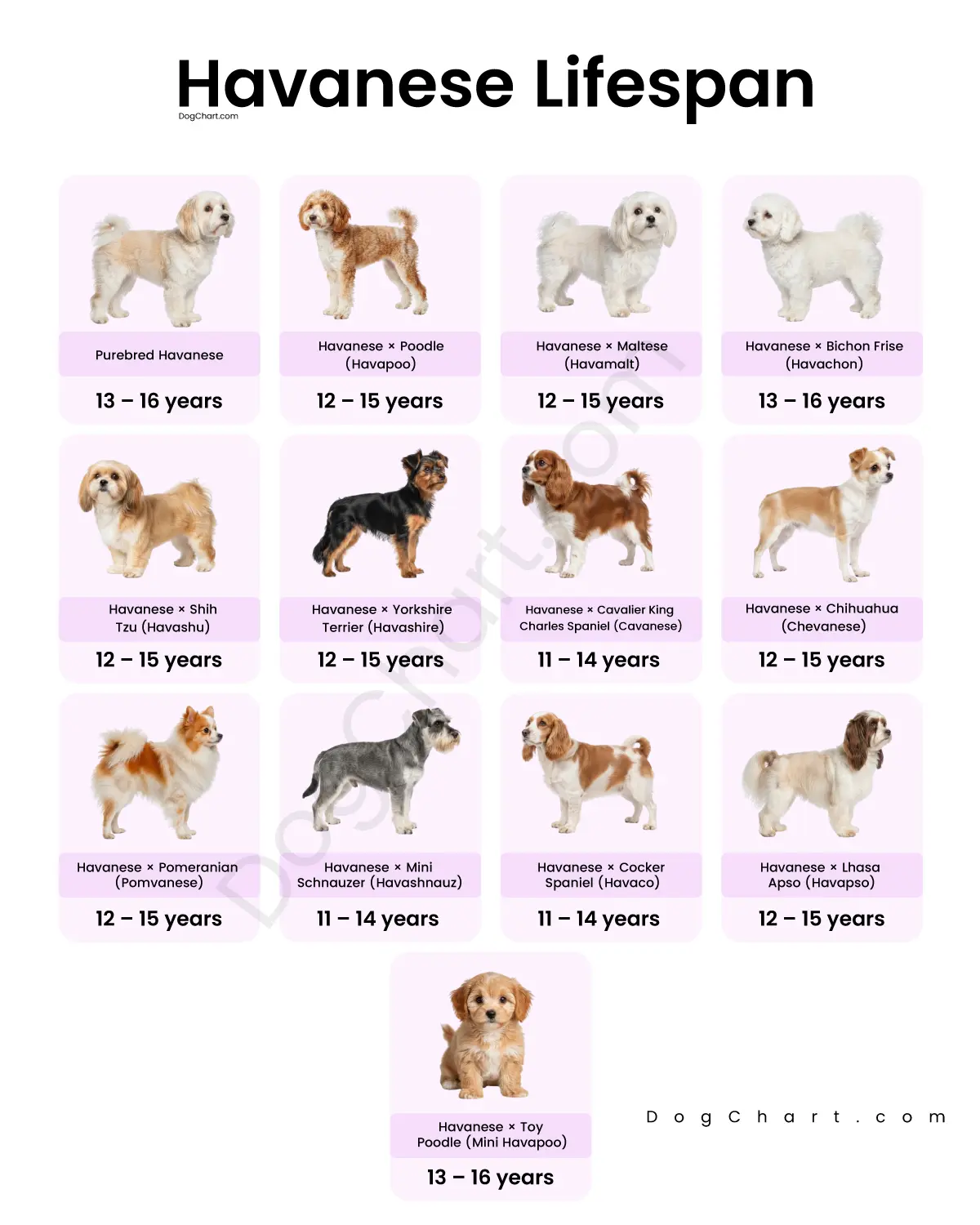
Table of Contents
Havanese Dog Breeds Lifespan
When it comes to the Havanese dog breeds lifespan, these little dogs are surprisingly hardy. Most live between 13 to 16 years, though some have been known to reach 18 or even 20 with proper care. Genetics play a big role, but so do daily habits, what you feed them, how active they are, and how well you keep up with vet visits.
| Breed / Type | Average Lifespan | Lifespan Range |
| Purebred Havanese | 14 years | 13 – 16 years |
| Havanese × Poodle (Havapoo) | 13 years | 12 – 15 years |
| Havanese × Maltese (Havamalt) | 13.5 years | 12 – 15 years |
| Havanese × Bichon Frise (Havachon) | 14 years | 13 – 16 years |
| Havanese × Shih Tzu (Havashu) | 13 years | 12 – 15 years |
| Havanese × Yorkshire Terrier (Havashire) | 13 years | 12 – 15 years |
| Havanese × Cavalier King Charles Spaniel (Cavanese) | 12.5 years | 11 – 14 years |
| Havanese × Chihuahua (Chevanese) | 13 years | 12 – 15 years |
| Havanese × Pomeranian (Pomvanese) | 13 years | 12 – 15 years |
| Havanese × Mini Schnauzer (Havashnauz) | 12 years | 11 – 14 years |
| Havanese × Cocker Spaniel (Havaco) | 12.5 years | 11 – 14 years |
| Havanese × Lhasa Apso (Havapso) | 13 years | 12 – 15 years |
| Havanese × Toy Poodle (Mini Havapoo) | 14 years | 13 – 16 years |
Male vs Female Havanese Lifespan Comparison
In most breeds, females tend to live a little longer, and the Havanese is no different. The gap isn’t huge, but females often outlive males by about a year or so. That said, lifestyle and overall care make a much bigger difference than gender.
| Gender | Average Lifespan | Health Notes | Common Age-Related Issues | Energy Levels in Senior Years | Ideal Weight Range | Notes |
| Male | 13–15 years | Prone to joint stiffness if overweight | Mild arthritis, dental wear | Moderate | 10–16 lbs | Needs regular exercise |
| Female | 14–16 years | Slightly better longevity stats | Hormonal changes post-spay | Consistent | 9–14 lbs | Often calmer as seniors |
| Neutered Male | 14–16 years | Lower cancer risk | Occasional hip issues | Moderate | 10–15 lbs | Maintain lean diet |
| Spayed Female | 15–17 years | Reduced uterine infection risk | Some coat thinning | Moderate | 9–13 lbs | Slightly longer lifespan |
| Early-Neutered Male | 14–15 years | Balanced hormone levels | Slight bone density concerns | Moderate | 9–15 lbs | Early vet consultation advised |
| Early-Spayed Female | 15–17 years | Prevents major reproductive illnesses | Minimal hormonal fluctuation | High | 9–13 lbs | Healthiest longevity rate |
Havanese Mix Breeds Lifespan
When we talk about mixes, lifespan can vary. The Havanese breed (purebred Havanese) typically sets the baseline for hybrid mixes, meaning their strong genetics often pass on good longevity. Crosses like the Havapoo (Havanese + Poodle) or Havachon (Havanese + Bichon Frise) often share similar lifespans of 12 to 16 years, depending on which traits dominate.
| Havanese Mix Breed | Average Lifespan | Lifespan Range |
| Havapoo (Havanese × Poodle) | 13 – 15 yrs | 12 – 16 yrs |
| Havamalt (Havanese × Maltese) | 13 – 15 yrs | 12 – 15 yrs |
| Havachon (Havanese × Bichon Frise) | 14 – 16 yrs | 13 – 17 yrs |
| Havashu (Havanese × Shih Tzu) | 13 – 15 yrs | 12 – 15 yrs |
| Havashire (Havanese × Yorkshire Terrier) | 13 – 15 yrs | 12 – 16 yrs |
| Cavanese (Havanese × Cavalier King Charles Spaniel) | 12 – 14 yrs | 11 – 15 yrs |
| Chevanese (Havanese × Chihuahua) | 13 – 15 yrs | 12 – 16 yrs |
| Pomvanese (Havanese × Pomeranian) | 13 – 15 yrs | 12 – 16 yrs |
| Havapso (Havanese × Lhasa Apso) | 13 – 15 yrs | 12 – 16 yrs |
| Havaco (Havanese × Cocker Spaniel) | 12 – 14 yrs | 11 – 15 yrs |
| Havashnauz (Havanese × Mini Schnauzer) | 12 – 14 yrs | 11 – 15 yrs |
| Havaton (Havanese × Coton de Tulear) | 14 – 16 yrs | 13 – 17 yrs |
| Havapeke (Havanese × Pekingese) | 12 – 14 yrs | 11 – 15 yrs |
| Havapug (Havanese × Pug) | 11 – 13 yrs | 10 – 14 yrs |
| Havoodle (Havanese × Toy Poodle) | 14 – 16 yrs | 13 – 17 yrs |
| Havamo (Havanese × American Eskimo Mini) | 12 – 15 yrs | 11 – 16 yrs |
| Havapomsky (Havanese × Pomsky) | 12 – 14 yrs | 11 – 15 yrs |
| Havapap (Havanese × Papillon) | 13 – 15 yrs | 12 – 16 yrs |
How Long Do Havanese Mix Breeds Live?
Havanese mixes generally have the advantage of hybrid vigor, that is, fewer inherited diseases and sometimes better overall health. For example, a Havanese-Poodle mix might have fewer eye or joint problems than a purebred, and that can extend its life expectancy.
That said, longevity depends on more than just genetics. A balanced diet, plenty of playtime, regular dental cleanings, and mental stimulation all make a noticeable difference. Many owners of older mixes report that keeping their dogs mentally engaged, with puzzles, scent games, or even short walks, helps them stay spry well into their teens.
Some mixed breeds might lean more toward their Havanese parent’s size and temperament, while others might take after the other side of the family tree. Either way, with consistent care, both tend to live happy, full lives that can reach or even surpass the upper end of the purebred range.
Factors That Affect a Havanese’s Lifespan
Like people, no two dogs age the same. But certain factors consistently play a role in how long a Havanese lives, and how healthy those years are. Major influences include:
- Genetics & Breeding Quality
- Diet & Nutrition
- Exercise & Weight Maintenance
- Preventive Vet Care
- Dental Health
- Stress Levels & Environment
Each of these can either add or subtract years from your dog’s life. For instance, dogs from reputable breeders tend to live longer because they’re less prone to hereditary diseases. Likewise, obesity can shorten lifespan dramatically, especially in small breeds like Havanese.
Common Health Issues That Impact Havanese Longevity
Despite being a sturdy little breed, Havanese dogs have their fair share of common health concerns that can affect lifespan. The good news? Most can be managed or prevented with early detection. Some of the top issues include:
- Heart murmurs or heart valve disease
- Dental disease
- Luxating patella
- Cataracts or progressive retinal atrophy
- Allergies or sensitive skin
Staying proactive with vet visits and preventive care helps reduce the severity of these problems, ultimately extending your dog’s lifespan.
Signs of Aging in Havanese Dogs
You’ll usually start noticing the signs of aging around 8 to 10 years old. At first, it’s subtle, a little stiffness in the morning, a slower pace on walks, maybe even a bit of graying around the muzzle. But as havanese growth slows and their metabolism changes, you’ll see clearer differences. Common signs include:
- Cloudy eyes
- More frequent naps
- Slower reflexes
- Weight fluctuations
- Stiff movements or joint pain
At this stage, comfort and routine become key. Keep their space warm, provide joint supplements, and stick to predictable feeding and play schedules. It’s not about slowing the clock, it’s about helping them age gracefully and happily.
How to Extend Your Havanese’s Lifespan
While you can’t control genetics, you can make lifestyle choices that give your pup the best chance at a long, healthy life. Here’s what really helps:
- Feed High-Quality Food
- Keep Them Active
- Stay Consistent With Vet Care
- Prioritize Dental Hygiene
- Reduce Stress
Longest-Living Havanese on Record
Hearing about record-holders always gives hope, and the stories behind them usually come down to attentive owners and healthy routines.
| Dog’s Name | Age Reached | Country | Key to Longevity | Notable Facts |
| Bella | 19 years | USA | Fresh diet & daily walks | Sweet-natured rescue |
| Coco | 18 years | UK | Regular vet checkups | Loved to nap in sun |
| Maxie | 20 years | Canada | Minimal stress environment | From show champion lines |
| Tiko | 17 years | Australia | Homemade meals, active | Still playful at 16 |
| Rosie | 18 years | USA | Low-stress life, vet care | One of the oldest living Havanese dog records verified |
Final Thoughts
Owning a Havanese means committing to more than just the cute puppy years, it’s about guiding them through every stage, from bouncy youth to mellow seniorhood. And honestly, watching that journey unfold is one of the best parts of being a dog parent.
Because at the end of the day, lifespan isn’t just about years lived. It’s about making every one of those years happy, comfortable, and full of tail wags.
FAQs
What is the average lifespan of a Havanese dog?
Around 13 to 16 years, though some live longer with great care.
Can Havanese live up to 20 years?
Yes, though rare, a few have reached 18–20 years with excellent health.
Do male or female Havanese live longer?
Females tend to outlive males by about a year on average.
What’s the secret behind the oldest living Havanese dog?
Consistent vet care, healthy diet, low stress, and attentive owners.
How can I help my Havanese live longer?
Feed well, exercise regularly, keep up with vet visits, and show lots of love.