
Newfoundland Dog Food Chart – Feeding Guide by Age and Weight
A Newfoundland puppy can eat more than most adult dogs by the time it’s four months old. I watched one pup inhale a full bowl of kibble in under ninety seconds. That’s the reality of feeding a giant breed.
This gentle giant needs the right dog food for Newfoundland dogs to stay healthy. Getting portion sizes right matters. Overfeeding causes joint problems. Underfeeding stunts growth. And these dogs are prone to bloat, which is life-threatening.
This Newfoundland dog feeding guide covers exactly how much they eat at every stage. I’ve included best dog food brands, nutritional needs, and tips to feed your Newfoundland safely. Every newfie owner needs this chart.
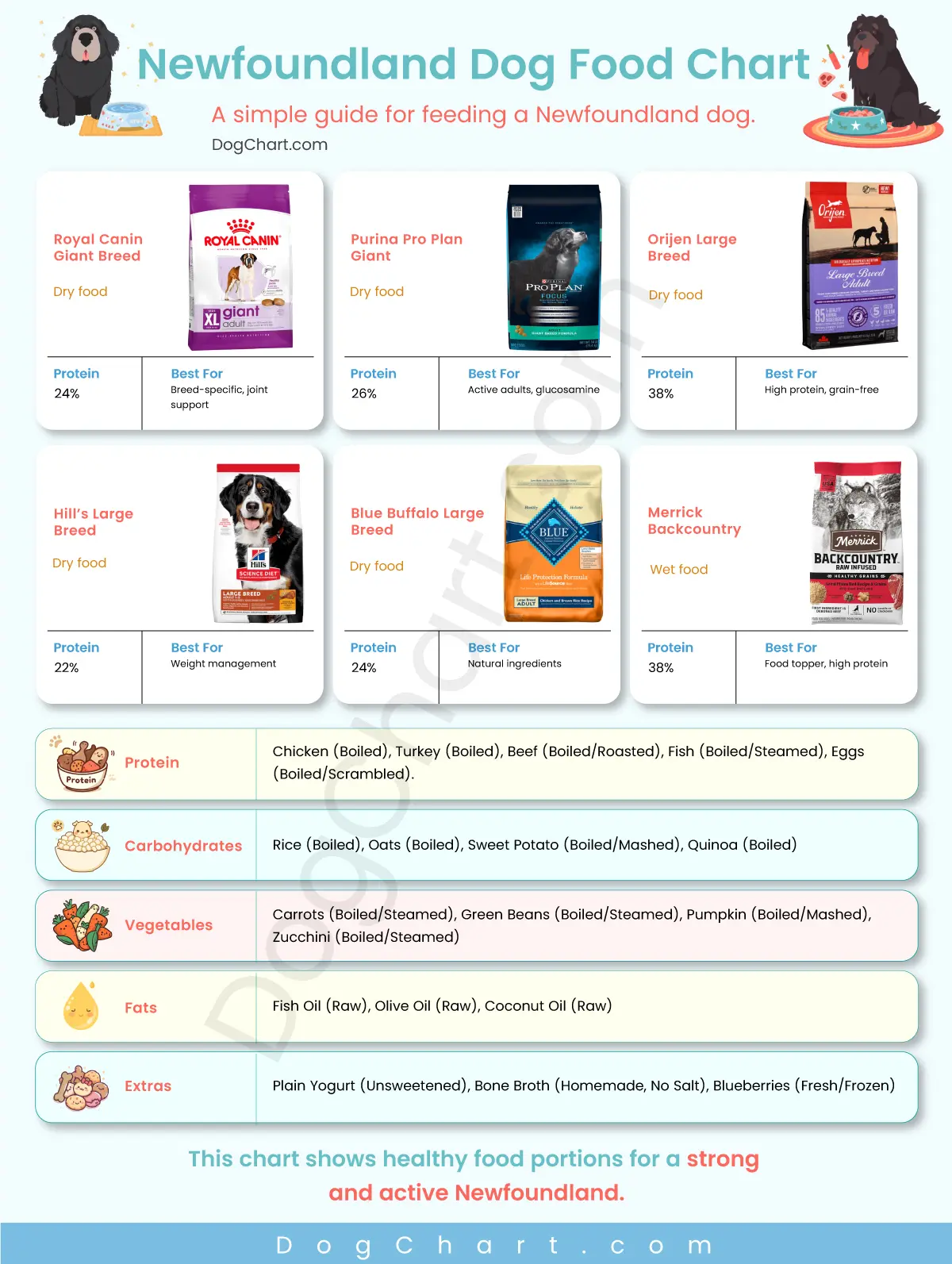
Table of Contents
Newfoundland Feeding Chart by Weight
These amounts are for standard dry dog food with 350–400 kcal per cup. Large breed formulas from brands like Royal Canin, Purina Pro Plan, and Orijen fall in this range. Adjust if you’re feeding a higher-calorie formula.
| Weight (lbs) | Weight (kg) | Daily Food (cups) | Meals/Day |
| 60–80 lbs | 27–36 kg | 3–4 cups | 2 |
| 80–100 lbs | 36–45 kg | 4–5 cups | 2 |
| 100–120 lbs | 45–54 kg | 5–6 cups | 2 |
| 120–140 lbs | 54–63 kg | 6–7 cups | 2 |
| 140–150+ lbs | 63–68+ kg | 7–8 cups | 2 |
A full-grown Newfoundland eats 6–8 cups of food per day. That’s $80–$150 per month on dog food alone. Check your dog’s body condition monthly. If they’re overweight, reduce by half a cup. Track their ideal weight using the Newfoundland weight chart.
Newfoundland Feeding Chart by Age
A Newfoundland puppy grows fast. During puppyhood, they need frequent meals to fuel rapid growth. By four to six months of age, your puppy may already weigh 60–80 lbs.
| Age | Meals/Day | Cups/Day | Food Type | Notes |
| 8–12 weeks | 4 | 2–3 | Large breed puppy food | Controlled calcium for bone growth |
| 3–6 months | 3 | 3–5 | Puppy formula | Fast growth, three meals minimum |
| 6–12 months | 2–3 | 5–7 | Puppy to adult transition | At 6 months of age, reduce meals |
| 1–6 years | 2 | 5–8 | Giant breed adult | Adjust for activity level |
| 7+ years | 2 | 4–6 | Senior dog formula | Lower calories, add joint support |
Feed large breed puppy food until 18–24 months of age. Their bones take longer to mature than smaller dog breeds. The puppy food should be specially formulated for giant and large breed dogs. Switching to adult dog food too early causes growth problems.
A senior dog needs fewer calories but more joint supplements. Watch how much your dog eats. If they leave food around in the bowl, reduce the serving. For a general feeding reference, the dog food chart covers all sizes.
Best Dog Food for Newfoundland Dogs
The best dog food for Newfoundland dogs is a commercial dog food formulated to support large and giant breeds.
Look for a formula with named meat as the first ingredient. The right food for Newfoundland dogs should include taurine for heart health, glucosamine for joints, and antioxidants for immune support.
| Brand | Type | Protein | Best For |
| Royal Canin Giant Breed | Dry food | 24% | Breed-specific, joint support |
| Purina Pro Plan Giant | Dry food | 26% | Active adults, glucosamine |
| Orijen Large Breed | Dry food | 38% | High protein, grain-free |
| Hill’s Large Breed | Dry food | 22% | Weight management |
| Blue Buffalo Large Breed | Dry food | 24% | Natural ingredients |
| Merrick Backcountry | Wet food | 38% | Food topper, high protein |
Both dry food and wet food work. Many dog owners use dry dog food as the base and add a food topper like canned food or bone broth for flavor. Whatever pet food you choose, check the protein and fat levels on the label.
Recommended Natural Food List
| Category | Natural Options |
| Protein | Chicken (Boiled), Turkey (Boiled), Beef (Boiled/Roasted), Fish (Boiled/Steamed), Eggs (Boiled/Scrambled) |
| Carbohydrates | Rice (Boiled), Oats (Boiled), Sweet Potato (Boiled/Mashed), Quinoa (Boiled) |
| Vegetables | Carrots (Boiled/Steamed), Green Beans (Boiled/Steamed), Pumpkin (Boiled/Mashed), Zucchini (Boiled/Steamed) |
| Fats | Fish Oil (Raw), Olive Oil (Raw), Coconut Oil (Raw) |
| Extras | Plain Yogurt (Unsweetened), Bone Broth (Homemade, No Salt), Blueberries (Fresh/Frozen) |
Key Nutrients for Newfoundlands
Protein (22–30%): Supports their massive frame. Named meat sources are best food picks. Avoid lower protein formulas unless your vet recommends it for kidney issues.
Fat (10–15%): Controlled fat prevents obesity. These dogs gain weight easily despite being working dogs by heritage.
Glucosamine and chondroitin: For hip dysplasia prevention. Non-negotiable with this canine giant. Start joint supplements early.
Omega fatty acids: For coat and skin health. Their thick double coat needs nutritious support. A well-fed coat sheds less. The Newfoundland shedding guide covers coat care.
Controlled calcium: For puppies only. Too much calcium causes bone growth problems in giant breeds. The best diet for a Newfoundland puppy keeps calcium balanced.
Fiber and digestible carbs: Sweet potato, rice, and oatmeal are easy on the stomach. Avoid fillers that cause gas, which can increase bloat risk.
Newfoundland Diet Tips
The right Newfoundland diet isn’t complicated. But it does take attention. Here’s what newfies need:
Measure every meal. Don’t free-feed. Newfies will eat until the bowl is empty and then look for more. Use proper food and water bowls sized for giant breeds.
Give your dog two meals per day. Split the daily amount into morning and evening. This reduces bloat risk and keeps energy steady.
See your regular vet twice a year. A vet checkup catches weight issues early. Ask your veterinarian about the healthiest feeding plan for your dog’s age and activity level.
Some newfs do well on a raw diet. Expect to spend $200–$400 per month if you go raw. Consult your vet before starting.
Be careful with grain-free formulas. The FDA flagged a link between grain-free diets high in legumes and heart disease in dogs. Unless your dog has confirmed allergies, grain-inclusive kibble is safer.
Bloat Prevention
Newfoundlands are at high risk for bloat (gastric torsion). The stomach twists and traps gas. It’s a life-threatening emergency.
Feed two smaller meals instead of one large one. Don’t let your dog gets heavy exercise right after eating. Use a slow-feeder bowl if they eat too fast. Avoid raised food bowls. Keep mealtimes calm.
If your dog’s belly looks distended and they seem restless, get to the vet immediately. Many Newfoundland rescue organizations recommend preventive gastropexy surgery for this breed.
Feeding a Newfoundland Puppy
A Newfoundland puppy grows from 10 pounds to over 100 in the first year. That growth demands the right fuel.
Use a large breed puppy food from a trusted brand. Royal Canin, Purina, and Orijen all make puppy food for giant breeds. Check their websites to find a store near you.
Feed four meals a day from 8–12 weeks. Drop to three meals at 3–6 months. By 6–12 months, two to three meals work. Don’t let a puppy go more than 4–5 hours without eating during the first few months.
For how your puppy should grow, the Newfoundland size chart tracks height and weight by age. The Newfoundland temperament page also covers food-related behavior in puppies.
FAQs
How much does it cost to feed a Newfoundland?
$80–$150 per month on dog food. They eat 6–8 cups daily. Premium brands cost more but often have better ingredients.
When should I switch from puppy to adult food?
Between 18–24 months. Giant breeds mature slower than other Newfoundlands. Don’t rush the switch. Ask your breeder or vet for timing guidance.
Can Newfoundlands eat raw food?
Yes, but the volume is massive. Every newf that eats raw needs a balanced recipe. Budget $200–$400 per month. Consult a veterinarian who specializes in canine nutrition.
How do I know if my Newfoundland is eating enough?
Check body condition. Feel the ribs. You should feel them with light pressure. If ribs are visible, increase food. If you can’t feel them, reduce. The dog weight chart helps track ideal weight across all breeds.
What’s the best food for a senior Newfoundland?
A senior dog formula with reduced calories, added glucosamine, and omega-3s. Hill’s Large Breed Senior and Purina Pro Plan Senior are solid picks. For lifespan info, the Newfoundland lifespan page shows how diet affects longevity.