
Bernese Mountain Dog vs Newfoundland – Which Giant Breed Is Right for You?
I’ve met owners of both gentle giants who swear theirs is the best large dog. The Berner people talk about the tri-colored coat and calm indoor presence. The Newf people talk about the swimming and patience with kids.
These two breeds are both massive. Both drool. Both shed enough fur to knit a second dog. But these are different breeds with key differences that matter when choosing the right dog.
This Bernese Mountain Dog vs Newfoundland comparison helps pet owners consider your lifestyle and decide which is the perfect match. Newfoundlands and Bernese are both incredible dogs. Let’s see how they compare.
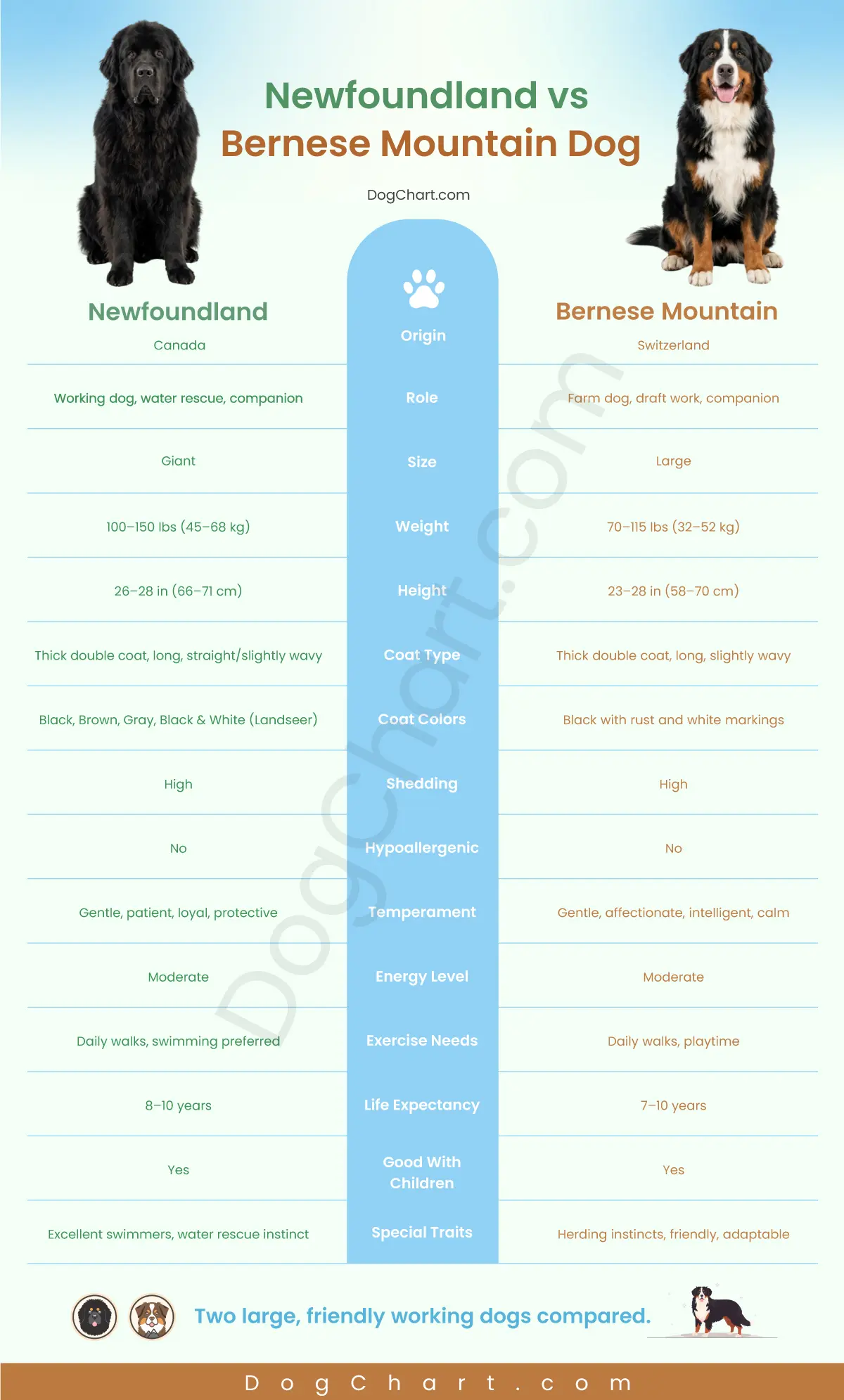
Table of Contents
Newfoundland vs Bernese Mountain Dog
| Feature | Newfoundland | Bernese Mountain Dog |
| Origin | Canada | Switzerland |
| Purpose / Role | Working dog, water rescue, companion | Farm dog, draft work, companion |
| Size | Giant | Large |
| Weight | 100–150 lbs (45–68 kg) | 70–115 lbs (32–52 kg) |
| Height | 26–28 in (66–71 cm) | 23–28 in (58–70 cm) |
| Coat Type | Thick double coat, long, straight or slightly wavy | Thick double coat, long, slightly wavy |
| Coat Colors | Black, Brown, Gray, Black & White (Landseer) | Black with rust and white markings |
| Shedding | High | High |
| Hypoallergenic | No | No |
| Temperament | Gentle, patient, loyal, protective | Gentle, affectionate, intelligent, calm |
| Energy Level | Moderate | Moderate |
| Exercise Needs | Daily walks, swimming preferred | Daily walks, playtime |
| Grooming Needs | Very High (brush 3–4x/week) | High (brush 2–3x/week) |
| Life Expectancy | 8–10 years | 7–10 years |
| Good With Children | Yes | Yes |
| Special Traits | Excellent swimmers, water rescue instinct | Herding instincts, friendly, adaptable |
Size and Weight Comparison
Both are large dog breeds. But they’re not the same size and weight. Here’s the breakdown:
| Trait | Bernese Mountain Dog | Newfoundland |
| Male Height | 25–27.5 inches | 27–29 inches |
| Female Height | 23–26 inches | 25–27 inches |
| Male Weight | 80–120 lbs | 130–150 lbs |
| Female Weight | 70–95 lbs | 100–120 lbs |
| Build | Sturdy, athletic | Massive, heavy-boned |
| Full Maturity | 2–3 years | 2–3 years |
The Newfoundland is bigger. A male outweighs a Berner by 20–40 pounds. Among large breeds, only the Great Dane and English Mastiff are larger.
For detailed measurements, the Newfoundland size chart and Bernese Mountain Dog size chart cover everything.
Origins and History
The Bernese Mountain Dog and the Newfoundland come from very different backgrounds.
The Bernese was originally bred in Switzerland as a farm dog. They pulled carts, guarded livestock, and worked alongside farmers in the Alps. They’re a true working dog.
The Newfoundland dog and the Newfoundland dog name both come from the island of Newfoundland in Canada.
They were bred by Canadian fishermen to help haul nets, retrieve lines, and rescue drowning people. They have webbed feet built for swimming.
Temperament and Personality
| Trait | Bernese (BMD) | Newfoundland (Newf) |
| With Kids | Excellent | Excellent (“nanny dog”) |
| Energy Level | Moderate | Low to moderate |
| Trainability | High, eager to please | High, gentle approach |
| Guarding | Moderate (watchdog) | Low (too friendly) |
| Water Love | Low | Very high |
| Separation Anxiety | Moderate | High |
| Drooling | Moderate | Heavy (slobber) |
Both are affectionate and excellent companions for families. They bond deeply and want to be members of the family, not outdoor-only dogs.
Bernese Mountain Dogs tend to be slightly more alert. They make decent watchdogs and can be reserved with strangers at first. Bernese Mountain Dogs make devoted family companions once they warm up.
Newfoundland dog owners report that newfies are friendly to everyone. They’re too gentle to guard anything. Both breeds are eager to please and great with children and other pets. Early socialization helps both, but it’s more important for the Bernese due to their initial shyness.
On drool: the Newfoundland wins this one. Newfies slobber heavily, especially after drinking. Berners drool less but still more than average dogs.
For deeper personality info, the Newfoundland temperament page covers everything.
Health and Lifespan
Both breeds have short lifespans compared to smaller dogs. That’s the trade-off with large dogs.
| Health Factor | Bernese (BMD) | Newfoundland |
| Lifespan | 7–10 years | 8–10 years |
| Cancer Risk | Very high (histiocytic sarcoma) | Moderate |
| Hip/Elbow Dysplasia | Common | Common |
| Bloat Risk | Moderate | High |
| Heart Issues | Moderate | High (subaortic stenosis) |
| Obesity Risk | Moderate | High |
The major health concern for Berners is cancer. The health issues in the breed include histiocytic sarcoma at alarmingly high rates. For Newfoundlands, the top concern is heart disease, specifically subaortic stenosis.
Both face elbow dysplasia and hip dysplasia. See a veterinarian for regular screening. Pet insurance is worth considering for either giant breed.
For more details, the Newfoundland lifespan page and Bernese Mountain Dog lifespan page cover each breed in depth. The dog life expectancy chart puts both in context.
Grooming and Shedding
Both are furry giants that shed heavily. Newfoundlands and Bernese Mountain Dogs both have thick double coats with a dense undercoat and longer outer coat.
The Newfoundland’s coat is water-resistant. That water-resistant outer layer is oily and can develop a doggy smell. The BMD’s coat is drier and easier to keep clean.
Both need regular brushing 2–3 times per week. During seasonal blowouts, daily brushing helps. Breeds like these require professional grooming every 6–8 weeks.
For shedding specifics, the Newfoundland shedding guide has the full breakdown.
Training and Exercise
Both respond well to positive reinforcement. Neither handles harsh corrections well. Start obedience training early while they’re still small enough to manage.
The Bernese is slightly more high-energy. They enjoy playtime, hiking, and cart-pulling activities. They need daily exercise of 30–60 minutes.
The Newfoundland is calmer. They prefer walks and swimming over intense runs. About 30–45 minutes of daily exercise is enough. If you have access to water, let them swim. It’s their favorite activity.
Neither breed should live in an apartment. Both need space to stretch out. A home with a yard works best.
Coat Colors
The Bernese comes in one pattern: tri-colored (black, white, and rust). No variation.
The Newfoundland comes in black, brown, gray, and Landseer (black and white). For the full color breakdown, the Newfoundland colors guide covers all options including rare colors.
Cost Comparison
| Cost | Bernese (BMD) | Newfoundland |
| Purchase Price | $1,500–$3,500 | $1,500–$3,500 |
| Monthly Food | $80–$120 | $100–$150 |
| Grooming | $60–$100/visit | $70–$120/visit |
| Vet Bills (annual) | $500–$1,500 | $500–$1,500 |
When getting a puppy, buy from a reputable breeder who health-tests hips, hearts, and eyes. Both breeds cost about the same to buy. The Newfoundland costs more to feed because it’s bigger. For the Bernese’s full pros and cons, the Bernese Mountain Dog pros and cons page covers everything.
Which Should You Choose?
Pick the Bernese if: you want a slightly smaller giant, prefer a more active dog, or live in a cold climate. Berners love snow and outdoor work.
Pick the Newfoundland if: you have access to water, want the calmest possible giant, or have young children. Newfs are the ultimate family dog.
Both come down to your needs and preferences. Both need space, grooming, and pet care commitment. Neither is a low-maintenance dog. But both are worth every minute. For the full list of giant dog breeds, the biggest dog breeds chart compares them all.
FAQs
Which is bigger, Bernese or Newfoundland?
Newfoundland. Males weigh 130–150 lbs vs 80–120 for the BMD. They’re also 2–3 inches taller.
Which drools more?
The Newfie. They’re heavy droolers. The Bernese drools less but still more than average.
Which lives longer?
About the same. 8–10 years for the Newf vs 7–10 for the Bernese. The Bernese’s cancer risk pulls their average down.
Can they live together?
Yes. Both are affectionate and get along well with other dogs. Just make sure you have space. That’s 250+ pounds of dog breed.
Which is better for first-time owners?
The Newfoundland. They’re calmer, more patient, and more forgiving of training mistakes. The Bernese can be slightly more stubborn. Both are manageable with socialization and consistency.
Which is better with cats?
Both do well with cats when raised together. The Newfoundland’s lower energy makes them less likely to chase. The Bernese’s affectionate nature means they usually ignore cats.