
Dog Fever Temperature Chart | When a Temp is Normal, Elevated, or a Vet Emergency
My friend Layla panicked one Saturday night when her Beagle, Otis, felt hot and refused dinner. She didn’t own a thermometer, so she drove to a 24-hour animal hospital.
His temperature was 104.2 F. The vet said it was a low-grade fever from a tick-borne infection, treatable with antibiotics, but catching it fast kept it from getting worse.
A dog fever temperature chart tells you what is normal, what counts as a fever, and when to go to the vet. Normal canine body temperature runs 101 to 102.5 degrees Fahrenheit (38.3 to 39.2 Celsius), which is higher than the human range. A reading above 103 F is elevated, and 106 F or higher is a medical emergency.
This guide covers normal and fever temperature ranges in both F and C, how to take a dog’s temperature properly, signs of fever beyond the number, common causes, and when to get emergency help.
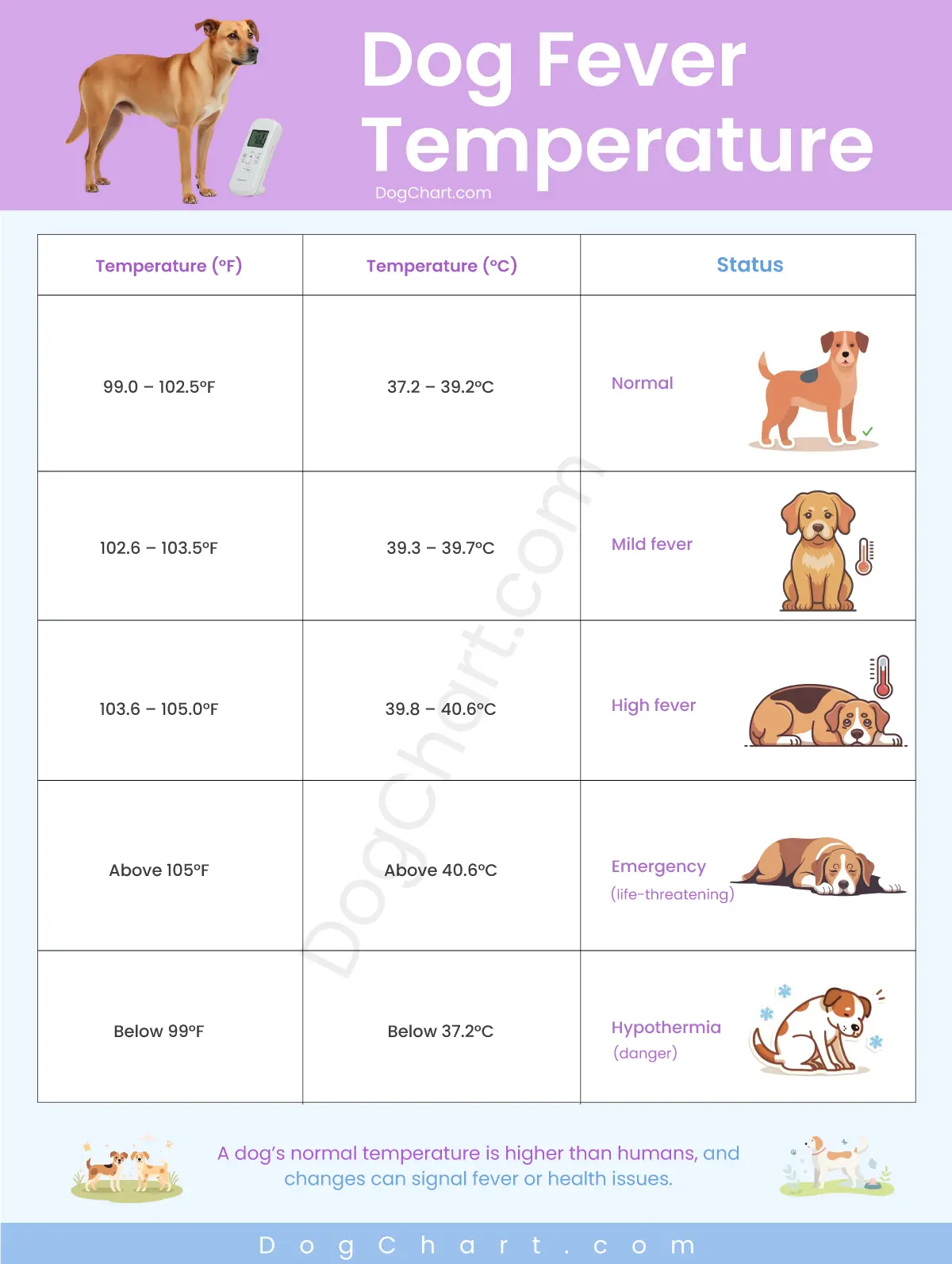
Table of Contents
Dog Fever Temperature Chart
| Attribute | Details |
| Normal range (F) | 99.0 to 102.5 |
| Normal range (C) | 37.2 to 39.2 |
| Mild fever (F) | 102.6 to 103.5 |
| High fever (F) | 103.6 to 105.0 |
| Emergency (F) | Above 105.0 |
| Hypothermia (F) | Below 99.0 |
| How to measure | Rectal thermometer, digital preferred |
| Puppy normal | Slightly lower until 6 weeks of age |
Dog Body Temperature Chart
This dog temperature chart shows the full range from hypothermia through emergency fever. Use both the Fahrenheit and Celsius columns so a quick reading lines up with whatever thermometer you own.
| Temperature (°F) | Temperature (°C) | Status |
| 99.0 – 102.5°F | 37.2 – 39.2°C | Normal |
| 102.6 – 103.5°F | 39.3 – 39.7°C | Mild fever |
| 103.6 – 105.0°F | 39.8 – 40.6°C | High fever |
| Above 105°F | Above 40.6°C | Emergency (life-threatening) |
| Below 99°F | Below 37.2°C | Hypothermia (danger) |
A temperature that runs a bit high after exercise or in hot weather can be normal. Wait 20 minutes and recheck at rest. A steady reading above 103°F is a fever, and it needs action.
Normal Body Temperature for Dogs
Dogs run hotter than we do. A dog’s normal body temperature sits between 99.0 and 102.5°F (37.2 to 39.2°C), well above the human mark. Their metabolism simply runs warmer.
A dog’s temperature shifts with activity, stress, and weather. After a hard run on a hot day, it climbs for 15 to 20 minutes, then settles. Swings of 1 to 2 degrees across the day are normal, so a resting baseline tells you more than one random reading.
Puppies under 4 weeks of age run lower, around 96 to 99°F, because their bodies can’t regulate heat yet. By 6 to 8 weeks of age they reach normal canine temperature. An adult dog settles into the standard range by about 4 months old.
Knowing your dog’s normal temperature helps you spot trouble fast. Take a reading every few months to track a baseline. When something feels off, that known number makes it easy to judge whether a reading is high.
How to Take Your Dog’s Temperature at Home
Taking your dog’s temperature at home takes about two minutes with the right tool. A digital thermometer gives the fastest, most accurate reading. Ear and forehead thermometers exist, but they can be off by 1 to 2 degrees, which is the gap between normal and a mild fever.
Use a digital thermometer made for pets. Coat the tip with petroleum jelly or coconut oil. Lift the tail and slide it about 1 inch into the rectum. Rectal readings are the gold standard, which is why vets rely on them. Hold until it beeps, around 30 to 60 seconds.
Most dogs handle it better with two people, one to distract with a treat. For small dogs, insert only half an inch. Clean the thermometer with alcohol after every use. Many owners keep a second thermometer labelled for the dog so it never mixes with the human ones.
A warm, dry nose alone is not reliable. Noses dry out for all kinds of reasons, including a nap in a sunny spot. The only way to confirm a fever is a thermometer reading.
Signs of Fever in Dogs
Dogs can’t tell us they feel sick, so the body does the talking. Early fever signs are subtle, which is why the thermometer matters. A fever is more likely when several signs show up together.
Common signs include loss of appetite, lethargy, shivering, warm ears and paws, and red or watery eyes. Add vomiting or diarrhea and a fever is more likely still. These signs point to many conditions, so only a thermometer confirms it.
A high temperature means the immune system is fighting something, most often an infection. If your dog still eats and drinks, the cause is likely minor. If your dog goes quiet and skips meals, something more serious may be at work.
| Sign | What It Suggests |
| Warm, dry nose | Possible fever (not reliable on its own) |
| Shivering or shaking | Fever response or chills |
| Loss of appetite | Common with any fever in dogs |
| Lethargy or extra sleeping | General signs of infection |
| Red or watery eyes | Infection, fever |
| Vomiting or diarrhea | Stomach infection, often with fever |
| Warm ears and paws | Elevated temperature |
| Panting at rest | Body trying to cool down |
Causes of Fever in Dogs
The causes of fever in dogs range from minor to life-threatening. Infection is the most common reason a dog’s temperature rises. Bacterial infections, viral infections, and tick-borne diseases all trigger a fever as the body fights off the invader.
A minor infection often clears on its own in 1 to 2 days. A vaccination can spark a fever for 12 to 24 hours as the immune system responds, which is normal. A high temperature that lasts more than 48 hours points to something deeper than a vaccine reaction.
A fever with no clear source is called fever of unknown origin, and it needs blood work and imaging to pin down. Toxins like antifreeze, chocolate, or certain plants can drive a fever alongside other serious signs. Heatstroke can push a body temperature above 106°F within minutes on a hot day, so check the dog heatstroke chart if heat is the likely cause.
| Cause | Common Source | Typical Fever Range |
| Bacterial infection | Wound, UTI, pneumonia | 103 to 105 F |
| Tick-borne disease | Lyme, Ehrlichia, Anaplasmosis | 103 to 105 F |
| Viral infection | Parvo, distemper, flu | 103 to 106 F |
| Vaccination reaction | Normal 12-24 hours post-shot | 102.5 to 103.5 F |
| Inflammatory disease | Pancreatitis, autoimmune | 103 to 105 F |
| Heatstroke | Hot car, exercise in heat | 106+ F |
| Toxin exposure | Antifreeze, rat poison, plants | Varies widely |
| Fever of unknown origin | Needs diagnostic workup | 103 to 105 F |
An elevated temperature above 103°F for more than a few hours means your dog’s fever needs attention. A high fever over 104°F calls for same-day contact with your vet. The higher the reading, the faster you need to act.
When to Call Your Veterinarian
When your dog has a temperature at or above 103°F at rest, it is time to call your veterinarian. Below that, most mild cases are worth monitoring at home. Veterinary care becomes critical as readings climb past 104°F, especially if your dog is lethargic or refusing food.
Call right away if the fever comes with other symptoms like vomiting, bloody stool, or seizures. These combinations can point to toxin exposure or a severe infection that needs immediate attention. Never give human fever medications to a dog. Tylenol, ibuprofen, and aspirin are all toxic to dogs and can cause organ failure.
For readings at or above 105°F, skip the regular vet and go straight to an emergency vet. Organ damage can start within hours at that temperature. Hypothermia below 99°F is just as urgent. Small dogs and puppies under 8 weeks of age lose heat fast, so any below-normal reading in them needs emergency care.
| Scenario | Action |
| Temp 102.6-103.5°F, dog alert | Monitor, recheck in 2-4 hours |
| Temp 103.6-105°F, dog lethargic | Call your veterinarian same day |
| Temp above 105°F | Emergency vet immediately |
| Fever in a puppy under 12 weeks of age | Same-day veterinary care |
| Fever plus vomiting or bloody stool | Emergency vet |
| Fever plus seizures or stiff neck | Emergency vet |
| Temp below 99°F | Emergency for hypothermia |
| Suspected heatstroke | Cool with wet towels, emergency vet |
See our dog temperature chart for the full body temperature guide, the dog gum color chart for checking hydration when your dog is unwell, and the dog dehydration chart if heatstroke is a concern.
Frequently Asked Questions
What is a normal temperature for a dog?
A normal temperature for a dog is 99.0 to 102.5°F (37.2 to 39.2°C). That is higher than the human normal of 98.6°F. Puppies under 4 weeks of age run a little lower because they can’t fully regulate body heat yet.
At what temperature is a dog considered to have a fever?
A dog has a fever at any reading above 102.5°F. A temperature above 103°F is a clear low-grade fever. Anything above 104°F is a high fever and needs a vet visit the same day.
How can I tell if my dog has a fever without a thermometer?
Look for lethargy, loss of appetite, shivering, warm ears, and red eyes. Together, these point to a fever. The warm-nose test is not reliable on its own. The only way to confirm is a rectal temperature reading.
Can I give my dog Tylenol for a fever?
No. Acetaminophen (Tylenol), ibuprofen, and aspirin are all toxic to dogs in typical human doses. They can cause liver failure, kidney damage, or fatal red blood cell problems. Only use medications prescribed by your veterinarian.
What should I do if my dog’s temperature reaches 104?
A temperature of 104°F is a high fever. Call your veterinarian the same day. Keep your dog calm, offer water, and skip the human medications.
Where can I learn more about my dog’s health?
For breed-specific health info, see our dog breeds chart and our dog life expectancy chart.