
Akita Dog Colors – Every Coat Color and Pattern Explained
I saw a pure white Akita at a dog show that stopped me in my tracks. Against the other dogs in the ring, she looked like a polar bear.
Then in the next ring, a brindle American Akita with a black mask that looked like he’d been dipped in tiger stripes. Same breed family, completely different look.
Akita colors vary depending on whether you’re looking at a Japanese Akita Inu or an American Akita. The Japanese standard is strict with limited accepted colors. The American standard allows far more variety. This guide covers every color, pattern, and marking for both types.
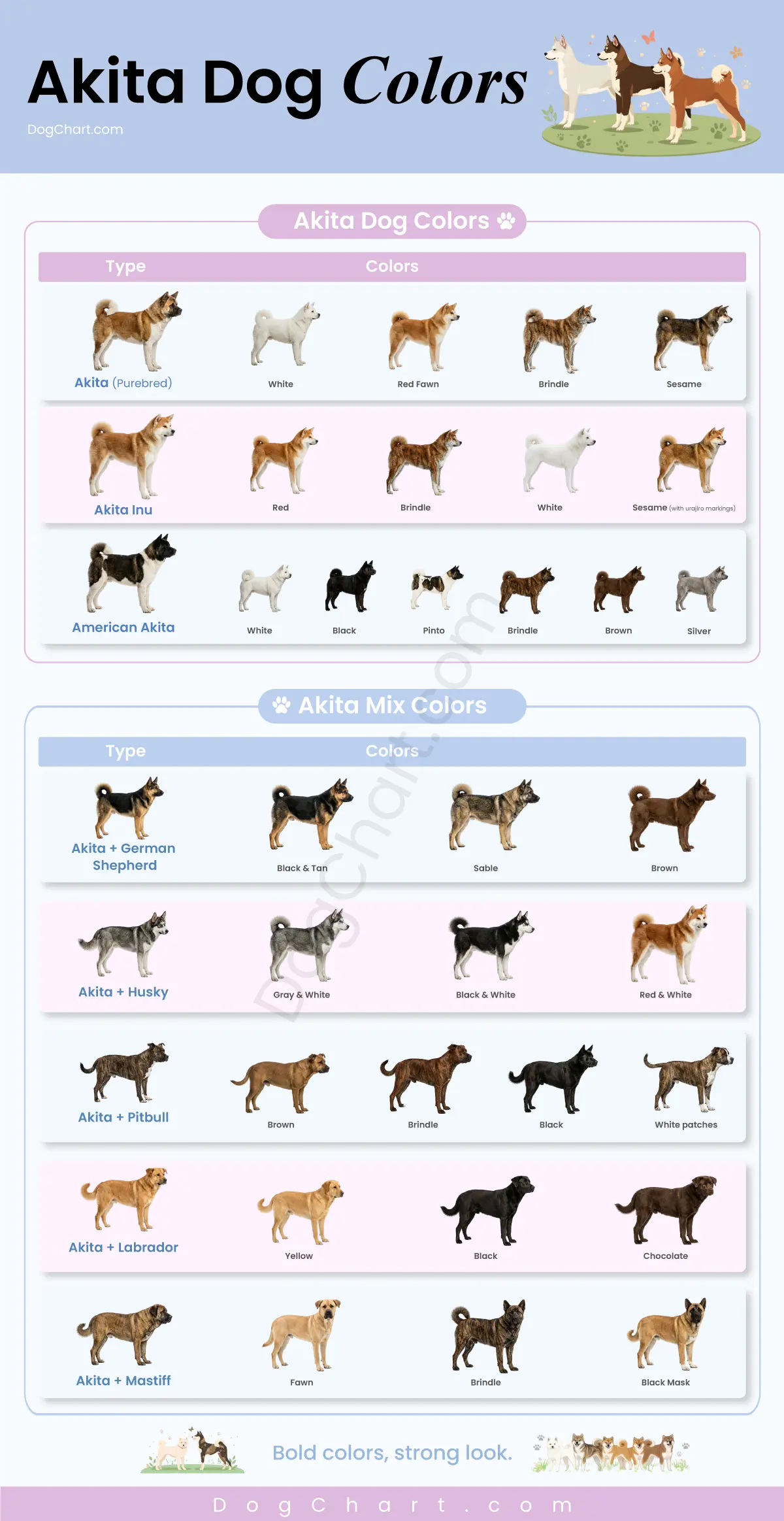
Table of Contents
Akita Color Chart
| Type | Accepted Colors |
| Japanese Akita Inu | Red fawn, brindle, white, sesame |
| American Akita | Any color including black, pinto, brown, sable |
| Rarest color | White (both types), sesame (Japanese) |
| Most common | Red fawn (Japanese), brindle (American) |
| Mask | Required in American, not in Japanese |
| Coat type | Thick double coat with dense undercoat, both types |
Japanese Akita Inu Colors
The Japanese Akita standard is strict. The Japan Kennel Club and its affiliated organizations accept four color groups.
| Color | Description |
| Red Fawn | Rich reddish-tan, the classic red Akita color |
| Brindle | Tiger-stripe pattern with black stripes on a base color |
| White | Pure solid white, no other markings or black overlay |
| Sesame | Red with black-tipped guard hairs (rare shaded sable) |
All Japanese Akitas except white must have “urajiro.” This means cream to white markings on the chest, muzzle sides, cheeks, jaw undersides, belly, tail underside, and inner legs. The Japanese breed standard requires this pattern.
Sesame is the rarest Japanese Akita color. True sesame needs a precise ratio of black-tipped hairs to base color. Dogs labeled “sesame” are more likely red or brindle Akitas with light tipping. Brindle shades in the Japanese standard range from light fawn brindle to dark black stripes.
American Akita Colors
| Color | Description |
| Brindle | Tiger-stripe pattern, most common, includes brindle pattern variations |
| Pinto | Large patches of color on white (also called piebald) |
| Red Fawn | Rich reddish-tan |
| Black | Solid black or black with markings |
| Brown | Rich brown, with or without black mask |
| White | Pure white, no mask required |
| Silver Fawn | Light silvery fawn, uncommon |
| Fawn | Lighter tan, common standard color |
The AKC breed standard for the American Akita accepts any color. The American Kennel Club’s color list is far broader than the Japanese version. Black Akitas, pinto patterns, and dark masks all qualify.
Masks are common in American Akitas. A black mask over the face creates their bear-like look. White Akitas are the one exception. No mask appears on solid white dogs because they lack black pigment entirely.
Akita Coat Color Genetics
An Akita’s coat gets its colors from two pigment types: eumelanin (black) and phaeomelanin (red). Eumelanin gives color depth to masks, brindle stripes, and black noses. The mix of these two pigments produces every color you see in the breed.
Recessive red is the gene behind red fawn Akitas. Recessive black produces solid black Akitas. White Akitas carry recessive red with extreme white spotting that covers their base color.
The white spotting gene creates pinto patterns and residual white on brindle chests. It also produces the rare solid white coat. Coat color genetics in this breed are stable. Most breeders skip color genetics testing for this reason.
The brindle pattern is dominant. A single brindle parent will produce some brindle puppies in most litters. Sable and shaded sable patterns show up when modifier genes lighten the base coat. For a coat colors overview across other breeds, standard rules vary by parent club.
Nose and Eye Colors
Most Akitas have a black nose regardless of coat color. White Akitas are the exception and may show a liver or pink nose from lack of black pigment. Blue eyes are a disqualification. The breed standard calls for dark brown.
Brown Akitas tend to have lighter eye and nose pigment. The AKC standard accepts this but considers it less desirable in the show ring. Black pigment around the nose and eyes gives the Akita its alert, focused look.
Does Color Affect Price, Temperament, or Health?
Price: Yes. White and sesame Akitas command premiums of $500 to $1,500 above standard colors because supply is lower. The Akita price guide covers pricing by color.
Temperament: No. Color has zero effect on personality. A brindle Akita acts the same as a white one. The Akita personality page covers temperament details.
Health: Minimal. Unlike breeds where merle or extreme white causes deafness or eye problems, Akita coat colors are genetically stable. No color carries known health risks.
Coat Type and Grooming
All Akitas have a thick double coat regardless of color. The outer coat is straight and harsh. The undercoat is dense and soft. This combination protected them in northern Japan’s harsh winters.
They shed year-round and “blow” coat twice a year in spring and fall. During blow coat, you’ll find enough fur to build a second dog. Daily brushing during these periods is non-negotiable. Regular grooming every 6 to 8 weeks keeps the coat manageable between blow outs.
White Akitas show dirt faster and need more frequent bathing. Dark-colored Akitas show less dirt but shed the same amount.
Akita Puppy Color Development
Akita puppies change color as they mature. A puppy that looks red fawn at 8 weeks will darken to a richer red by 12 months. Brindle patterns intensify or soften as the adult coat grows in. Fawn Akitas lighten with age, while sable puppies darken.
White Akita puppies are born white and stay white. Their color is locked from birth. Sesame puppies are the hardest to predict because the black tipping develops over the first year.
The adult coat settles by 12 to 18 months, though some shifts continue until age 2. If you’re buying a puppy for a specific color, ask the breeder to show you the parents and previous litters.
Urajiro: The Required Japanese Akita Marking
Urajiro is one of the most distinct features of the Japanese Akita Inu. It refers to cream or white markings on specific body parts: cheeks, muzzle sides, jaw undersides, chest, belly, tail underside, and inner legs.
Without urajiro, a Japanese Akita fails the breed standard. Whites are the exception since they are entirely white. This pattern is genetically linked to red, brindle, and sesame coats. It gives the Japanese Akita its clean, refined look.
American Akitas don’t need urajiro. Their colors and markings are less regulated by the AKC. You’ll see white on the chest of many American dogs, but the standard doesn’t demand it.
Akita Color and Breeder Selection
Don’t choose a breeder based on color alone. A breeder who pushes “rare” colors at premium prices but lacks health clearances is a red flag. Color is cosmetic.
Health testing, temperament, and structure matter more. The Akita Club of America and its affiliated partners maintain breeder directories worth checking.
If you want a white or sesame Akita, expect to wait longer. These colors appear less frequently in litters. Waiting lists at quality breeders run 6 to 12 months. For the full list of types and mixes, the Akita breed list covers every recognized variety.
FAQs
What colors do Japanese Akitas come in?
Red fawn, brindle, white, and sesame. All except white must have urajiro (cream/white underside markings).
What’s the rarest Akita color?
True sesame in Japanese Akitas. For American Akitas, solid black and silver fawn are less common.
Do all American Akitas have black masks?
Most do, but white Akitas are the exception. The American breed standard accepts masks but does not require them.
Does coat color affect shedding?
No. All colors shed the same amount. The thick double coat sheds year-round regardless of color. The Akita lifespan page covers longevity, and the Akita breed page has the full breed overview.