
Akita Lifespan – How Long Do Akitas Live?
My neighbor’s Akita turned 13 last year. He’s slower now, grayer around the muzzle, and prefers short walks over hikes. But he still patrols the yard every morning like it’s his job. For a breed this large, 13 is a gift. Most large dogs don’t get there.
The average Akita lifespan is 10 to 14 years. That’s good for a breed weighing 70 to 130 lbs (32 to 59 kg). They’re healthy dogs with a few breed-specific conditions to watch for. With proper care, many reach 12 to 13 years without major health problems.
This guide covers how long Akitas live by type and mix, common health issues, and what you can do to maximize your dog’s years.
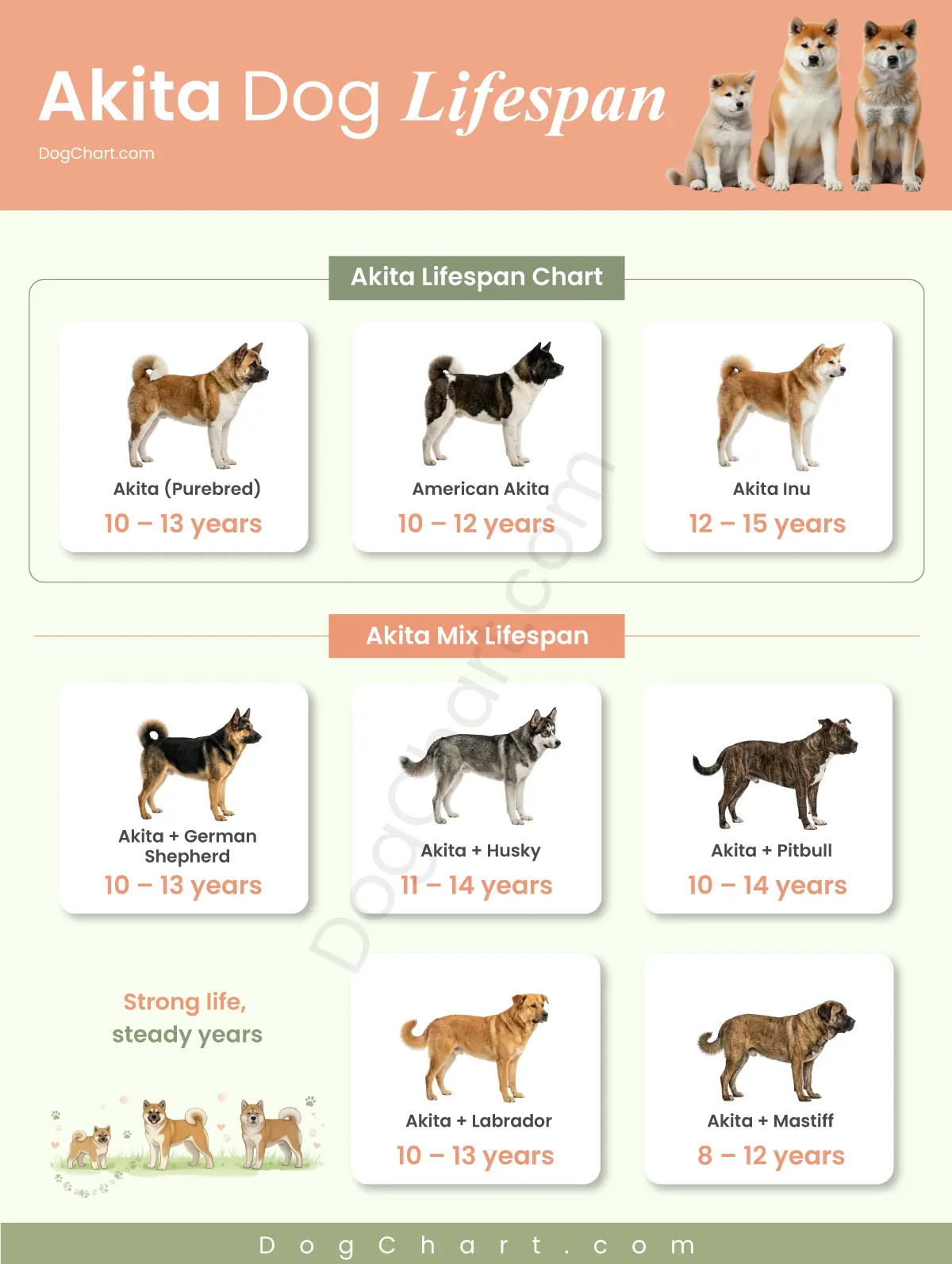
Table of Contents
Akita Lifespan Chart
| Factor | Details |
| Average lifespan | 10 to 14 years |
| Japanese Akita Inu | 12 to 15 years |
| American Akita | 10 to 12 years |
| Senior age | Starts around 7 to 8 years |
| Biggest killer | Cancer and autoimmune disease |
| Most preventable killer | Bloat (GDV) and obesity |
| Spay/neuter effect | Adds 1 to 2 years on average |
| AKC recognition | 1972 |
Akita Lifespan Chart by Type
How long Akitas live depends on which type you have. The Akita is a large Japanese dog breed with two recognized varieties. Each has a different average lifespan.
| Dog Type | Lifespan |
| Akita (Purebred) | 10 to 13 years |
| American Akita | 10 to 12 years |
| Akita Inu (Japanese) | 12 to 15 years |
The Japanese Akita Inu lives the longest, reaching 15 years in well-cared-for lines. Japanese Akitas share the health advantages of other spitz-family breeds like the Shiba Inu.
The American Akita’s larger size cuts its lifespan by 2 to 3 years. This follows the pattern seen in all big dogs. Smaller variants within a breed outlive bigger ones.
Akita Mix Lifespan
Akita mixes gain from hybrid vigor, which extends life compared to purebreds. The Akita’s size and the other parent breed both shape the final number.
| Mix Type | Lifespan |
| Akita + German Shepherd | 10 to 13 years |
| Akita + Husky | 11 to 14 years |
| Akita + Pitbull | 10 to 14 years |
| Akita + Labrador | 10 to 13 years |
| Akita + Mastiff | 8 to 12 years |
The Akita + Husky mix tops the chart. Both parent breeds are healthy and share similar builds. The Akita + Mastiff cross lives the shortest because mastiffs carry heavy health loads and their size compounds the Akita’s own risks.
Common Health Issues
Akitas are prone to several breed-specific conditions. Some are more common in Akitas than in other breeds. Here’s what to watch for.
| Condition | How Common | Impact |
| Hip Dysplasia | Very Common | Joint pain, mobility issues |
| Autoimmune Thyroiditis | Common | Weight gain, skin issues, lethargy |
| Bloat (GDV) | Moderate risk | Emergency, fatal within hours |
| Progressive Retinal Atrophy | Moderate | Gradual vision loss |
| Sebaceous Adenitis | Moderate (Akita-specific) | Skin disease, hair loss |
| Cancer | Common in seniors | Various types, leading cause of death |
| Hypothyroidism | Common | Weight gain, coat issues |
| Von Willebrand’s Disease | Rare | Bleeding disorder |
Autoimmune thyroiditis hits Akitas harder than most breeds. The immune system attacks the thyroid gland. Symptoms include weight gain, lethargy, skin infections, and ear infections.
If your Akita shows chronic itching or sudden weight changes, get a thyroid panel. Blood tests catch it early, and medication manages it well.
Sebaceous adenitis is a skin condition near-unique to this breed. It destroys the oil glands in the skin, causing scaling, hair loss, and secondary infections. It’s manageable but not curable. See your vet if you notice flaky patches or thinning fur along the back.
Bloat (gastric dilatation-volvulus) is the most dangerous acute condition. A deep-chested breed like the Akita faces high risk.
The stomach twists and blood supply gets cut off within hours. Feed multiple small meals, avoid exercise after eating, and learn the signs: restlessness, distended abdomen, unproductive retching. The Akita food guide covers feeding strategies that reduce bloat risk.
How to Help Your Akita Live Longer
Focus on prevention, not treatment. Here’s what works.
Keep them lean. Overweight large dogs lose years. Maintain a visible waist and easy-to-feel ribs. Every extra pound stresses joints and heart. Feed the right amount based on weight and activity, not what the bag says.
Feed quality food. Large-breed formulas with controlled calcium and adequate protein work best. The Akita food guide covers brands and portions. Feed twice a day, not free-fed.
Regular vet visits. Twice a year for adults is standard. Annual bloodwork catches thyroid disease, organ issues, and early cancer markers. Akitas need thyroid screening every 1 to 2 years.
Exercise consistently. One to two walks daily plus mental stimulation meets most Akitas’ needs. Aim for two hours of moderate activity spread across the day. No extreme exercise. Steady movement that maintains muscle without stressing joints.
Dental care. Dental disease affects the heart. Brush teeth 2 to 3 times per week.
Prevent bloat. Feed 2 to 3 meals per day. No exercise 1 hour before or after eating. Use slow-feeder bowls.
Buy from health-tested lines. OFA hip clearances, CERF eye tests, and thyroid panels matter. The Akita Club of America maintains a breeder directory with health-tested lines.
The Akita price guide explains what to expect from reputable breeders. For general breed comparisons, the dog life expectancy chart covers every breed, and the biggest dog breeds page ranks by size.
Socializing and Training for a Long Life
Akitas are intelligent dogs that need early training. Socializing your Akita from 8 weeks onward reduces stress, anxiety, and reactivity later in life. Chronic stress weakens the immune system and shortens lifespan.
Take your Akita to obedience class, controlled group walks, and dog park visits if your dog is friendly with other dogs. Akitas are selective with other dogs, so read your dog’s signals. Some Akitas do well at dog parks. Others don’t. Don’t force it.
Helen Keller is credited with bringing the Akita to America. She received an Akita puppy named Kamikaze-Go during her 1937 visit to Japan. The breed has been in the US ever since. The AKC recognized the Akita in 1972, and its history as one of the oldest purebred dogs in Japan contributes to its overall health stability.
Senior Akita Care
Senior Akitas need adjusted care. Gray muzzle, slower walks, more naps, and stiffness after resting are normal signs of aging. These start around 7 to 8 years, earlier than in smaller breeds.
Watch for sudden weight loss, loss of appetite, new lumps, difficulty breathing, or confusion. These signal something beyond normal aging. Senior Akitas do well with orthopedic beds, joint supplements (glucosamine + chondroitin), ramps instead of stairs, and softer food if dental issues develop.
Keep your Akita mentally engaged with puzzle toys and short training sessions. Akitas need mental work as much as physical exercise in their senior years. This is a one-family dog that thrives on consistency.
Akita Puppy Care for Long-Term Health
The foundation for a long life starts early. Akita puppies grow fast, and overfeeding during the first year causes joint problems that shorten life. Feed a large-breed puppy formula until 14 to 18 months. Limit high-impact exercise until growth plates close at 18 to 24 months.
Early socialization matters more for this breed than most. Expose your puppy to people, other dogs, car rides, vet visits, and different environments before 16 weeks. Akitas that miss this window become reactive adults. Reactive adults live shorter, more stressful lives.
Start health monitoring early. Baseline bloodwork at 1 year, thyroid screening at 2 years, and hip X-rays by age 2 give you a reference point for the rest of the dog’s life. That’s standard for a breed with known health risks. For temperament details, the Akita personality guide covers training approaches.
FAQs
How long do Akitas live?
10 to 14 years on average. Japanese Akita Inus live longer than American Akitas because of the size difference between the two varieties.
What’s the biggest health risk for Akitas?
Autoimmune thyroiditis and cancer for long-term risk. Bloat is the biggest acute emergency. Regular vet screenings catch most issues early. Thyroiditis is more common in Akitas than in any other Japanese dog breed.
Do female Akitas live longer than males?
Yes, by 1 to 2 years on average. Males are larger and carry more joint stress, which shortens their lifespan.
Which Akita mix lives longest?
The Huskita (Akita x Husky) at 11 to 14 years. Both parent breeds are healthy, and hybrid vigor helps.
What’s the oldest Akita on record?
Verified cases around 15 to 16 years exist but are rare. Most Akitas live 10 to 14 years. The Akita colors page has coat information and the Akita breed page has the full breed overview.