
Best Dog Food for Akita – Complete Feeding Guide
An Akita owner I know switched from grocery-store kibble to a premium large-breed formula. Within six weeks, the dog’s coat went from dull and patchy to thick and glossy.
The skin allergies that had been causing weekly vet visits cleared up. “The food change cost me $30 more per month,” she said. “But I was spending $200 a month on allergy meds before.”
Finding the best dog food for Akita matters. Akitas are large, powerful dogs originally bred in northern Japan for hunting large game.
Their energy requirements and nutritional needs are higher than most breeds. This guide covers everything Akita owners and dog owners need.
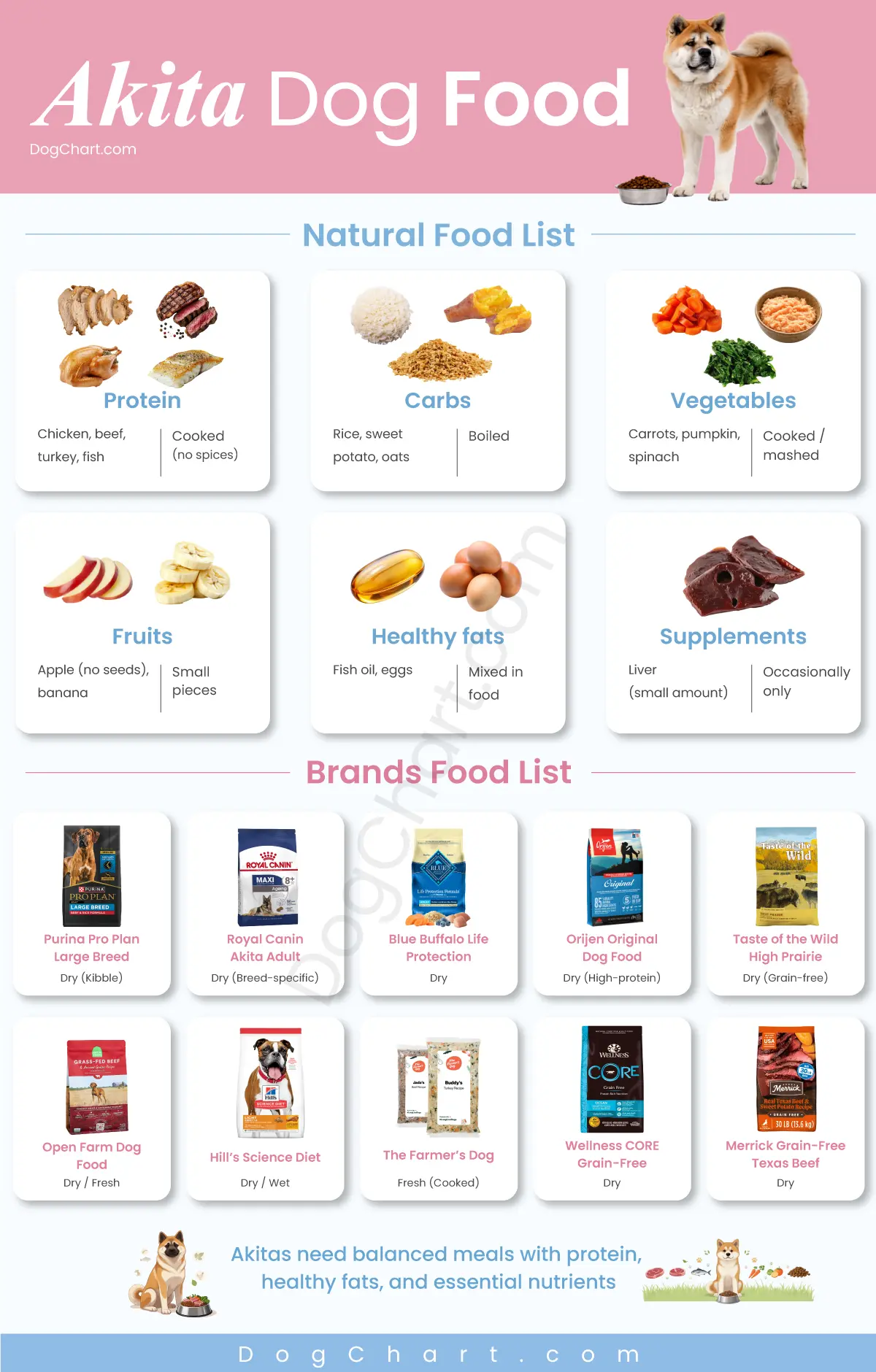
Table of Contents
Top 10 Best Dog Food Brands for Akitas
These are the top food for Akitas approved by veterinarians. The American Kennel Club recommends high-quality animal protein as the first ingredient.
Most working dogs and highly active Akitas thrive on these formulas because they balance protein, fat, and joint-supporting nutrients.
| Product Name | Type |
| Purina Pro Plan Large Breed | Dry (Kibble) |
| Royal Canin Akita Adult | Dry (Breed-specific) |
| Blue Buffalo Life Protection | Dry |
| Orijen Original Dog Food | Dry (High-protein) |
| Taste of the Wild High Prairie | Dry (Grain-free) |
| Open Farm Dog Food | Dry / Fresh |
| Hill’s Science Diet | Dry / Wet |
| The Farmer’s Dog | Fresh (Cooked) |
| Wellness CORE Grain-Free | Dry |
| Merrick Grain-Free Texas Beef | Dry |
Purina Pro Plan is the most commonly recommended dry dog food for this breed. The Royal Canin American Akita formula is designed specifically for the breed’s body shape and digestive system.
If you’re comparing brands by cost, our Akita price guide covers monthly food budgets alongside other ownership costs.
Natural Food List for Akitas
If you prefer cooking at home, this list shows safe ingredients that meet a canine’s nutritional needs. Always rotate proteins and vegetables to give your dog variety. Never feed your Akita human food prepared with onions, garlic, salt, or spices.
| Food Type | Examples | Form / How to Give |
| Protein | Chicken, beef, turkey, fish | Cooked (no spices) |
| Carbs | Rice, sweet potato, oats | Boiled |
| Vegetables | Carrots, pumpkin, spinach | Cooked / mashed |
| Fruits | Apple (no seeds), banana | Small pieces |
| Healthy fats | Fish oil, eggs | Mixed in food |
| Supplements | Liver (small amount) | Occasionally only |
Sweet potato is excellent for digestion and helps produce firm stool. Pumpkin works the same way and is gentler on sensitive stomachs.
Bone broth adds hydration and minerals when poured over kibble. Akita puppy diets benefit from added eggs because the protein and biotin support coat development during the first year.
Feeding Chart by Age and Weight
Follow these feeding guidelines based on body weight and activity level. An adult dog at 100 lbs needs 4–6 cups of kibble daily.
Highly active Akitas working on farms or competing in weight pull need more, sometimes up to 7 cups. Couch-potato pets need less. Always adjust based on body condition rather than chart numbers alone.
| Age | Meals/Day | Amount |
| 8–12 weeks | 4 | 2–3 cups puppy food |
| 3–6 months | 3 | 3–4 cups |
| 6–14 months | 2–3 | 4–5 cups |
| 14mo–7 yr | 2 | 4–6 cups adult |
| 8+ years | 2 | 3.5–5 cups senior |
Use large breed puppy food until 14–18 months. Breed puppies need controlled calcium and phosphorus ratios to support bone development.
Switching to adult food too early can cause rapid growth spurts that stress developing bones and joints, leading to long-term joint problems. For weight tracking by age, the dog weight chart has reference values.
Key Nutrients Akitas Need
High-quality protein at 24–30% protein levels from named meats like chicken, beef, salmon, or lamb should be the first ingredient. Avoid foods that list “meat by-products” or generic “animal meal” as the primary source.
Omega-3 fatty acids from salmon oil help maintain healthy skin and coat condition for the double coat. A glossy outer coat is one of the first signs the food is working.
Glucosamine and chondroitin support joint health and bones and joints. Akitas are prone to hip dysplasia, so glucosamine plus chondroitin supplements should start at age 2–3 even if you don’t see symptoms yet. The Akita lifespan guide covers other breed-specific health concerns.
Phosphorus balanced with calcium supports skeletal health throughout adulthood. A probiotic supports the digestive system and produces firmer stool. Look for formulas with added probiotics or add a daily supplement.
Bloat Prevention
Bloat (gastric dilatation-volvulus) is deadly in deep-chested breeds. The risk of bloat is high in Akitas because of their chest shape. To prevent bloat, feed 2–3 smaller meals and frequent meals instead of one large meal. Avoid free-feeding because it lets dogs eat too fast.
Avoid vigorous exercise 1 hour before and after eating. Always provide fresh water but don’t let them gulp it down after meals. Use slow-feeder bowls that force the dog to work for each bite. These bowls cost $15–$30 and can save you from a $5,000 emergency surgery bill.
Raw, Wet, and Canned Food Options
Raw food and raw diet options work for many Akitas. Raw meat, organs, and bones support lean muscle and provide natural enzymes that some commercial foods lack. Bone broth adds hydration and nutrients. Budget $250–$450 per month for a fully raw program.
Wet food and canned food work as toppers for picky eaters. Mix a tablespoon or two with dry kibble for variety and added moisture.
Grain-free and grain free options exist but consult your veterinarian first. The FDA flagged grain-free diets for potential heart concerns in some breeds, so this is worth a conversation before switching.
Allergies and Sensitive Stomachs
Akitas often need novel proteins like salmon, duck, or venison. Responsible breeders screen for food sensitivities in their lines, but allergies can still develop later.
If you feed your Akita chicken and notice itching, ear infections, or hot spots, switch proteins. Feeding your dog fish-based formulas often solves skin issues within 4–6 weeks.
Monitor body condition and portion control closely. Akitas gain weight easily because their activity level varies day to day. You should be able to feel ribs without pressing hard but not see them. If your dog’s waist is disappearing, cut food daily portions by 10–15%.
FAQs
How much food daily for an Akita?
4–6 cups food daily split into 2 meals for a 100-lb adult. Adjust based on activity level and body condition.
Are Akitas food motivated?
Yes, most Akitas are food motivated, which helps training. Use small high-value treats during sessions and subtract that amount from meals.
Best food for Akita lifespan?
Premium large-breed kibble improves lifespan and overall health markers. The Akita lifespan page covers longevity and the dog food chart has general guidelines.
Can I give my Akita an American Akita formula?
Royal Canin makes a breed-specific formula for the American Akita. The Akita personality page covers temperament and the Akita breed guide has full breed details.