
Akita Personality – What Living with an Akita Is Really Like
My uncle’s Akita used to sit by the front door every evening waiting for him to come home from work. Not excited-dog-spinning-in-circles waiting. Just sitting. Calm. Watching. And when the door opened, one slow tail wag and a lean into his leg.
That was it. That was the whole greeting. If you’re used to Labs, this breed will confuse you. If you understand them, that quiet lean means everything.
The Akita dog breed has a personality unlike most dogs. If you want to learn about the Akita and their akita temperament, this breed information guide covers it all.
The Akita is a loyal dog – quiet, dignified, and fiercely devoted. The Akita is a large, powerful large dog that doesn’t seek approval from strangers and doesn’t bounce off walls.
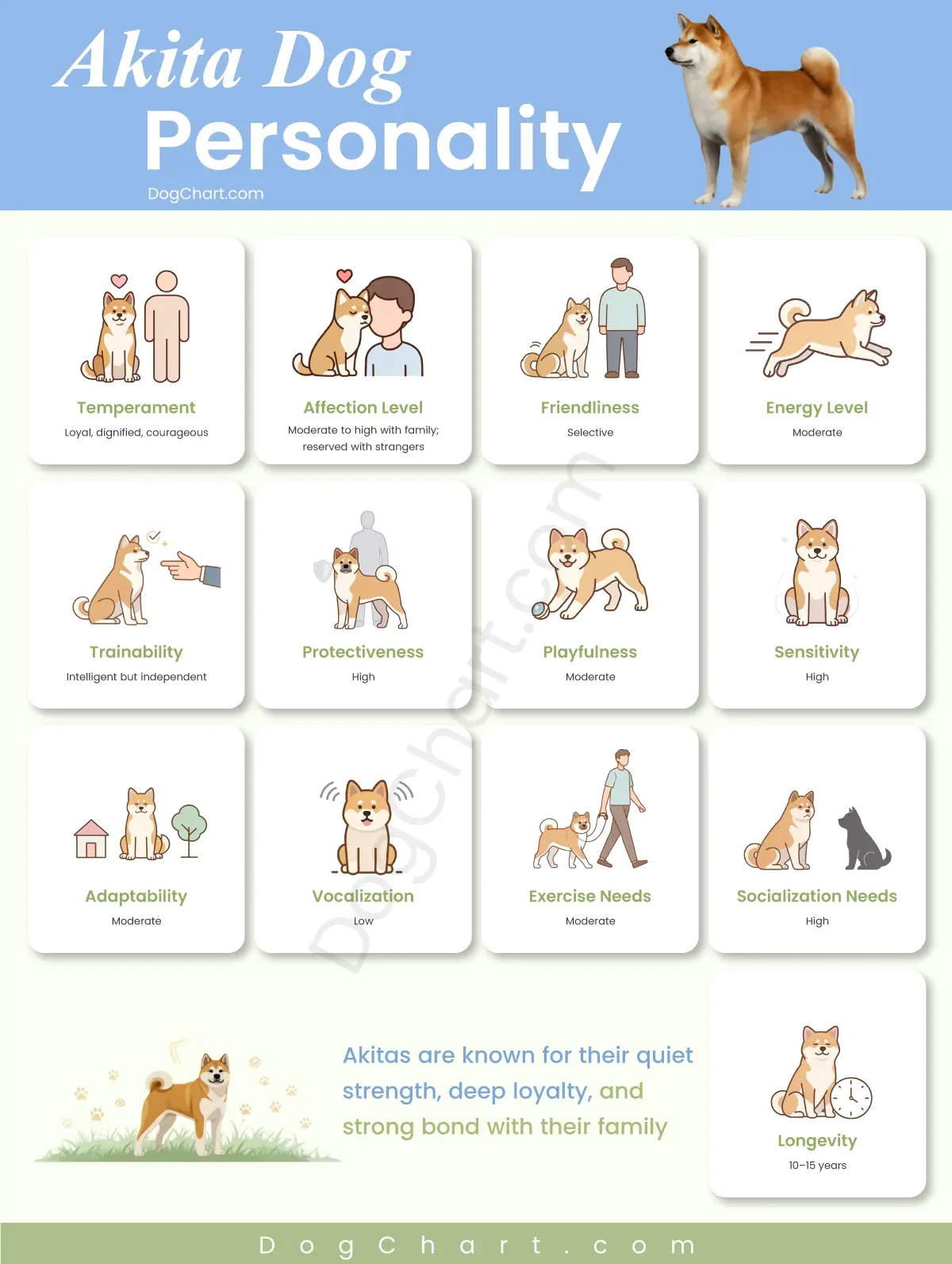
Table of Contents
Akita Personality Traits Chart
| Trait | Description | Notes |
| Temperament | Loyal, dignified, courageous | Strong bond with family, protective |
| Affection Level | Moderate to high with family | Reserved with strangers, aloof toward outsiders |
| Friendliness | Selective | Not social with other dogs unless socialized early |
| Energy Level | Moderate | Daily walks and play, not hyperactive |
| Trainability | Intelligent but independent | Consistent, firm training; may be stubborn |
| Protectiveness | High | Natural guardians of home and family |
| Playfulness | Moderate | Enjoy play with family, not constantly active |
| Sensitivity | High | Responds to positive reinforcement, not harsh corrections |
| Adaptability | Moderate | Prefers space but can live in apartments if exercised |
| Vocalization | Low | Not barky, will alert when necessary |
| Exercise Needs | Moderate | Regular walks and mental stimulation essential |
| Socialization Needs | High | Early socialization with people and pets is critical |
| Longevity | 10–15 years | Healthy lifestyle and diet improve lifespan |
Loyalty and the One-Family Bond
The Akita is a loyal and protective breed that bonds deeply with family. They’re intensely protective of their family and form a one-person or one-family attachment that runs deep. This is a loyal breed in every sense.
In ancient Japanese culture, Akitas were protectors and symbols of good fortune. Families gave Akita statues as symbols of good health and happiness to new parents. The most famous Akita, Hachiko, waited at a Tokyo train station every day for nearly 10 years after his owner passed.
American soldiers brought the first Akita to the United States after World War II. The breed’s loyalty and affectionate nature with family made them popular despite their reserved temperament with outsiders.
With Strangers
Akitas are wary of strangers and naturally aloof with strangers. Not aggressive. Not fearful. Just aloof and uninterested. A delivery driver gets a long stare. A houseguest gets a brief sniff and then distance.
This makes them excellent natural guard dogs. They don’t bark at every noise. When an Akita does bark, something is actually wrong. They’re also remarkably clean dogs – they groom themselves almost like cats, which surprises many new owners.
With Other Dogs and Pets
This is the Akita’s biggest challenge. They can show aggressive behavior toward other dogs, especially dogs of the same sex. They tend to be territorial and may get aggressive if another dog challenges them.
Early socialization helps but doesn’t eliminate the trait. Akitas were bred to work alone, not in packs. Dog parks are generally a bad idea. Leash walks and controlled introductions work better.
Their strong prey drive means small dogs, cats, and other small animals can trigger chase behavior. If raised together from puppyhood, coexistence is possible. Introducing an adult Akita to a cat is riskier.
The aggressive dog breeds page covers the reputation vs reality for breeds like this.
With Children
Akitas can be wonderful with their own family’s children. They’re patient, gentle with kids they know, and naturally protective. Many Akita owners report that their dog positions itself between children and strangers instinctively.
The concern is their large size (70–130 lbs) and low tolerance for rough handling from unfamiliar kids. A larger dog like the Akita can accidentally knock over toddlers. Supervision is essential. Teach kids to respect the dog’s space.
Japanese Akita vs American Akita Personality
The Japanese Akita personality differs from the American version. Japanese Akitas (Akita Inu) are more reserved and dignified. American Akitas are bolder and more overtly protective. Both types share the core loyalty.
| Trait | Japanese Akita | American Akita |
| Temperament | Reserved, dignified | Bold, protective |
| Stranger reaction | Aloof, watchful | More territorial |
| Trainability | Slightly more biddable | More stubborn |
| Guard instinct | Subtle | Strong and overt |
| Size | 70–100 lbs | 100–130 lbs |
Different breed standards and kennel club registrations govern each type. The Akita breed page covers the full comparison.
Training and Socialization
The Akita is an intelligent breed that learns quickly but decides whether to comply. This isn’t disobedience. It’s how the breed thinks. Proper training with positive reinforcement works best.
This is not a breed for first-time dog owners. A first time dog owner will struggle with the Akita’s independence and guarding nature. Experienced dog owners who’ve handled strong-willed breeds do much better.
To raise an Akita into a well-rounded dog, start socialization before 16 weeks. Expose them to different people, dogs, surfaces, and environments. Keep all walks on leash until recall is reliable. Train daily in short 10–15 minute sessions.
They’re easy to groom despite the thick coat – weekly brushing with professional grooming every 6–8 weeks keeps the double coat manageable.
Exercise and Daily Life
Moderate exercise. 1–2 walks per day plus some playtime. Despite their size, Akitas are a relatively laid-back dog indoors. They’re calm on the couch but alert when needed.
They handle being left alone better than most breeds. 4–6 hours is manageable for a well-trained adult. They don’t have severe separation anxiety like velcro breeds. If you travel, dog sitting or boarding with someone familiar is better than a stranger.
Mental stimulation matters more than physical for this breed. Puzzle toys, training games, and scent work keep their brain engaged. A bored Akita becomes destructive. The working dog breeds page covers similar breeds.
Health Issues That Affect Personality
The Akita breed has some conditions that show up as behavioral changes. An Akita can develop hypothyroidism, which causes lethargy often mistaken for laziness.
Dogs with hip dysplasia may become irritable or snappy due to chronic pain. Hip dysplasia is common in this breed.
Regular vet visits catch these issues early. An adult dog should see the vet twice a year. A female Akita may show different behavioral patterns during heat cycles. Spayed female Akitas tend to have steadier temperaments year-round.
Start with a healthy Akita puppy from health-tested parents. The Akita lifespan page covers breed-specific conditions. The Akita food guide covers nutrition that supports temperament.
Is the Akita the Right Breed for You?
Deciding if the Akita is the right right breed for you requires honest self-assessment. If you want a dog that’s loyal, quiet, and protective, the Akita fits. If you want a social butterfly that loves every stranger and dog, look elsewhere.
Before you buy an Akita or get an Akita, understand that owning an Akita means managing aggressive tendencies toward other dogs and reserved behavior with strangers. This breed was a hunting dog used for large game in Japan’s mountains. That history shapes their personality today.
For dog owners who match the lifestyle, Akitas reward you with the deepest loyalty of any breed. To find an Akita, the Akita price guide covers costs. The Akita bite force page explains their physical capabilities. The Akita colors page covers coat options.
FAQs
Are Akitas good family dogs?
Yes, for experienced families. They’re loyal and protective but need clear boundaries and early socialization.
Are Akitas aggressive?
Not toward their family. They can show same-sex dog aggression and are reserved with strangers. Proper socialization prevents most issues.
Do Akitas bark a lot?
No. They’re one of the quietest breeds. When an Akita barks, pay attention.
Can Akitas be left alone?
Better than most breeds. They’re independent and handle 4–6 hours alone without severe anxiety.
Are Akitas good for first-time owners?
No. Their independence, size, and guarding instinct require experience. This breed is best for owners who’ve handled strong-willed dogs before.