
Best Dog Breeds to Own for First-Time & Novice Owners
When I decided to get my first dog, I had no clue what I was doing, just a whole lot of excitement and about ten different best breed lists open in my browser. Every article seemed to say something different.
Some breeds looked adorable but were total handfuls for beginners, while others were calm, loyal, and surprisingly easy to train. That’s when I realized: finding the best dog breeds to own isn’t about picking the cutest one, it’s about finding a companion that actually fits your life.
If you’re new to dog ownership, you’re in the right place. It’s important to focus on good dogs for first-time owners, breeds that are gentle, adaptable, and patient enough to grow with you as you learn the ropes.
These are also the best dogs for novice owners who want that perfect balance of friendliness, trainability, and low-stress companionship. Whether you live in a city apartment or a quiet suburb, there’s a dog that’ll fit right into your daily rhythm, no chaos, no regrets, just good company and wagging tails.
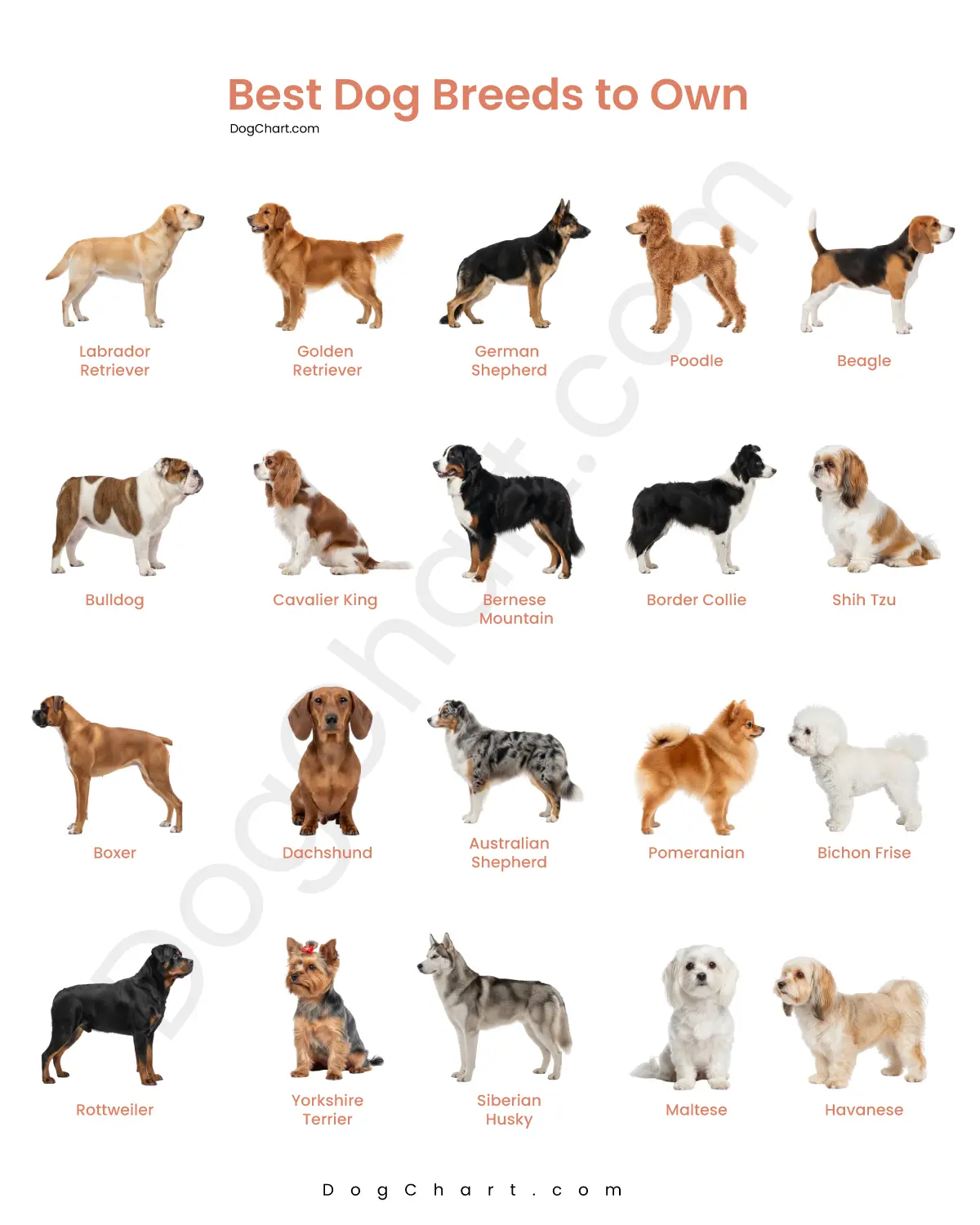
Table of Contents
Best Dog Breeds to Own as Pets
When you’re picking a dog to share your home with, think beyond looks or popularity.
The best dog breeds to own as pets are those that match your energy level, family setup, and daily routine. From the endlessly affectionate Labrador Retriever to the calm and cuddly Cavalier King Charles Spaniel, a good pet dog should bring balance and joy, not stress.
You’ll want a breed that’s easy to train, adaptable, and happy just being part of your world.
| Breed Name | Size | Temperament | Best For | Maintenance Level |
| Labrador Retriever | Large | Friendly, loyal, active | Families, outdoor lovers | Moderate |
| Golden Retriever | Large | Gentle, obedient, affectionate | Families, first-time owners | Moderate |
| German Shepherd | Large | Intelligent, protective, loyal | Active owners, guard use | High |
| Poodle | Small–Large | Smart, elegant, hypoallergenic | Allergy sufferers, families | Moderate |
| Beagle | Medium | Curious, loving, playful | Kids, small homes | Low–Moderate |
| Bulldog | Medium | Calm, affectionate, easygoing | Apartment living, seniors | Low |
| Cavalier King Charles Spaniel | Small | Sweet, quiet, friendly | Families, seniors | Low |
| Border Collie | Medium | Highly intelligent, energetic | Active people, farms | High |
| Shih Tzu | Small | Gentle, loving, adaptable | Apartments, seniors | Moderate |
| Boxer | Large | Playful, protective, loyal | Families with kids | Moderate |
| Dachshund | Small | Brave, curious, loyal | Apartments, singles | Low |
| Australian Shepherd | Medium–Large | Energetic, smart, loyal | Active owners, countryside | High |
| Pomeranian | Small | Alert, lively, charming | Apartments, families | Moderate |
| Bichon Frise | Small | Cheerful, gentle, hypoallergenic | Allergy sufferers, families | Moderate |
| Rottweiler | Large | Strong, confident, protective | Experienced owners | High |
| Yorkshire Terrier | Small | Bold, loving, energetic | Apartments, singles | Moderate |
| Siberian Husky | Large | Athletic, outgoing, social | Cold climates, active people | High |
| Maltese | Small | Affectionate, playful, gentle | Seniors, small spaces | Low–Moderate |
| Havanese | Small | Friendly, social, intelligent | Apartments, families | Moderate |
| Bernese Mountain Dog | Large | Calm, affectionate, strong | Families with space | High |
Good Dogs for First-Time Owners
Choosing your first dog can feel like a big commitment, and it is. That’s why good dogs for first-time owners are typically patient, eager to please, and forgiving if you’re still learning the ropes.
Breeds like Golden Retrievers, Poodles, and Cocker Spaniels make wonderful starters because they’re sociable, smart, and intuitive about human emotions. They help you grow as an owner without overwhelming you in the process.
| Breed | Why They’re Great for Beginners |
| Labrador Retriever | Friendly, easy to train, and very social. |
| Golden Retriever | Gentle nature and easygoing temperament. |
| Cavalier King Charles Spaniel | Affectionate and adaptable to any lifestyle. |
| Poodle (Toy/Miniature/Standard) | Intelligent, trainable, and hypoallergenic. |
| Havanese | Small, cheerful, and eager to please. |
| Bichon Frise | Happy personality and minimal shedding. |
| Shih Tzu | Calm, low exercise needs, great for apartments. |
| Papillon | Smart, small, and easy to handle. |
Best Dog for Novice Owners
If you’re new to dog ownership, confidence matters. The best dog for novice owners is one that makes you feel capable, not constantly challenged. Dogs like Beagles or Miniature Schnauzers are playful, affectionate, and relatively easy to manage, both in training and daily care.
The goal is to start with a breed that’s friendly, low-stress, and teaches you the rhythm of dog parenthood.
| Breed | Temperament | Maintenance Level |
| Beagle | Curious, loyal, family-friendly | Moderate |
| Maltese | Gentle, affectionate, small | Low–Moderate |
| Cocker Spaniel | Playful, kind, social | Moderate |
| Pug | Funny, adaptable, good with kids | Low |
| Boston Terrier | Easygoing, intelligent, minimal grooming | Low |
| Toy Poodle | Smart, eager to learn, hypoallergenic | Moderate |
| Whippet | Calm indoors, minimal shedding | Low |
Best Small Dog Breeds to Own
Small dogs often have big personalities packed into tiny bodies. The best small dog breeds to own are great for apartments or homes where space is limited but companionship isn’t.
Breeds like the Havanese, Pug, and Shih Tzu love being close to their people, adapt easily to urban living, and don’t require huge yards. They’re also easier to handle physically, which makes them ideal for older owners or busy professionals.
| Breed | Personality | Best For |
| Cavalier King Charles Spaniel | Gentle, affectionate | Families, seniors |
| Havanese | Playful, intelligent | Apartments, new owners |
| Yorkshire Terrier | Lively, loyal | Singles, small spaces |
| Maltese | Loving, quiet | Seniors, allergy sufferers |
| Shih Tzu | Calm, cuddly | Apartment life |
| Pomeranian | Alert, fluffy, charming | Active owners |
| Papillon | Energetic, smart | First-time owners |
| Bichon Frise | Happy, hypoallergenic | Families with kids |
Best Medium Dog Breeds to Own
Medium-sized dogs tend to be the sweet spot for many families, not too fragile, not too demanding. The best medium dog breeds to own often blend energy with manageability.
Think Border Collies, Bulldogs, or Australian Shepherds. They’re active enough for outdoor adventures but still content lounging indoors on lazy days. These breeds fit well in suburban homes or active households that love weekend hikes and park days.
| Breed | Personality | Best For |
| Beagle | Curious, friendly | Families with kids |
| Cocker Spaniel | Gentle, obedient | Novice owners |
| Border Collie | Very intelligent | Active owners |
| Australian Shepherd | Energetic, loyal | Rural homes |
| Bulldog | Calm, loving | Apartment living |
| Whippet | Quiet, affectionate | Families, first-timers |
| Shetland Sheepdog | Smart, easy to train | Beginners |
| Vizsla | Loyal, athletic | Outdoor lovers |
Best Large Dog Breeds to Own
Big dogs bring a different kind of companionship, steady, loyal, and often deeply protective. The best large dog breeds to own are intelligent, affectionate, and dependable, like the Labrador Retriever, Bernese Mountain Dog, or German Shepherd.
While they need space and regular exercise, they’re usually calm indoors and deeply connected to their families. If you have the room and time, large breeds make some of the most rewarding pets out there.
| Breed | Temperament | Best For |
| Labrador Retriever | Outgoing, reliable | Families |
| Golden Retriever | Gentle, obedient | First-time owners |
| German Shepherd | Loyal, protective | Active owners |
| Bernese Mountain Dog | Calm, affectionate | Families with space |
| Boxer | Playful, protective | Kids & active people |
| Standard Poodle | Smart, trainable | Families with allergies |
| Newfoundland | Sweet-natured, patient | Families, kids |
| Collie | Loyal, intelligent | Beginners with yard |
Dog Breeds to Avoid
Some dogs, while wonderful in their own right, just aren’t suited for every lifestyle. The dog breeds to avoid often include those with high energy needs, strong prey drives, or stubborn temperaments that can challenge even experienced owners.
Breeds like the Dalmatian, Siberian Husky, or Chow Chow can be tough to manage if you’re not ready for their specific quirks. Avoid choosing a breed purely for looks, focus on compatibility, not trendiness.
| Breed | Why to Avoid (for Beginners) |
| Siberian Husky | High energy, needs constant training and exercise. |
| Dalmatian | Very active and stubborn; can be hard to train. |
| Akita | Strong-willed, requires experienced handling. |
| Chow Chow | Independent and territorial; not ideal for beginners. |
| Rottweiler | Needs confident, experienced owner. |
| Belgian Malinois | Military-level intelligence and energy — not for casual owners. |
| Jack Russell Terrier | High prey drive, requires a lot of attention. |
| Weimaraner | Demanding and highly energetic. |
How to Choose the Right Dog Breed for You
If you’re an active person who loves the outdoors, breeds like Border Collies, Labradors, or Vizslas might fit your rhythm. They’ll push you to get outside more, and they thrive on activity. But if you’re more of a homebody, low-energy breeds like Basset Hounds or French Bulldogs are content to spend weekends lounging beside you.
Living space also matters. Apartment dwellers should focus on smaller, adaptable breeds or those known for being calm indoors, think Havanese, Cavalier King Charles Spaniels, or even medium-sized Greyhounds (yes, they’re couch potatoes despite their speed).
Age and family structure also play a huge role. A busy household with young kids might be better suited for friendly, tolerant breeds like Golden Retrievers or Boxers. On the other hand, older adults or retirees might prefer something smaller, quieter, and easy to handle, like a Maltese or Shih Tzu.
Training and Socializing Your New Dog
Training and socializing are what transform a dog from pet to family. Even the calmest breed can develop behavioral issues without proper guidance. Dogs look to their humans for structure, they need to know what’s expected of them, and they actually enjoy learning it.
Start with the basics: sit, stay, come, and leash manners. Use positive reinforcement, treats, praise, playtime, instead of punishment. It builds trust and confidence, especially for rescue dogs or shy puppies. Training sessions don’t have to be long; 10 to 15 minutes a day can make a huge difference if you’re consistent.
Socialization is just as important. Introduce your dog to new sounds, smells, and people early on. Go on walks through busy areas, visit dog-friendly parks, and invite friends over so your dog learns how to behave around guests. A well-socialized dog is calmer, friendlier, and easier to manage, whether it’s around kids, strangers, or other pets.
Caring for Your Dog Long-Term
Getting a dog isn’t a short-term decision, it’s a commitment that often lasts a decade or more. Proper long-term care means balancing physical, emotional, and medical needs so your pup can live their happiest, healthiest life.
Exercise: Every dog, regardless of size, needs some form of physical activity. Regular activity keeps your dog fit and helps prevent behavioral problems that stem from boredom or excess energy.
Nutrition: Quality food makes a huge difference in your dog’s health and coat.
Grooming: Even low-shedding breeds need regular brushing and occasional baths. Grooming prevents matting, keeps their skin healthy, and strengthens your bond.
Healthcare: Annual vet visits, vaccinations, and dental cleanings are non-negotiable. Senior dogs may require more frequent checkups or special diets.
Emotional Well-Being: Dogs are social creatures; they crave companionship. Leaving them alone for long hours daily can lead to anxiety or destructive behavior.
Planning Ahead: Life changes and so does your dog’s. As they age, mobility issues, diet adjustments, and comfort become priorities. Investing in orthopedic beds, ramps, or joint supplements can make a big difference in their quality of life.
FAQs
What’s the best dog breed for beginners?
Golden Retrievers, Poodles, and Cavaliers are great for first-time owners.
Which small dogs make the best pets?
Shih Tzus, Havanese, and Pugs are affectionate and easy to handle.
Are large dogs harder to own?
They need more exercise and space, but many are calm and gentle indoors.
What breeds are not recommended for first-time owners?
Huskies, Dalmatians, and Chows can be challenging without experience.
How do I know which dog fits my lifestyle?
Consider your space, activity level, and schedule before choosing a breed.