
20 Best Dogs for Cold Weather
Growing up in a mountain town where winter lasted nearly half the year, I learned quickly that not every dog can handle freezing temperatures.
My first pup, an adorable beagle mix, loved the snow, but his short coat meant we could only stay outside for a few minutes before he started shivering.
A few years later, I adopted a Husky, and the difference was unbelievable. While I bundled up in layers, she bounced through snowbanks like she was built for it, which she was.
That’s when I realized that choosing the best dog for cold weather isn’t just preference, it’s essential for their comfort, safety, and quality of life.
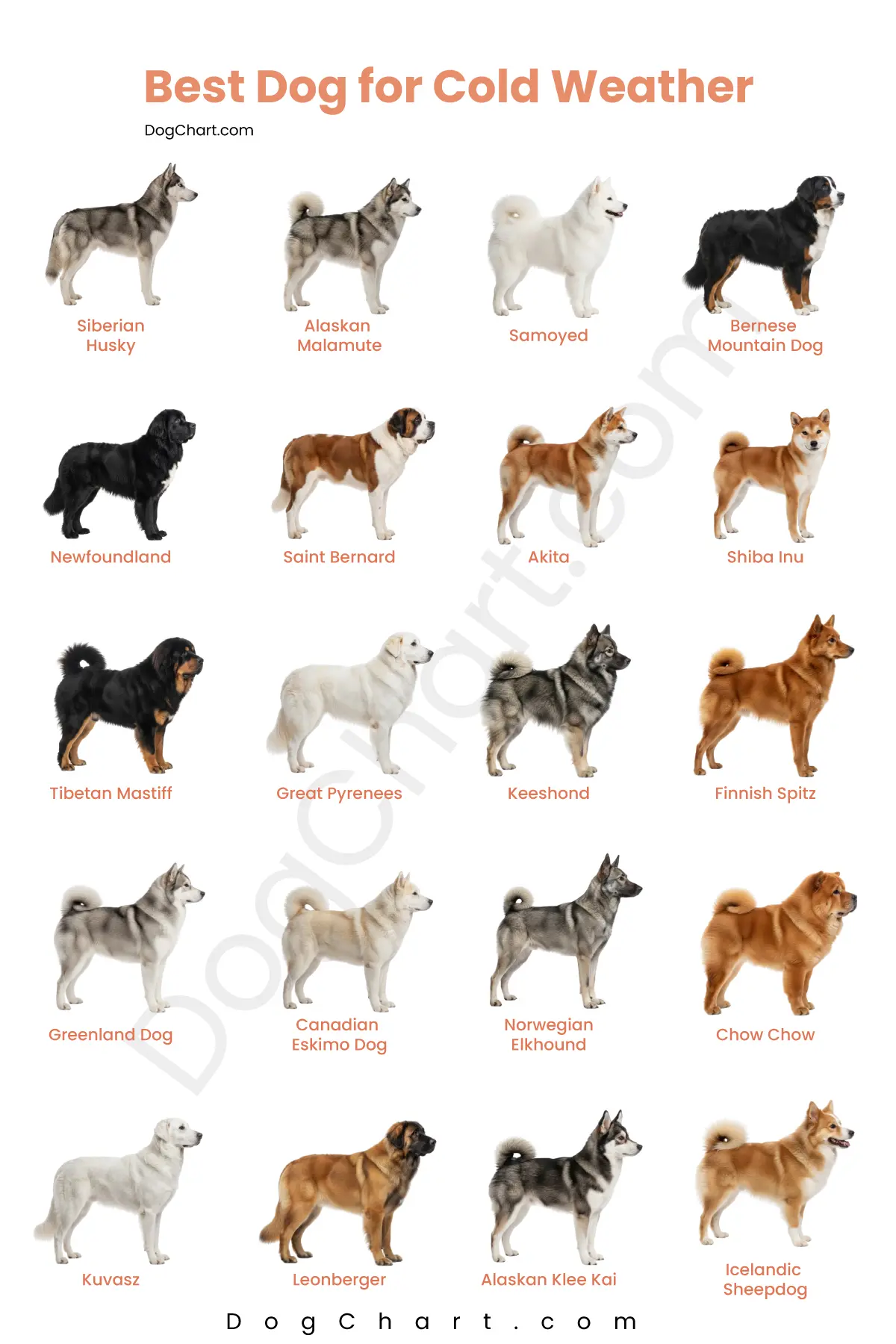
Table of Contents
What Makes a Dog Good for Cold Weather?
Certain features give dogs natural winter resilience. Thick double coats, sturdy frames, snow-resistant paws, and strong endurance are key traits.
Cold-weather breeds are historically bred for sledding, guarding, or herding in harsh climates, so they’re naturally equipped to stay warm and active even when temperatures drop below freezing.
| Breed Name | Size | Coat Type | Cold Tolerance | Energy Level | Trainability (1–5) | Best For |
| Siberian Husky | Medium | Double, thick | Excellent | High | 4 | Running, outdoor homes |
| Alaskan Malamute | Large | Heavy double coat | Excellent | High | 3 | Snow work, hiking |
| Samoyed | Medium | Long double coat | Excellent | Medium | 4 | Families, therapy & cold climates |
| Bernese Mountain Dog | Large | Thick, long coat | Very High | Medium | 4 | Families, mountain climates |
| Newfoundland | Giant | Water-resistant, thick | Excellent | Low–Medium | 3 | Water rescue, families |
| Saint Bernard | Giant | Dense coat | Very High | Low–Medium | 3 | Mountain living, families |
| Akita | Large | Dense double coat | Very High | Medium | 3–4 | Guarding, cold regions |
| Shiba Inu | Small–Medium | Plush double coat | High | Medium | 3 | Small homes in cold climates |
| Tibetan Mastiff | Giant | Heavy coat | Very High | Low–Medium | 3 | Guarding, farms |
| Great Pyrenees | Large | Thick weatherproof coat | Excellent | Low–Medium | 3 | Livestock, farms, cold areas |
| Keeshond | Medium | Plush double coat | High | Medium | 4 | Families, companionship |
| Finnish Spitz | Medium | Dense red coat | High | Medium | 3 | Active families |
| Greenland Dog | Large | Arctic coat | Excellent | High | 3 | Outdoor work, sledding |
| Canadian Eskimo Dog | Large | Thick polar coat | Excellent | High | 3 | Sledding, working homes |
| Norwegian Elkhound | Medium | Thick double coat | High | Medium | 4 | Hiking, hunting |
| Chow Chow | Medium–Large | Dense lion-like coat | Very High | Low–Medium | 2–3 | Guarding cold-weather homes |
| Kuvasz | Large | Dense white coat | High | Medium | 3 | Livestock, farms |
| Leonberger | Giant | Water-resistant coat | High | Medium | 4 | Families, therapy, cold regions |
| Alaskan Klee Kai | Small | Double coat | High | Medium–High | 4 | Companionship, cold climates |
| Icelandic Sheepdog | Medium | Thick double coat | High | Medium–High | 4 | Herding, snowy climates |
Traits of Cold-Climate Dog Breeds
Cold-weather dogs share a combination of physical and behavioral traits that allow them to thrive in snow, wind, and subzero temperatures.
1. Thick Double Coat
These coats consist of a soft insulating undercoat and a protective outer layer that repels snow and moisture. Together, they trap heat and allow dogs to stay warm even in extreme cold.
2. Snow-Ready Paws
Breeds adapted to winter often have wider paws that act like natural “snowshoes.” They may also have fur between their toes to prevent ice buildup.
3. High Endurance and Stamina
Cold-weather breeds were historically sled dogs, herders, or workers. This gives them the physical capacity to stay active and energized even during long winter tasks.
4. Body Structure Built for Cold
Larger body mass, deep chests, and strong muscles help conserve heat and maintain strength in harsh climates.
5. Behavioral Resilience
These breeds are naturally calm and confident in winter conditions. Snow, ice, and wind do not easily overwhelm them.
Best Large Dog Breeds for Cold Weather
Large breeds like the Alaskan Malamute, Saint Bernard, and Newfoundland are iconic winter dogs. Their size and dense coats make them ideal for snow-heavy regions.
| Breed Name | Size | Coat Type | Cold Tolerance | Energy | Trainability | Best For |
| Alaskan Malamute | Large | Heavy double coat | Excellent | High | 3 | Snow work, hiking |
| Bernese Mountain Dog | Large | Long thick coat | Excellent | Medium | 4 | Families, farms |
| Newfoundland | Giant | Water-resistant coat | Excellent | Low–Med | 3 | Families, water rescue |
| Saint Bernard | Giant | Dense long coat | Excellent | Low–Med | 3 | Mountain living |
| Great Pyrenees | Large | Weatherproof coat | Excellent | Low–Med | 3 | Guarding livestock |
| Tibetan Mastiff | Giant | Heavy coat | Excellent | Low | 3 | Guarding & outdoor living |
| Leonberger | Giant | Water-resistant coat | Excellent | Medium | 4 | Families, therapy |
| Norwegian Elkhound | Medium–Large | Thick double coat | High | Medium | 4 | Active families |
Best Medium Dog Breeds for Cold Climates
Medium breeds such as the Samoyed, Keeshond, and Finnish Lapphund manage cold exceptionally well thanks to their thick coats and agile bodies.
| Breed Name | Size | Coat Type | Cold Tolerance | Energy | Trainability | Best For |
| Siberian Husky | Medium | Thick double coat | Excellent | High | 4 | Running, outdoor homes |
| Samoyed | Medium | Long fluffy coat | Excellent | Medium | 4 | Families, therapy |
| Keeshond | Medium | Plush double coat | High | Medium | 4 | Families |
| Finnish Spitz | Medium | Dense coat | High | Medium | 3 | Active families |
| Icelandic Sheepdog | Medium | Thick coat | High | High | 4 | Herding, snow climates |
| Chow Chow | Medium–Large | Dense lion coat | Very High | Low–Med | 3 | Guarding cold climates |
Best Small Dogs That Handle Cold Weather Well
Although small cold-weather dogs are rarer, breeds like the Shiba Inu, American Eskimo Dog, and Tibetan Spaniel tolerate winter better than most small companions.
| Breed Name | Size | Coat Type | Cold Tolerance | Energy | Trainability | Best For |
| Shiba Inu | Small–Med | Plush double coat | High | Medium | 3 | Small homes in cold climates |
| Alaskan Klee Kai | Small | Double coat | High | Med–High | 4 | Active owners |
| Pomeranian | Small | Thick fluffy coat | High | Medium | 3 | Companionship |
| American Eskimo Dog | Small–Med | Dense double coat | High | Medium | 4 | Families |
| Swedish Vallhund | Small | Thick coat | High | High | 4 | Herding small farms |
Best Snow Dog Breeds for Harsh Winters
These are the breeds specifically developed for subzero temperatures, Huskies, Malamutes, and Greenland Dogs, known for thriving in deep snow and unforgiving climates.
| Breed Name | Size | Coat Type | Cold Tolerance | Energy | Trainability | Best For |
| Siberian Husky | Medium | Double coat | Excellent | High | 4 | Sledding, running |
| Alaskan Malamute | Large | Heavy double coat | Excellent | High | 3 | Heavy pulling |
| Greenland Dog | Large | Arctic coat | Excellent | High | 3 | Expedition work |
| Canadian Eskimo Dog | Large | Thick polar coat | Excellent | High | 3 | Harsh winter climates |
| Samoyed | Medium | Long double coat | Excellent | Medium | 4 | Cold-weather families |
Double-Coated Dog Breeds Ideal for Freezing Temperatures
Double-coated breeds use a powerful insulation system that keeps their body temperature stable. Nordic breeds, sheepdogs, and mountain dogs dominate this category.
| Breed Name | Size | Coat Type | Cold Tolerance | Energy | Trainability | Best For |
| Husky | Med | Double coat | Excellent | High | 4 | Outdoor sports |
| Malamute | Large | Heavy coat | Excellent | High | 3 | Snow pulling |
| Akita | Large | Double coat | Very High | Medium | 3–4 | Guarding |
| Shiba Inu | Small | Double coat | High | Medium | 3 | Cold homes |
| Keeshond | Medium | Plush double coat | High | Medium | 4 | Families |
| Finnish Lapphund | Medium | Arctic coat | Very High | Medium | 4 | Herding & snow |
Best Cold-Weather Dogs for Families
Family-friendly winter breeds, like the Samoyed, Bernese Mountain Dog, and Newfoundland, combine a gentle temperament with sturdy cold tolerance.
| Breed Name | Size | Coat Type | Cold Tolerance | Energy | Trainability | Best For |
| Bernese Mountain Dog | Large | Thick coat | Excellent | Medium | 4 | Kids & families |
| Newfoundland | Giant | Water-resistant | Excellent | Low–Med | 3 | Gentle families |
| Samoyed | Medium | Long fluffy coat | Excellent | Med | 4 | Friendly family homes |
| Leonberger | Giant | Weatherproof | Excellent | Medium | 4 | Families |
| Keeshond | Medium | Plush coat | High | Medium | 4 | Indoor/outdoor families |
Best Guard Dogs for Cold Regions
Livestock guardians such as the Tibetan Mastiff, Great Pyrenees, and Caucasian Shepherd remain alert and functional in snow and cold, making them excellent winter guardians.
| Breed Name | Size | Coat Type | Cold Tolerance | Energy | Trainability | Best For |
| Tibetan Mastiff | Giant | Heavy coat | Excellent | Low | 3 | Guarding large properties |
| Akita | Large | Dense coat | Very High | Medium | 3–4 | Protection |
| Caucasian Shepherd | Giant | Massive double coat | Excellent | Low–Med | 2–3 | Extreme cold guard dog |
| German Shepherd (long coat) | Large | Thick undercoat | High | High | 5 | Patrol, security |
| Great Pyrenees | Large | Weatherproof coat | Excellent | Low–Med | 3 | Livestock guarding |
Best Working Dogs for Snowy Environments
These dogs excel at pulling, herding, search-and-rescue, and patrolling in heavy winter regions. Breeds like the Husky and Belgian Tervuren shine here.
| Breed Name | Size | Coat Type | Cold Tolerance | Energy | Trainability | Best For |
| Malamute | Large | Heavy coat | Excellent | High | 3 | Pulling loads |
| Husky | Medium | Double coat | Excellent | High | 4 | Sledding |
| Samoyed | Medium | Long coat | Excellent | Medium | 4 | Light sledding & families |
| Newfoundland | Giant | Water-resistant | Excellent | Low–Med | 3 | Water rescue |
| Greenland Dog | Large | Arctic coat | Excellent | High | 3 | Expedition work |
Best Cold-Weather Dogs for Outdoor Living
Some breeds can comfortably tolerate extended outdoor time, thanks to their thick coats and hardy structure, including the Akita and Anatolian Shepherd.
| Breed Name | Size | Coat | Cold Tolerance | Energy | Trainability | Best For |
| Tibetan Mastiff | Giant | Heavy coat | Excellent | Low | 3 | Outdoor guard duties |
| Caucasian Shepherd | Giant | Thick coat | Excellent | Low–Med | 2–3 | Harsh climates |
| Alaskan Malamute | Large | Thick coat | Excellent | High | 3 | Outdoor work |
| Great Pyrenees | Large | Weatherproof | Excellent | Low–Med | 3 | Outdoor farms |
| Akita | Large | Dense coat | Very High | Medium | 3–4 | Protection outdoors |
High-Energy Breeds That Thrive in Winter Climates
Energetic dogs such as Huskies, Malamutes, and Australian Shepherds love running, hiking, and playing in snow, making winter their favorite season.
| Breed Name | Size | Coat Type | Cold Tolerance | Energy | Trainability | Best For |
| Siberian Husky | Medium | Double coat | Excellent | Very High | 4 | Running & winter sports |
| Alaskan Malamute | Large | Heavy coat | Excellent | Very High | 3 | Hard work |
| Belgian Malinois (long coat) | Medium | Thick coat | High | Very High | 5 | Working & sport |
| Border Collie (long coat) | Medium | Medium-long coat | High | Very High | 5 | Snow herding |
| Icelandic Sheepdog | Medium | Thick double coat | High | High | 4 | Herding in snow |
Calmest Cold-Weather Breeds for Apartment Living
Gentle giants like the Bernese Mountain Dog or Newfoundland adapt surprisingly well to apartment life, provided they receive moderate exercise.
| Breed Name | Size | Coat Type | Cold Tolerance | Energy | Trainability | Best For |
| Newfoundland | Giant | Water-resistant | Excellent | Low | 3 | Large apartments in cold climates |
| Saint Bernard | Giant | Dense coat | Excellent | Low–Med | 3 | Calm homes |
| Chow Chow | Medium–Large | Thick coat | Very High | Low | 2–3 | Quiet apartments |
| Great Pyrenees | Large | Weatherproof coat | Excellent | Low–Med | 3 | Calm owners |
| Keeshond | Medium | Plush coat | High | Medium | 4 | Cold climates |
Cold-Resistant Hypoallergenic Dog Breeds
Breeds like the Giant Schnauzer and Standard Poodle provide strong cold tolerance with minimal shedding, ideal for allergy-sensitive households.
| Breed Name | Size | Coat Type | Cold Tolerance | Energy | Trainability | Best For |
| Standard Poodle | Medium–Large | Curly dense coat | High | Medium | 5 | Families & therapy |
| Giant Schnauzer | Large | Harsh double coat | High | High | 4 | Guarding & working |
| Airedale Terrier | Medium–Large | Wiry coat | High | High | 4 | Active homes |
| Soft-Coated Wheaten Terrier | Medium | Wavy coat | High | Medium | 4 | Families |
| Bouvier des Flandres | Large | Thick coarse coat | High | Medium | 3–4 | Farms & cold climates |
Breeds to Avoid in Cold Weather
Not all dogs are made for winter. Thin-coated breeds such as Greyhounds, Boxers, Chihuahuas, and many short-nosed breeds struggle in cold weather.
Their small body fat percentage, short coats, and narrower airways make cold exposure uncomfortable and sometimes dangerous.
How to Care for Dogs in Winter
Even winter-adapted breeds need proper cold-weather care. Regular coat maintenance, paw protection, and hydration are crucial.
Dry winter air can cause itching, while frozen surfaces may irritate paws. Make sure they have warm shelter, especially at night, and avoid long exposure during extreme wind chills.
Cold-Weather Gear Dogs May Need
While many winter breeds don’t require coats, certain gear can still enhance comfort and safety.
- Paw balms or booties
- Reflective jackets
- Insulated bedding
- Waterproof coats
Winter Exercise Tips for Dogs
Winter shouldn’t stop activity, many cold-weather dogs love it even more.
- Schedule outdoor play during daylight
- Use traction boots
- Break long runs into shorter sessions
- Engage in indoor games
Signs of Cold Stress in Dogs
Watch for symptoms that your dog is too cold:
- Shivering or trembling
- Lifting paws off the ground
- Whining or slowing down
- Rigid posture
- Pale gums or skin
If you observe these, bring your dog indoors immediately.
How to Choose the Right Cold-Weather Dog Breed
Selecting a winter dog requires balancing climate, lifestyle, and experience level. Consider:
- Coat type and thickness
- Energy level
- Training needs
- Size and living space
- Family friendliness
By evaluating these factors, you can find a breed that thrives in your climate and fits perfectly into your life.
Also read: Dogs For Hot Weather
FAQs
Do dogs get cold even if they have thick coats?
Yes, wind chill, wet snow, and extreme temperatures can still put them at risk.
Can cold-weather dogs live in warm climates?
They can, but you must manage overheating risks carefully.
Do double-coated dogs need sweaters?
Usually no, but wet snow or freezing rain may require extra protection.
What temperature is too cold for most dogs?
Below 20°F (-6°C) can be dangerous for many breeds.
Are Huskies good indoor dogs?
Yes, surprisingly calm indoors, as long as they get plenty of exercise.