
Best Dog Breeds Out There for Therapy Work
I first realized the impact a therapy dog can have when a volunteer visited my grandmother’s nursing home with a gentle Golden Retriever named Sam.
My grandmother, who rarely spoke much by then, lit up the moment Sam rested his head on her knee. It was a small moment, quiet and simple, but it changed the atmosphere of the entire room.
Watching Sam calmly move from person to person, offering comfort without needing a single command, made me realize how powerful the right dog can be in bringing reassurance and peace to people who need it most.
That experience is what sparked my fascination with therapy dogs and what makes certain breeds exceptional at this meaningful work.
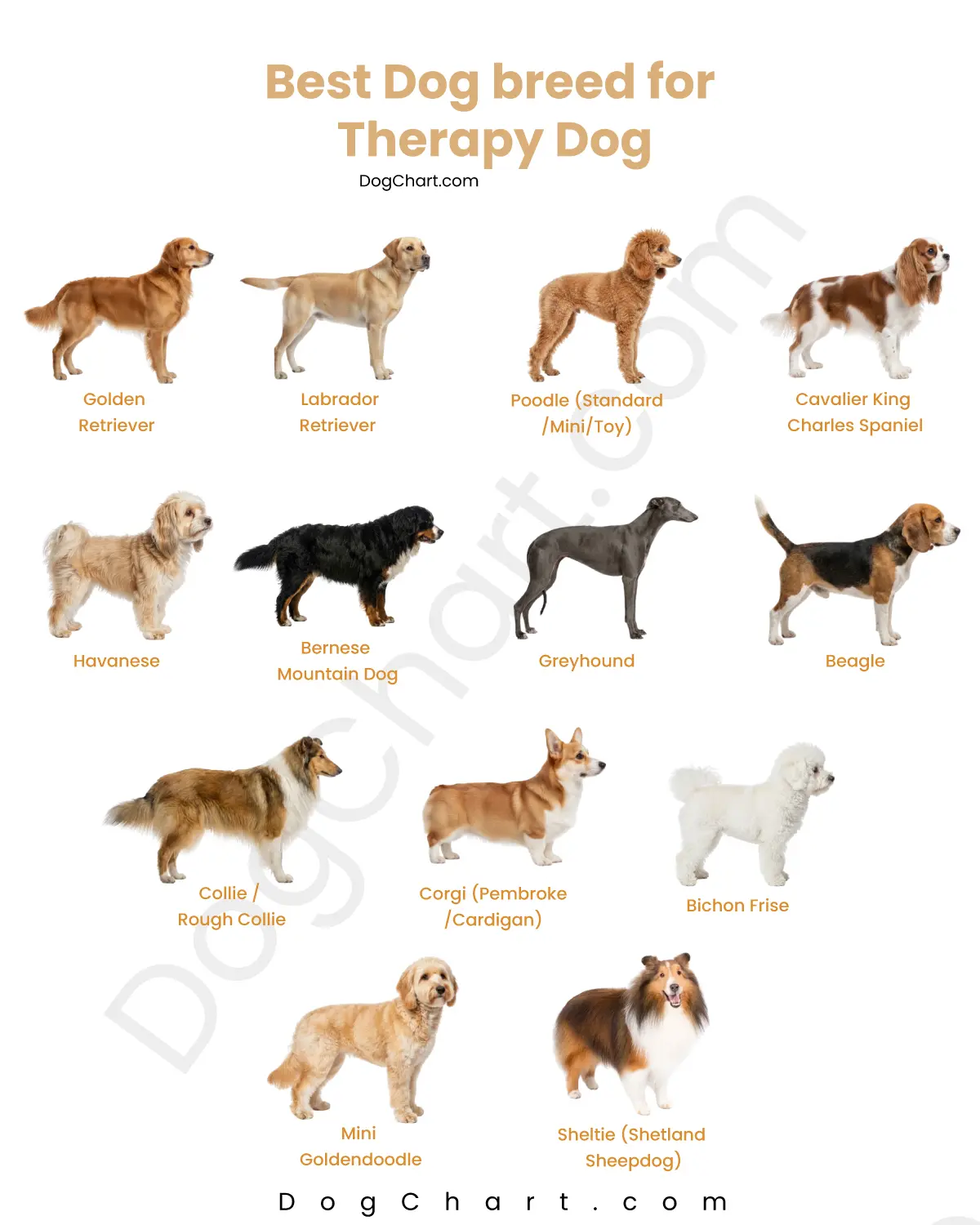
Table of Contents
What Is a Therapy Dog?
A therapy dog is trained to provide comfort, emotional support, and companionship in environments such as hospitals, schools, rehabilitation centers, and nursing homes.
Unlike service dogs, therapy dogs don’t perform specific tasks; instead, they help reduce stress, encourage social interaction, and support emotional well-being.
The best therapy dog breeds are calm, friendly, and naturally drawn to human connection.
| Breed | Size | Temperament | Trainability (1–5) | Best For | Hypoallergenic |
| Golden Retriever | Large | Gentle, friendly | 5 | Hospitals, kids, seniors | No |
| Labrador Retriever | Large | Calm, patient | 5 | Emotional support, hospitals | No |
| Poodle (Standard/Mini/Toy) | Small–Large | Intelligent, calm | 5 | Allergy-safe environments | Yes |
| Cavalier King Charles Spaniel | Small | Sweet, affectionate | 4 | Elderly, lap therapy | No |
| Havanese | Small | Loving, people-oriented | 4 | Schools, nursing homes | Yes |
| Bernese Mountain Dog | Large | Gentle, stable | 4 | Stress-relief therapy | No |
| Greyhound | Large | Quiet, gentle | 4 | Anxiety & PTSD support | No |
| Beagle | Small–Medium | Friendly, social | 3 | Group therapy, kids | No |
| Collie / Rough Collie | Medium–Large | Intuitive, sensitive | 4 | Autism therapy, emotional support | No |
| Corgi (Pembroke/Cardigan) | Small–Medium | Cheerful, outgoing | 4 | Visits, community therapy | No |
| Bichon Frise | Small | Happy, affectionate | 4 | Allergy-sensitive settings | Yes |
| Mini Goldendoodle | Small–Medium | Calm, affectionate | 4 | Families, hospitals | Yes |
| Sheltie (Shetland Sheepdog) | Small–Medium | Gentle, smart | 5 | Children, anxiety support | No |
Traits That Make a Dog a Great Therapy Dog
A successful therapy dog is defined far more by temperament than by breed.
- Calmness: Therapy dogs must remain relaxed even in noisy or unpredictable environments. Sudden movements, medical equipment, and unfamiliar people shouldn’t rattle them.
- Gentleness: Their interactions, whether being petted, hugged, or touched awkwardly, must be soft and patient.
- Social Engagement: The best therapy dogs enjoy meeting people. They seek eye contact, lean in for affection, and show curiosity without being overwhelming.
- Emotional Sensitivity: Many therapy dogs show a natural ability to read human emotions and adjust their behavior accordingly.
- Trainability: They must respond consistently to commands, walk politely on a leash, and remain focused despite distractions.
- Adaptability: They may encounter children, seniors, wheelchairs, beds, and medical staff. They must adjust smoothly to each situation.
These qualities combine to create a dog that brings comfort effortlessly and safely.
Best Small Dog Breeds for Therapy Work
Small therapy dogs excel in environments where people may prefer a lap-sized companion or where space is limited, such as classrooms or assisted-living facilities. Their portable size and friendly nature make them easy to handle, gentle, and ideal for close physical interactions.
| Breed Name | Size | Temperament | Trainability (1–5) | Hypoallergenic | Best For |
| Cavalier King Charles Spaniel | Small | Gentle, loving | 4 | No | Seniors, kids |
| Havanese | Small | Friendly, social | 4 | Yes | Nursing homes, anxiety |
| Bichon Frise | Small | Happy, calm | 4 | Yes | Allergy-sensitive therapy |
| Pug | Small | Affectionate, stable | 3 | No | Emotional support |
| Mini Poodle | Small | Smart, calm | 5 | Yes | Hospitals, schools |
| Shih Tzu | Small | Quiet, gentle | 3 | Yes | Elderly companionship |
Best Medium Dog Breeds for Therapy Work
Medium-sized therapy dogs strike a balance between being sturdy enough for physical interaction yet still gentle and manageable. These breeds tend to be calm, affectionate, and capable of working in both busy and quiet environments.
| Breed Name | Size | Temperament | Trainability | Hypoallergenic | Best For |
| Cocker Spaniel | Medium | Sweet, gentle | 4 | No | Kids & families |
| Collie | Medium | Sensitive, intuitive | 4 | No | Autism therapy |
| Shetland Sheepdog (Sheltie) | Medium | Intelligent, calm | 5 | No | Emotional support |
| Standard Poodle | Medium | Highly trainable | 5 | Yes | Hospitals |
| Labradoodle | Medium | Calm, affectionate | 4 | Yes | General therapy |
| Beagle | Medium | Friendly, social | 3 | No | Group therapy |
Best Large Dog Breeds for Therapy Work
Large dogs often bring a grounding, reassuring presence. Their size can be comforting, especially for people who feel more secure leaning on or hugging a bigger dog. The best large breeds are gentle giants with steady temperaments.
| Breed Name | Size | Temperament | Trainability | Hypoallergenic | Best For |
| Golden Retriever | Large | Gentle, calm | 5 | No | Hospitals, kids |
| Labrador Retriever | Large | Patient, friendly | 5 | No | Emotional support |
| Bernese Mountain Dog | Large | Calm, stable | 4 | No | PTSD, deep pressure therapy |
| Greyhound | Large | Quiet, gentle | 4 | No | Anxiety support |
| Newfoundland | Large | Mild, sweet | 3 | No | Children & water therapy |
| German Shepherd (calm lines) | Large | Loyal, focused | 4 | No | Service & therapy combo |
Calmest Dog Breeds for Emotional Support
Some breeds naturally have soothing, steady personalities that make them ideal emotional-support companions. These dogs remain composed during stressful moments, providing quiet comfort to people dealing with anxiety, grief, or emotional overwhelm.
| Breed Name | Size | Temperament | Trainability | Hypoallergenic |
| Greyhound | Large | Quiet, gentle | 4 | No |
| Cavalier King Charles Spaniel | Small | Soft, loving | 4 | No |
| Bichon Frise | Small | Calm, happy | 4 | Yes |
| Golden Retriever | Large | Patient, gentle | 5 | No |
| Clumber Spaniel | Medium | Relaxed, friendly | 3 | No |
Most Affectionate Breeds for Therapy
Affectionate therapy dogs love people deeply and consistently. They enjoy being touched, cuddled, and spoken to, making them perfect for settings where emotional warmth and consistent friendliness matter.
| Breed Name | Size | Temperament | Trainability | Hypoallergenic |
| Golden Retriever | Large | Loving, outgoing | 5 | No |
| Cavalier King Charles Spaniel | Small | Affectionate | 4 | No |
| Havanese | Small | People-oriented | 4 | Yes |
| Labrador Retriever | Large | Loyal, gentle | 5 | No |
| Poodle | Small–Large | Calm, social | 5 | Yes |
Best Therapy Dogs for Hospitals & Nursing Homes
In medical and elder-care environments, the best therapy dog breeds are calm, gentle, quiet, and extremely patient. They must navigate equipment, tight spaces, and vulnerable individuals with total confidence.
| Breed Name | Size | Temperament | Trainability | Hypoallergenic |
| Poodle | Medium/Large | Calm, intelligent | 5 | Yes |
| Golden Retriever | Large | Patient, gentle | 5 | No |
| Bichon Frise | Small | Happy, approachable | 4 | Yes |
| Labrador Retriever | Large | Friendly, calm | 5 | No |
| Cavalier King Charles Spaniel | Small | Sweet & quiet | 4 | No |
Best Therapy Dogs for Kids
Therapy dogs that work with children must be playful yet controlled, patient with unpredictable behavior, and resilient during high-energy interactions. The best breeds for kids combine friendliness with a soft, nurturing nature.
| Breed Name | Size | Temperament | Trainability | Hypoallergenic |
| Golden Retriever | Large | Gentle, playful | 5 | No |
| Labrador Retriever | Large | Patient | 5 | No |
| Beagle | Medium | Friendly | 3 | No |
| Cocker Spaniel | Medium | Sweet | 4 | No |
| Poodle | Any | Smart, calm | 5 | Yes |
Best Therapy Dogs for Seniors
Best seniors breeds are calm, slow-paced, affectionate, and intuitive. These dogs stay close, move gently, and form lasting bonds with older individuals.
| Breed Name | Size | Temperament | Trainability | Hypoallergenic |
| Cavalier King Charles Spaniel | Small | Quiet, loving | 4 | No |
| Havanese | Small | Gentle, social | 4 | Yes |
| Shih Tzu | Small | Calm | 3 | Yes |
| Bichon Frise | Small | Happy | 4 | Yes |
| Greyhound | Large | Low energy | 4 | No |
Best Therapy Dog Breeds for Anxiety & Depression
Dogs suited for helping those with anxiety or depression have soothing temperaments and a strong desire to stay close. Their presence can reduce stress hormones, regulate emotions, and provide grounding during overwhelming moments.
| Breed Name | Size | Temperament | Trainability | Hypoallergenic |
| Golden Retriever | Large | Calm, grounding | 5 | No |
| Cavalier King Charles Spaniel | Small | Gentle | 4 | No |
| Poodle | Any | Smart & sensitive | 5 | Yes |
| Bernese Mountain Dog | Large | Grounding, steady | 4 | No |
| Havanese | Small | Loving | 4 | Yes |
Hypoallergenic Therapy Dog Breeds
For people with allergies, hypoallergenic therapy dogs offer comfort without triggering reactions. These breeds shed minimally and still maintain the gentle, people-oriented temperament needed for therapy work.
| Breed Name | Size | Temperament | Trainability | Best For |
| Poodle | Any | Calm, smart | 5 | Hospitals, seniors |
| Bichon Frise | Small | Happy | 4 | Elderly homes |
| Havanese | Small | Loving | 4 | Kids, families |
| Labradoodle | Medium | Balanced | 4 | Hospitals |
| Goldendoodle | Medium | Affectionate | 4 | General therapy |
Easiest Breeds to Train as Therapy Dogs
Breeds that pick up commands quickly, stay focused during sessions, and respond predictably to guidance are among the easiest to train. Their willingness to learn and cooperate makes therapy certification smoother.
| Breed Name | Size | Temperament | Trainability |
| Poodle | Any | Very smart | 5 |
| Golden Retriever | Large | Eager to learn | 5 |
| Labrador Retriever | Large | Cooperative | 5 |
| Sheltie | Medium | Quick learner | 5 |
| Collie | Medium | Intuitive | 4 |
Therapy Dog Breeds with the Best Temperament
Certain breeds are known for their stable, easygoing, and exceptionally friendly personalities. These dogs stay calm under stress, accept handling from strangers, and thrive in emotionally demanding roles.
| Breed Name | Size | Temperament | Trainability |
| Golden Retriever | Large | Calm, loving | 5 |
| Cavalier King Charles Spaniel | Small | Gentle | 4 |
| Bernese Mountain Dog | Large | Soft, stable | 4 |
| Havanese | Small | Sweet, comforting | 4 |
| Greyhound | Large | Quiet, polite | 4 |
Breeds to Avoid for Therapy Work
While any individual dog can surprise you, some breeds are less suited to therapy work because of high energy, aloofness, intense prey drive, or difficulty adjusting to constant handling. These traits can make them uncomfortable-or unsafe-in therapy settings.
| Breed Name | Reason |
| Chihuahua | Can be reactive or nervous |
| Akita | Too independent, reserved |
| Malinois | Highly intense, overstimulated |
| Dachshund | Prone to barking |
| Husky | High energy, vocal |
| Chow Chow | Aloof, not people-oriented |
How to Choose the Right Therapy Dog Breed
Choosing the right therapy dog starts with assessing your goals and environment. Consider whether the dog will visit hospitals, work with children, support seniors, or provide emotional comfort at home.
Each setting requires slightly different traits, some demand higher patience, others calmer energy levels, and some a sturdier or more hypoallergenic breed.
Also evaluate your lifestyle: how much exercise you can offer, how much training you’re willing to do, and what environment the dog will live in. Above all, temperament matters more than size, coat type, or breed reputation.
A truly great therapy dog is one that naturally gravitates toward people and remains consistent and reliable in every interaction.
Training Requirements for Therapy Dogs
Training begins with strong foundational obedience, sit, stay, come, leave it, and loose-leash walking. From there, therapy dogs must learn controlled greeting behaviors, ignoring distractions, and following cues even in high-stress environments.
Socialization is critical; expose the dog to wheelchairs, medical equipment, children, seniors, and diverse environments early.
Many organizations require dogs to pass temperament tests, demonstrate calm behavior in tight spaces, and show predictable responses to sudden noises, awkward touches, or unusual scent environments.
Patience and repetition are key: therapy dogs aren’t just trained, they’re shaped through positive experiences and consistent reinforcement.
How to Certify a Therapy Dog
Certification varies depending on the country or organization, but most follow a similar process. First, the dog must be at least one year old and pass a basic health check.
Next, handlers enroll in a therapy-dog preparation course or testing program, where the dog’s obedience, temperament, and ability to handle unfamiliar environments are evaluated.
Organizations such as Therapy Dogs International, Pet Partners, and similar groups conduct official tests covering leash control, reaction to crowds, tolerance of petting, and calm behavior around medical devices.
Once certified, the dog can participate in supervised visits and eventually begin independent volunteer work.
Common Therapy Dog Mistakes Owners Make
Many owners misunderstand that therapy work is emotionally demanding for dogs. A common mistake is pushing a dog to work even when it shows signs of stress.
Others underestimate the amount of socialization required, leading to fearful or overstimulated behavior in real therapy settings.
Some handlers also rely too heavily on obedience training while neglecting emotional conditioning, teaching the dog how to stay calm, decompress, and feel comfortable in busy environments.
Not maintaining ongoing training, certification requirements, and regular breaks can also limit a dog’s long-term success.
Tips for Raising a Calm & Confident Therapy Dog
Raising a therapy dog starts with building trust. Expose the dog to new places gradually, pairing each experience with positive reinforcement. Encourage gentle interactions with people of all ages and allow the dog to explore at its own pace.
Maintain predictable routines to build confidence, and reward calm behavior consistently.
Provide plenty of mental stimulation, puzzle toys, scent games, and low-pressure training sessions help shape a relaxed, attentive companion. Above all, prioritize the dog’s emotional health; a dog that feels secure will naturally become calm, steady, and ready for therapy work.
FAQs
Can any dog become a therapy dog?
Most dogs can, but temperament is the deciding factor, not breed.
How old should a dog be to start therapy training?
Basic training starts early, but official testing usually requires the dog to be at least one year old.
Do therapy dogs need special health checks?
Yes, vaccinations, routine vet care, and regular health clearances are required.
How long does it take to train a therapy dog?
Most take 6 months to 2 years depending on age, temperament, and training consistency.
Is a therapy dog the same as an emotional support dog?
No, therapy dogs visit facilities to help others, while emotional support dogs help their specific owner.