
Borzoi Dog Size – Height and Weight Chart by Age
I watched a Borzoi at a park last summer stretch out next to a Labrador for comparison. The Borzoi was taller by almost a foot, lighter by 15 pounds, and looked like a different species entirely. That’s the thing about this breed. Their size deceives you because they’re all legs and chest, with no bulk.
The Borzoi dog size falls into the large category by weight but the giant category by height. Males reach 75–85 cm (30–33 inches) at the shoulder, taller than a Great Dane puppy and matching adult Irish Wolfhounds. Weight sits between 34–48 kg (75–105 lbs) for males, which is lean for a dog that tall.
This guide covers full height and weight charts by age, male vs female differences, how to measure correctly, and what growth looks like from puppy to adult. You can also compare Borzoi measurements against other breeds on the dog size chart and dog weight chart.
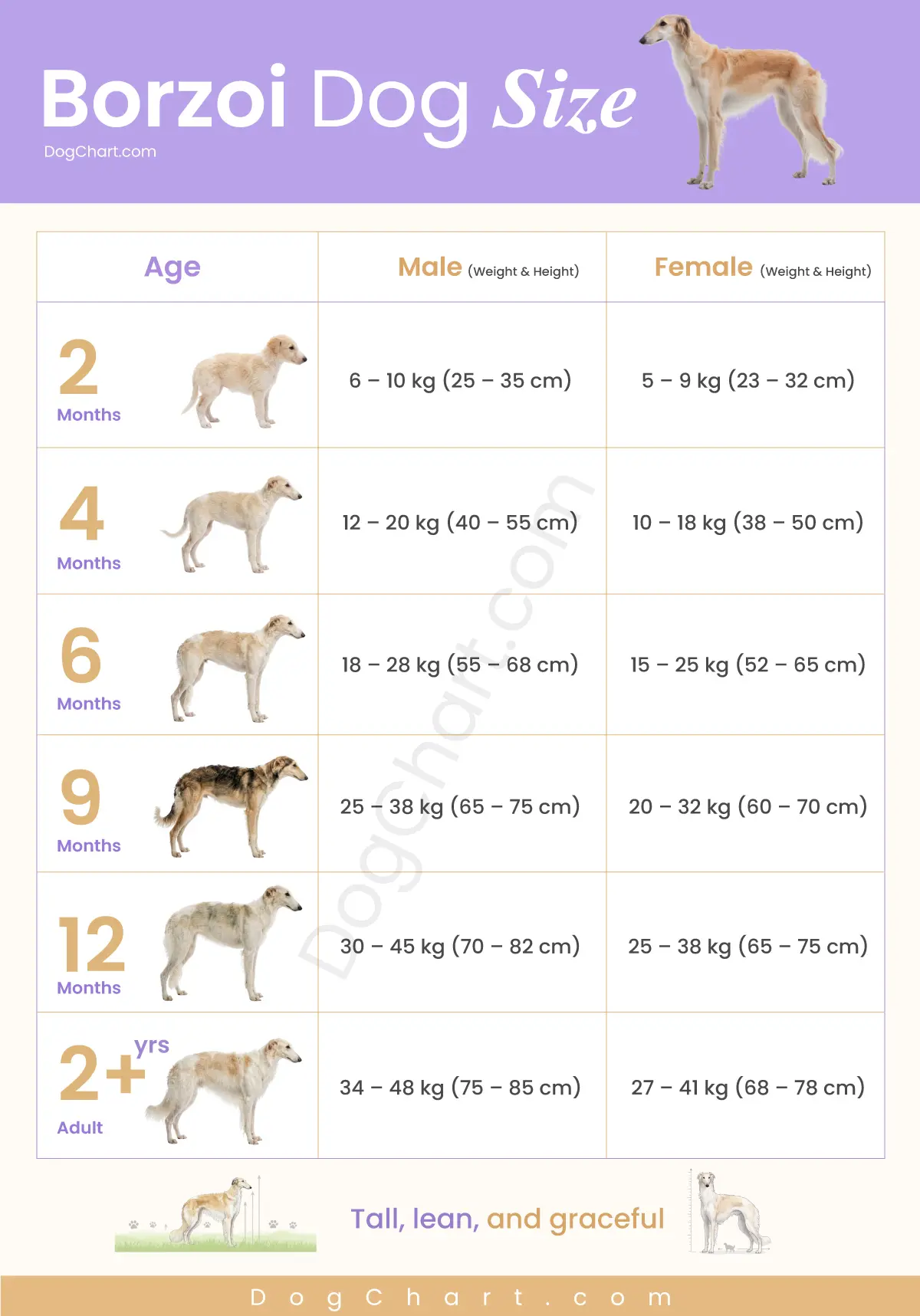
Table of Contents
Borzoi Size Chart
| Category | Details |
| Also Known As | Russian Wolfhound |
| Male Height | 75–85 cm (30–33 in) at the shoulder |
| Female Height | 68–78 cm (27–31 in) at the shoulder |
| Male Weight | 34–48 kg (75–105 lbs) |
| Female Weight | 27–41 kg (60–90 lbs) |
| Size Category | Large by weight, giant by height |
| Adult Size Reached | 18–24 months |
| Build | Long and narrow, deep but narrow chest |
| Life Expectancy | 9–14 years |
| Top Speed | Over 40 mph (64 km/h) |
Borzoi Size by Age Chart
The chart below shows male and female Borzoi growth from 2 months to adulthood. Like most sighthounds, Borzois grow fast in the first year and fill out slowly after that. Don’t expect a fully filled-out adult body until 18–24 months.
| Age | Male Weight | Female Weight | Male Height | Female Height |
| 2 Months | 6–10 kg | 5–9 kg | 25–35 cm | 23–32 cm |
| 4 Months | 12–20 kg | 10–18 kg | 40–55 cm | 38–50 cm |
| 6 Months | 18–28 kg | 15–25 kg | 55–68 cm | 52–65 cm |
| 9 Months | 25–38 kg | 20–32 kg | 65–75 cm | 60–70 cm |
| 12 Months | 30–45 kg | 25–38 kg | 70–82 cm | 65–75 cm |
| Adult (2+ yrs) | 34–48 kg | 27–41 kg | 75–85 cm | 68–78 cm |
A male Borzoi at 12 months is usually at full height but still filling out in the chest and hindquarters. Females finish a bit earlier. The Borzoi breed standard sets no upper size limit, so some males reach 88–90 cm (35 in).
History of the Borzoi and Size Origin
The Borzoi’s size traces back to 17th century Russia. Russian aristocrats developed the breed to hunt wolves across open steppe. Grand Duke Nicholas and the Czar kept packs of hundreds. The breed’s tall, lean build made it fast enough to chase down wolves and strong enough to pin them.
Dogs were given as gifts to European royalty, which spread the Borzoi across the continent. The breed nearly vanished during the Russian Revolution. Many dogs were killed along with their owners. Modern Borzois descend from dogs that reached kennels in England, America, and Western Europe before the upheaval.
The AKC recognized the breed in 1891, originally under the name Russian Wolfhound. Some kennel clubs still use that name. The size you see today reflects the wolf-hunting past. Borzois are large enough to hold a wolf but light enough to sprint past 40 mph. The long legs, narrow chest, and narrow head all evolved for speed over open ground.
Male vs Female Size Comparison
Male Borzois average 7–8 cm taller and 7–10 kg heavier than females. The difference is visible at a glance. Males have broader chests, heavier bone, and more feathering on the hindquarters and tail. Females look proportionally longer and narrower.
Both sexes share the same body plan: deep but narrow chest, tucked waist, long curved tail, and a narrow head. Temperament is similar too. Both are affectionate and loyal, with a calm dignity that matches their appearance. The Borzoi personality guide covers temperament traits in detail.
Borzoi vs Other Sighthounds and Large Breeds
Among sighthounds, only the Irish Wolfhound is taller. Here’s how the Borzoi stacks up against similar breeds and other large hunting dogs.
| Breed | Height | Weight | Type |
| Borzoi (male) | 75–85 cm (30–33 in) | 34–48 kg (75–105 lbs) | Sighthound |
| Greyhound | 71–76 cm (28–30 in) | 27–32 kg (60–70 lbs) | Sighthound |
| Saluki | 58–71 cm (23–28 in) | 18–27 kg (40–60 lbs) | Sighthound |
| Afghan Hound | 64–74 cm (25–29 in) | 23–27 kg (50–60 lbs) | Sighthound |
| Irish Wolfhound | 81–86 cm (32–34 in) | 48–69 kg (105–150 lbs) | Sighthound |
| Great Dane | 76–86 cm (30–34 in) | 54–91 kg (120–200 lbs) | Working |
| German Shepherd | 60–65 cm (24–26 in) | 30–41 kg (66–90 lbs) | Herding |
The Borzoi is taller than a Greyhound and far lighter than a Great Dane. The silky coat adds to the impression of size without adding bulk. For a full ranking, see the biggest dog breeds guide.
Coat, Build, and Physical Features
The Borzoi coat is long and silky with a slight wave. Some lines show more curl than others. The longest hair grows on the neck, chest, tail, and hindquarter feathering. Brush 2–3 times a week to prevent tangles, and trim the paw pads regularly to stop matting between the toes.
The body is long and narrow with a deep chest that houses large lungs and a strong heart. The narrow head is one of the most distinctive in any breed. This aerodynamic shape, combined with the flat-lying coat, lets a Borzoi hit over 40 mph at full sprint.
Despite that speed, Borzois spend most of their day lounging. They need room to stretch and occasional sprint time, but they are not high-energy dogs. Regular walks and some mental stimulation keep them satisfied.
Borzoi Health Considerations by Size
Large, deep-chested breeds carry specific health risks. Dilated cardiomyopathy is the main cardiac concern in Borzois. Regular vet checkups with heart screening catch problems early. The narrow, deep chest also raises the risk of bloat (GDV), which can be fatal within hours if untreated.
Borzois overheat more easily than stockier breeds because of their lean build and long coat. Limit exercise in warm weather, provide shade, and check pavement temperature with the back of your hand before summer walks.
Lifespan runs 9–14 years, which is solid for a dog this tall. The dog life expectancy chart covers longevity across all breeds. For breeder costs and health testing standards, see the Borzoi price guide.
Living Space and Exercise Needs
Borzois are calm house dogs that do well indoors as long as they have room to stretch out. Two 20–30 minute walks per day plus some play time meet most adults’ exercise needs. They are not hyperactive, but they do need space.
Off-leash is risky. The prey drive is strong, and a Borzoi at full speed is almost impossible to recall. Lure coursing is a safe outlet that lets them sprint in an enclosed field. Many Borzoi clubs host lure coursing events monthly.
These dogs bond closely with their families and can develop separation anxiety if left alone for long hours. They do well in calm households but struggle in chaotic ones. The Borzoi colors guide and dog breeds chart cover more breed details.
How to Measure a Borzoi
Measure height from the top of the shoulder blade (the withers) straight down to the ground. The dog should stand square on a flat surface. Use a rigid ruler or measuring stick against the wall, not a soft tape draped over the back.
For weight, use a pet scale or weigh yourself holding the puppy and subtract your own weight. Adult Borzois are too large for most home scales, so use your vet’s scale during regular visits. Track measurements monthly for the first year to catch growth issues early.
Frequently Asked Questions
How big do Borzois get?
Males reach 75–85 cm (30–33 in) and 34–48 kg (75–105 lbs). Females are smaller at 68–78 cm (27–31 in) and 27–41 kg (60–90 lbs). Some males hit 88–90 cm in rare cases.
When do Borzois stop growing?
Most reach full height by 12–14 months but keep filling out in chest and muscle until 18–24 months. The adult body shape settles around age 2.
Are Borzois bigger than Greyhounds?
Yes. Borzois are taller by 5–10 cm and heavier by 5–15 kg on average. Both are lean sighthounds, but Borzois carry more bone and a longer coat.
Is a Borzoi considered a giant breed?
By height, yes. By weight, no. Borzois fall into a unique category: tall as giants but light as large breeds. Vets often group them with giant breeds for lifespan and joint health purposes.
Are Borzois aloof or affectionate?
Both. They can seem reserved around strangers, but they are loyal and affectionate with family. They do best in calm, predictable households. For more on temperament and pricing, see the Borzoi personality guide and the Borzoi price guide.