
Boxer Dog Colors – Every Coat Color and Marking
The first Boxer I ever owned was a classic fawn with a black mask. Standard as it gets. My neighbor had a reverse brindle that looked black at first glance. She also had a white Boxer with one patch of fawn over an ear. Three dogs, same breed, three different looks. That’s what surprises people about Boxer colors.
The Boxer dog colors accepted by the AKC are few. The breed packs more variety inside those colors than people expect. Fawn and brindle are the two base colors.
Brindle splits into light, standard, and reverse. White Boxers exist but face show restrictions tied to deafness. Every Boxer except solid white has a dark mask. Many also carry flashy white markings on the chest and legs.
This guide covers every recognized color and its markings. It also walks through Boxer color genetics and how color affects price and health.
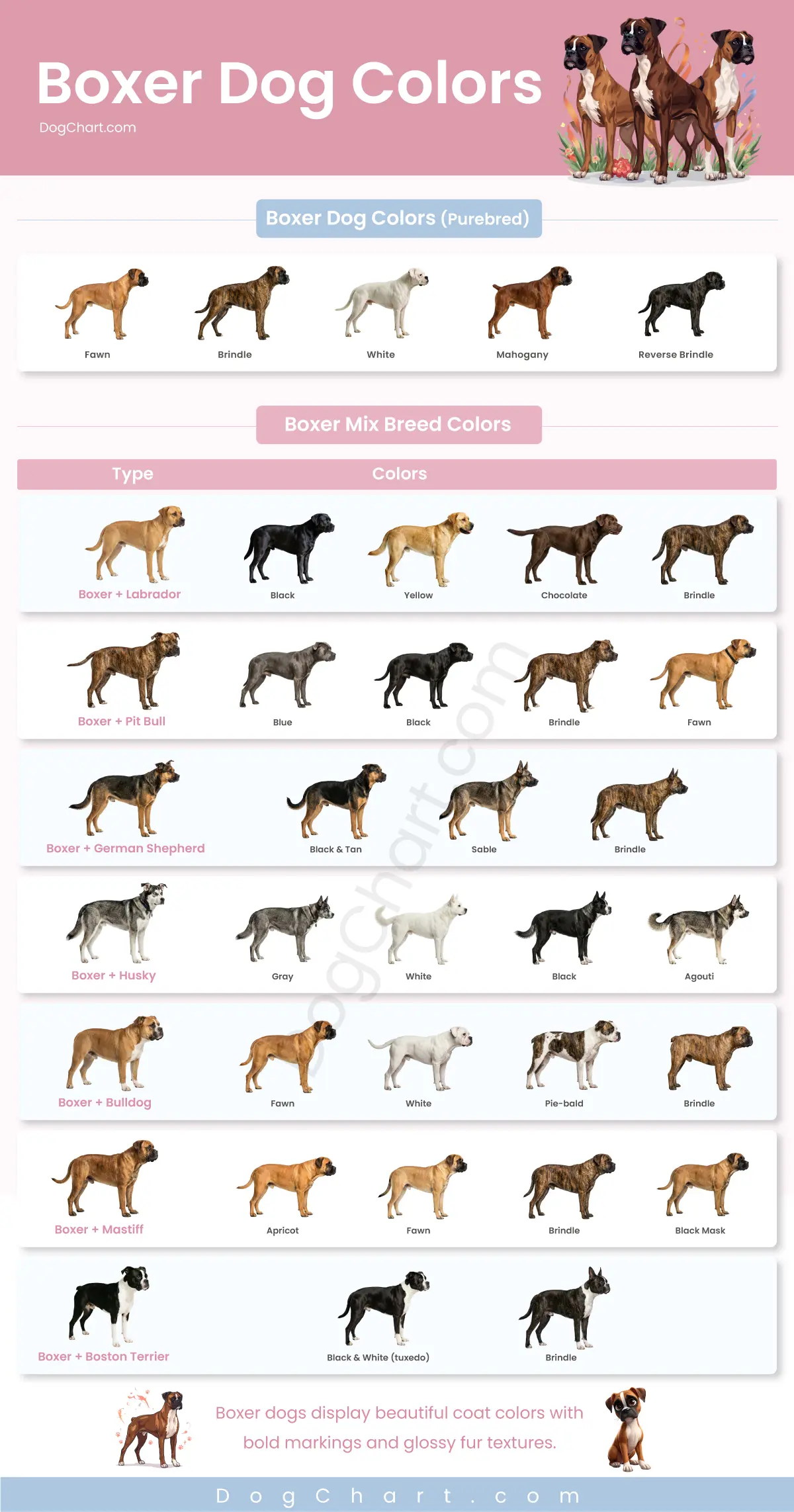
Table of Contents
The Two Base Boxer Coat Colors
The AKC breed standard recognizes two base colors for this breed: fawn and brindle. Fawn ranges from light tan to deep mahogany. Brindle shows black stripes on a fawn background.
Every other Boxer coat pattern is a variation of these two. White markings can appear on both. Solid white is not a standard color under the AKC breed standard.
Boxer Dog Colors (Purebred)
Here are the main Boxer coats you’ll see in purebred lines.
| Color Type | Description | Common? |
|---|---|---|
| Fawn | Light tan to deep reddish-brown | Very common |
| Brindle | Dark stripes on fawn base (tiger-like) | Very common |
| White | Mostly white coat (may have patches) | Less common (~20–25%) |
| Mahogany | Deep reddish-brown (dark fawn) | Common variation |
| Reverse Brindle | Mostly dark with lighter stripes | Less common |
Fawn Boxers in Detail
Fawn is the most common base color in the breed. Shades vary from light tan to deer red to mahogany. The fawn color covers the body with a black mask on the face.
Some fawn Boxers have a white flash on the chest or muzzle. A fawn Boxer can show black shading along the back. The AKC accepts all shades of fawn as standard colors for the breed.
Brindle Boxers in Detail
Brindle Boxers carry dark stripes over a fawn base color. The pattern ranges from sparse to dense by dog. Light brindle shows a few defined black stripes. Standard brindle shows more even black striping over the fawn base.
Reverse brindle packs so much black striping that the fawn background barely shows through. Sealed brindle is the heaviest pattern, where the dog looks close to solid black.
The fawn ground color beneath the stripes must stay visible in a show-quality brindle coat. Brindle ranges from sparse to dense, but the fawn base must always be present.
Reverse Brindle
Reverse brindle is a popular variation where dark stripes dominate the fawn base. From a distance, a reverse brindle Boxer can look solid black.
Up close, you can see the fawn ground color between the dark stripes. Reverse brindle meets the AKC standard as long as the fawn base is present. It’s not a separate color. It’s an extreme brindle pattern.
White Boxers
About 20–25% of Boxer puppies are born white or near-white. White Boxers are not albino. They have normal pigmentation. The eyes are dark and the nose is black. The color comes from the extreme white spotting gene carried by flashy parents.
White Boxers face a higher risk of deafness than fawn or brindle dogs. About 18% are deaf in one or both ears. BAER testing at 6 weeks confirms hearing status. Deaf Boxers can still live happy lives with hand signals. The Boxer lifespan guide covers other health concerns worth knowing about.
Mahogany Boxers
Mahogany is a deep, reddish-brown shade of fawn. It looks darker than standard fawn but lighter than brindle. Some breeders call it “dark deer red.” Mahogany Boxers show strong contrast against their black masks. The color is accepted under the AKC breed standard as one of the natural shades of fawn.
Black Mask and White Markings
Every Boxer except solid white has a black mask. The mask covers the muzzle and can extend up toward the eyes. Flashy Boxers carry white markings on the chest, belly, paws, and face. Plain Boxers have little to no white.
White markings look good but the breed standard does not require them. They range from light to prominent. Prominent white on a large share of the chest and feet is called “flashy.” A Boxer with white on more than one-third of the body counts as a white Boxer rather than a flashy fawn or brindle.
What About Solid Black Boxers?
Solid black Boxers don’t exist in the breed. The Boxer doesn’t carry the gene for solid black coats. Any dog sold as a “solid black Boxer” is either a reverse brindle or a mix. Dark reverse brindles can look black at first glance, but the fawn background is still there.
Blue and liver Boxers are also not recognized by the kennel club. These colors come from outcrossing or reflect non-standard dilutes that shouldn’t be bred.
Boxer Mix Breed Colors
Mixing brings more colors than standard Boxer genetics allow. Here are the common Boxer mixes and their color ranges.
| Mix Type | Possible Colors | Notes |
|---|---|---|
| Boxer + Labrador | Black, Yellow, Chocolate, Brindle | Black very common |
| Boxer + Pit Bull | Blue, Black, Brindle, Fawn | Wide variety |
| Boxer + German Shepherd | Black & Tan, Sable, Brindle | Shepherd patterns appear |
| Boxer + Husky | Gray, White, Black, Agouti | May have blue eyes |
| Boxer + Bulldog | Fawn, White, Pie-bald, Brindle | Stocky appearance |
| Boxer + Mastiff | Apricot, Fawn, Brindle, Black Mask | Large, darker tones |
| Boxer + Boston Terrier | Black & White (tuxedo), Brindle | Compact size |
A Boxer Lab mix shows a black coat in most litters because Labrador black is dominant over fawn. Boxer Husky mixes inherit blue eyes from the Husky parent. Boxer Bulldog mixes produce pie-bald patterns with white patches mixing into the stripes.
How Color Affects Price
Most Boxer breeders don’t price heavily by color. Standard fawn and brindle run the same price from the same breeder. White Boxers cost $200–$500 more because of demand, not rarity.
Flashy fawn and flashy brindle puppies with strong white markings carry small premiums. Reverse brindle and mahogany don’t change the price. See the Boxer price guide for full pricing across bloodlines and breeders.
Does Color Affect Health?
For most colors, no. Fawn Boxers and brindle Boxers share the same health profile and face the same breed-specific risks. White Boxers carry a higher risk of deafness.
The extreme white spotting gene affects inner ear pigmentation during development. White Boxers face no other breed-specific risks beyond deafness. Their lifespan matches the 10–12 year average for the breed.
Boxer Puppy Color Changes
Boxer puppies change shade as they mature. A light fawn pup can deepen into mahogany by 12 months. Fawn shades shift through the first year. Brindle stripes intensify or soften with age. Thin stripes darken over time. White markings stay stable from birth.
The black mask darkens in the first few months. The adult coat settles by 12–18 months. You’ll know the final coat your dog will carry into adulthood by then.
Boxer Color and Personality
Coat color has no effect on Boxer personality. A fawn Boxer has the same temperament as a brindle or white one. They’re all playful and loyal with family.
Don’t choose a puppy based on color alone. Health testing and temperament matter more than appearance. See the Boxer size guide for breed measurements and the dog breeds chart for broader breed comparisons.
FAQs
What colors do Boxers come in?
The colors are fawn and brindle under the AKC breed standard. Fawn ranges from light tan to dark mahogany. Brindle shows dark stripes on a fawn base. White Boxers exist but aren’t AKC show-accepted.
Are solid black Boxers real?
No. Solid black Boxers don’t exist in the breed. The Boxer doesn’t carry the gene for solid black coats. Dogs that look black are reverse brindle or mixes with another breed.
Are white Boxers rare?
No. About 20–25% of Boxer puppies are born white, which makes them common in litters. They face AKC show restrictions and a higher risk of deafness than fawn or brindle dogs.
What is reverse brindle in Boxers?
Reverse brindle shows such heavy black striping that the fawn ground color barely shows through. The dog looks dark with light stripes. It’s an extreme brindle pattern, not a separate color.
Can Boxers be shown with white markings?
Yes, as long as the white covers less than one-third of the body. Flashy Boxers with prominent white on the chest and feet are show-eligible. Boxers that are mostly white face show restrictions. See the Boxer food guide for feeding details.