
Boxer Dog Lifespan – How Long Do Boxers Live?
My uncle’s Boxer Max made it to 13. For the breed, that’s rare. Most Boxers live 10–12 years. My uncle credited Max’s extra year to two things: early health screening and controlled feeding.
No table scraps. No overfeeding. Vet checkups every six months with full bloodwork. That care added a year to a breed that loses most dogs to cancer or heart disease.
The average Boxer dog lifespan is 10–12 years. That’s shorter than many medium breeds. Boxers carry a high genetic load for cancer and heart conditions. Boxer cardiomyopathy is breed-specific. It causes a large share of premature deaths. Mast cell tumors are the other major killer.
This guide covers average lifespan by Boxer type and the common health issues that cut it short. It also lays out what you can do to help your Boxer live longer.
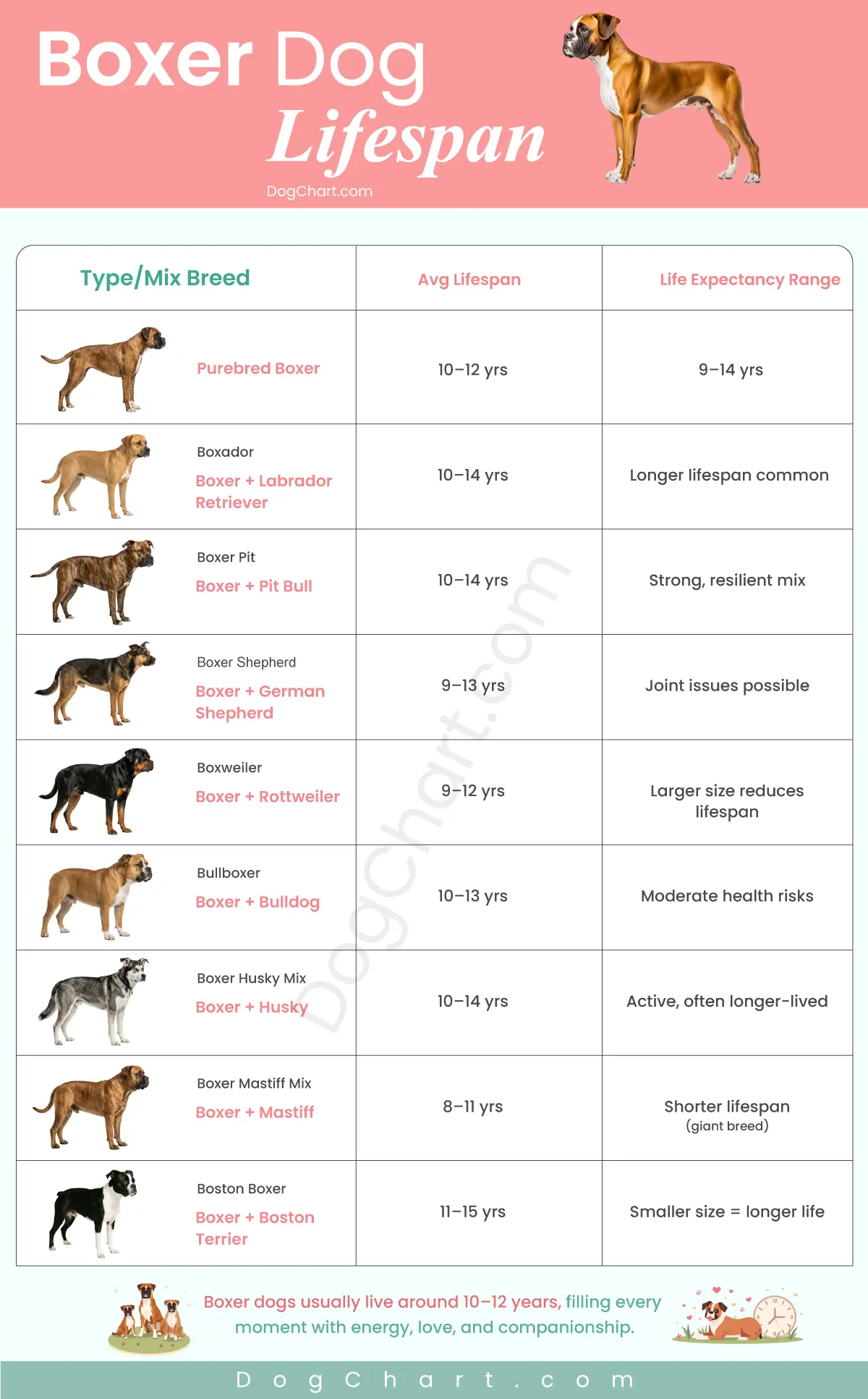
Table of Contents
Boxer Lifespan Chart
| Factor | Details |
| Average Lifespan | 10–12 years (life expectancy of the modern Boxer) |
| Life Expectancy Range | 9–14 years |
| Male Average | 9–11 years |
| Female Average | 10–12 years |
| Senior Age | Starts around 7 years |
| Biggest Killer | Cancer (mast cell tumors, lymphoma) |
| Second Biggest | Boxer cardiomyopathy (ARVC) |
| Breed Type | Brachycephalic working breed |
| Origin | Germany, descended from the Bullenbeisser |
Boxer Lifespan by Type and Mix
The lifespan of a Boxer varies by whether it’s a purebred or a mix. Mixes benefit from hybrid vigor, which extends life expectancy compared to pure breeds. The table below shows average lifespan ranges for the purebred Boxer and eight Boxer mixes.
| Type | Breed Mix | Avg Lifespan | Life Expectancy Range |
| Purebred Boxer | — | 10–12 yrs | 9–14 yrs |
| Boxador | Boxer + Labrador Retriever | 10–14 yrs | Longer lifespan common |
| Boxer Pit | Boxer + Pit Bull | 10–14 yrs | Strong, resilient mix |
| Boxer Shepherd | Boxer + German Shepherd | 9–13 yrs | Joint issues possible |
| Boxweiler | Boxer + Rottweiler | 9–12 yrs | Larger size reduces lifespan |
| Bullboxer | Boxer + Bulldog | 10–13 yrs | Moderate health risks |
| Boxer Husky Mix | Boxer + Husky | 10–14 yrs | Active, longer-lived |
| Boxer Mastiff Mix | Boxer + Mastiff | 8–11 yrs | Shorter lifespan (giant breed) |
| Boston Boxer | Boxer + Boston Terrier | 11–15 yrs | Smaller size = longer life |
The Boston Boxer mix has the longest average lifespan at 11–15 years because small dogs live longer than large ones. The Boxer Mastiff mix has the shortest. Giant breeds carry more orthopedic and cardiac stress. Boxer puppies from healthy mix parents live 1–2 years longer than purebred Boxer pups.
History of the Boxer Breed
To understand Boxer health, some breed background helps. The Boxer descended from a mastiff-type dog called the Bullenbeisser (“bull biter”) and the English Bulldog. The Bullenbeisser hunted large game in 16th century Germany. Some trace its roots back to the war dogs of the ancient Assyrian empire.
That original breed no longer exists. Its genetic contribution produced the modern Boxer. Flocki was the first Boxer entered into the studbook of the Munich Boxer Club in 1895. The breed standard was formalized just before that registration.
The American Kennel Club registered its first Boxer in 1904. The breed has been popular in the US ever since. The American Boxer Club was founded in 1935 to maintain breed standards and track genetic health across generations.
Boxers have worked as service dogs, therapy dogs, and guard dogs. They’re one of the most versatile working breeds. Their role evolved from bull-baiting to family companion over the past century. The working dog breeds page covers Boxer history alongside other working dogs.
Common Health Issues
Boxers carry several health risks that hit the breed harder than others. Knowing these issues helps you catch them early and extend your Boxer’s life expectancy.
| Condition | How Common | Impact |
| Cancer (mast cell, lymphoma) | Very Common | Leading cause of death in the breed |
| Boxer Cardiomyopathy (ARVC) | Common | Arrhythmogenic right ventricular cardiomyopathy |
| Aortic Stenosis | Common | Heart condition, exercise intolerance |
| Hip Dysplasia | Moderate | Joint pain, mobility loss |
| Bloat (GDV) | Moderate | Emergency stomach condition |
| Degenerative Myelopathy | Rare | Progressive spinal disease |
| Hypothyroidism | Moderate | Weight gain, coat loss |
| Brachycephalic Syndrome | Moderate | Breathing difficulty in heat |
Cancer is the biggest concern. Boxers have one of the highest cancer rates of any popular breed. Mast cell tumors show up as skin lumps on the body, paws, or muzzle. Any new lump should go to a vet right away.
Arrhythmogenic right ventricular cardiomyopathy (ARVC) is breed-specific to Boxers. It causes irregular heartbeats and can lead to sudden death. The American Veterinary Medical Association and the American Boxer Club recommend annual heart screening starting at age 3. Ask your vet about Holter monitoring for at-risk lines.
Brachycephalic syndrome affects Boxers because of the short muzzle. They have breathing difficulty in hot weather. Avoid exercising them in extreme heat. The dog life expectancy chart covers longevity across breeds.
How to Help Your Boxer Live Longer
Owning a Boxer comes with responsibilities that affect their long life. Here’s what works for most Boxer owners.
Keep them lean. Overweight Boxers face higher cancer risk and joint problems. A healthy Boxer should have a visible waist and easy-to-feel ribs. Don’t feed your Boxer table scraps.
Regular veterinary care. Twice a year minimum after age 5. Annual bloodwork and heart screening starting at age 3. Early detection of cancer or cardiac issues can add 1–2 years.
Quality food. Premium large-breed formula with controlled protein and joint-support additives. See the Boxer food guide and the dog food chart for recommendations.
Plenty of exercise and mental stimulation. Boxer dogs need 1–2 hours of daily activity. They thrive on play, runs, and dog sports like agility or flyball. A bored Boxer becomes destructive. Boredom-stress shortens life. Boxers need exercise and mental stimulation in equal measure. They’re not independent dogs that entertain themselves.
Avoid bloat. Feed 2–3 smaller meals per day. No vigorous exercise 1 hour before or after eating. Use slow-feeder bowls if your dog eats fast.
Buy from health-tested lines. Reputable breeders screen for cardiomyopathy, hip dysplasia, and cancer predisposition. The Boxer price guide covers what to expect from a responsible breeder.
Senior Boxer Care
Boxers hit senior status around age 7. Watch for gray muzzle, stiffness after rest, reduced play drive, and weight changes. Most Boxers stay active well into their double digits with proper care.
Senior Boxers benefit from orthopedic beds, joint supplements like glucosamine and chondroitin, and shorter but more frequent walks. Switch to softer food if dental issues develop. Brush the coat weekly. A healthy Boxer coat reflects overall health. Senior checkups should include bloodwork, heart screening, and a tumor check.
Learn your Boxer’s normal behavior so you can spot changes early. Sudden appetite loss, new lumps, difficulty breathing, or confusion signal something beyond normal aging. Call your vet right away.
Boxers as Family Dogs and Companions
Boxers make excellent family dogs. They’re playful and gentle and form deep bonds with their humans. They stay patient with children and clown around well into adulthood. They’re alert as guard dogs without being aggressive. Boxers work as therapy dogs and service dogs thanks to their trainability and even temperament.
This breed needs commitment. Boxers are strong dogs that need daily exercise and structured training. They want to be part of family life, not backyard dogs left alone. Boxers develop separation anxiety if ignored. For size and growth, see the Boxer size guide. For coat variety, the Boxer colors guide covers fawn, brindle, and white markings.
Buying or Adopting a Boxer
Health testing matters whether you’re buying or adopting. A first Boxer in your home should come from a reputable breeder or breed-specific rescue. Avoid puppy mills and backyard operations. Boxer Rescue organizations across the US have adult Boxers ready for homes. These dogs come temperament-tested and vaccinated.
Spend time with the breed before committing. Talk to current owners. Visit a local dog show and meet adult Boxers to gauge their energy level. This breed rewards dedicated ownership and punishes casual care. If you can commit to daily exercise and ongoing health monitoring, a Boxer will give you 10–12 years of devoted companionship.
Frequently Asked Questions
How long do Boxers live?
The average lifespan of a Boxer is 10–12 years. Well-cared-for Boxers from health-tested lines reach 13–14. The dog life expectancy chart compares Boxer longevity to other breeds.
What do Boxers usually die from?
Cancer is the leading cause, followed by Boxer cardiomyopathy (ARVC). These two conditions account for most premature deaths in the breed. Health studies have confirmed these as the top killers.
Do female Boxers live longer than males?
Slightly, yes. Females average 1–2 years longer than males. This is typical for larger breeds.
Are white Boxers shorter-lived?
No. A white Boxer lives the same 10–12 years as fawn or brindle Boxers. White Boxers have a higher rate of deafness but not a shorter lifespan. See the Boxer colors guide for details.
Can Boxers live 15 years?
It’s rare but possible. Some Boxers reach 14–16 years with excellent genetics, diet, and veterinary care. Mixes like the Boston Boxer hit 15+ thanks to smaller size and hybrid vigor.
What’s the oldest Boxer on record?
Verified cases around 16–17 years exist but are rare for this breed. Most Boxers live 10–12 years. The dog breeds chart compares lifespan data across popular breeds.