
Best Dog Food for Boxers – Complete Feeding Guide
A Boxer owner I know switched her 3-year-old from a grocery-brand kibble to a premium large-breed formula. Within two months his coat got glossier, his stool firmed up, and his energy leveled out. She said the food cost $20 more per bag, but the vet bills dropped once his chronic gas and itching cleared up. Sometimes that’s all it takes.
Finding the best dog food for Boxers comes down to a handful of breed-specific needs. Boxers are muscular and athletic, and they tend toward food allergies, sensitive stomachs, and bloat.
Their diet needs high-quality animal protein as the first ingredient, moderate fat, and few fillers. Get that right and you back up their muscle, their joints, and the energy this breed never seems to run out of.
This guide covers the top brands, feeding amounts by age and weight, the nutrients that matter most, how to lower bloat risk, and what to keep out of the bowl.
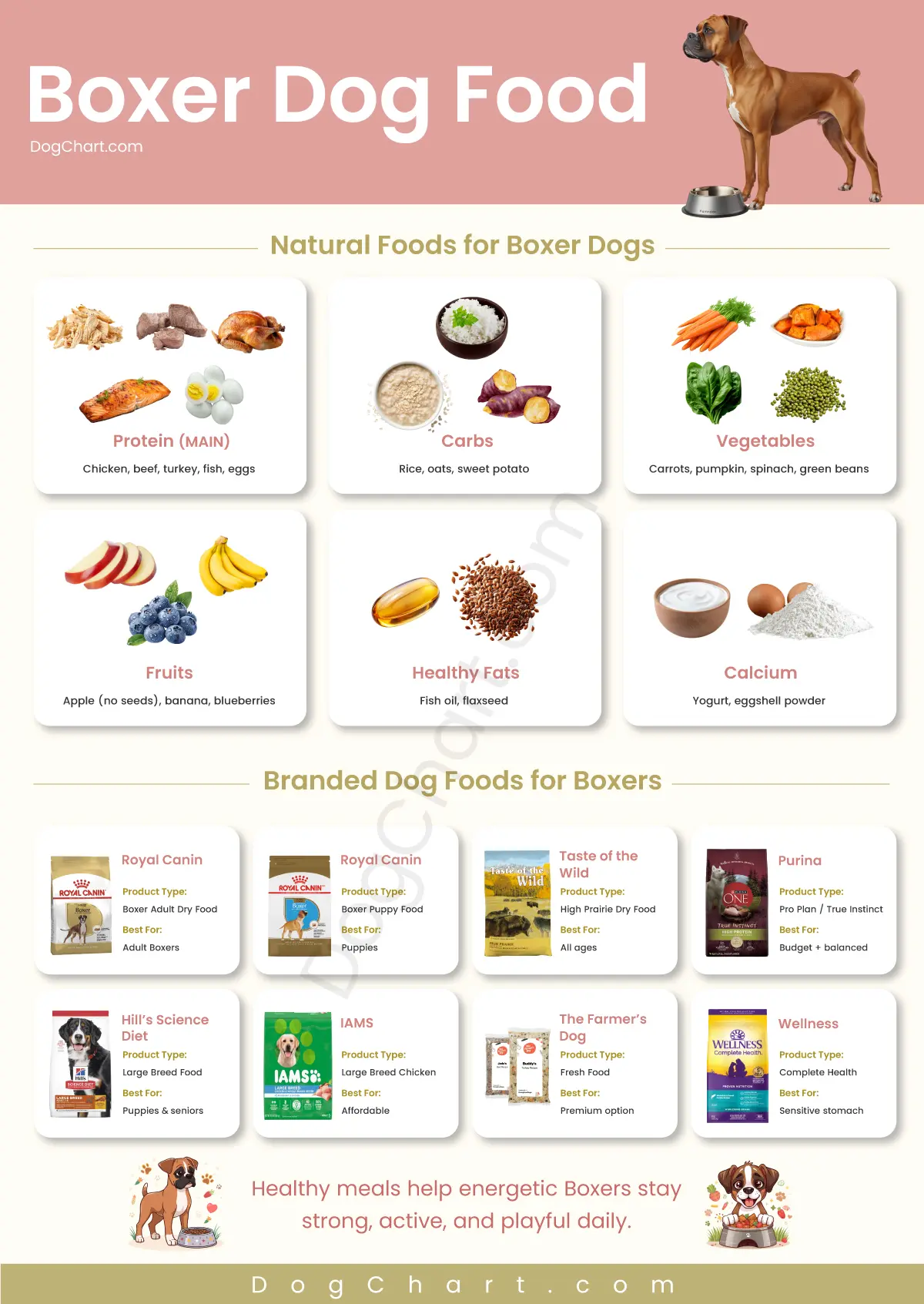
Table of Contents
What Boxers Need in Their Food
Boxers are a big, high-energy breed, so they need food that builds lean muscle and looks after the heart. The first ingredient should be a named protein.
Chicken, beef, fish, or lamb all work well. Skip anything that leads with generic “meat meal” or “animal by-products,” since those are lower-quality sources that don’t give a Boxer much to work with.
Check that the label meets AAFCO nutrient profiles for large-breed adult dogs and says the food is complete and balanced for your dog’s life stage.
Words like “natural” or “premium” on the front of the bag mean almost nothing without that AAFCO line on the back. If you want a second opinion before buying, Dog Food Advisor publishes unbiased brand reviews.
Natural Foods for Boxer Dogs
If you like to cook at home or add fresh food on top of kibble, these ingredients cover the main nutrient groups a Boxer needs.
| Food Type | Examples | Benefits |
| Protein (main) | Chicken, beef, turkey, fish, eggs | Muscle growth and energy |
| Carbs | Rice, oats, sweet potato | Steady energy, easy digestion |
| Vegetables | Carrots, pumpkin, spinach, green beans | Fiber and vitamins |
| Fruits | Apple (no seeds), banana, blueberries | Antioxidants |
| Healthy fats | Fish oil, flaxseed | Skin and heart health |
| Calcium | Yogurt, eggshell powder | Bone strength |
Aim for protein at roughly 25–30% of the diet, which is higher than most small breeds need. Rice and sweet potato give steady energy without the blood-sugar spikes you get from cheap fillers, and they sit well on a sensitive stomach.
Fish oil earns its place because it supports the heart, which is a real concern in a breed prone to cardiomyopathy. Cook meat and vegetables plain. No salt, garlic, onion, or seasoning, since several common spices are toxic to dogs.
Best Branded Dog Foods for Boxers
These are the brands owners and vets recommend most often for Boxers. Each one leans toward a different budget or health need.
| Brand | Product Type | Best For | Key Benefits |
| Royal Canin | Boxer Adult Dry Food | Adult Boxers | Breed-specific, heart support |
| Royal Canin | Boxer Puppy Food | Puppies | Controlled calcium for safe growth |
| Taste of the Wild | High Prairie Dry | All ages | High protein, grain-free option |
| Purina | Pro Plan / True Instinct | Budget and balanced | Good protein and digestion |
| Hill’s Science Diet | Large Breed Food | Puppies and seniors | Vet-recommended, joint support |
| IAMS | Large Breed Chicken | Affordable | Balanced everyday nutrition |
| The Farmer’s Dog | Fresh Food | Premium option | Human-grade fresh meals |
| Wellness | Complete Health | Sensitive stomach | Natural ingredients |
Royal Canin Boxer Formula
Royal Canin’s Boxer Adult formula is built around the breed’s shape and known health risks, which is why so many owners reach for it first.
The line splits into separate puppy and adult recipes, each tuned to the life stage. The kibble itself is shaped for the Boxer’s square muzzle and underbite, so it’s easier to pick up and chew than standard round pieces.
The recipe adds taurine and L-carnitine for heart support, which counts for a breed with real cardiac risk. Plenty of owners use the Royal Canin Boxer wet food as a topper too, either for a picky eater or just to add some moisture to the dry food.
A common routine is dry food for daily meals with wet food mixed in once or twice a week. Both are easy to find in stores and online.
Feeding Chart by Age
How much your Boxer eats depends on age, weight, and how active they are. Use the chart below as a starting point for each life stage.
| Age | Meals / Day | Daily Amount |
| 8–12 weeks | 4 | 1.5–2 cups puppy food |
| 3–6 months | 3 | 2–3 cups |
| 6–12 months | 2–3 | 3–4 cups |
| 1–7 years | 2 | 3–5 cups adult dry food |
| 8+ years | 2 | 2.5–4 cups senior |
Puppies need four meals a day until about 12 weeks because their stomachs are too small to get enough calories in fewer sittings. Drop to three meals from 3 to 6 months, then move to twice a day once they hit adolescence. Stay on a large-breed puppy formula until 12 to 15 months.
The controlled calcium keeps them from growing too fast and stressing young joints. Switching to adult food too soon is one of the most common mistakes new owners make.
Key Nutrients for Boxers
The right mix of nutrients helps a Boxer hold muscle, protect the heart, and dodge the stomach trouble the breed is known for.
Protein (25–30%)
Protein feeds the muscle on this athletic breed. Named meat sources like chicken, beef, and salmon work best because the amino acids come in a form Boxers digest easily. It matters most during puppy growth spurts, though adults need plenty too to keep their tone through their active years.
Omega-3 Fatty Acids
Fish oil or salmon oil supports the heart, which is the big one for a breed prone to cardiomyopathy. Omega-3s also sharpen the coat, calm joint inflammation, and help older Boxers stay clear-headed. Many premium foods already include fish oil, but a liquid supplement stirred into kibble works if yours doesn’t.
Taurine and L-carnitine
These amino acids help the heart muscle do its job, and they sometimes run low in grain-free diets. Owners whose dogs have a family history of Boxer cardiomyopathy sometimes add them for extra cardiac support. Check with your vet first so the dose actually fits your dog.
Glucosamine and Chondroitin
These support the hips and slow down joint wear. Start them around age 3 or 4 to head off problems rather than chase them later. A lot of large-breed foods list them on the label, but usually at levels too low to do much, so an extra supplement can help an active Boxer.
Probiotics
Probiotics feed the gut bacteria that keep a sensitive stomach settled. They cut down on loose stools and help a Boxer get more out of each meal. Look for a food with probiotics built in, or add a daily powder to the bowl.
Bloat Prevention
Boxers sit at moderate risk for bloat, or gastric dilatation-volvulus (GDV), which is a true emergency. The simplest defense is splitting the day into 2 or 3 smaller meals instead of one big one. A stomach that never gets overfull is far less likely to twist on itself, and that twist is what makes bloat deadly.
Keep hard exercise out of the hour before and after meals, because running on a full stomach pushes the risk up. If your Boxer inhales food, a slow-feeder bowl helps, since gulping air along with kibble is part of the problem. Give fresh water all day, but don’t let them down a huge bowlful right after eating. Emergency bloat surgery runs $3,000 to $7,500 at most US clinics, so prevention is the cheap option by a wide margin.
Food Allergies and Sensitive Stomachs
Boxers react to food more often than a lot of breeds, and the usual suspects are chicken, beef, corn, wheat, and dairy. The signs show up as itchy skin, repeat ear infections, paw licking, loose stools, or flaky patches in the coat. Dogs with touchy stomachs often do better on a limited-ingredient diet with one protein and one carb, which makes it much easier to spot the trigger.
When you switch foods, take 7 to 10 days to do it. Start at 25% new food and 75% old for three days, go 50/50 for three more, then 75/25 before the full swap. Change it overnight and you’ll almost always get loose stools, even when the new food is the better one. If allergies stick around no matter which over-the-counter limited-ingredient food you try, ask your vet about a prescription hydrolyzed-protein diet.
Foods to Avoid
Never give a Boxer chocolate, grapes, raisins, onions, garlic, xylitol (it’s in a lot of sugar-free products), or macadamia nuts. All of them are toxic to dogs. Go easy on fatty table scraps too, especially rich meats and sauces, because they can set off pancreatitis in a breed that already has a touchy gut. Keep dairy light, since plenty of Boxers are lactose-sensitive, though a spoonful of plain yogurt is usually fine.
Watch the label for gluten and cheap fillers, which are often behind the skin and stomach flare-ups. Corn, wheat, and soy show up in a lot of budget brands, and Boxers tend not to handle them well. See the dog food chart for the full safe-foods list.
Raw, Wet, and Fresh Food Options
Raw diets suit some Boxers, but only if they’re balanced properly. Expect to spend $200 to $400 a month depending on your meat source and whether you buy a pre-made blend or build meals yourself. Talk to a veterinary nutritionist before committing to full raw, because an unbalanced version can cause deficiencies that take months to show.
Fresh-food services like The Farmer’s Dog are a good fit for Boxers who need solid nutrition without you doing the cooking. They ship pre-portioned, human-grade meals, and a lot of Boxers do well on them. Wet or canned food works as a topper to add moisture and flavor for a fussy eater. It’s a useful trick when a Boxer goes off plain kibble, but it’s a pricey way to feed a large breed as a full diet, so most people keep it to a topper.
How Much Should a Boxer Eat?
Portion size comes down to age, weight, activity, and whether your dog is spayed or neutered. Most adult Boxers do well on 3 to 5 cups of quality food a day, split into two meals. A Boxer logging 2-plus hours of exercise might need closer to 6, while a senior or couch-leaning dog might want only 2.5 to 3.
Weigh your dog once a month and adjust by body condition, not just the number on the bag. A healthy Boxer has a visible waist from above and ribs you can feel without digging. If the ribs hide under a layer of padding, trim the food 10–15%. If they stick out too far, add the same. The Boxer size guide has weight references by age if you want a closer look.
How to Choose a Dog Food
Read the label and look for a named protein in the first slot. Find the AAFCO statement that says the food is complete and balanced for your dog’s life stage, since anything without it isn’t a full diet. Steer clear of artificial colors, chemical preservatives, and cheap fillers like corn gluten meal leading the ingredient list.
Every dog is different, and a food that suits one Boxer can flop for another. Some do great on Royal Canin, others prefer Taste of the Wild or Wellness. If yours is itchy, gassy, or low on energy with their current food, try a different brand before assuming it’s a medical problem. For a specific health condition, your vet or a food maker’s nutritionist hotline can point you the right way.
Feeding Senior Boxers
A Boxer’s needs shift as they get older. Seniors burn fewer calories as their metabolism slows, but they want more joint support, better protein, and food that’s easy on digestion. Move to a senior formula around age 7, or sooner if your dog is slowing down or showing joint trouble.
Add glucosamine and chondroitin for the joints, and an omega-3 supplement for heart and brain. Smaller, more frequent meals are easier on an older gut. Keep a close eye on weight, because seniors drop muscle fast when they’re underfed and pack it on just as fast when they’re overfed. The Boxer lifespan guide goes deeper on the health issues that come with age.
FAQs
How much should a Boxer eat?
Most adult Boxers eat 3 to 5 cups of quality kibble a day, split into two meals. Adjust up or down based on weight, activity, and whether your dog is gaining or losing. Hard-working Boxers need more; older or quieter ones need less.
Are Boxers prone to food allergies?
Yes. Chicken, beef, corn, wheat, and dairy trigger most of them. Itchy skin, repeat ear infections, and stomach upset are the early warning signs. A limited-ingredient diet usually helps, and an elimination trial can pin down the exact culprit.
What’s the best food for a Boxer puppy?
Royal Canin Boxer Puppy is the top breed-specific pick because it’s built for the breed’s growth rate and jaw shape. Purina Pro Plan Large Breed Puppy and Hill’s Science Diet Large Breed Puppy are strong alternatives. All three control growth for large-breed pups and meet AAFCO puppy standards.
Can Boxers eat grain-free food?
They can, but the FDA has flagged a possible link between grain-free diets and heart trouble in some breeds. That’s a bigger deal for Boxers, who already carry cardiomyopathy risk. Check with your vet before going grain-free, especially if heart problems run in your dog’s line.
Is Royal Canin good for Boxers?
Yes. The Boxer Adult formula is made for the breed, the kibble fits the jaw, and the added taurine and L-carnitine back up the heart. It’s the breed-specific food vets and breeders name most. See the Boxer size guide for portions by weight and the Boxer price guide for budgeting.