
Corgi Temperament: What Are Corgis Really Like?
I dog-sat my cousin’s Pembroke, Tater, for a week last fall. I learned more about corgi temperament in those seven days than in years of reading breed profiles. He herded me from room to room. He barked at every delivery truck. By the third night, he slept pressed against my legs.
The classic corgi temperament mixes affection, brains, and a stubborn streak a mile wide. Corgis rank as the 11th smartest dog breed on Stanley Coren’s scale. They bond hard with their people. They also bark a lot and hold strong opinions. The herding instinct never switches off.
This guide covers what corgis are like day to day. You’ll see how they handle kids, other dogs, and strangers. I’ll also explain why they bark so much and how to train the stubborn streak.
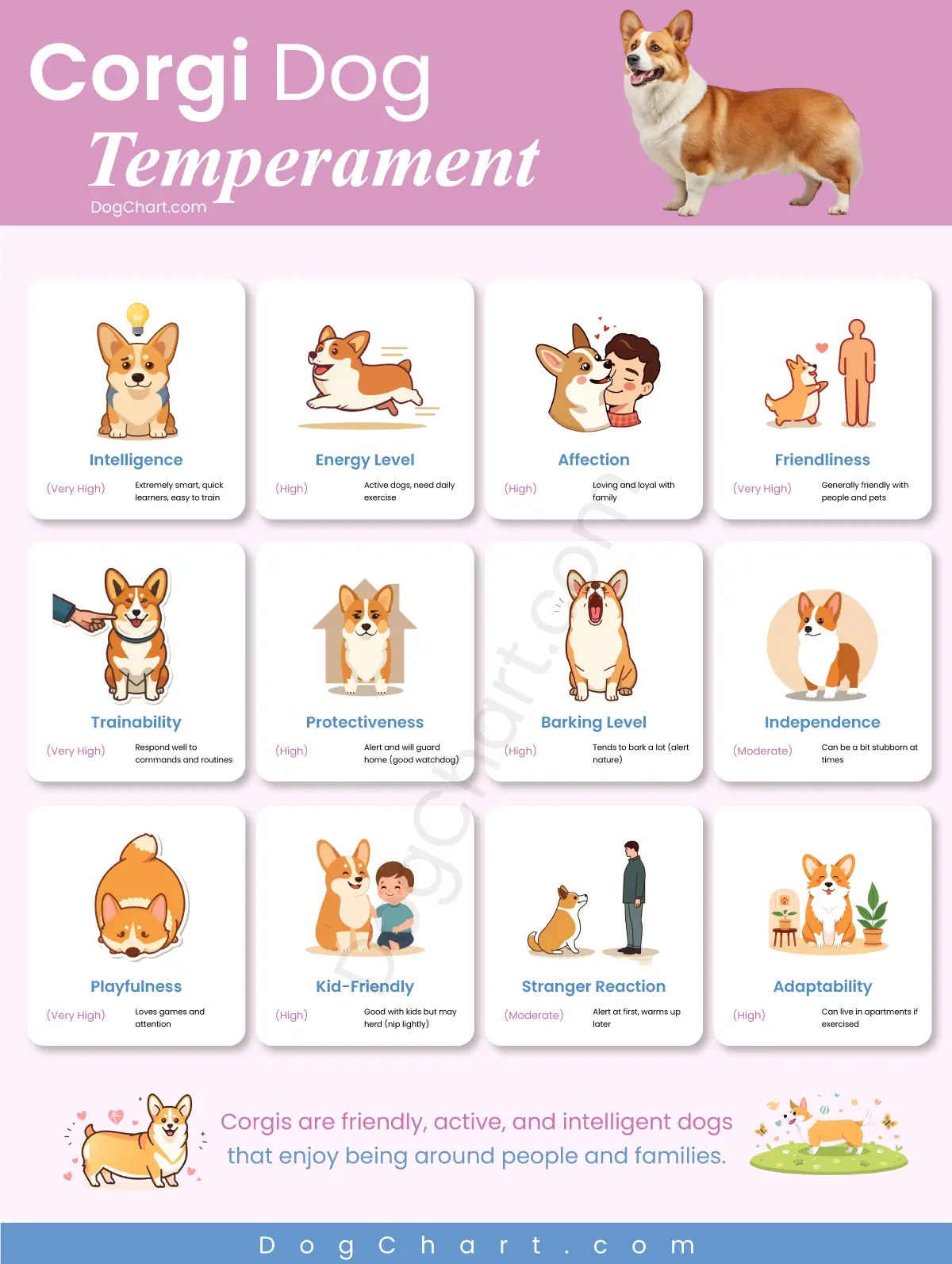
Table of Contents
Corgi Temperament Chart
| Trait | Details |
| Core Traits | Loyal, smart, vocal |
| Intelligence Rank | #11 of 138 breeds (Coren scale) |
| Energy Level | Moderate to high |
| Daily Exercise | 45–60 minutes |
| Good With Kids | Yes, with supervision |
| Good With Dogs | Usually, with early socialization |
| Bark Level | Above average |
| Good With Strangers | Reserved at first |
Corgi Dog Temperament Chart
The chart below rates the main traits of the Welsh corgi on a 1 to 5 scale. The ratings draw on AKC breed standard notes and behavior surveys of thousands of corgi owners.
| Trait | Level | Description |
| Intelligence | ★★★★★ Very High | Very smart, quick learners, easy to train |
| Energy Level | ★★★★☆ High | Active dogs that need daily exercise |
| Affection | ★★★★☆ High | Loving and loyal with family |
| Friendliness | ★★★★☆ High | Friendly with people and pets |
| Trainability | ★★★★★ Very High | Respond well to commands and routines |
| Protectiveness | ★★★★☆ High | Alert and will guard the home |
| Barking Level | ★★★★☆ High | Tends to bark a lot |
| Independence | ★★★☆☆ Moderate | Can be stubborn at times |
| Playfulness | ★★★★★ Very High | Loves games and attention |
| Kid-Friendly | ★★★★☆ High | Good with kids but may herd and nip lightly |
| Stranger Reaction | ★★★☆☆ Moderate | Alert at first, warms up later |
| Adaptability | ★★★★☆ High | Can live in apartments if exercised |
These ratings fit both the Pembroke Welsh Corgi and the Cardigan line. Every dog varies, but the pattern holds across the two corgi types and matches the breed information published by the American Kennel Club.
Corgi Personality and Breed Origins
Farm work in Wales shaped the corgi we know today. Flemish weavers brought corgis to Wales around the 12th century. The dogs went straight to work herding cattle across open fields. Their short legs and low body let them nip at heels and duck the kick that came back.
That job built an alert, confident dog with real brains. Corgis still carry those farm instincts. A corgi puppy shows them by 8 weeks old. It nips at heels in play and barks at anything new. The temperament traces straight back to one task: moving cattle on Welsh hills.
The Pembroke and the Cardigan Welsh Corgi share most of these traits. Many owners say Cardigans run a bit calmer and more reserved. Both lines still show the same loyal, alert, clever pattern.
AKC Breed Standard Temperament
The American Kennel Club calls the corgi “bold but kindly.” It ranks the breed among the most agreeable small housedogs. That easy nature sits right next to a working dog’s sharp alertness.
The AKC also calls the Pembroke a “lively little herder” that stays affectionate with family. The Kennel Club in the UK agrees the corgi trains easily for a herding breed. The reason is simple. These dogs were bred to read human cues while they worked cattle.
Cardigan standards describe a similar dog with a touch more reserve around strangers. The AKC groups both corgis as herding dogs. Their group-mates include the Australian Cattle Dog and the Australian Shepherd.
Are Corgis Good With Kids?
Corgis do well with kids over age 6 who handle a dog with respect. They play hard and stay patient. The catch is the herding instinct. It can turn into ankle-nipping when toddlers run and shriek.
Socialization matters most here. A corgi raised around children grows into a steady family dog. One raised in a kid-free home may stay jumpy around little ones later. Corgis also need clear rules about which herding moves are okay indoors.
For homes with young kids, supervise and stay consistent. Reward calm behavior. Redirect the nip. Give the corgi a quiet spot to retreat when the noise climbs.
How Corgis Behave With Other Dogs and Strangers
Some Pembrokes show same-sex aggression, most often between two unneutered males. Most corgis live fine with another dog when they meet young and get clear routines. Corgis also tend to do well with cats they grew up beside.
At the dog park, a corgi may try to herd the other dogs. It cuts off chase games and barks at play it finds too rough. This looks worse than it is. It rarely tips into real aggression. For breeds that do top those lists, see our aggressive dog breeds guide.
With strangers, corgis hold back at first and warm up fast. Their alert streak makes them solid watchdogs. That reserved-then-friendly pattern is part of why farmers kept them long before they became house pets.
Do Corgis Bark a Lot?
Yes. Corgis bark more than most breeds. They sound off at doorbells, squirrels, the delivery truck, and sometimes nothing at all. The bark is part of the herding wiring, not a flaw, but it still catches new owners off guard.
Training from 8 weeks on helps. A “quiet” command paired with a treat for silence often cuts the noise in half within a month. Teach “speak” first, then “quiet.” That gives you a clear on-off switch most corgis learn in about two weeks.
Corgis bark less when their brain and body get enough work. A bored corgi barks more than a tired one. Daily walks and puzzle games bring the volume down.
Exercise and Mental Stimulation Needs
Corgis need 45 to 60 minutes of exercise a day plus some mental work. Puzzle toys and short training games do the job. A bored corgi turns to digging or chewing, in the yard or on the couch.
Good options include brisk walks, fetch in a fenced yard, scent work, and beginner agility. Agility fits corgis well because it rewards speed, focus, and tight teamwork with the handler. Skip heavy jumping. The long back and short legs leave corgis prone to spine trouble later.
A corgi mix or a working-line corgi often needs even more than the average pet. Match the work to the dog in front of you. That keeps a corgi sound and content into the senior years.
Corgi Training and Stubbornness
Corgis learn fast and rank among the easiest breeds to train. They also come with opinions. Positive reinforcement beats corrections. Short 10-minute sessions beat long drills.
A corgi can work as a first dog for a committed owner. Experienced owners tend to handle the stubborn streak with less friction. Keep the rules the same across the whole household. Corgis spot any gap in enforcement and use it.
Corgis crack the top 15 breeds for obedience trial success. That’s strong for a dog this independent. Start training at 8 weeks, and call in a good trainer early if the temperament worries you.
Common Behavior Issues in Corgis
Separation anxiety shows up often because corgis bond so tight. Leave one alone for 8 hours with no prep, and you may come home to barking, chewing, or a soiled floor. Build up alone-time slowly from puppyhood. Most of this never starts that way.
Resource guarding turns up in some corgis, usually over food or a favorite toy. Trade-up training fixes most cases. You swap a high-value treat for the guarded item. Catch it early, before it hardens into a habit.
An older corgi can get grumpy about rough play or crowded rooms as hearing and sight fade. Respect the space it asks for and keep handling gentle. Keep grooming sessions short and upbeat, since a long session can stress a senior corgi. For more on aging, see our corgi lifespan guide.
Who Should and Should Not Get a Corgi
Corgis suit active owners who are home often, enjoy training, and don’t mind a vocal dog. They thrive with a fenced yard or easy walks close by. They’re a strong match for anyone who wants a medium-energy companion with a big personality.
A corgi is the wrong pick for a quiet lap dog or a low-maintenance pet. They shed hard and bark often. Both of those deserve honest thought before a corgi joins the family. For coat, grooming, and size details, see the corgi size chart.
Frequently Asked Questions
Are corgis easy to train?
Yes. Corgis are smart and food-motivated, which makes them one of the easier breeds to train. The catch is the stubborn streak, so short, upbeat sessions work better than long ones.
Do corgis bark a lot?
Corgis bark more than average, and it’s one of their clearest traits. Expect alerts at doorbells, passersby, and anything odd in the yard. Training trims it but won’t erase it.
Are corgis aggressive?
Corgis aren’t aggressive toward people as a rule. They can nip during herding play and may show same-sex dog aggression. Early socialization heads off most of it.
Are corgis good for first-time owners?
Corgis can work for first-timers who are ready for daily exercise, steady training, and heavy shedding. They’re a poor fit for anyone who wants a quiet, low-maintenance lap dog.
Do corgis like to cuddle?
Most corgis love to stay near their people but would rather lie beside you than on top of you. Their affection shows in steady company more than in lap-sitting.
Are corgis hyper or calm?
Corgi puppies run hyper, young adults stay energetic, and seniors settle down. Daily exercise smooths the energy at every age. For more on the breed, see our corgi lifespan page, and for other herders visit our working dog breeds hub.