
Dog Facial Expressions Chart
I still remember the day my dog Luna gave me that look. You know the one, head slightly tilted, eyes soft but curious, ears perked just enough to make you melt. At first, I thought she was asking for a treat (which, honestly, she usually is), but over time I realized her expressions told me much more, how she felt, what she wanted, even when she was uncomfortable.
That moment sent me down a rabbit hole of understanding dog facial expressions’ meaning and once I started noticing the subtle cues, it completely changed how I communicated with Luna. Dogs might not speak our language, but their faces say plenty if we know how to read them.
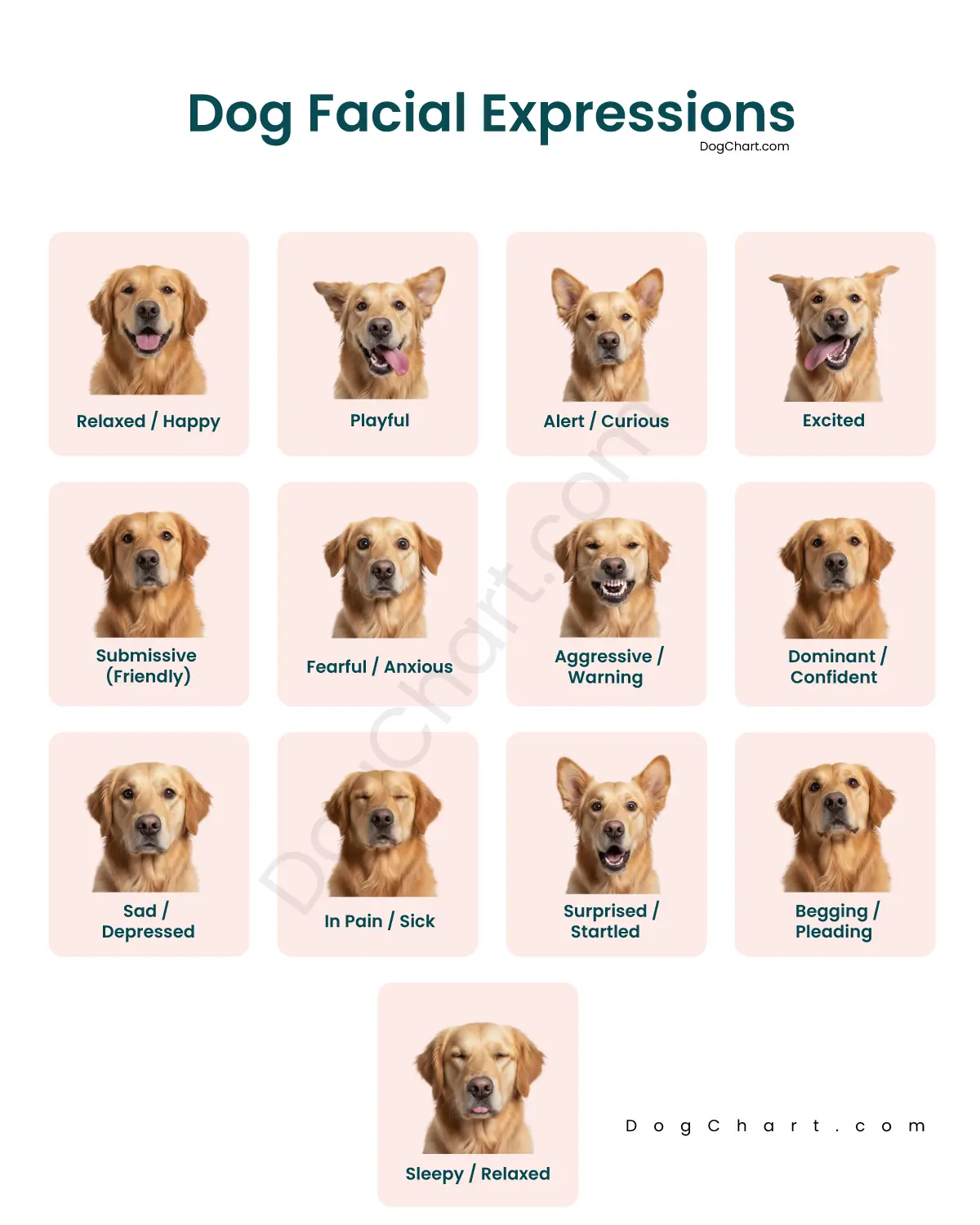
Table of Contents
Dog Facial Expressions Chart with Pictures
Before diving into details, here’s where your chart will go, a simple dog facial expressions chart showing different moods (happy, anxious, alert, fearful, playful) along with photos or illustrations. This helps you quickly identify your dog’s mood at a glance.
| Expression | Eyes | Ears | Mouth | Overall Look | Emotion / Meaning |
| Relaxed / Happy | Soft, half-open | Neutral or slightly forward | Slightly open, tongue out | Calm, balanced | Content, friendly, relaxed |
| Playful | Bright, wide | Forward | Open mouth, tongue out | “Smiling,” wagging tail | Wants to play or interact |
| Alert / Curious | Focused, wide open | Standing up, forward | Closed or slightly open | Leaning forward | Interested or attentive |
| Excited | Sparkling, focused | Up and alert | Open, panting | High energy posture | Anticipating fun or treat |
| Submissive (Friendly) | Squinty, looking away | Back or sideways | Slight grin, lips pulled back | Low body posture | Friendly surrender, non-threatening |
| Fearful / Anxious | Wide eyes, whites visible (“whale eye”) | Back, flat against head | Closed or tight lips | Trembling or crouching | Scared, nervous, wants distance |
| Aggressive / Warning | Narrowed eyes, staring | Forward or raised | Lips curled, teeth visible | Stiff, rigid posture | Warning to back off |
| Dominant / Confident | Focused, calm | Forward or upright | Closed or slightly open | Standing tall | In control, confident |
| Sad / Depressed | Droopy eyes | Ears back or down | Closed mouth | Low head, slow movement | Lonely, unhappy |
| In Pain / Sick | Squinting or unfocused | Back or limp | Tense lips, no panting | Unsteady or hiding | Discomfort, needs vet |
| Surprised / Startled | Very wide eyes | Erect, alert | Slightly open mouth | Sudden head lift | Shocked or confused |
| Begging / Pleading | Wide, soft eyes | Slightly back | Closed or pouty mouth | Head tilted | Wants food or attention |
| Sleepy / Relaxed | Half-closed | Neutral or droopy | Slightly open | Loose, calm posture | Content, drowsy |
How Many Facial Expressions Do Dogs Have?
Dogs have a surprisingly wide emotional range. Researchers suggest they can make over 100 distinct facial movements, though we humans can easily recognize about a dozen clear expressions that convey everyday feelings.
They use their eyes, mouth, ears, and even tiny muscle twitches around the nose to express joy, fear, curiosity, or stress. Understanding these nuances helps you recognize when your dog feels safe or uncomfortable.
Learning dog facial expressions explained gives you a better handle on reading these subtle differences, especially in dogs with lots of fur or flat faces where cues can be harder to spot.
Do Dogs Understand Our Facial Expressions?
Absolutely. Dogs are emotional detectives. Studies show they can interpret human expressions, especially happiness, anger, and sadness. Your grin? They see it as positive energy. A frown or raised voice? They notice and often react with appeasement gestures like licking, turning their head, or soft whining.
When we smile, many dogs even raise their eyebrows slightly, mirroring us in a sign of connection. So while you’re learning dog facial expressions meaning, remember that your expressions matter, too. Dogs don’t just read faces; they respond to them.
How Dogs Communicate Through Facial Expressions
Communication isn’t just barking or wagging tails. It’s micro-movements, muscle tension, and changes in their eyes and mouth. Each feature tells part of the story.
A relaxed dog looks soft, loose lips, half-closed eyes, calm brows. A nervous dog looks tight, squinting, pulled-back ears, mouth closed or tense.
When paired with ear position and tails position, facial expressions give a full emotional snapshot of what your dog’s feeling in real time.
Key Facial Features to Observe
Eyes and Eyebrows
Eyes are windows to your dog’s emotions.
- Relaxed: Soft, round eyes, normal blinking.
- Alert or anxious: Wide eyes, visible whites
- Happy: Gentle squinting or smiling eyes.
- Angry: Narrowed eyes, stiff brows.
Eyebrow movement is subtle but powerful, raised brows often mean curiosity or confusion, while furrowed brows can indicate stress.
Ears
Ears shift constantly depending on mood.
- Forward: Focused or curious.
- Sideways: Uncertain or relaxed.
- Flattened back: Fear or submission.
Mouth and Lips
Dogs smile differently than humans.
- Relaxed: Slightly open mouth, tongue visible.
- Excited: Open, panting mouth.
- Stressed: Closed mouth, tight lips.
- Aggressive: Lips pulled back, teeth showing.
Lip tension is a big clue, even without growling, a tight jaw can show unease.
Nose and Whiskers
These tiny details often go unnoticed. A tense nose or flared nostrils may mean alertness or anxiety, while relaxed whiskers rest gently against the face.
Common Dog Facial Expressions and Their Meanings
Here’s a quick reference guide to the most common dog facial expressions meaning and what they often signal. This dog facial expressions chart is your go-to visual cue to connect emotion with posture and features.
| Expression Type | Facial Features | Common Emotion | What It Means |
| Relaxed & Happy | Soft eyes, open mouth | Calm | Comfortable and content |
| Excited or Playful | Bright eyes, raised brows | Joy | Ready to engage or play |
| Curious or Alert | Forward ears, focused eyes | Interest | Observing something new |
| Nervous or Anxious | Whale eyes, tense lips | Uneasy | Unsure or scared |
| Fearful | Ears back, lip corners pulled | Fear | Wants distance or reassurance |
| Angry or Aggressive | Stiff posture, teeth visible | Warning | Feeling threatened |
| Sad or Submissive | Droopy eyes, flattened ears | Sadness | Seeking comfort or appeasement |
Puppy Facial Expressions vs Adult Dogs
Puppies often have exaggerated expressions, wider eyes, more dramatic ear and mouth movements. They’re learning communication both with humans and other dogs, so their cues can be over-the-top.
Adult dogs are more subtle and controlled. You’ll notice small muscle changes instead of big gestures. Knowing this difference helps avoid confusion, what looks like fear in a puppy might just be curiosity.
Understanding dog facial expressions explained across life stages can help you adjust your training and reassurance style appropriately.
Misinterpreted Dog Expressions and Common Mistakes
Even experienced dog owners get it wrong sometimes. A wagging tail doesn’t always mean happiness, and bared teeth aren’t always aggressive (some dogs smile this way). Common misreads include:
- Thinking panting always means heat, it can signal stress.
- Assuming wide eyes = alertness only, it can also mean fear.
- Ignoring subtle ear position or mouth tension cues.
- Overlooking tails position, which adds context to every expression.
Final Thoughts
Understanding dog facial expressions explained is one of the best skills any pet parent can develop. Once you start reading your dog’s eyes, brows, and mouth, you’ll realize just how much they’re talking all the time.
It’s not just about knowing when they’re happy or scared, it’s about deepening your bond, responding better to their needs, and making them feel truly seen.
Dogs might not use words, but their faces are full of emotion. All you have to do is pay attention, and suddenly, those looks make perfect sense.
FAQs
How many facial expressions do dogs have?
Over 100 movements, though we recognize about a dozen clear ones.
What does a relaxed dog face look like?
Soft eyes, slightly open mouth, and calm ears, easygoing and happy.
Can dogs understand human facial expressions?
Yes, they read emotions like happiness, anger, or sadness surprisingly well.
Why do dogs show the whites of their eyes?
It’s often a sign of stress or discomfort called the whale eye.
How can I tell if my dog’s smile is real?
Look at the eyes, if they’re soft and the body’s relaxed, it’s genuine happiness.