
Maltese Dog Lifespan and Longevity Guide
When I first brought home my Maltese, I remember wondering just how long such a tiny, delicate dog could live. Friends warned me that small breeds can be fragile, but I quickly learned that their small size plays a key role in their long lifespan. Coco’s energy and love for life amazed me, even as she grew older, her spirit never dimmed.
Maltese dogs are known for their resilience and grace. With the right diet, care, and affection, they often live longer than many other toy breeds. While coat color doesn’t affect lifespan, genetics sometimes do, meaning responsible breeding and good care can make a world of difference.
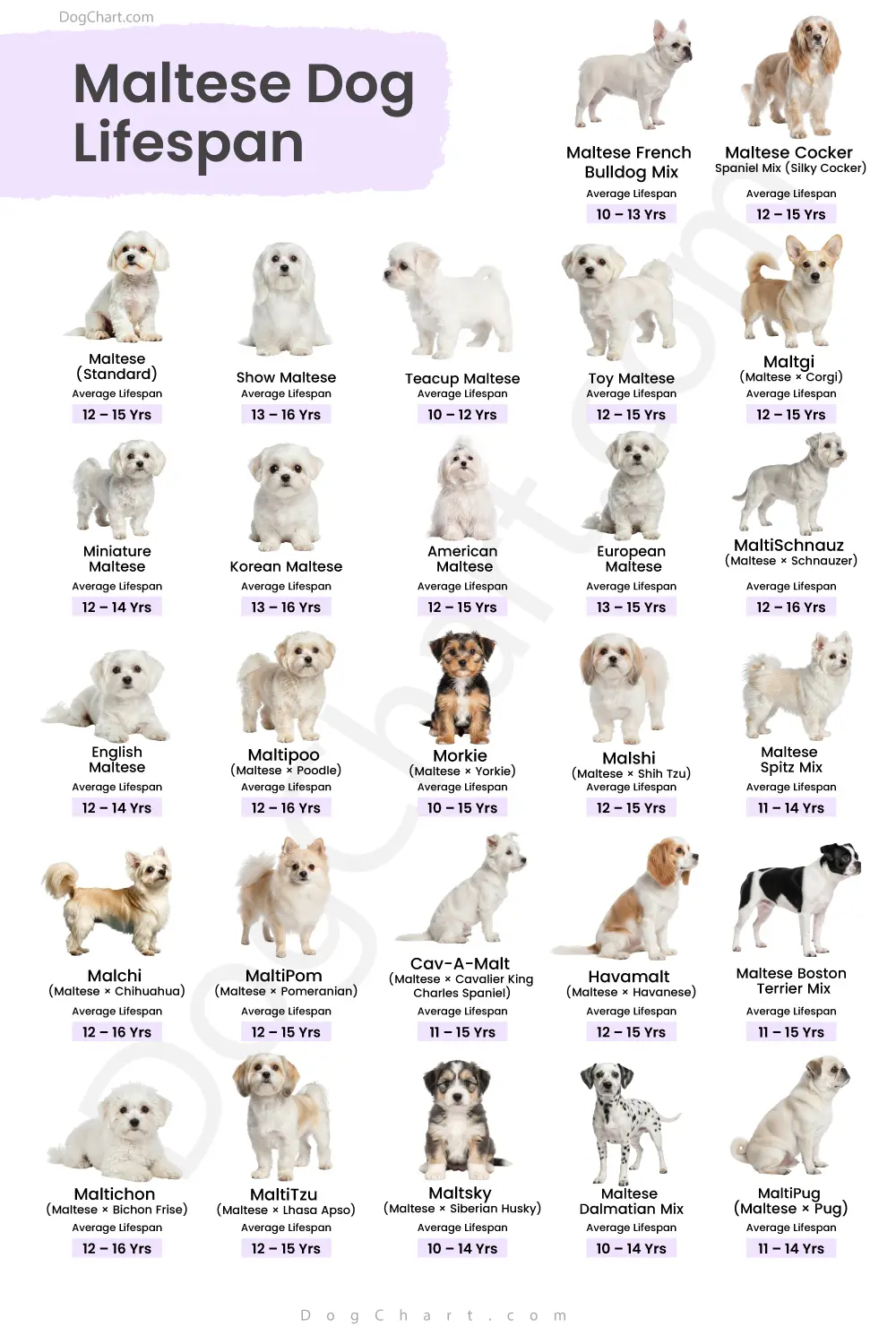
Table of Contents
How Long Do Maltese Dogs Live?
On average, Maltese dogs live between 12 and 15 years, but many exceed that when properly cared for. Their longevity is one of the reasons they’re cherished by families and individuals alike.
Buying from a responsible breeder often means a healthier Maltese with a longer life, since reputable breeders prioritize genetic health testing and early veterinary care. Some Maltese mixes, like the Maltipoo or Morkie, can have slightly different lifespans, depending on their mixed genetics and size.
Longevity also depends on lifestyle, balanced diet, regular vet visits, and emotional well-being all contribute to a Maltese living a long, joyful life.
Average Lifespan of a Maltese Dog
The average Maltese dog lifespan typically falls between 12 to 15 years, though some can live up to 17 years with consistent care. Genetics, diet, and activity levels all influence their longevity. Many Maltese live longer indoors, where they’re safe from harsh weather and environmental risks.
| Breed Name | Average Lifespan () | Description |
| Maltese (Standard) | 12 – 15 Years | Classic white toy breed; affectionate and playful. |
| Show Maltese | 13 – 16 Years | Long silky coat, bred for appearance and temperament. |
| Teacup Maltese | 10 – 12 Years | Very small size; delicate health and short lifespan. |
| Toy Maltese | 12 – 15 Years | Slightly larger than teacup; energetic and friendly. |
| Miniature Maltese | 12 – 14 Years | Compact body, gentle personality. |
| Korean Maltese | 13 – 16 Years | Doll-faced, soft-coated, popular in Asia. |
| American Maltese | 12 – 15 Years | AKC-recognized standard with white coat and dark eyes. |
| European Maltese | 13 – 15 Years | Slightly larger with denser fur. |
| English Maltese | 12 – 14 Years | Stronger bone structure, calmer nature. |
| Maltipoo (Maltese × Poodle) | 12 – 16 Years | Intelligent, low-shedding, and affectionate. |
| Morkie (Maltese × Yorkie) | 10 – 15 Years | Bold and lively with silky coat. |
| Malshi (Maltese × Shih Tzu) | 12 – 15 Years | Fluffy double coat and family-friendly. |
| Malchi (Maltese × Chihuahua) | 12 – 16 Years | Energetic, loyal, and compact. |
| MaltiPom (Maltese × Pomeranian) | 12 – 15 Years | Fluffy coat, playful, affectionate. |
| Maltese Westie (Maltie) | 12 – 15 Years | Cheerful and playful; loves attention. |
| Cav-A-Malt (Maltese × Cavalier King Charles Spaniel) | 11 – 15 Years | Sweet and gentle; perfect companion. |
| Havamalt (Maltese × Havanese) | 13 – 16 Years | Loving, soft coat, intelligent. |
| Maltichon (Maltese × Bichon Frise) | 12 – 16 Years | Fluffy and hypoallergenic; good for apartments. |
| MaltiTzu (Maltese × Lhasa Apso) | 12 – 15 Years | Calm and loyal with long coat. |
| Maltsky (Maltese × Siberian Husky) | 10 – 14 Years | Unusual, medium size, blue eyes. |
| Maltese Dalmatian Mix | 10 – 14 Years | Spotted coat, friendly and rare. |
| Maltgi (Maltese × Corgi) | 12 – 15 Years | Short legs, cheerful, fluffy coat. |
| MaltiSchnauz (Maltese × Schnauzer) | 12 – 16 Years | Protective, intelligent, minimal shedding. |
| Maltese Spitz Mix | 11 – 14 Years | Active and energetic; needs exercise. |
| Maltese Boston Terrier Mix | 11 – 15 Years | Compact, lively, and people-oriented. |
| MaltiPug (Maltese × Pug) | 11 – 14 Years | Playful, affectionate, moderate shedding. |
| Maltese French Bulldog Mix | 10 – 13 Years | Rare, charming, short coat. |
| Maltese Cocker Spaniel Mix (Silky Cocker) | 12 – 15 Years | Long silky hair, friendly nature. |
Male vs Female Maltese Lifespan
In general, female Maltese dogs tend to live slightly longer than males, usually by a year or two. This isn’t a hard rule, but females often show better stress management and steadier hormone patterns post-spaying, which can impact longevity. Males, however, are just as capable of living long, healthy lives when neutered and well cared for.
| Gender | Average Lifespan | Common Health Concerns | Longevity Factors | Tips for Healthy Aging |
| Male Maltese | 12–14 years | Heart issues, dental disease | Regular vet care and dental hygiene | Maintain steady diet and exercise |
| Female Maltese | 13–16 years | Hormonal changes, joint stiffness | Spaying reduces health risks | Balanced nutrition and gentle activity |
| Teacup Male | 8–10 years | Fragile bones, low immunity | Extra care and frequent vet visits | Avoid over-exertion |
| Teacup Female | 9–11 years | Hypoglycemia, liver shunt | Gentle handling, high-quality food | Frequent small meals |
| Senior Maltese | 10+ years | Vision and hearing decline | Low-stress environment | Routine checkups and supplements |
Indoor vs Outdoor Maltese Lifespan
Maltese dogs are indoor pets by nature. They thrive in cozy, clean environments and can live longer when kept indoors. Outdoor living exposes them to temperature extremes, pollution, and parasites, all of which shorten lifespan.
| Living Condition | Average Lifespan | Key Risks | Recommended Care |
| Indoor Maltese | 13–16 years | Low physical risk, but may need more activity | Daily walks, mental games |
| Outdoor Maltese | 8–12 years | Heatstroke, cold exposure, parasites | Supervised outdoor time only |
| Part-Time Outdoor | 10–14 years | Mixed exposure | Shade, clean water, grooming |
| Apartment Maltese | 12–15 years | Low space but safe | Regular walks and playtime |
| Teacup Indoor | 9–11 years | Fragility, stress sensitivity | Extra cushioning, gentle handling |
Indoor living significantly improves safety, comfort, and life expectancy, making it the best choice for these small companions.
Maltese Dog Age in Human Years
Converting a Maltese dog’s age in human years helps owners understand how quickly their pet is aging and adjust care accordingly. Small breeds age slower than larger dogs, meaning a 10-year-old Maltese might still behave like a middle-aged human.
| Maltese Age (Years) | Equivalent Human Years | Life Stage |
| 1 Year | 15 Human Years | Puppy / Adolescent |
| 2 Years | 24 Human Years | Young Adult |
| 3 Years | 28 Human Years | Adult |
| 4 Years | 32 Human Years | Adult |
| 5 Years | 36 Human Years | Mature Adult |
| 6 Years | 40 Human Years | Mature Adult |
| 8 Years | 48 Human Years | Senior |
| 10 Years | 56 Human Years | Senior |
| 12 Years | 64 Human Years | Senior |
| 14 Years | 72 Human Years | Elderly |
| 16 Years | 80 Human Years | Elderly |
| 18 Years | 88 Human Years | Very Elderly |
| 20 Years | 96 Human Years | Rare Longevity |
Common Health Issues in Maltese Dogs
Though generally healthy, Maltese dogs are susceptible to certain conditions that can affect their lifespan if not managed early. Regular checkups, a healthy diet, and prompt veterinary attention can prevent most of these problems.
| Health Issue | Description | Common Age of Onset | Preventive Tips | Severity |
| Dental Disease | Tartar buildup leading to infection | 2+ years | Brush teeth, dental treats | Moderate |
| Luxating Patella | Knee joint displacement | 3–5 years | Controlled exercise, avoid jumping | Moderate |
| Collapsed Trachea | Weak airway cartilage | 5+ years | Use harness instead of collar | High |
| Heart Disease | Genetic or age-related | 6+ years | Regular vet checkups | High |
| Hypoglycemia (Teacups) | Low blood sugar | 1–3 years | Frequent small meals | High |
Keeping track of symptoms and early interventions makes a big difference in extending lifespan and improving quality of life.
Diet and Nutrition Tips for a Longer Lifespan
The right diet is crucial for longevity. Maltese dogs thrive on high-protein, balanced meals that support muscle maintenance and immune health. Avoid overfeeding, as obesity shortens lifespan.
Key dietary tips include:
- Feed small, frequent meals to prevent low blood sugar.
- Choose foods rich in omega-3s for heart and coat health.
- Avoid artificial fillers and preservatives.
- Provide fresh water at all times.
- Monitor calorie intake and adjust for age and activity.
Remember, regular grooming keeps their skin and coat healthy, which also supports longevity, as clean skin helps prevent infections and discomfort.
Exercise and Mental Stimulation for Healthy Aging
Exercise helps maintain a healthy weight and strong joints. Maltese dogs don’t need intense activity, short daily walks, gentle play, and indoor games are enough. Combine this with mental stimulation, such as puzzle toys or simple tricks, to keep their minds sharp as they age.
A well-stimulated Maltese is not only happier but also less prone to anxiety and behavioral problems, both of which can indirectly affect overall health.
Grooming and Hygiene’s Role in Lifespan
Good grooming is more than appearance, it’s essential for well-being. Regular brushing prevents matting, which can trap dirt and cause skin irritation. Bathing every few weeks keeps their coats clean and bright.
Dental hygiene is equally important. Daily tooth brushing prevents gum disease, which is linked to heart and kidney problems. Consistent grooming routines can extend your Maltese’s life by minimizing preventable health issues.
Vaccination and Veterinary Care for Maltese Dogs
Vaccinations and vet visits are non-negotiable for a long, healthy life. Early puppy vaccinations and annual boosters protect against dangerous diseases like parvovirus and distemper.
| Care Type | Frequency | Importance | Example | Notes |
| Puppy Vaccinations | 6–16 weeks | Build immune foundation | Parvovirus, Distemper | Vital for early protection |
| Booster Shots | Yearly | Maintain immunity | DHPP, Rabies | Required by law in most areas |
| Dental Checkups | Every 6 months | Prevent infections | Cleanings, exams | Extend overall lifespan |
| Heart & Lung Exams | Annual | Early detection | ECG, heartworm test | Especially for seniors |
| Senior Screenings | 8+ years | Monitor age-related issues | Bloodwork, X-rays | Adjust care accordingly |
Do Teacup Maltese Live Shorter Lives?
Yes, unfortunately. Teacup Maltese dogs are bred to be even smaller than standard ones, and their fragile structure makes them more prone to health problems like hypoglycemia, bone fractures, and organ issues. Their average lifespan is usually 8–11 years. While undeniably adorable, their delicate nature requires extra attention, gentle handling, and frequent vet visits.
How to Tell if Your Maltese Is Aging Gracefully
An aging Maltese may slow down a bit but should remain happy and alert. Watch for subtle signs like cloudy eyes, slower walking, or increased sleeping. If your dog still shows curiosity, appetite, and affection, they’re aging gracefully.
Regular vet visits and minor lifestyle adjustments, like softer food or ramps instead of stairs — keep senior dogs comfortable and content.
Signs of Aging and Elderly Care Tips
Caring for a senior Maltese means focusing on comfort, consistency, and love.
Common aging signs include:
- Graying coat or thinning hair
- Slower movements
- Reduced hearing or vision
- More frequent naps
- Weight changes
Care tips:
- Provide orthopedic bedding for joint comfort.
- Keep routines predictable to reduce stress.
- Offer gentle play and cuddles.
- Visit the vet every 6 months for senior checkups.
Aging is natural, with love and attention, your Maltese can enjoy their golden years gracefully and happily.
FAQs
What is the average lifespan of a Maltese?
Most Maltese dogs live 12–15 years, though some reach 17 or more with excellent care.
Do female Maltese dogs live longer than males?
Generally, yes, by about a year or two, though lifestyle and genetics matter more.
Can diet affect lifespan?
Absolutely. A balanced, high-quality diet directly influences longevity and energy levels.
Do Teacup Maltese live as long as standard Maltese?
No, they usually have shorter lifespans (8–11 years) due to fragile genetics.
How do I know my Maltese is aging well?
If they’re alert, affectionate, and still playful, they’re aging gracefully. Regular vet visits ensure continued wellness.