
Pomeranian Dog Feeding Chart & Complete Feeding Guide
When I first brought home my tiny Pomeranian puppy, I was convinced that feeding him would be simple, just fill a small bowl a couple of times a day. I was so wrong as within a week, I realized I had a confused little furball who was either too full to eat or begging for snacks every few hours.
That’s when I discovered how important it is to follow a pomeranian dog feeding chart. These dogs may be small, but their metabolism runs fast, almost like they’re always in turbo mode.
Figuring out when, how much, and what to feed them can make a huge difference in their energy levels, coat quality, and long-term health. With the right pomeranian feeding guide, you can keep your pup energetic, at a healthy weight, and free from tummy issues.
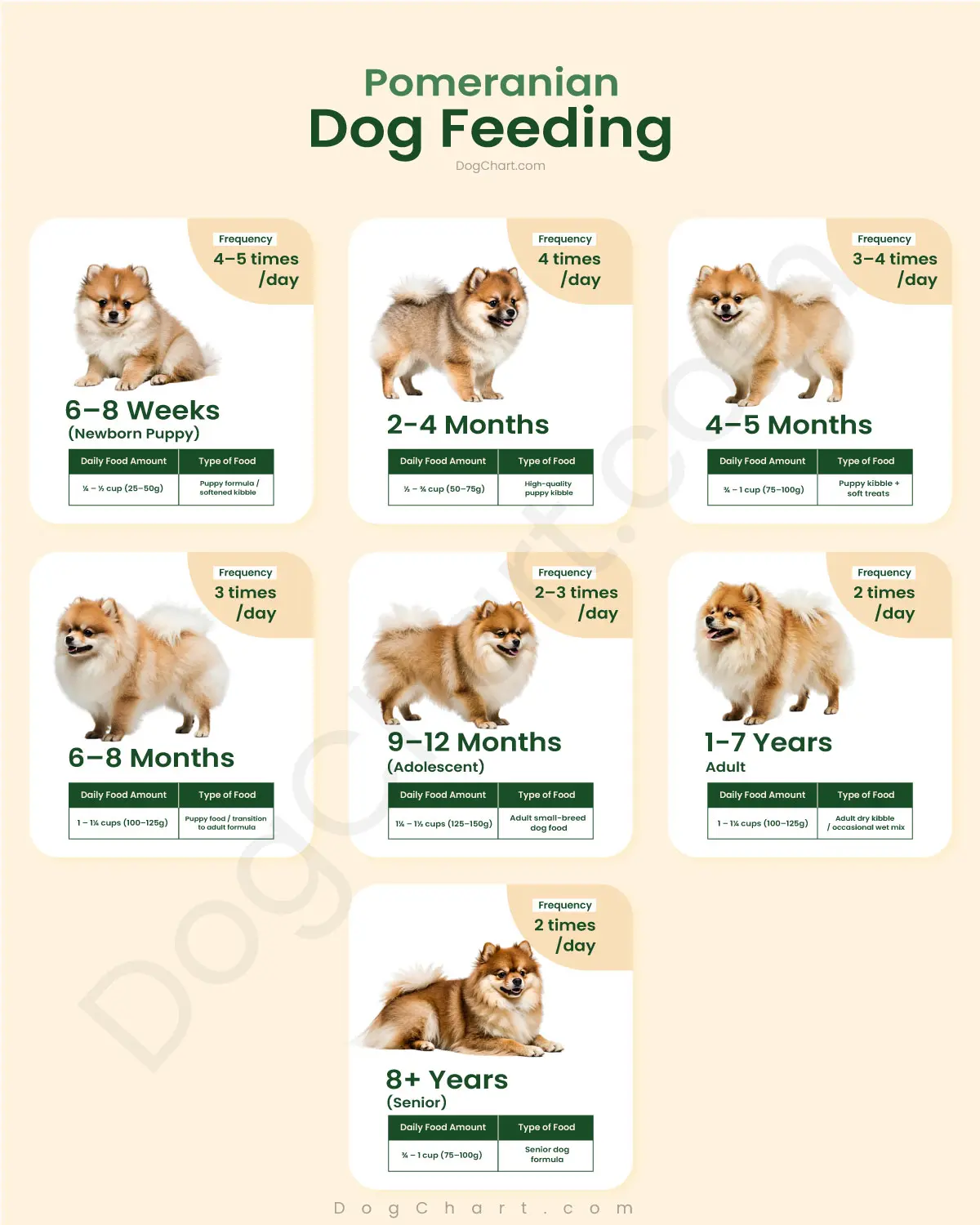
Table of Contents
Pomeranian Dog Feeding Schedule
Pomeranians thrive on consistency. Because of their small stomachs and high energy, they can’t handle long gaps between meals. A proper pomeranian dog feeding chart includes a structured daily schedule to prevent hypoglycemia (low blood sugar), which is common in toy breeds.
Puppies usually need to eat 3–4 times a day, while adults can do fine with 2–3 meals spaced evenly apart. Try to stick to the same feeding times every day, dogs, especially Poms, love routine.
I’ll include a pomeranian dog feeding schedule chart here that outlines how often and how much to feed based on age but remember, your individual dog’s activity level, size, and health condition matter, too.
| Age | Meals per Day | Notes |
| 2–3 Months | 4–5 | Small, frequent meals for energy and growth |
| 3–6 Months | 3–4 | Gradually reduce meal frequency |
| 6–12 Months | 3 | Transition to adult diet slowly |
| 1 Year & Older | 2 | Morning & evening feeding recommended |
| Senior (7+ yrs) | 2 (smaller portions) | May need senior-specific diet |
Pomeranian Feeding Chart by Weight
Every Pomeranian is unique, some are naturally petite, while others grow a bit chunkier depending on their genetics. The right feeding quantity depends largely on your dog’s body weight.
In your pomeranian feeding guide, you’ll want to include a chart showing daily calorie needs and portion sizes for dogs ranging from 1 kg to 6 kg. Generally speaking, a 2 kg Pom might need around 200–250 calories per day, while larger Poms closer to 5–6 kg may need 350–400 calories daily.
Feeding too much can quickly lead to obesity, which is a big issue for this breed. Even a few extra bites here and there add up. So, a pomeranian feeding chart by weight keeps you on track.
| Weight (kg) | Weight | Daily Food (Dry Kibble) |
| 1.5–2 kg | 3–4 lbs | 40–60 g (¼ – ½ cup) |
| 2–3 kg | 4–7 lbs | 60–80 g (½ – ⅔ cup) |
| 3–4 kg | 7–9 lbs | 80–100 g (⅔ – ¾ cup) |
| 4–5 kg | 9–11 lbs | 100–120 g (¾ – 1 cup) |
Pomeranian Feeding Chart by Age
Just like humans, a Pomeranian’s nutritional needs evolve as they grow. Puppies require extra calories and protein for growth, while adults and seniors need balanced portions to maintain weight and avoid joint stress.
A pomeranian feeding guide by age typically divides feeding stages into puppy (up to 12 months), adult (1–7 years), and senior (8+ years). Puppies eat smaller but more frequent meals; adults eat 2–3 times daily; and seniors do best on lighter meals with joint-supporting supplements.
I’ll include a pomeranian feeding chart by age later so you can easily see how portion sizes adjust throughout life.
| Age | Feeding Frequency | Daily Food Amount | Type of Food | Notes |
| 6–8 Weeks (Newborn Puppy) | 4–5 times/day | ¼ – ½ cup (25–50g) | Puppy formula / softened kibble | Start weaning; use small, frequent meals. |
| 2–3 Months | 4 times/day | ½ – ¾ cup (50–75g) | High-quality puppy kibble | Focus on small-breed puppy food rich in DHA and protein. |
| 4–5 Months | 3–4 times/day | ¾ – 1 cup (75–100g) | Puppy kibble + soft treats | Maintain consistent meal times to prevent hypoglycemia. |
| 6–8 Months | 3 times/day | 1 – 1¼ cups (100–125g) | Puppy food / transition to adult formula | Begin gradual switch to adult food around 8 months. |
| 9–12 Months (Adolescent) | 2–3 times/day | 1¼ – 1½ cups (125–150g) | Adult small-breed dog food | Ensure balanced protein (25–30%) and moderate fat (12–15%). |
| 1–7 Years (Adult) | 2 times/day | 1 – 1¼ cups (100–125g) | Adult dry kibble / occasional wet mix | Maintain healthy weight; avoid overfeeding. |
| 8+ Years (Senior) | 2 times/day | ¾ – 1 cup (75–100g) | Senior dog formula |
Pomeranian Food List
The best pomeranian feeding guide starts with high-quality food, both commercial and homemade options can work if they’re nutritionally complete. Poms need a protein-rich diet with moderate fat and low fillers. Common foods to include in your pomeranian dog feeding chart:
| Food Type | Examples |
| High-quality kibble | Small breed puppy/adult food |
| Proteins | Boiled chicken, turkey, lean beef, fish (boneless) |
| Vegetables | Carrots, pumpkin, spinach, peas, sweet potato |
| Fruits | Blueberries, apple slices (no seeds), banana |
| Healthy Extras | Cooked rice, oats, eggs (boiled) |
Pomeranian Food to Avoid
Knowing what not to feed your Pomeranian is just as important as knowing what to give. Some foods that are fine for humans can be dangerous, even deadly for small dogs. Foods to avoid include
| Food Type | Examples |
| Toxic Foods | Chocolate, caffeine, grapes, raisins |
| Dangerous Veggies | Onion, garlic, avocado |
| Junk Foods | Sugary snacks, fried food, salty chips |
| Bones | Cooked chicken bones (choking hazard) |
| Artificial Sweeteners | Xylitol (very toxic) |
| Excess Dairy | Milk, cheese (can cause upset stomach) |
Importance of Hydration for Pomeranians
People often overlook water when talking about dog diets, but hydration is critical, especially for small breeds with fast metabolism. A Pomeranian should always have access to fresh, clean water. Dehydration can lead to constipation, overheating, or even kidney issues.
If your dog isn’t drinking enough, try adding a little unsalted chicken broth to their water bowl. Moist foods like boiled veggies or wet dog food can also help increase fluid intake naturally.
Homemade vs Store-Bought Food for Pomeranians
Deciding between homemade and commercial dog food is a personal choice, but both can work if done right. Store-bought kibble designed for toy breeds ensures balanced nutrition, while homemade diets allow for more control over ingredients.
Homemade diets are great for dogs with allergies or picky eaters, but they must include proper supplementation. Commercial foods are more convenient but choose ones with real meat listed first, no by-products, and limited fillers. Rotating between both options often works best – it keeps your Pom interested and offers nutritional variety.
Treats and Snack Portions for Pomeranians
It’s easy to overdo treats with Pomeranians, after all, who can resist that face? But treats should make up no more than 10% of their daily calorie intake. Opt for healthy options like tiny pieces of boiled chicken, carrot sticks, or freeze-dried liver treats.
Avoid sugary biscuits or anything that adds unnecessary calories. If your dog is in training, use soft, bite-sized treats and adjust meal portions slightly to maintain their ideal weight.
FAQs
How many times a day should I feed my Pomeranian?
Puppies under 6 months need 3-4 small meals daily. Adult Poms do best with 2–3 evenly spaced meals. Avoid leaving food out all day, as it encourages overeating.
Can I feed my Pomeranian homemade food every day?
Yes, but only if the meals are nutritionally balanced. Homemade food should include lean meat, grains, and vegetables, along with a calcium supplement. Consult your vet for portion guidance.
What human foods are safe for Pomeranians?
Boiled chicken, cooked rice, plain eggs, pumpkin, apple slices (without seeds), and green beans are all safe in moderation. Always avoid chocolate, onions, and grapes.
How do I know if my Pomeranian is eating enough?
You should be able to feel (but not see) their ribs, and they should have steady energy levels. Underfeeding can lead to low blood sugar, while overfeeding shows in weight gain and lethargy.
What’s the best food brand for Pomeranians?
Look for brands made for small breeds, such as Royal Canin, Hill’s Science Diet, or Orijen Small Breed. These offer the right kibble size and balanced nutrition to support coat, teeth, and energy levels.