
Malshi: Maltese Mix Shih Tzu
The first time I met a Malshi, it was at a friend’s family gathering. While the kids ran around the living room, this tiny dog was perched on the couch like it owned the place, soft fur like a cloud, tail wagging happily at anyone who passed.
I picked it up, and it melted into my arms like a warm, fluffy pillow. It didn’t bark, didn’t fuss, just quietly enjoyed the attention. That’s when I understood why so many families fall in love with this breed.
The Malshi is a designer hybrid created by mixing the Maltese with the Shih Tzu. This combination blends two affectionate, loyal, and gentle companion breeds into one irresistibly cute package.
Known for their loving personalities, easy adaptability, and low-shedding coats, Malshis have become a favorite for families, singles, and seniors alike. Whether you live in an apartment or a house with a yard, this little dog can fit right in.
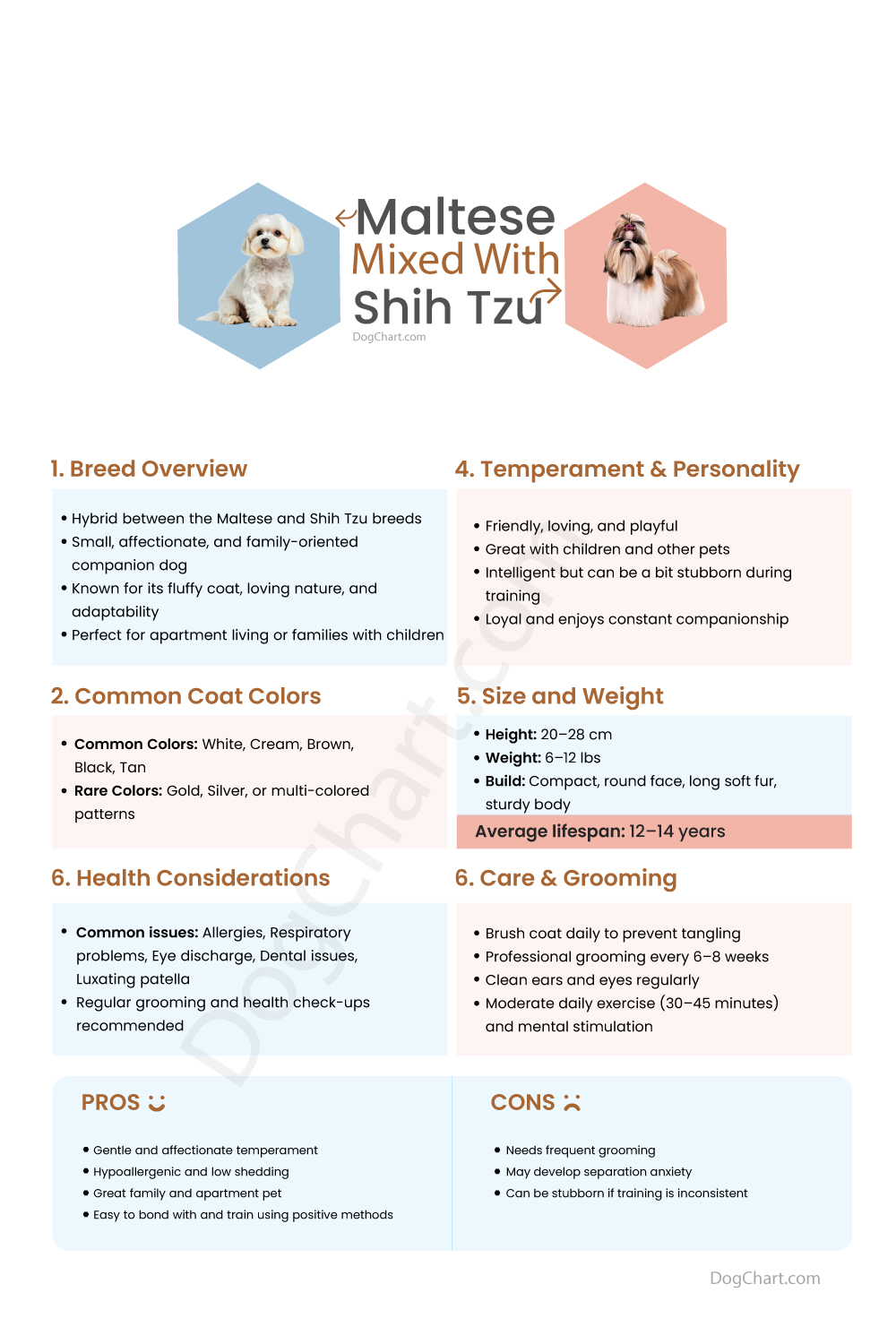
Table of Contents
What Is a Malshi Dog?
A Malshi is a hybrid cross between the elegant Maltese and the playful Shih Tzu. Known for its loving temperament and adorable teddy-bear looks, this breed brings together the best of both worlds, the Maltese’s loyalty and the Shih Tzu’s calm yet curious personality.
Malshis are small, intelligent, and gentle dogs that make excellent companions for families, seniors, and individuals living in apartments. Their affectionate nature and low-shedding coat make them ideal for those who want a manageable, lovable pet.
History and Origin of the Maltese Shih Tzu Mix
The Malshi was first intentionally bred in the 1990s, primarily in the United States and Australia, as part of the designer dog movement. The goal was to create a low-shedding companion that combined the intelligence and elegance of the Maltese with the sturdy build and calm demeanor of the Shih Tzu.
Today, Malshis are beloved worldwide for their adaptability, making them perfect for both city and suburban lifestyles. Despite being a modern hybrid, their parent breeds, both ancient toy breeds, carry centuries of companionship history.
Appearance: Size, Coat, and Colors of the Malshi
Malshis are small yet sturdy, with expressive round eyes and a soft, flowing coat that often falls in waves or curls. Their coat colors can range widely, and they can inherit a variety of traits from either parent.
| Feature | Description | Size Range | Texture | Common Colors | Coat Type | Grooming Level |
| Height | Small, compact build | 20–28 cm | Soft | White, Cream, Brown | Long, silky | High |
| Weight | Light but solid | 6–12 lbs | Fluffy | Tan, Black, Gold | Double coat | High |
| Eyes | Dark, expressive | Medium | — | — | Round | — |
| Ears | Floppy and furry | — | — | — | Feathered | — |
| Body Type | Sturdy and well-balanced | — | — | — | Compact | Moderate |
Malshi Temperament and Personality Traits
Malshis are known for their loving, sociable, and gentle nature. They adore being around people and form strong bonds with their families. Their Maltese heritage gives them affection and loyalty, while their Shih Tzu side brings calmness and adaptability.
| Trait | Description | Family Suitability | Intelligence Level | Independence | Friendliness | Adaptability |
| Temperament | Affectionate, lively | Excellent | High | Moderate | Very friendly | Excellent |
| Energy Level | Medium | Great for families | Good | Moderate | Playful | High |
| Behavior | Loyal, gentle | Great with kids | Good | Moderate | Loving | High |
Are Maltese Shih Tzu Mixes Good Family Dogs?
Absolutely! Malshis are well-suited for families of all sizes. They love children and often develop protective instincts toward their favorite humans. Their friendly nature makes them equally compatible with other pets, especially if socialized early.
They’re small enough to live comfortably in apartments, yet playful enough to thrive in homes with backyards. Because they crave attention, Malshis do best in homes where they won’t be left alone for long periods.
Intelligence and Trainability of a Malshi
Malshis inherit high intelligence from both parents, making them quick learners. However, they can occasionally be stubborn, so patience and consistency are key. They respond best to reward-based training, treats, praise, and affection go a long way.
Early socialization and obedience training ensure a well-behaved companion. Short, frequent training sessions work best, as they can lose focus if sessions are too long.
Grooming Requirements for a Maltese Shih Tzu Mix
The Malshi’s coat can grow long and silky, requiring regular grooming to prevent tangles and matting. Daily brushing is ideal, along with professional grooming every 6–8 weeks. Their coat can be clipped short (puppy cut) for easier maintenance.
Regular ear cleaning, teeth brushing, and tear-stain control are also important due to their facial structure. Keeping up with these routines helps prevent skin issues and keeps your Malshi comfortable and fresh.
Exercise and Activity Needs
While Malshis are not overly active, they do enjoy daily walks and playtime. About 30–45 minutes of activity per day keeps them healthy and happy.
| Activity Type | Duration | Benefits | Ideal Environment | Mental Stimulation |
| Walks | 20–30 minutes | Physical fitness | Parks or streets | Moderate |
| Playtime | 15–20 minutes | Bonding | Indoors or yard | High |
| Training Games | 10–15 minutes | Discipline | Anywhere | High |
| Rest Time | As needed | Recovery | Home | — |
Common Health Issues in Maltese Dogs
Malshis are generally healthy but can inherit conditions from their parent breeds.
| Health Issue | Description | Symptoms | Prevention | Treatment | Impact |
| Allergies | Skin or food sensitivity | Itching, redness | Hypoallergenic food | Medication | Mild |
| Respiratory Issues | Due to flat face | Snoring, wheezing | Avoid overheating | Vet care | Moderate |
| Eye Problems | Tear stains, infections | Watery eyes | Clean daily | Eye drops | Mild |
| Dental Issues | Common in small dogs | Bad breath, plaque | Daily brushing | Dental cleaning | Moderate |
| Luxating Patella | Knee issues | Limping | Weight control | Surgery (if severe) | High |
Malshi Lifespan and Care Tips
The average Malshi lifespan ranges between 12 and 14 years, but with proper care, they can live even longer. These little dogs thrive on affection, stability, and routine. Regular vet visits are crucial to catch potential health issues early, such as dental problems or allergies. A balanced diet, safe playtime, and mental stimulation are all key contributors to longevity.
To help your Malshi live their best life, maintain a consistent grooming schedule and provide gentle exercise daily. Because of their small size and loving temperament, they often seek comfort and closeness with their owners, emotional well-being matters just as much as physical health.
Spending time with your Malshi, even just a few minutes of cuddling or interactive play, can do wonders for their happiness and overall quality of life.
Feeding and Nutrition Guide for Malshi Dogs
Malshis are small but energetic, so their diet must be nutrient-rich without being excessive. High-quality, small-breed dog food that’s rich in lean protein and healthy fats supports their muscle tone, coat, and immune system. Avoid fillers like corn and soy, which can cause sensitivities in some dogs.
Puppies require more frequent meals, three to four times daily as they grow, while adult Malshis do well on two meals per day. Senior Malshis benefit from food with added antioxidants and joint-support supplements.
| Life Stage | Meals per Day | Food Type | Portion Size | Key Nutrients | Notes |
| Puppy | 3–4 | Puppy kibble | ¼–½ cup | Protein, DHA | Promotes healthy growth |
| Adult | 2 | Small breed formula | ½–1 cup | Omega-3, Calcium | Maintains muscle tone |
| Senior | 2 | Senior blend | ½ cup | Joint support, Fiber | Easier digestion |
| Treats | Occasional | Healthy chews | Minimal | Low-calorie | Prevent obesity |
Pros and Cons of Owning a Malshi
The Malshi has a lot to offer, but like all breeds, they come with both strengths and challenges. Understanding these helps you make a more informed choice.
| Category | Pros | Cons |
| Temperament | Loving, friendly, loyal | Can develop separation anxiety |
| Maintenance | Hypoallergenic, minimal shedding | Needs regular grooming |
| Training | Smart and responsive | May be a little stubborn |
| Health | Generally hardy | Prone to dental and respiratory issues |
| Adaptability | Perfect for small homes | Doesn’t tolerate long loneliness |
Malshi Puppies: What to Expect
Bringing home a Malshi puppy is a heartwarming experience but it also requires patience and preparation. These little furballs are playful, curious, and full of affection. Expect them to be energetic one moment and fast asleep the next.
Potty training should begin early, as small breeds have smaller bladders and need frequent breaks. Crate training and positive reinforcement work well for this intelligent hybrid. Socialization is another key factor, introducing your puppy to new sights, sounds, and people to ensure they grow into a confident adult.
During the first year, you’ll notice rapid growth and personality development. By 12 months, your Malshi will settle into their full adult temperament, loving, loyal, and slightly clingy in the best way possible.
Malshi Price and How to Find a Responsible Breeder
The price of a Malshi can vary significantly depending on lineage, breeder reputation, and location. Typically, you can expect to pay between $800 and $2,000, but prices may go higher for show-quality or rare-colored puppies. Always choose a breeder who prioritizes health over profit.
Ask for health certificates, vaccination records, and genetic testing results for both parent dogs. Ethical breeders will welcome questions, allow you to visit the puppies, and ensure the dogs are raised in a clean, loving environment.
| Country | Average Price Range | Notes |
| USA | $800–$2,000 | Reputable breeders include health checks |
| UK | £700–£1,800 | Prices vary by region and demand |
| Australia | AUD 1,000–3,000 | Breeders may offer microchipped pups |
| India | ₹50,000–₹1,20,000 | Imported lines are more costly |
| Canada | CAD 1,000–2,500 | High demand in major cities |
Malshi vs. Maltipoo: Which Mix Is Right for You?
Both the Malshi (Maltese + Shih Tzu) and the Maltipoo (Maltese + Poodle) are designer breeds known for their affectionate nature and small size but they have distinct personalities and care needs.
- Malshi: Calm, gentle, and great with children and seniors. They love quiet, cozy homes and thrive on companionship.
- Maltipoo: More energetic and playful, making them perfect for active families or individuals who enjoy outdoor time.
- Coat: Malshis have softer, longer fur that needs daily brushing, while Maltipoos often have curlier, lower-shedding coats.
- Training: Maltipoos are slightly easier to train due to their Poodle intelligence, while Malshis may require extra patience.
Life With a Malshi: What to Expect Day-to-Day
Life with a Malshi is full of small joys from morning cuddles to playful zoomies across the living room. They thrive on attention, so expect a constant shadow following you around the house.
Malshis do best with routines, scheduled meals, short walks, and regular grooming help them feel secure. They enjoy moderate exercise but are equally content lounging next to you. These dogs are extremely social and dislike being left alone for long periods. Providing chew toys or puzzle games helps keep them mentally stimulated while you’re away.
Their gentle nature makes them adaptable to most lifestyles, whether it’s a quiet apartment or a bustling household with kids and other pets.
Senior Malshi Care – Helping Them Age Gracefully
As your Malshi enters their golden years (around 10+), their needs will shift. You may notice slower movement, more naps, and possible stiffness in the joints. Switching to a senior-specific diet with joint-supporting nutrients like glucosamine can help.
Regular vet check-ups every six months are vital to monitor heart, dental, and mobility health. Gentle daily walks and soft bedding can make a world of difference. Older Malshis still crave companionship, so continue giving them love, attention, and gentle play.
FAQs
Are Malshis hypoallergenic?
They’re low-shedding, making them more suitable for allergy sufferers but no breed is 100% hypoallergenic.
How often should I groom my Malshi?
Brush daily and schedule a professional grooming session every 6–8 weeks to prevent tangles and matting.
Are Malshis good with other pets?
Yes, especially when socialized early. They get along well with cats and other small dogs.
What is the typical size of a Malshi?
Most adult Malshis weigh between 6–12 lbs and stand about 20–28 cm tall.
Can Malshis be left alone for long hours?
No, they can suffer from separation anxiety. They need human companionship and regular interaction.