
Havanese Pros and Cons – Is This the Right Breed for You?
I once watched a Havanese at a coffee shop greet every single person who walked in. Tail wagging, soft eyes, zero fear. The owner said he does this everywhere. That’s the Havanese personality in one scene.
They’re social, affectionate, and adaptable. But they also come with grooming demands, separation anxiety, and a few health issues that owners need to know about.
This havanese pros and cons guide covers both sides. If you want a Havanese, knowing what you’re getting into helps you decide if this is the right breed for your life.
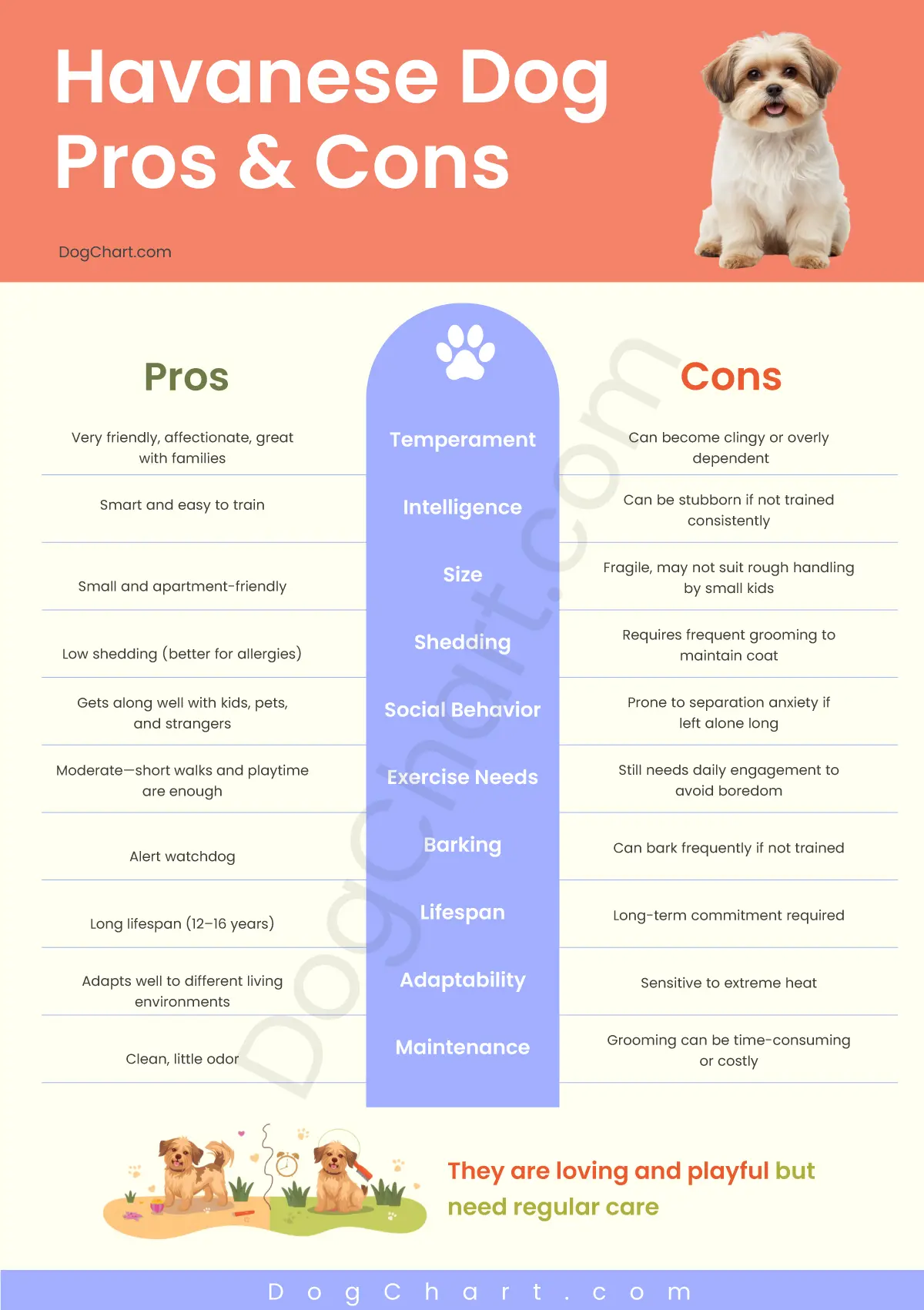
Table of Contents
The Havanese dog breed is a dog breed native to Cuba. They’re the national dog of the island, descended from the Blanquito de la Habana. They belong to the Bichon family of dogs and were bred as companion dogs for Cuban aristocracy.
The Havanese is a small breed weighing 7–13 lbs and standing 8.5–11.5 inches tall. The Havanese Club of America maintains the breed standard.
The Havanese lifespan is 14–16 years, one of the longest among all dog breeds.
| Trait | Details | Why It Matters |
| Size | 7–13 lbs, 8.5–11.5 inches | Can live in an apartment |
| Lifespan | 14–16 years | Long commitment |
| Temperament | Playful, affectionate, social | Great family dog |
| Shedding | Very low | Good for allergies |
| Energy Level | Moderate | Active but not hyperactive |
| Grooming | High (long silky coat) | Needs regular brushing |
| Trainability | High | Smart breed, eager to please |
havanese dog pros and cons
| Category | Pros | Cons |
| Temperament | Very friendly, affectionate, great with families | Can become clingy or overly dependent |
| Intelligence | Smart and easy to train | Can be stubborn if not trained consistently |
| Size | Small and apartment-friendly | Fragile—may not suit rough handling by small kids |
| Shedding | Low shedding (better for allergies) | Requires frequent grooming to maintain coat |
| Social Behavior | Gets along well with kids, pets, and strangers | Prone to separation anxiety if left alone long |
| Exercise Needs | Moderate—short walks and playtime are enough | Still needs daily engagement to avoid boredom |
| Barking | Alert watchdog | Can bark frequently if not trained |
| Lifespan | Long lifespan (12–16 years) | Long-term commitment required |
| Adaptability | Adapts well to different living environments | Sensitive to extreme heat |
| Maintenance | Clean, little odor | Grooming can be time-consuming or costly |
Pros of Owning a Havanese
Perfect apartment dog. The Havanese can live in an apartment without issues. These little dogs don’t need a backyard. A daily walk and indoor play is enough. A breed like this adapts to any space.
Hypoallergenic coat. Their silky, long coat sheds very little. This makes them one of the best dog breeds for people with allergies. The Havanese hypoallergenic guide covers this in detail.
Amazing with kids and pets. The Havanese temperament is good with children and children and other pets. They’re playful dogs that don’t nip or snap. Even overly rambunctious dogs in the park don’t faze them.
Highly trainable. This is a smart breed. They respond well to positive reinforcement and consistent training. Many pet parents say the Havanese learns tricks faster than any dog they’ve had.
Social and friendly. Havanese seem to love every dog and person they meet. That’s why pet parents call them velcro dogs — they stick to you. Owning a Havanese means never being alone in a room.
Long lifespan. 14–16 years means you get a long time with this pup. The dog life expectancy chart shows them among the longest-lived breeds.
Quiet. They’ll alert bark at the door but aren’t yappy. Havanese owners rarely complain about noise.
Travel-friendly. Small enough for airplane cabins, road trips, and hotels. Easy to take everywhere.
Cons of Owning a Havanese Dog
High grooming demands. This is a high maintenance coat. It needs regular grooming 3–4 times per week to prevent matting and tangling. Without it, the long coat turns into a mess fast.
A puppy cut reduces the work. Find a good groomer early and stick with them. Budget $40–$70 per visit with the groomer.
Separation anxiety. This is the biggest con. Havanese could develop separation anxiety if left alone for too long. They don’t handle being left alone for more than 4–5 hours. Some destroy furniture or bark nonstop when alone for too long. Every dog owner considering this breed needs to plan for this.
Housetraining can be slow. Small breeds often take longer. Expect 4–6 months of work. Crate training helps a lot. Be patient.
Tear staining. Common, especially on a white dog. Those reddish-brown marks under the eyes need daily wiping. Diet changes help but don’t always fix it. Common health issues with a Havanese include this as a cosmetic concern.
Dental issues. Small breeds are prone to dental disease. Brush teeth several times per week. Annual cleanings at the vet add to costs.
Can be clingy. They follow you everywhere. Bathroom, kitchen, bedroom. Havanese may not suit people who want an independent dog.
Weight management. Don’t overfeed your Havanese. A few extra treats on a 10-pound dog adds up fast. The right dog food matters. The best dog food for Havanese page covers portions and brands.
Not a guard dog. Responsible dog dog ownership means knowing what your dog can and can’t do. This Havanese dog is too friendly to protect anything.
Health and Finding a Good Breeder
| Condition | How Common | What to Watch For |
| Patellar Luxation | Common | Limping, skipping on walks |
| Hip Dysplasia | Moderate | Stiffness, reluctance to jump |
| Cataracts | Common | Cloudy eyes, bumping into things |
| Heart Murmurs | Moderate | Fatigue, coughing |
| Dental Disease | Common | Bad breath, tooth loss |
A healthy Havanese starts with a good breeder. Look for a breeder who is a reputable breeder with a solid breeding program. Parents should be fully health tested for hips, eyes, heart, and patellas. The health of the dog depends on this.
A breeder who emphasizes easy-care lines may produce dogs with shorter, less demanding coats. Short-haired Havanese do exist from certain lines, though they’re less common. Ask the breeder about coat types in their kennel.
Don’t underestimate how big a breed’s health needs can be, even for a small dog. Annual vet visits, dental cleanings, and preventive care keep your dog healthy long-term.
Havanese vs Similar Breeds for Pet Parents
| Breed | Advantage Over Havanese | Disadvantage vs Havanese |
| Maltese | Smaller, even less shedding | More fragile, less playful |
| Bichon Frise | Equally hypoallergenic, sturdier | Higher energy, more grooming |
| Shih Tzu | Calmer, less separation anxiety | More stubborn, sheds more |
| Cavalier King Charles | More affectionate | Not hypoallergenic, health issues |
| Poodle (Toy) | Very smart, athletic | Higher energy needs |
The Havanese wins on balance. Not the smallest, not the calmest, but the most well-rounded small companion. For all toy options, the toy dog breeds page compares every small dog. The dog sweater size chart covers sizing for small breeds.
Cost of Ownership
| Expense | Amount | Frequency |
| Purchase Price | $1,000–$2,500 | One-time |
| Food | $30–$60/month | Monthly |
| Grooming | $40–$70/visit | Every 4–6 weeks |
| Vet (annual) | $300–$800 | Yearly |
| Dental Cleaning | $200–$500 | Yearly |
For detailed pricing, the Havanese dog price page covers purchase costs. The best dog food for Havanese page helps with monthly food budgeting.
Should You Get a Havanese?
Want to get a Havanese? Best for families, seniors, apartment dwellers, allergy sufferers, first-time owners, and anyone who works from home.
Not ideal for people who work long hours away, don’t want grooming responsibilities, or want a guard dog.
Havanese puppies need to be socialized from a young age. Expose your puppy to different people, dogs, and environments early. This builds the confident, friendly pup the breed is known for.
FAQs
Are Havanese good for first-time owners?
Yes. Their trainability and gentle Havanese breed personality make them one of the best dog breeds for beginners.
Do Havanese bark a lot?
Not typically. They alert bark but aren’t yappy. Training reduces unnecessary noise.
Can Havanese be left alone?
Not for long. Havanese could develop separation anxiety within hours. 4–5 hours max. Consider daycare or a companion pup if you’re away often.
Are Havanese hypoallergenic?
Yes. One of the best breeds for allergy sufferers. The Havanese hypoallergenic guide explains why.
How long do Havanese live?
14–16 years on average. Good diet and regular vet care can push them to 17+. The dog life expectancy chart puts this in context.
Are Havanese easy to train?
Very. They’re intelligent and want to please. Use positive reinforcement. Start early. Keep sessions short and fun. Crate training helps with housetraining.