
Are Havanese Dogs Hypoallergenic? What Allergy Sufferers Need to Know
A coworker brought her Havanese to the office once. Three people with dog allergies sat near him for hours. Zero sneezing. Zero itchy eyes. That’s what sold me on this breed for allergy-prone families.
But “hypoallergenic” doesn’t mean “allergen-free.” No dog is. What it means is that certain breeds produce fewer allergens than others. The Havanese is one of the best options out there.
This guide explains why the Havanese is considered hypoallergenic, what actually causes dog allergies, and how to keep allergens low at home. For a full overview of the breed, the Havanese dog breeds page covers everything.
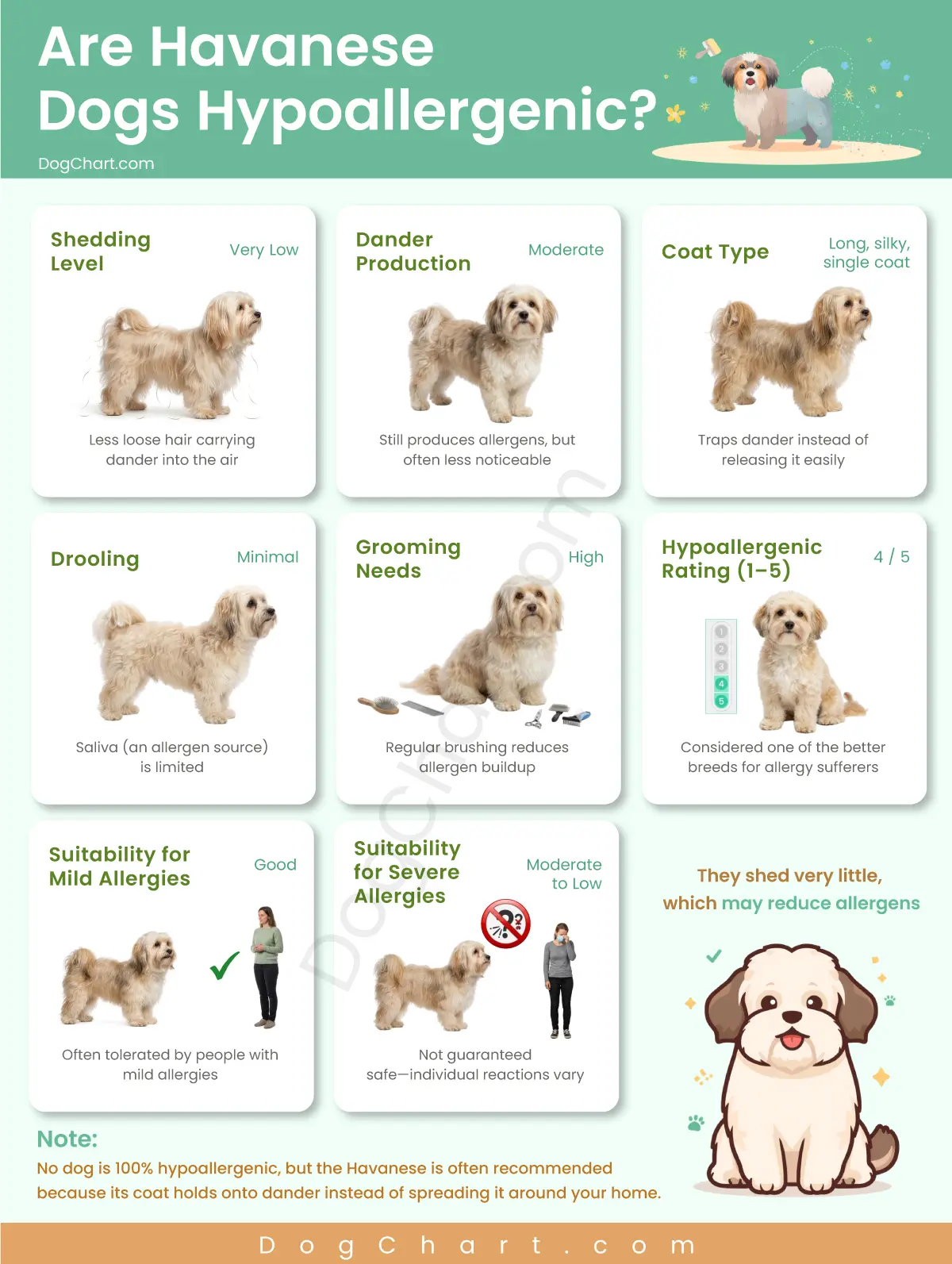
Table of Contents
The Havanese – Cuba’s National Dog
The Havanese breed is the national dog of Cuba. They descended from the Blanquito de la Habana, a small white dog brought to Cuba by Spanish settlers centuries ago. They belong to the Bichon family of companion dogs.
Havanese are popular with dog lovers because they’re one of the few little dogs that combine a hypoallergenic coat with a playful, social personality. The AKC breed standard describes them as outgoing, funny, and intelligent.
What Causes Dog Allergies?
Most people think allergies come from fur. They don’t. The trigger is a protein called Can f 1. It lives in dog saliva, urine, and skin cells. Those skin cells are called pet dander.
When dogs shed, dander travels with the fur. It floats in the air like pollen, lands on furniture, and triggers an allergic reaction. People who are allergic to dander sneeze, get itchy eyes, or develop asthma symptoms around high-shedding dogs.
If you’re allergic to most dogs, the issue isn’t fur itself. It’s the amount of allergens getting airborne. Dogs that shed less release less dander. That’s the difference.
Why Havanese Dogs Are Hypoallergenic
The Havanese is a true hypoallergenic dog breed. Their single-layer, silky coat has no dense double coat underneath. Most dogs are hypoallergenic because of this exact trait — the absence of a shedding undercoat.
Their hair grows continuously, like human hair. It falls out slowly. When it does fall, it stays trapped in the coat rather than floating through your house. The lack of shedding is what makes this hypoallergenic breed work for allergy sufferers.
As a low-shedding small breed dog breed, the Havanese also doesn’t have the oily “doggy smell” that comes from heavy-coated dogs. These dogs thrive indoors and their low shedding makes them pleasant housemates for sensitive noses.
Temperament and Why It Matters for Allergy Homes
The Havanese temperament is calm, social, and affectionate. They’re good with children, other pets, and strangers. That matters in allergy homes because a calm dog produces less saliva (from panting and licking) than a hyperactive one.
A friend of mine said, “We got our Havanese because of allergies, but we stayed because of the personality.” That sums it up. Owning a Havanese gives you both a hypoallergenic coat and a dog that’s genuinely fun to live with.
For more on personality, the Havanese pros and cons page covers both sides of ownership.
Havanese vs Other Hypoallergenic Breeds
| Breed | Coat Type | Shedding | Size | Best For |
| Havanese | Silky, wavy | Very low | 7–13 lbs | Families, apartments |
| Maltese | Single, silky | Very low | 4–7 lbs | Seniors, small spaces |
| Poodle (Toy) | Curly, dense | Very low | 6–9 lbs | Active owners |
| Bichon Frise | Curly, double | Low | 12–18 lbs | First-time owners |
| Shih Tzu | Long, double | Low | 9–16 lbs | Relaxed homes |
| Coton de Tulear | Cotton-like | Very low | 8–15 lbs | Gentle families |
The Havanese sits in the sweet spot. Bigger than a Maltese but smaller than a Bichon. Calmer than a Poodle but more playful than a Shih Tzu. For all toy options, the toy dog breeds page compares every small dog.
How to Reduce Allergens at Home
Even people with allergies who are allergic to dogs can live comfortably with a Havanese. But it takes some work. Here’s what helps:
Brush 3–4 times per week. This removes loose hair and dander before it gets airborne. It also helps prevent matting, which traps more allergens. Do it outside if possible.
Bathe every 2–3 weeks. Regular grooming washes away dander from skin. Use a gentle, hypoallergenic shampoo. Frequent grooming is the single most effective way to manage allergy issues.
Keep one room dog-free. Your bedroom works best. This gives you a clean zone for sleeping.
Use a HEPA air filter. These trap airborne dander. Run one where your hypoallergenic dog spends the most time.
Wash bedding weekly. Regular cleaning of blankets and dog beds removes embedded dander. Hot water works best.
Book a professional groomer every 4–6 weeks. They do a deeper clean than most owners manage at home. For style options, the dog grooming styles chart has ideas.
Grooming and Allergy Management
Grooming is the biggest factor. The Havanese coat grows long and traps dander close to the skin. Without regular brushing, dander builds up.
A shorter haircut helps. The puppy cut keeps hair at 1–2 inches, reducing the surface where dander collects. Longer show coats trap more and need daily brushing.
Diet matters too. A well-fed Havanese has a healthier coat that produces less dry skin. The best dog food for Havanese page covers nutrition that supports coat quality.
Finding a Havanese Breeder
If allergies are your main concern, visit a Havanese breeder before buying. Spend at least an hour with adult dogs. If you don’t react, you’ll likely be fine long-term.
A reputable breeder health-tests for hips, eyes, and heart. They’ll let you visit and meet the parents. Avoid pet stores and online-only sellers.
A mixed breed Havanese (like a Havapoo) is usually hypoallergenic too, since both Havanese and Poodles are low-shedding. But mixes with heavy-shedding breeds may not work for allergy sufferers.
Are Havanese Puppies Hypoallergenic?
Yes. Havanese puppies have the same single-coat structure as adults. They shed very little from day one.
Puppy skin produces more oil during development. Some allergy sufferers notice mild reactions during the first few months that fade as the dog matures.
If you’re testing sensitivity, spend time with an adult first. That gives a more accurate picture.
Who Should and Shouldn’t Get a Havanese for Allergies?
A Havanese is a great fit if: you have mild to moderate dog allergies, you’re willing to maintain a grooming schedule, and you want a small, social companion. Most allergy sufferers do well with this breed.
A Havanese might not work if: you have severe allergies that react to dander even in tiny amounts. In those cases, no breed will be safe enough.
The honest advice: visit a breeder or friend who owns one. A few hours without symptoms means you’ll likely be fine. The Havanese dog price page covers costs. The dog life expectancy chart shows they live 14–16 years – a long, wonderful commitment.
FAQs
Are Havanese 100% hypoallergenic?
No dog is allergen-free. The Havanese produces less dander than most breeds. Most allergy sufferers tolerate them well. Reactions depend on individual sensitivity.
Do Havanese dogs shed at all?
Very little. Their hair falls out slowly, like human hair. You won’t find clumps on furniture. Loose hair stays trapped in the coat and comes out during brushing.
Which is more hypoallergenic, Havanese or Maltese?
Both produce very low dander. The Maltese is smaller (4–7 lbs) with straighter hair. The Havanese is slightly larger (7–13 lbs) with wavier hair. Either works well for people with allergies.
Can I have a Havanese if I have asthma?
Many people with asthma do well with this breed. Their low dander output means fewer airborne triggers. But talk to your doctor first, especially if your asthma is severe. A trial visit with a breeder’s dog is the best test.
Does grooming reduce allergens?
Yes. Regular brushing, bathing, and haircuts remove dander before it gets airborne. A well-groomed Havanese produces far fewer allergens than a neglected one.
Are Havanese mixes hypoallergenic?
It depends on the other parent. A Havapoo (Havanese + Poodle) is usually low-shedding. A Havanese + Lab mixed breed may not be. Always meet the specific dog before committing.
What’s the best diet for a hypoallergenic coat?
Omega-3 fatty acids from fish oil reduce dry skin and dander. Feed a high-quality diet with named protein sources. The dog food chart covers feeding guidelines across all sizes.