
Best Dog Food for Havanese – Feeding Guide by Age and Weight
A Havanese looks at you with those big eyes and you want to share everything on your plate. Don’t. A 10-pound dog eating table scraps can gain weight faster than you’d think.
Feeding a Havanese correctly is about precision. They eat small amounts. Every bite counts. The right food keeps their coat silky, their energy steady, and their weight in check.
This guide covers exactly how much to feed at every stage. Puppy through senior. By weight and age. I’ve included brand recommendations and nutrient needs specific to this small breed.
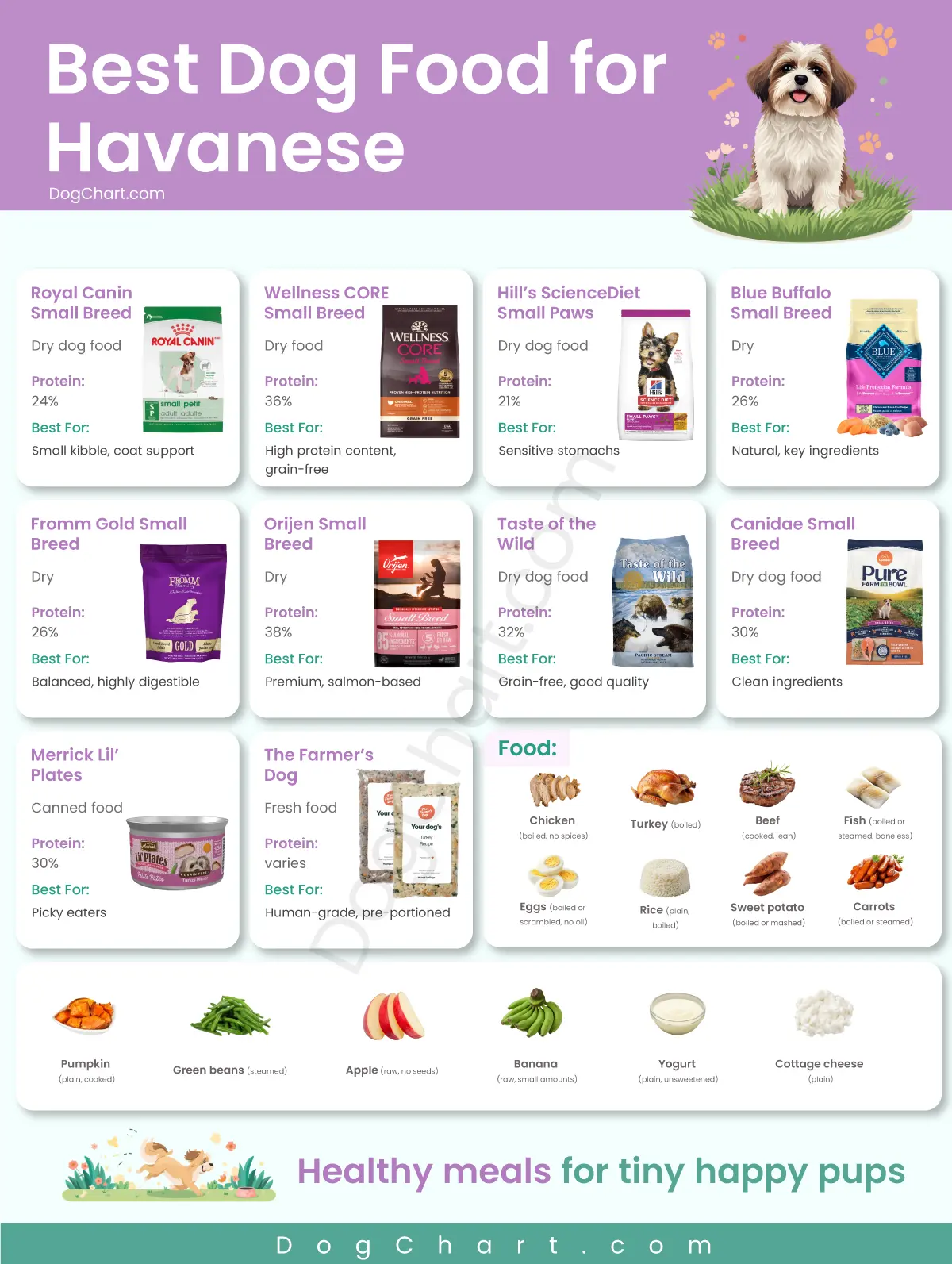
Table of Contents
Havanese Feeding Chart by Weight
To feed your Havanese correctly, start with their weight. These amounts are for standard dry kibble with 350–400 kcal per cup. Use small kibble pieces made for small dogs.
| Weight (lbs) | Weight (kg) | Daily Food | Meals/Day |
| 5–7 lbs | 2.3–3.2 kg | 1/3–1/2 cup | 2–3 |
| 7–9 lbs | 3.2–4.1 kg | 1/2–2/3 cup | 2 |
| 9–11 lbs | 4.1–5.0 kg | 1/2–3/4 cup | 2 |
| 11–13 lbs | 5.0–5.9 kg | 2/3–1 cup | 2 |
A full-grown Havanese eats about 1/2 to 3/4 cup per day. That’s not much. Use a measuring cup every time. Eyeballing doesn’t work with a small dog this size.
Havanese Feeding Chart by Age
A Havanese dog puppy has different needs than adult dogs. Here’s how feeding changes across life stages:
| Age | Meals/Day | Daily Amount | Food Type | Notes |
| 8–12 weeks | 4 | 1/4–1/3 cup | Small breed puppy food | Frequent meals prevent blood sugar drops |
| 3–6 months | 3 | 1/3–1/2 cup | Puppy food | Growth phase, DHA for brain |
| 6–12 months | 2–3 | 1/3–1/2 cup | Transition to adult | Switch around 10–12 months |
| 1–10 years | 2 | 1/2–3/4 cup | Adult dog food | Watch weight closely |
| 10+ years | 2 | 1/3–1/2 cup | Senior formula | Lower calories, joint support |
The Havanese’s stomach can be sensitive. Havanese dogs with sensitive stomachs do better on limited-ingredient formulas. Your pup may need a few tries to find the right fit.
Puppy food should stay until 10–12 months. Don’t rush the switch to adult dog food. The dog food chart covers general guidelines across all life stages.
Best Dog Food for Havanese Dogs
The best dog food for Havanese should be a good quality dog food with great ingredients. When choosing a brand of dog food, check the list of ingredients.
The first item should be a named protein source like chicken, turkey, or salmon. Avoid by-products, artificial colors, and cheap preservatives.
I’ve tested several dog food brands with Havanese owners. Here are the top picks:
| Brand | Type | Protein | Best For |
| Royal Canin Small Breed | Dry dog food | 24% | Small kibble, coat support |
| Wellness CORE Small Breed | Dry food | 36% | High protein content, grain-free |
| Hill’s Science Diet Small Paws | Dry dog food | 21% | Sensitive stomachs |
| Blue Buffalo Small Breed | Dry | 26% | Natural, key ingredients |
| Fromm Gold Small Breed | Dry | 26% | Balanced, highly digestible |
| Orijen Small Breed | Dry | 38% | Premium, salmon-based |
| Taste of the Wild | Dry | 32% | Grain-free, good quality |
| Canidae Small Breed | Dry | 30% | Clean ingredients |
| Merrick Lil’ Plates | Canned food | 30% | Picky eaters |
| The Farmer’s Dog | Fresh food | varies | Human-grade, pre-portioned |
The best dry dog food options are Royal Canin and Fromm. Both have small pieces sized for tiny mouths. Havanese can be prone to dental issues, so small kibble that’s easy to chew matters.
For dog food brands you can trust, look for AAFCO-certified pet food without preservatives or fillers. A good quality dry food with named salmon or chicken as the first ingredient is what you want.
Fresh Dog Food for Havanese
Fresh dog food for Havanese is growing in popularity. Services like The Farmer’s Dog deliver human-grade ingredients pre-portioned for your dog’s weight. The fresh food is cooked and shipped frozen.
Some owners feed their dogs homemade dog food. If you make food at home, include cooked chicken, sweet potato, butternut squash, and a bit of bone broth. Add essential vitamins and a calcium supplement. Consult your vet for balanced recipes.
The food you give matters more than the format. Whether dry dog food, canned food, or human-grade fresh – the food is important for coat quality, energy, and long-term health.
Key Nutrients Your Havanese Needs
Every food formula should meet these nutritional needs for a balanced diet:
Protein (25–32%): Supports lean muscle. Named meat sources with high protein content are best. Look for highly digestible options.
Fat (12–18%): Higher than larger breeds because of their fast metabolism. Omega-3 fatty acids and other fatty acids support healthy skin and coat. This keeps the silky coat looking its best.
Vitamins and minerals: Look for essential vitamins like E for immune support and biotin for coat quality. The right vitamins and minerals support joint health and dogs health overall.
Fiber: Gentle sources like butternut squash, sweet potato, and oatmeal. Havanese with sensitive stomachs do best on these.
Dry vs Wet vs Fresh – What’s Best for Your Hav?
| Factor | Dry Kibble | Wet / Canned | Fresh Food |
| Cost/month | $20–$40 | $40–$70 | $60–$120+ |
| Convenience | Very easy | Easy | Needs refrigeration |
| Dental benefit | Some | None | None |
| Palatability | Good | High | Very high |
Many Havanese owners mix dry and wet food. The kibble gives dental benefits. Canned food adds moisture and flavor. If your hav is a picky eater or extremely picky, try warming the wet food slightly. The smell makes it more appealing.
Havanese may do well on grain free food, but check with your vet first. The FDA flagged a link between grain free diets and heart issues. Unless your dog has confirmed allergies, stick with grain-inclusive.
The best food for your Havanese depends on their preferences. Whatever dog food for your Havanese you pick, give your Havanese consistent portions. This family dog does best on routine.
Foods Your Havanese Should Never Eat
Breeds like the Havanese are small enough that even a tiny amount of the wrong food is dangerous. Keep these away: chocolate, grapes, raisins, onions, garlic, xylitol, macadamia nuts, cooked bones, alcohol, and caffeine.
A single grape can cause kidney failure in a dog this small. The foods dogs can’t eat chart has the complete list. The dog safe foods chart shows what’s okay as treats.
Common Feeding Mistakes
Overfeeding treats. A single biscuit can be 15% of daily calories. Break them into tiny pieces.
Wrong kibble size. Standard pieces are too big. Use a small breed formula with small pieces.
Table scraps. A small bite of cheese adds up fast. The best food is the dog food you chose, not human leftovers.
Switching food too fast. Transition over 7–10 days. Mix old and new. Havanese stomachs are sensitive to sudden changes.
Not adjusting for grooming and activity. Active dogs need slightly more food. Dogs that just got groomed or had a stressful day may eat less. That’s normal.
Ask your breeder what they fed the pup. Starting with the same food reduces stomach upset during the transition home.
FAQs
How many times a day should I feed my Havanese?
Adults: 2 meals per day. Puppy: 3–4 meals under 6 months. Senior: 2 meals with smaller portions.
What’s the best food brand?
Royal Canin Small Breed and Fromm Gold are top picks for Havanese dogs. Both have small kibble and balanced nutrition. For more about the breed, the Havanese dog breeds page has a full overview.
Is grain-free food safe?
The FDA flagged a possible link to heart disease. Unless your vet recommends it for confirmed allergies, grain-inclusive is safer for this small breed.
My Havanese won’t eat. What should I do?
Try warming the food. Mix in a spoonful of canned food or bone broth. If refusal lasts more than 24 hours, see your vet. For pros and cons of this breed, the Havanese pros and cons page covers eating habits.
Does diet affect coat quality?
Yes. Omega-3 fatty acids, biotin, and vitamin E all support the Havanese’s silky coat. A dull coat often means the diet is missing something. The Havanese hypoallergenic guide covers how coat health connects to allergen levels.
How do I know if I’m overfeeding?
Feel the ribs. You should feel them without pressing hard. If you can’t, reduce by a tablespoon per meal and recheck in two weeks. The dog life expectancy chart shows how weight affects lifespan in small breeds.