
Pitbull Weiner Dog Mix – Everything You Need to Know
The first time I saw a Pitbull Dachshund mix, I thought someone had photoshopped a Pitbull head onto a Dachshund body. Short legs. Broad chest. Muscular build on a low-rider frame. It’s one of the most unusual-looking mixes out there.
This crossbreed goes by several names: Pitweenie, Dox-Bull, Doxie-Pit, Pitshund, or simply Pitbull Weiner Dog mix. This bull mix isn’t as common as Labradoodles, but they have a growing fan base as a designer companion among people who love quirky, one-of-a-kind dogs.
This guide covers what to expect in terms of size, temperament, health, and daily care. Knowing both parent breeds helps you understand the mix.
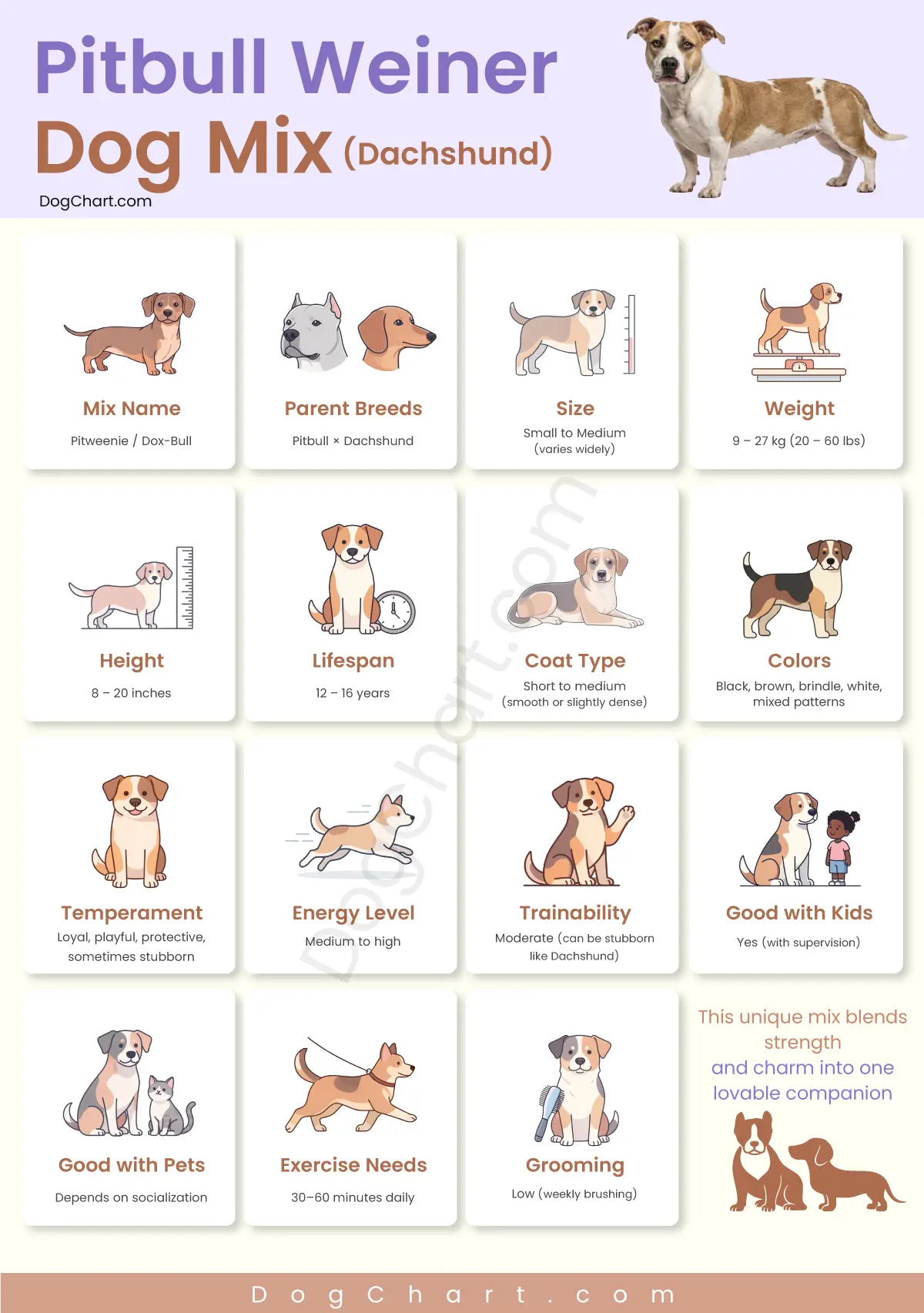
Table of Contents
Pitbull Weiner Dog Mix Chart
| Category | Details |
| Mix Name | Pitweenie / Dox-Bull / Doxie-Pit |
| Parent Breeds | Pitbull × Dachshund |
| Size | Small to Medium (varies widely) |
| Weight | 9–27 kg (20–60 lbs) |
| Height | 8–20 inches |
| Lifespan | 12–16 years |
| Coat Type | Short to medium (smooth or slightly dense) |
| Colors | Black, brown, brindle, white, mixed patterns |
| Temperament | Loyal, playful, protective, sometimes stubborn |
| Energy Level | Medium to high |
| Trainability | Moderate (can be stubborn like Dachshund) |
| Good with Kids | Yes (with supervision) |
| Good with Pets | Depends on socialization |
| Exercise Needs | 30–60 minutes daily |
| Grooming | Low (weekly brushing) |
Size and Appearance
The appearance of this mix is genuinely odd in the best way. Most Pitweenies combine the body of a dachshund with the broad head of a Pitbull. The long body sits on shorter legs, creating a shape that looks almost cartoonish.
Most stand 8–20 inches tall and weigh 20–60 pounds. Some look like a miniature Pitbull with shorter legs. Others look more Dachshund-sized with a thicker build. The size range is wide because the parent breeds are so different in frame.
Puppies are almost universally cute and adorable. The mix of stubby legs, a broad chest, and wrinkled brow makes every pup look like a cartoon character. Their body continues to change as they grow, so the adult look may surprise you.
Common coat colors include black, brown, brindle, fawn, red, white, and mixed patterns. Brindle is the most striking, inherited from the Pitbull side. For Dachshund coat options, the Dachshund color chart covers all variations. For size context across breeds, the dog size chart helps.
Pitweenie Personality and Temperament
The personality of this mix is a mix of loyalty, stubbornness, and affection. Pitbulls bring the sweet and eager-to-please side. Dachshunds bring independence and courage.
They’re playful without being hyperactive. They love their family deeply and bond closely with one or two people in the household. Many owners describe them as small dogs who think they’re big dogs – or big dogs who act like small dogs.
They can be wary of strangers. Early socialization is critical. Without it, the Dachshund’s territorial streak combined with the Pitbull’s protectiveness can become problematic. With proper socialization, they’re friendly and well-adjusted.
They’re good with older children but the potential for back sensitivity (from the Dachshund side) means rough play from toddlers isn’t ideal. Supervision matters.
Health Issues to Watch For
Every animal has its health concerns, and this mix has several potential health issues inherited from both parent breeds.
| Condition | From Which Parent | What to Watch For |
| IVDD (Disc Disease) | Dachshund | Back pain, paralysis risk |
| Hip Dysplasia | Pitbull | Limping, stiffness |
| Skin Allergies | Pitbull | Itching, hot spots, ear infections |
| Obesity | Both | Long spine + extra weight = disaster |
| Patellar Luxation | Both | Kneecap slipping |
| Dental Issues | Dachshund | Small jaw, crowded teeth |
| Heart Conditions | Pitbull | Annual checkups recommended |
| Breathing Issues | Both | Watch in heat or exercise |
IVDD is the biggest concern. The Dachshund’s long spine combined with the Pitbull’s heavier upper body creates extra stress on the back. Keep this mix lean. Avoid stairs and jumping. A ramp for the couch is worth the investment.
Skin allergies show up as itching, hot spots, and ear infections. Most are food-related. Breathing issues can show up in hot weather or during intense exercise. Some Pitweenies inherit a shorter muzzle that makes cooling harder.
The Pitbull food guide covers allergy-friendly diets. For lifespan info, the Pitbull lifespan page covers the Pitbull parent’s health profile.
Exercise and Activity Needs
30–60 minutes of daily exercise. Walks, play sessions, and indoor games work well. They have moderate to high energy but tire faster than a full-sized Pitbull.
Avoid activities that stress the back: jumping from furniture, going up and down stairs repeatedly, and roughhousing with larger dogs. Swimming is excellent because it builds muscle without spinal compression.
Mental stimulation matters too. Puzzle toys, training sessions, and scent games keep their sharp Dachshund brain engaged.
Training a Pitbull Dachshund Mix
Patience is the key word. The Dachshund side brings stubbornness. The Pitbull side brings eagerness to please. These two traits will fight each other during every training session.
Use high-value treats. Cheese, chicken, or hot dog pieces work better than dry biscuits for this mix. Keep sessions short – 5 to 10 minutes maximum. End on a win.
Start socialization before 16 weeks. Expose them to other dogs, strangers, kids, and different environments. This prevents the fearfulness that can develop in either parent breed.
Crate training helps with housetraining. Small dogs take longer to housetrain. Expect 4–6 months of consistent work.
Grooming, Feeding, and Daily Care
Grooming is easy. Short coat needs brushing once a week. Bathing every 4–6 weeks is enough. They’re low-shedding compared to many breeds.
Check ears weekly. Trim nails every 2–3 weeks. Brush teeth several times per week to prevent the dental issues common in small-jawed dogs.
Feeding: 1–2 cups per day, split into two meals. Use a high-protein formula with named meat first. Keep portions strict – weight control is critical for spinal health. The dog food chart covers general guidelines.
Best Living Situation
Apartment living works for this mix. They’re small enough for tight spaces but active enough to need daily outdoor time. A single-story home is ideal – stairs are the biggest IVDD trigger.
They do best with someone home most of the day. Both parent breeds can develop separation anxiety. If you work long hours, consider doggy daycare or a dog walker.
Avoid homes with lots of stairs unless you can carry them or install ramps. This is non-negotiable for long-term spinal health.
Finding a Pitweenie: Rescue or Breeder?
Check shelters and rescue organizations first. This mix often ends up available for adoption because they don’t fit traditional breed expectations. Adoption is the best way to find one. You already know their size, personality, and any health issues.
Search sites like Petfinder and Adopt-a-Pet for “Dachshund mix” or “Pit bull mix” listings. Many unnamed mixes are actually Pitweenies in shelter intake photos. A quick video call with the shelter staff can confirm.
Ask shelter staff what name the dog currently goes by. Some respond to their shelter name. Others are happy to learn a new one. A brief video of the dog playing or walking helps you assess mobility and energy level before committing.
Many owners say their rescue Pitweenie is the greatest dog they’ve ever had – loyal, funny, and full of personality. Social media is full of video clips showing these mixes being silly and sweet.
Intentional breeders are rare. Be cautious about anyone marketing them as “designer dogs” at premium prices. Most reputable Pitbull or Dachshund breeders don’t cross the breeds intentionally.
Is a Pitweenie Right for You?
Good fit for: Experienced owners, apartment dwellers, families with older children, single-story homeowners, and anyone who wants a unique-looking companion.
Not ideal for: Homes with very young children, first-time owners who haven’t dealt with stubborn dog breeds, anyone who works long hours, or homes with lots of stairs.
This is a high-commitment mix because of the IVDD risk. But the reward is a quirky, loyal, one-of-a-kind dog breed that gets attention everywhere you go.
FAQs
How big does a Pitbull Dachshund mix get?
8–20 inches tall and 20–60 pounds. The exact size depends on which parent’s genes dominate.
What’s a Pitweenie called?
Pitweenie is the most common name. Other names: Dox-Bull, Doxie-Pit, Pitshund, Doxiebull. All refer to the same crossbreed.
Are they good with kids?
Yes, with older children. Their potential for back issues means rough play from toddlers is risky. Supervised interaction with school-aged kids works well.
Are Pitweenies aggressive?
Not inherently. Like any pit bull mix, temperament depends on training and socialization. Early positive experiences prevent most issues. The aggressive dog breeds page covers the facts about Pitbull reputation.
How long do they live?
12–16 years on average. Keeping them lean and protecting the spine adds years.
How much do they cost?
$100–$300 from a rescue. $500–$1,500 from a breeder. Adoption is cheaper and gives a dog a second chance. For naming your new puppy, the Pitbull names guide has 200+ ideas. For the Dachshund parent’s info, the Dachshund size chart has details.