
Pitbull Lifespan – How Long Do Pitbulls Live?
A friend’s Pitbull just turned 15. Fifteen years old. She’s slower now, grayer around the muzzle, and takes her time on stairs. But she still greets everyone at the door like she’s a puppy. That’s the best-case scenario with this breed.
The average pitbull lifespan and life expectancy is 12–16 years, longer than many breeds their size.
How long does a pitbull live? Most reach 12–16 years when fed well, kept lean, and exercised regularly. A pitbull’s lifespan depends a lot on which type you have and whether they’re purebred or mixed.
This guide covers every Pitbull type and common mix, the health issues that affect longevity, and what you can do to give your dog the longest, healthiest life possible.
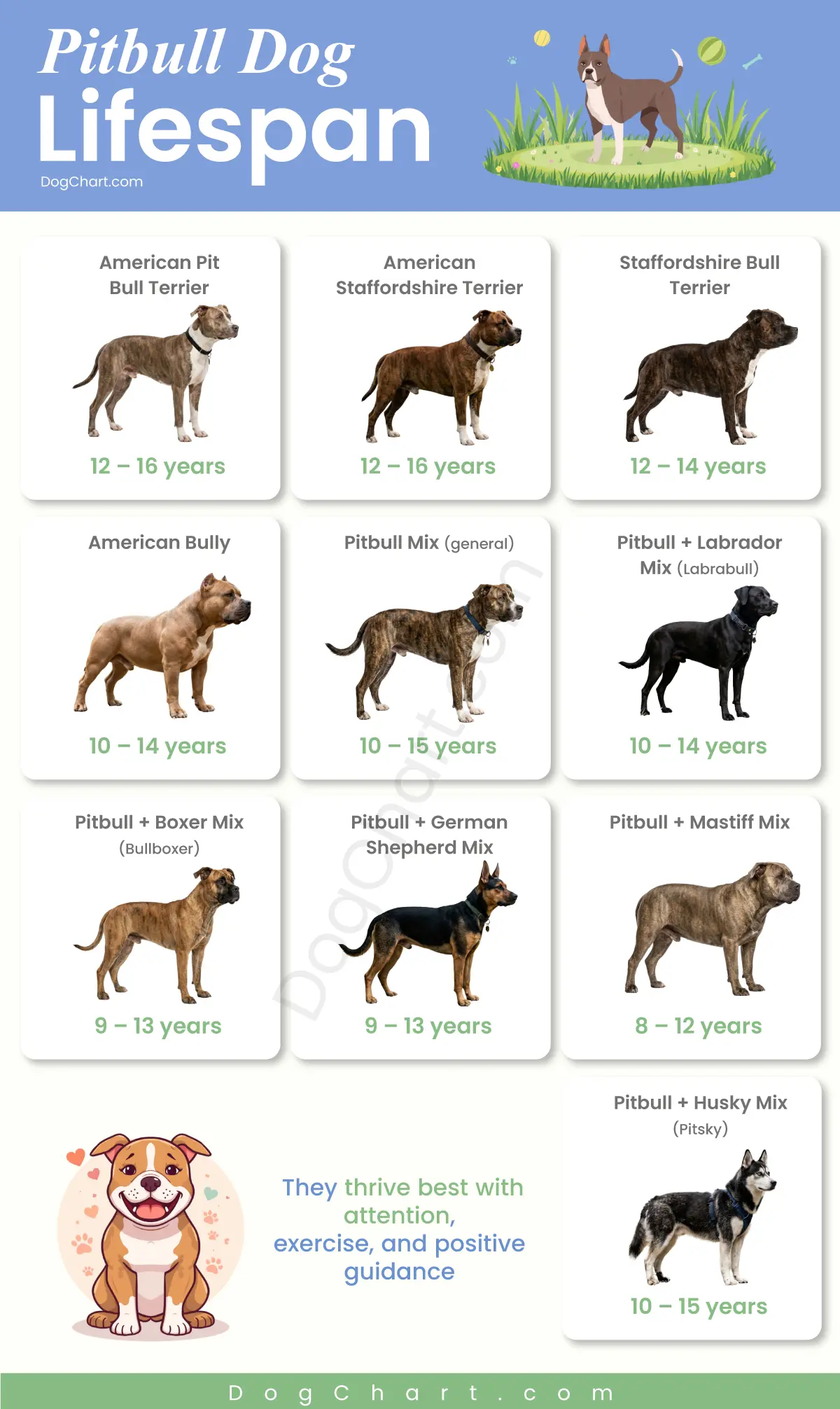
Table of Contents
Pitbull Lifespan Chart
| Factor | Details |
| Average lifespan (purebred) | 12–16 years |
| Longest-lived type | American Pit Bull Terrier |
| Shortest-lived type | American Bully (extreme lines) |
| Senior age | Starts around 8–9 years |
| Biggest killer | Cancer and heart disease |
| Most preventable killer | Obesity-related conditions |
| Females vs males | Females live slightly longer |
| Spay/neuter effect | Adds 1–2 years on average |
Pitbull Lifespan by Type and Mix
“Pitbull” isn’t a single breed. The pit bull terrier breed group covers several breeds and a growing list of mixes.
The pitbull breed breed includes the APBT, Am Staff, and Staffordshire Bull Terrier as the main pit bull types. Each pit bull-type has different lifespan ranges.
| Type of Pitbull | Average Lifespan |
| American Pit Bull Terrier | 12–16 years |
| American Staffordshire Terrier | 12–16 years |
| Staffordshire Bull Terrier | 12–14 years |
| American Bully | 10–14 years |
| Pitbull Mix (general) | 10–15 years |
| Pitbull + Labrador Mix (Labrabull) | 10–14 years |
| Pitbull + Boxer Mix (Bullboxer) | 9–13 years |
| Pitbull + German Shepherd Mix | 9–13 years |
| Pitbull + Mastiff Mix | 8–12 years |
| Pitbull + Husky Mix (Pitsky) | 10–15 years |
The longest average life is 12 to 14 years or longer among pit bulls, with the APBT and Am Staff at the top.
American Pit Bull Terrier Lifespan
The American Pit Bull Terrier lives 12–16 years on average. American Pit Bull Terriers are athletic, lean, and built for endurance. Their athleticism is part of why they live longer than many similarly sized breeds.
The American Dog Breeders Association (ADBA) recognized the APBT in 1909. The American Kennel Club doesn’t officially recognize the APBT but recognizes the closely related American Staffordshire Terrier. The Am Staff breed was recognized by the AKC in 1936.
American Pit Bull Terrier dogs from working lines tend to live longer than show lines or extreme builds. Lean genetics, proper exercise, and good nutrition all stack the odds in your dog’s favor.
American Staffordshire Terrier and Staffordshire Bull Terrier Lifespan
The American Staffordshire Terrier lives 12–16 years – the same range as the APBT. American Staffordshire Terriers are slightly heavier and more compact, but their health profile is nearly identical.
The Staffordshire Bull Terrier (the smaller UK version) lives 12–14 years. Staffordshire Bull Terriers are more compact than American types but face specific issues like L-2 hydroxyglutaric aciduria and hereditary cataracts in some lines.
All three of these bull terriers typically reach senior age around 8–9 years, with care needs increasing after that.
Common Health Issues That Affect Pitbull Lifespan
Pitbulls are prone to specific health conditions and health problems that can cut their lifespan short. Knowing these common health issues helps you catch them early.
| Condition | How Common | Impact |
| Hip Dysplasia | Very Common | Affects hip joints, causes arthritis |
| Skin Allergies | Very Common | Itching, hair loss, skin infection |
| Heart Disease | Moderate | Can be fatal if undetected |
| Knee Problems (ACL tears) | Common | Joint problems, surgery needed |
| Cancer (Mast Cell) | Common | Mast cell tumors most frequent |
| Thyroid Disease | Moderate | Weight gain, lethargy |
| Cataracts | Moderate | Vision loss in older dogs |
| Parvovirus (puppies) | Moderate | Fatal without treatment |
Hip dysplasia is the most common in pitbulls. It affects the hip joints and leads to chronic joint problems and arthritis with age. Severe cases need surgery.
Skin allergies are the most common ongoing issue. They cause hair loss, skin infections, and chronic itching. Most allergies are food-related. Mast cell tumors are the most frequent type of cancer in this breed.
Heart disease is the most serious silent threat. Annual vet checkups catch problems early. Parvovirus is the biggest threat to puppies – vaccinate on schedule.
For diet solutions to allergies, the Pitbull food guide covers nutrition.
How to Help Your Pitbull Live a Long and Healthy Life
To keep your pit bull living a long and healthy life, focus on the basics. Pit bull owners who follow these steps regularly see their dogs reach 14–16 years with a strong zest for life:
Keep them at a healthy weight. Overweight Pitbulls live 2–3 years less than lean ones. This is the biggest factor dog owners can control. Many dogs reach old age simply because their owners watched portions.
Feed quality dog food. To feed your dog right, choose high-protein, real-meat-based food. Cheap fillers cause skin issues and shorten lifespan.
Provide proper care. Regular grooming, dental care, nail trims, and ear cleaning. These small things add up over years.
Daily exercise. 45–60 minutes minimum. This keeps healthy dogs happy and healthy. Walks, fetch, swimming, dog sports – they all work.
Regular vet visits. Twice a year for adults. Annual bloodwork from your veterinarian catches issues before symptoms appear. Veterinary care matters more as dogs reach their senior years.
Start proper training and socialization early in life. A well-adjusted dog is less stressed. Less stress means longer life. Begin socialization early in life, before 16 weeks.
Buy from reputable breeders. A good breeder health-tests parents for hip dysplasia and heart disease. This stacks the genetic odds in your favor for a long and happy life.
With advanced dog care today, more Pitbulls than ever are reaching 16+ years. The dog weight chart helps you track healthy weight. The dog food chart covers feeding basics.
Pitbull Senior Years and Aging
Senior years start around age 8–9 for this breed. Gray muzzle. Slower walks. More naps. These are normal changes.
Dog parents notice the difference at the dog park first. The 8-year-old who used to run for an hour now wants 20 minutes and a bench. That’s fine. Match the activity to the age.
Senior care needs: orthopedic bed, joint supplements, ramps instead of stairs, more frequent bathroom breaks, softer food if dental issues develop. Adopting a dog who’s already a senior is rewarding too – these breed dogs make incredible companions even at 8 or 9.
Watch for new lumps, sudden weight changes, or loss of appetite. These signal something beyond normal aging.
The Pit Bull’s Origins and Reputation
The pit bull’s reputation comes from a dark history. They were used for dog fighting by humans who exploited their loyalty and strength. That history doesn’t reflect their true nature – it reflects what humans did to them.
Originally, Pitbulls were farm and family dogs. They worked livestock, hunted vermin, and acted as nanny dogs for children. Today’s well-bred Pitbull stands strong on all four feet, occasionally up on hind legs to greet people, and lives a full life as a family companion.
For more on the breed’s reputation versus reality, the aggressive dog breeds page covers the data and context.
Mental Health and Lifespan
Stressed dogs don’t live as long. Pitbulls bond deeply with their people. Dogs that experience chronic stress from isolation or unstable homes show higher rates of immune problems and behavioral disorders.
The fix is simple: daily interaction, consistent routine, regular exercise, and mental enrichment. A Pitbull that’s engaged is a healthier Pitbull.
Compare lifespans across all breeds with the dog life expectancy chart. For breeds with the longest lifespans, the long living dog breeds page ranks them.
FAQs
How long is the average pitbull life span?
The average life span is 12–16 years. The American Pit Bull Terrier and American Staffordshire Terrier reach the higher end. American Bullies tend to live shorter due to extreme builds.
What’s the oldest Pitbull on record?
Some Pitbulls have reportedly lived 20+ years, though verified records are rare. The realistic upper range is 16–17 years with exceptional care.
Which Pitbull type lives longest?
The American Pit Bull Terrier and American Staffordshire Terrier at 12–16 years. Both have balanced builds without extreme features.
Do mixed Pitbulls live longer?
Sometimes. A Pitbull + Husky mix often benefits from hybrid vigor. A Pitbull + Mastiff mix lives shorter because Mastiffs have shorter lifespans.
Does spaying or neutering affect lifespan?
Yes. Spayed and neutered dogs live 1–2 years longer on average. Lower cancer risk and fewer roaming injuries.
How can I tell if my Pitbull is aging well?
Clear eyes, steady appetite, normal energy, healthy coat, no new lumps. Annual senior bloodwork gives the full picture. The Pitbull food guide covers nutrition. The Pitbull names guide has 200+ ideas. The Pitbull service dog guide covers their working potential.