
Best Dog Food for Pitbulls – Feeding Chart by Age and Weight
My neighbor’s Pitbull once ate an entire rotisserie chicken off the counter in under two minutes. Bones and all. The vet bill was $400. That’s the reality of feeding a dog that’s equal parts muscle and appetite.
Finding the best dog food for Pitbulls isn’t about buying whatever’s on sale. This pitbull dog breed burns through calories fast. They’re muscular, active, and prone to food allergies. The wrong food shows up quickly. Dull coat. Low energy. Itchy skin. Weight gain in the wrong places.
Pitbulls need food that supports lean muscle, healthy skin, and sustained energy for their full 12–16 year lifespan. I’ve spent time comparing brands, reading labels, and talking to owners. This 2025 guide covers everything.
For how long your pit bull will need this food, the Pitbull lifespan page covers life expectancy. The dog food chart has general feeding guidelines.
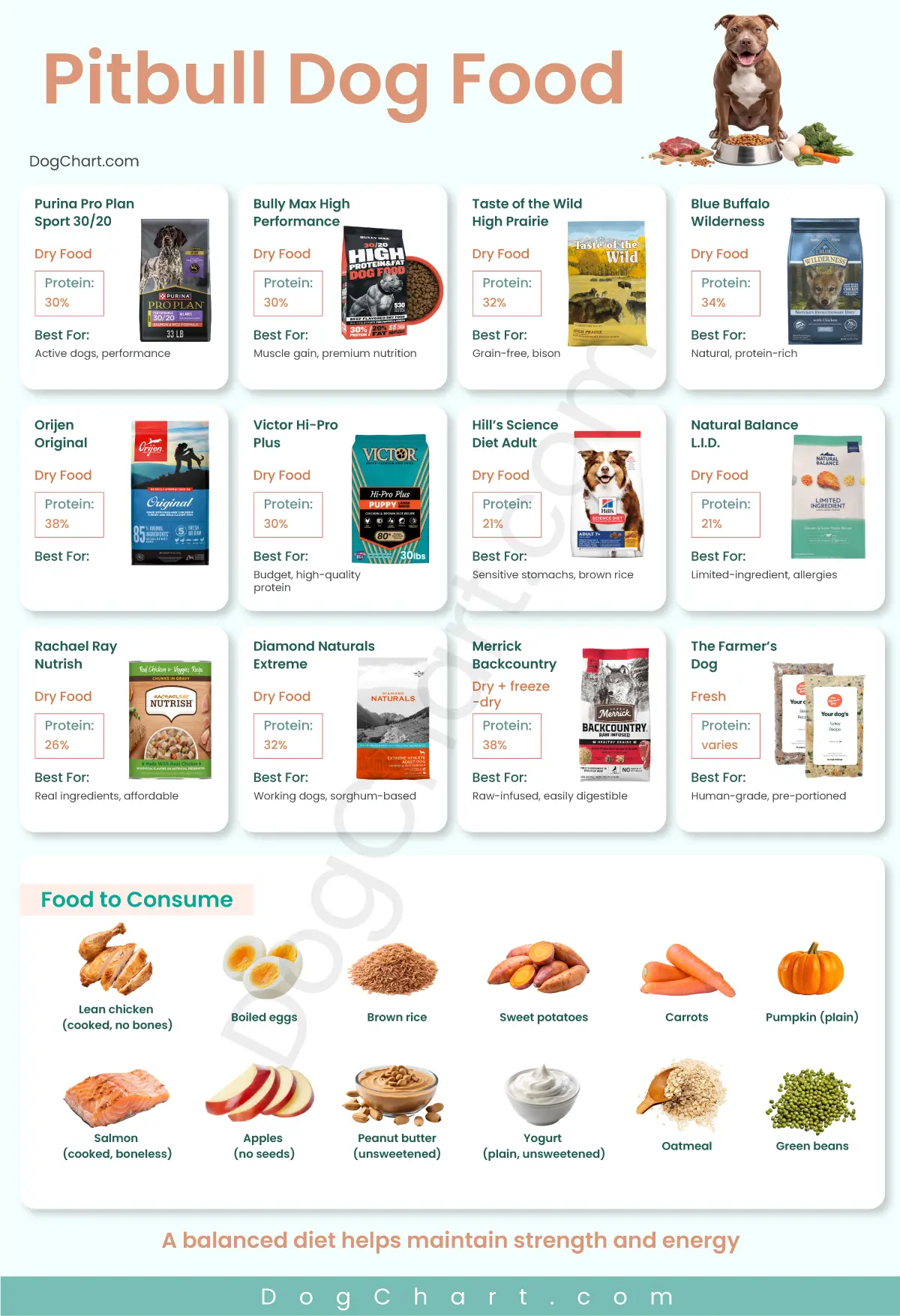
Table of Contents
Pitbull Feeding Chart
| Factor | Details |
| Daily food (adult, 50-60 lbs) | 2.5–3 cups dry kibble |
| Meals per day | 2 (adults), 3–4 (puppies) |
| Ideal protein | 26–34% (high-protein formula) |
| Ideal fat | 14–18% (healthy fats) |
| Common allergens | Chicken, beef, wheat, corn, soy |
| Switch to adult food | 12–14 months (from puppy formula) |
| Monthly food cost | $50–$90 (dry), $100–$200 (fresh) |
| Diet type | Nutrient-dense, real meat first |
Pitbull Feeding Chart by Weight
Every dog needs portions matched to their size. These amounts are for standard dry dog food with 350–400 kcal per cup. Pitbulls are built like a large breed in a medium-breed body, so they burn more per pound than you’d expect.
| Weight (lbs) | Weight (kg) | Daily Food (cups) | Calories/Day |
| 30–40 lbs | 14–18 kg | 1.5–2 cups | 700–900 |
| 40–50 lbs | 18–23 kg | 2–2.5 cups | 900–1,100 |
| 50–60 lbs | 23–27 kg | 2.5–3 cups | 1,000–1,200 |
| 60–70 lbs | 27–32 kg | 3–3.5 cups | 1,100–1,400 |
| 70–80 lbs | 32–36 kg | 3.5–4 cups | 1,300–1,600 |
| 80+ lbs | 36+ kg | 4–4.5 cups | 1,500–1,800 |
These are high-energy dogs. Working dogs and weight-pull competitors may need 20–30% more. The right amount gives your dog steady energy and supports muscle gain without fat buildup. Track weight monthly using the dog weight chart.
Pitbull Feeding Chart by Age
| Age | Meals/Day | Cups/Day | Food Type | Notes |
| 8–12 weeks | 4 | 1–1.5 | Puppy food | High protein, DHA for brain |
| 3–6 months | 3 | 1.5–2.5 | Puppy food | Fastest growth, monitor weekly |
| 6–12 months | 2–3 | 2.5–3.5 | Transition | Switch around 12–14 months |
| 1–7 years | 2 | 2.5–4 | Adult formula | Adjust for activity level |
| 8+ years | 2 | 2–3 | Senior formula | Add glucosamine, lower cal |
Puppy food should contain DHA for brain development and essential amino acids for muscle growth. Keep puppies on their formula until 12–14 months. Per a 2024 AAFCO update, look for foods meeting “growth and reproduction” nutrient profiles.
Seniors need fewer calories but more joint support. By age 8, add glucosamine. Their hips and knees take years of wear from their muscular frame.
Best Dog Food Brands for Pitbulls in 2025
Pitbulls need high-quality protein from real ingredients. Every brand below uses a named quality protein source as the first ingredient. No unnamed meals, no fillers as primary ingredients.
| Brand & Formula | Type | Protein | Best For |
| Purina Pro Plan Sport 30/20 | Dry | 30% | Active dogs, performance |
| Bully Max High Performance | Dry | 30% | Muscle gain, premium nutrition |
| Taste of the Wild High Prairie | Dry | 32% | Grain-free, bison |
| Blue Buffalo Wilderness | Dry | 34% | Natural, protein-rich |
| Orijen Original | Dry | 38% | Premium, whole-prey ratio |
| Victor Hi-Pro Plus | Dry | 30% | Budget, high-quality protein |
| Hill’s Science Diet Adult | Dry | 21% | Sensitive stomachs, brown rice |
| Natural Balance L.I.D. | Dry | 21% | Limited-ingredient, allergies |
| Rachael Ray Nutrish | Dry | 26% | Real ingredients, affordable |
| Diamond Naturals Extreme | Dry | 32% | Working dogs, sorghum-based |
| Merrick Backcountry | Dry + freeze-dry | 38% | Raw-infused, easily digestible |
| The Farmer’s Dog | Fresh | varies | Human-grade, pre-portioned |
Purina Pro Plan Sport 30/20 is the go-to for active Pitbulls. It includes chicken fat for energy and amino acids for recovery. Bully Max is the most protein-rich option designed specifically for this breed, offering premium nutrition without artificial fillers.
Many Pitbulls do well on Diamond Naturals, which uses sorghum instead of corn and is easily digestible.
Merrick Backcountry adds freeze-dry raw pieces to standard kibble. Some dogs prefer bacon flavored toppers to boost palatability. For more brand comparisons, the best dry dog foods page ranks all options. The best canned dog foods page covers wet pet food.
Nutrients That Pitbulls Need
Protein (26–34%): This breed is built to build muscle and promote muscle maintenance. Named meat sources with complete amino acid profiles do this best. Look for AAFCO nutrient profiles on the label.
Healthy fats (14–18%): Healthy fats from fish oil, flaxseed, and chicken fat fuel sustained energy. Omega-3 fatty acids support coat shine and reduce inflammation. These minerals and nutrients keep skin and coat in top shape.
Vitamins: Vitamin E supports immune function. Biotin supports coat quality. Food that’s natural with added vitamins and added vitamins ensures complete nutrient coverage.
Fiber for digestive health: Sweet potato, pumpkin, and brown rice support gut health and digestion. Avoid plant-based protein fillers like pea protein that replace real meat.
Don’t forget dental health. Crunchy kibble helps scrape plaque. Soft-only diets can accelerate dental disease in this breed.
Pitbull Food Allergies and Sensitive Skin
Pitbulls are more allergy-prone than most breeds. Pitbulls with sensitive stomachs and sensitive skin need careful ingredient selection. Skin issues like itchy skin, ear infections, hot spots, and digestive upset are often caused by food sensitivity or intolerance.
Common triggers: chicken, beef, wheat, corn, soy. These are also the primary ingredients in cheap commercial dog food loaded with by-products, fillers, and artificial additives.
| Allergen | Symptoms | Alternative Protein |
| Chicken | Itchy skin, ear infections | Fish, duck, turkey |
| Beef | Hot spots, digestive upset | Bison, venison, lamb |
| Wheat | Bloating, loose stools | Rice, oats, sorghum |
| Corn | Skin flare-up, gas | Sweet potato, peas |
| Soy | Ear infections, vomiting | Lentils, flaxseed |
Pitbulls can benefit from a limited-ingredient diet if allergies flare-up often. When switching to a new dog food, transition over 7–10 days. Mix old and new. A sudden switch causes digestive upset even with good food that’s high quality.
The foods dogs can’t eat chart covers toxic foods. The dog safe foods chart shows what’s safe as treats.
Raw Feeding and Fresh Food for Pitbulls
Some pitbulls thrive on raw (BARF diet). Raw-fed dogs often show shinier coats, cleaner teeth, and more energy. A balanced raw meal is highly digestible and nutrient-dense.
Include 70–80% muscle meat, 10% organ meat, 10% raw meaty bones, and 5–10% vegetables. Budget $150–$300 per month. Consult a vet nutritionist for balanced recipes. Don’t wing it.
A middle-ground option: raw-infused dry food like Merrick Backcountry or a combo pack of kibble plus freeze-dried raw toppers. You get convenience with raw nutrition benefits.
Fresh food services like The Farmer’s Dog ship pre-portioned, human-grade meals. They’re pricier but eliminate guesswork. Many pet parents mix fresh with dry dog food to balance cost and quality.
Common Feeding Mistakes
Overfeeding for bulk. Extra cups don’t build muscle. Exercise and proper protein do. A lean Pitbull with visible definition is healthy.
Free-feeding. Pitbulls eat everything in the bowl and check the trash. Measure portions. Two meals a day for adults.
Ignoring allergies. Itchy skin and chronic ear infections aren’t normal. Change the protein source. Don’t just add supplements.
Going grain-free without reason. The FDA flagged a link between grain-free diets and heart disease. Unless your vet confirms a grain allergy, grain-inclusive formulas with brown rice or oats are safer and more digestible.
Cheap food with fillers. Corn and unnamed by-products don’t support this breed. Spend more on food now or more on vet bills later.
Supplements Worth Adding
Fish oil (omega-3): 1,000mg per 20 lbs. Reduces inflammation, supports skin and coat shine. The single most useful supplement for Pitbulls.
Glucosamine: For joint support. Start by age 3–4. Cosequin or Dasuquin are vet-recommended.
Probiotics: For gut health and dogs with sensitive stomachs. Purina FortiFlora is commonly recommended.
Coconut oil: 1 tsp per 10 lbs. Supports skin and adds healthy fats.
Frequently Asked Questions
How much should I feed my Pitbull per day?
A 50–60 pound adult needs about 2.5–3 cups of dry kibble per day, split into two meals. Active dogs need more. Sedentary dogs need less.
What’s the best protein level?
26–34% for adults. This is a muscular, high-energy breed that benefits from high-protein formulas. Named meat should be the first ingredient on the best dog food you choose.
Are Pitbulls prone to food allergies?
Yes. Chicken, beef, wheat, and corn are common triggers. Fish-based or limited-ingredient diets usually resolve issues within 8–12 weeks.
Should I feed grain-free?
Only if your vet recommends it. Grain-inclusive with brown rice or oats is generally safer per the latest research.
How long should puppies stay on puppy food?
Until 12–14 months. They grow fast and need the extra DHA, calcium, and protein that puppy food provides.
Is raw food better than kibble?
Both work. Raw shows shinier coats. Kibble is more convenient. Many owners mix both. The best dog food is the one your dog eats consistently and thrives on. For naming your well-fed pup, the Pitbull names guide has 200+ ideas. The Pitbull service dog guide covers working nutrition. The aggressive dog breeds page separates myth from fact.