
Do Newfoundland Dogs Shed? What to Expect and How to Manage It
The short answer: yes. A lot. If you’re thinking about getting a Newfoundland and you like wearing black clothing, prepare to give that up.
These gentle giants – often called the “nanny dog” – have a thick double coat that drops fur year-round. Unlike other breeds that shed seasonally, every newfie sheds constantly with two extreme peaks per year.
This Newfoundland dog breed shedding guide covers how much they lose, when it’s worst, and what you can do. The Newfoundland temperament page covers personality. This page covers the fur.
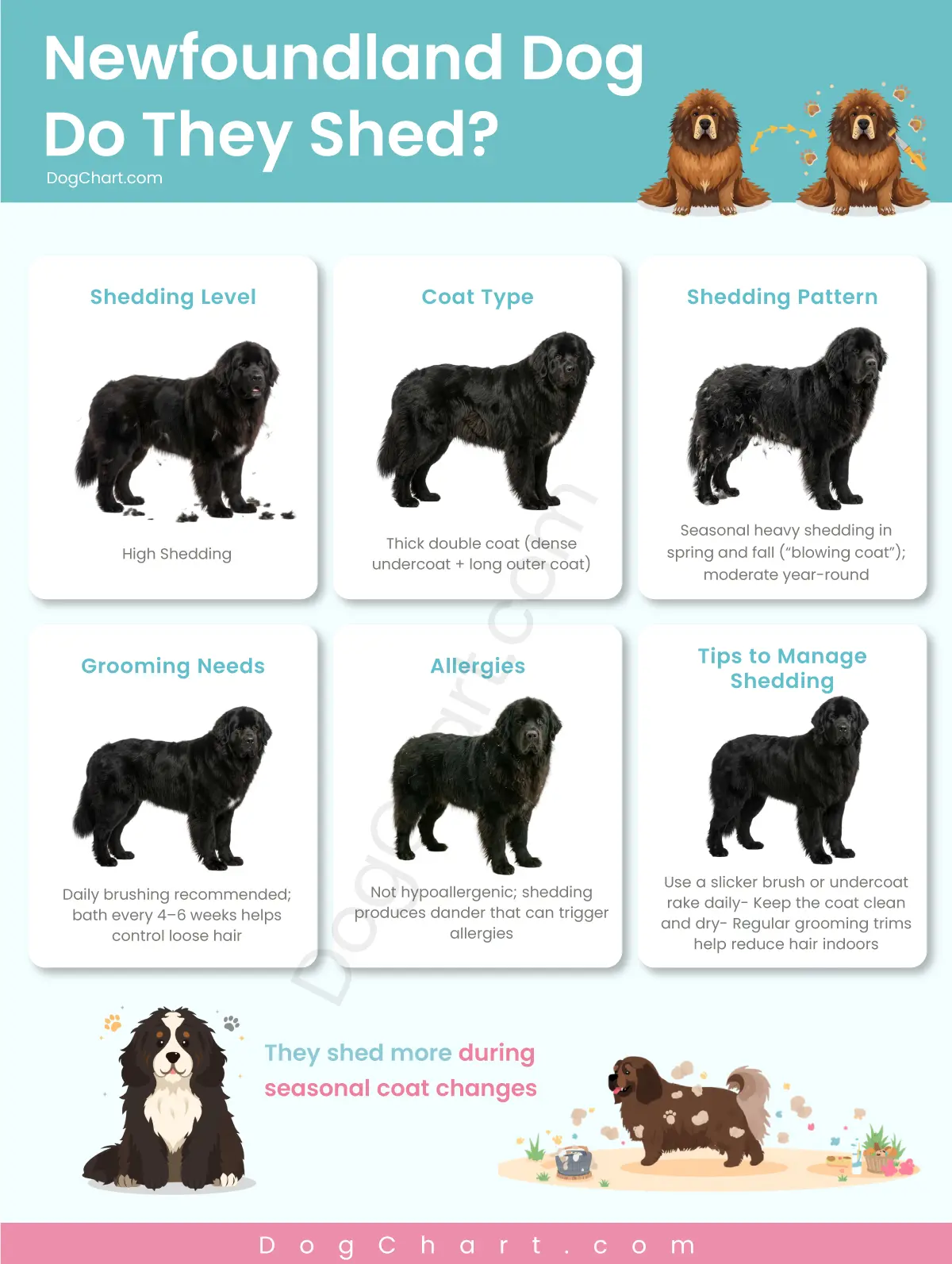
Table of Contents
How Much Do Newfoundlands Shed?
| Season | Shedding Level | What to Expect |
| Spring (coat blow) | Extreme | Undercoat comes out in clumps |
| Summer | Heavy | Continuous, lighter fur loss |
| Fall (coat blow) | Extreme | Winter coat grows in |
| Winter | Moderate | Less than summer but still noticeable |
Newfies shed heavily all year. The worst periods are spring and fall when the coat blows twice a year. During these 2–4 week blowouts, the dense winter coat drops in massive clumps. The thick coat produces more loose hair than most owners expect.
Why Do They Shed So Much?
The double-layer structure. Newfoundlands have a water-resistant outer layer and a soft, dense undercoat. The undercoat traps warmth in cold months and releases in warm months to regulate temperature.
This is why they’re great swimmers. The outer layer repels water. The inner layer insulates. But that same structure drops a lot of fur and loose hair indoors.
All colors drop the same amount. Black, brown, gray, and Landseer Newfoundlands all produce equal fur. Black hair shows more on light furniture. Brown shows on dark. For color details, the Newfoundland colors guide covers every variation.
Grooming to Manage Shedding
Brush 3–4 times per week. Regular brushing is the single most effective way to control loose fur. Use a slicker brush for the outer layer and an undercoat rake for the dense inner layer. Finish with a steel comb to catch anything the brush missed.
During coat blows, switch to daily brushing. This is brushing to prevent matting and to remove dead hair before it falls on your floor. Use a detangling spray first. It makes the brush glide through and helps detangle knots without pulling.
Bathe every 4–6 weeks. Bathe your dog with a dog-specific shampoo. Rinse completely. Leftover shampoo causes irritation and more shedding. Their oily outer layer picks up dirt fast, so a good bath every month keeps things clean.
Make bath time thorough. Use a high-velocity dryer after every bath. A forced-air dryer blows out loose undercoat fur that brushing alone misses. This is the best tool for double-coated giant breeds. Many professional groomers consider it essential.
Trim feet, ears, and sanitary areas weekly. These spots collect dirt and matting. A quick trim every weekly or bi-weekly keeps your dog comfortable between full grooming sessions.
Never shave a Newfoundland. The double layer protects from heat and cold. Shaving removes that protection. The fur can grow back unevenly. It also exposes skin to sunburn and irritation.
Book professional grooming every 6–8 weeks. A groomer does a deeper deshed than most owners manage at home. Budget $70–$120 per session. For general tips, the dog grooming styles chart covers all breeds.
How to Keep Your Home Clean
Get a robot vacuum. Run it daily. Manual vacuuming once a week won’t keep up with the volume. A robotic model handles the daily maintenance while you do deeper cleaning on weekends.
Cover furniture. Washable covers on couches and car seats save hours of cleaning. Choose fabric that releases hair easily when washed.
Keep lint rollers everywhere. Car, office, by the front door. Buying in bulk is the move. You’ll go through them faster than you think.
Wash dog bedding weekly. Loose hair accumulates in their bed faster than anywhere else. Hot water with pet-safe detergent removes embedded fur.
Use a HEPA air filter. Airborne fur and dander settle on everything. A HEPA filter catches particles before they land. This also helps reduce shedding impact for anyone with mild allergies in the house.
Accept it. At some point, you stop fighting the fur and just live with it. Every newfie owner reaches this stage.
Does Diet Affect Shedding?
Yes. Poor nutrition causes more shedding, dry skin, and a dull look. The outer layer is a direct reflection of what your dog eats.
Omega-3 fatty acids from fish oil are the most effective supplement to reduce shedding. They improve quality, reduce inflammation, and keep skin hydrated.
Feed a high-quality giant breed formula with named meat as the first ingredient. Avoid corn, wheat, and soy fillers. These can trigger allergies and health issues that increase fur loss.
If shedding suddenly increases, see your vet. Sudden changes can signal thyroid problems, allergies, or skin infections. The Newfoundland food chart covers nutrition that supports a healthy look. The Newfoundland weight chart tracks healthy ranges.
Shedding Compared to Other Giant Breeds
| Breed | Shedding Level | Notes |
| Newfoundland | Very Heavy | Thick double, oily |
| Bernese Mountain Dog | Very Heavy | Thick double, drier |
| Great Dane | Moderate | Single, short |
| Saint Bernard | Heavy | Double, dense |
| Golden Retriever | Heavy | Double, medium length |
| Poodle | Very Low | Single, curly |
Newfoundlands and Bernese Mountain Dogs are among the heaviest shedding breeds. The Newfoundland’s oilier texture means fur clumps together more. Newfies produce more visible hair clumps than the Bernese, whose drier fur floats freely.
For a full comparison, the Bernese vs Newfoundland page covers both side by side. The biggest dog breeds chart lists all giant options.
Do Newfoundland Puppies Shed?
Newfoundland puppies shed less than adults. Their puppy layer is softer and thinner. Around 6–12 months, they transition to the adult double layer. This period involves noticeable fur loss as the puppy layer falls out.
Start brushing habits early. Even if the puppy layer doesn’t need much care, teaching your newfie to stand still for brushing pays off when they’re 130 pounds. For growth tracking, the Newfoundland size chart has height and weight by age.
FAQs
Are Newfoundlands hypoallergenic?
No. They’re one of the heaviest shedding breeds. Not a good fit for allergy sufferers.
When is shedding worst?
Spring and fall during the two annual blowouts. These last 2–4 weeks each. Daily brushing during these periods is essential.
Can I eliminate shedding?
No. You can manage it with brushing, bathing, diet, and professional care. But a newfie will always drop fur. That’s the trade-off with this breed.
Should I shave my Newfoundland in summer?
No. The double layer insulates against heat and cold. Shaving removes that protection and can cause sunburn. Keep them cool with shade, water, and air conditioning instead.
How much does professional grooming cost?
$70–$120 per session. Their size makes grooming take longer than most breeds. Book every 6–8 weeks.
Does color affect how much they shed?
No. All colors drop the same amount. The only difference is visibility on your furniture. For color options, the Newfoundland colors guide covers all variations. For naming your furry companion, the Newfoundland names guide has 150+ ideas.