
Newfoundland Dog Temperament – What Living with One Is Really Like
A friend’s Newfoundland once sat on a toddler’s foot during a barbecue. Not aggressively. Just sat on it. The toddler giggled. The dog didn’t move. That’s the Newfoundland dog breed personality in one scene.
This gentle giant has a gentle temperament and sweet disposition that makes them a famously good companion. Every newfie owner will tell you these big dogs think they’re lap dogs. At up to 150 pounds, that’s a lot of lap dog.
They’re known as the “nanny dog” for their patience with children. They make an incredible family pet. But living with a giant that drools, sheds, and takes up half the couch has its challenges too.
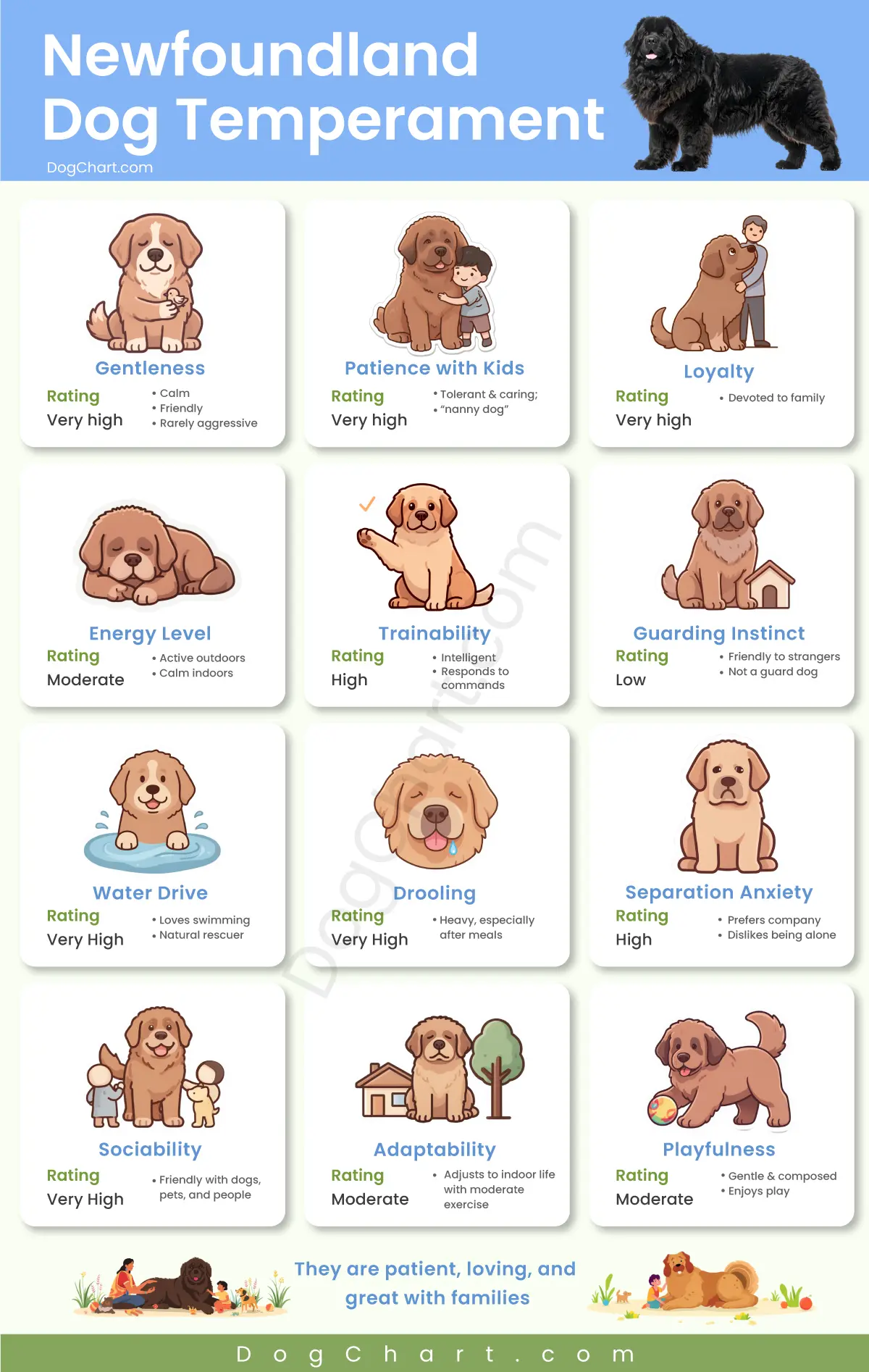
Table of Contents
Core Personality Traits
| Trait | Rating | Notes |
| Gentleness | Very High | Calm, friendly, rarely aggressive |
| Patience with Kids | Very High | Tolerant and caring; “nanny dog” |
| Loyalty | Very High | Devoted to family |
| Energy Level | Moderate | Active outdoors, calm indoors |
| Trainability | High | Intelligent, responds to commands |
| Guarding Instinct | Low | Friendly to strangers; not a guard dog |
| Water Drive | Very High | Loves swimming; natural rescuer |
| Drooling | Very High | Heavy, especially after meals |
| Separation Anxiety | High | Prefers company; dislikes being alone |
| Sociability | Very High | Friendly with dogs, pets, and people |
| Adaptability | Moderate | Adjusts to indoor life with moderate exercise |
| Playfulness | Moderate | Gentle and composed, enjoys play |
| Noise Sensitivity | Low | Calm around household and outdoor sounds |
| Intelligence | High | Quick learner, problem-solving ability |
| Affection Level | Very High | Loves cuddles and attention |
These are among the most friendly dogs you’ll ever meet. Their temperament is calm, patient, and deeply loyal and loving.
History of the Newfoundland Dog
The history of the Newfoundland dog explains their personality. This breed originated on the island of Newfoundland in the Canadian province of Newfoundland.
They were bred by fisherman communities as water rescue dogs and working dogs. They hauled nets, pulled boats, and saved drowning people. Their webbed paws and water-resistant double coat made them built for the sea.
That working heritage shaped their calm, steady personality. They’re bred to stay cool under pressure. That’s why they’re so patient with kids today.
With Children
This is where the Newfoundland’s reputation shines. They get along well with children of all ages. Many owners report the dog positions itself between the child and any perceived threat.
They’re patient around children even when kids climb on them, pull their fur, or scream. A well-socialized Newfoundland is a balanced dog that doesn’t react to chaos.
The only risk is their large size. A 130-pound dog can knock a toddler over just by turning around. Supervision matters – not because of aggression, but because of physics.
With Other Pets
Newfoundland dogs get along with most other dogs and even cats. Their calm energy doesn’t trigger reactive behavior. Newfies from rescue may need more time adjusting, but most default to friendly.
With Strangers
Friendly. Too friendly to be guard dogs. They might bark once when someone arrives, then want to be petted. Many dog owners joke that a burglar would get licked, not stopped.
Training and Socialization
Training and socialization should start early. A newfie puppy that jumps on people is cute at 20 pounds. At 130 pounds, it’s dangerous.
Newfoundlands respond well to positive reinforcement. They’re easy to train because they want to please. Harsh corrections shut them down. Be patient and consistent.
Start obedience training early. Teach leash manners and “off” commands while they’re small. Newfoundland puppies grow so fast you only have a few months before they outweigh you.
Mental stimulation matters too. Puzzle toys, hide-and-seek, and dog sports like water trials keep their brain sharp. A bored newfie can develop anxiety. For name ideas during training, the Newfoundland names guide has 150+ options.
Exercise Needs
Moderate. An adult Newfoundland needs 30–45 minutes of exercise daily. Daily walks plus some play is enough. Swimming is their favorite activity and it’s easy on their joints.
Avoid heavy exercise in hot weather. This large breed overheats fast due to their thick coat. Early morning or evening walks are best in summer. For how exercise connects to lifespan, the Newfoundland lifespan page covers that link.
Grooming and Care Needs
The care needs for this breed are high. Their thick double coat has a long outer layer and dense undercoat. It needs daily brushing during shedding season to remove dead hair.
Shedding is heaviest in spring and fall when the coat blows. Outside of those periods, brushing 2–3 times per week is enough. Don’t forget nail trims every 2–3 weeks.
For full shedding and grooming details, For coat colors, the Newfoundland colors guide shows all variations.
Health Considerations That Affect Temperament
A newfie’s personality can change when they’re in pain. Watch for these health conditions:
Hip dysplasia: Causes pain and limping. A dog in pain may become less patient or withdrawn.
GDV (gastric dilatation-volvulus): Gastric dilatation-volvulus is bloat. Feed frequent meals to reduce risk. Don’t exercise right after eating.
DCM (dilated cardiomyopathy): Dilated cardiomyopathy affects the heart. Feed the best dog dog food with taurine. The Newfoundland food chart covers nutrition.
Buy from a reputable breeder who health-tests parents. If adopting through shelters and breed-specific rescues, ask for available health records. A good breeder screens for heart and hip issues before breeding.
Best Living Situation
Newfoundlands need space. A house with a yard is ideal. They can technically live in large apartments but it’s not comfortable for a giant breed dog.
The American Kennel Club ranks them among the most adaptable dog breeds despite their size. They’re calm indoors and don’t need constant activity. But they do need room to lie down and stretch out.
For how their size affects daily life, the Newfoundland size chart puts it in perspective. The Bernese vs Newfoundland comparison also covers living requirements for both giants.
FAQs
Are Newfoundlands aggressive?
No. They’re one of the least aggressive dog breeds. Aggression in a Newfoundland almost always signals a health problem or past abuse.
Do Newfoundlands bark a lot?
No. They’re not a barker. They bark occasionally to alert you but aren’t yappy. Their deep bark is more of a “woof” than rapid-fire noise.
Do Newfoundlands drool a lot?
Yes. Newfies drool heavily, especially after eating or drinking. Keep towels handy. It’s part of the package with this breed.
Do they shed much?
Yes. Their double coat sheds year-round. Expect fur on everything. The Newfoundland shedding guide covers how to manage it.
Can Newfoundlands live in apartments?
Technically possible but not ideal. These are big dogs that need room. A home with a yard works much better for their comfort and exercise needs.
Are they good for first-time owners?
Yes. Their patience, trainability, and calm temperament make them forgiving of mistakes. Just be ready for the grooming, the drooling, and the size. The Newfoundland weight chart shows just how big they get.
Can I adopt a Newfoundland from rescue?
Yes. Rescue organizations exist specifically for this breed. Adult rescue dogs often come already trained. Check breed-specific rescue groups and local shelters. For naming your new dog, the Newfoundland names guide has ideas for every personality type.