
Newfoundland Dog Lifespan – How Long Do They Live?
The hardest part about owning a gentle giant is knowing they won’t be around as long as smaller dogs. A Chihuahua might live 15–18 years. A Newfoundland dog averages 8 to 10 years.
That’s not a lot of time. But the years you get are full ones. These large dogs pack more love and loyalty into a decade than most dogs manage in twice the life span.
This Newfoundland dog breed lifespan guide covers how long they live, what affects their health, and what dog owners can do to give their newfie the longest life possible.
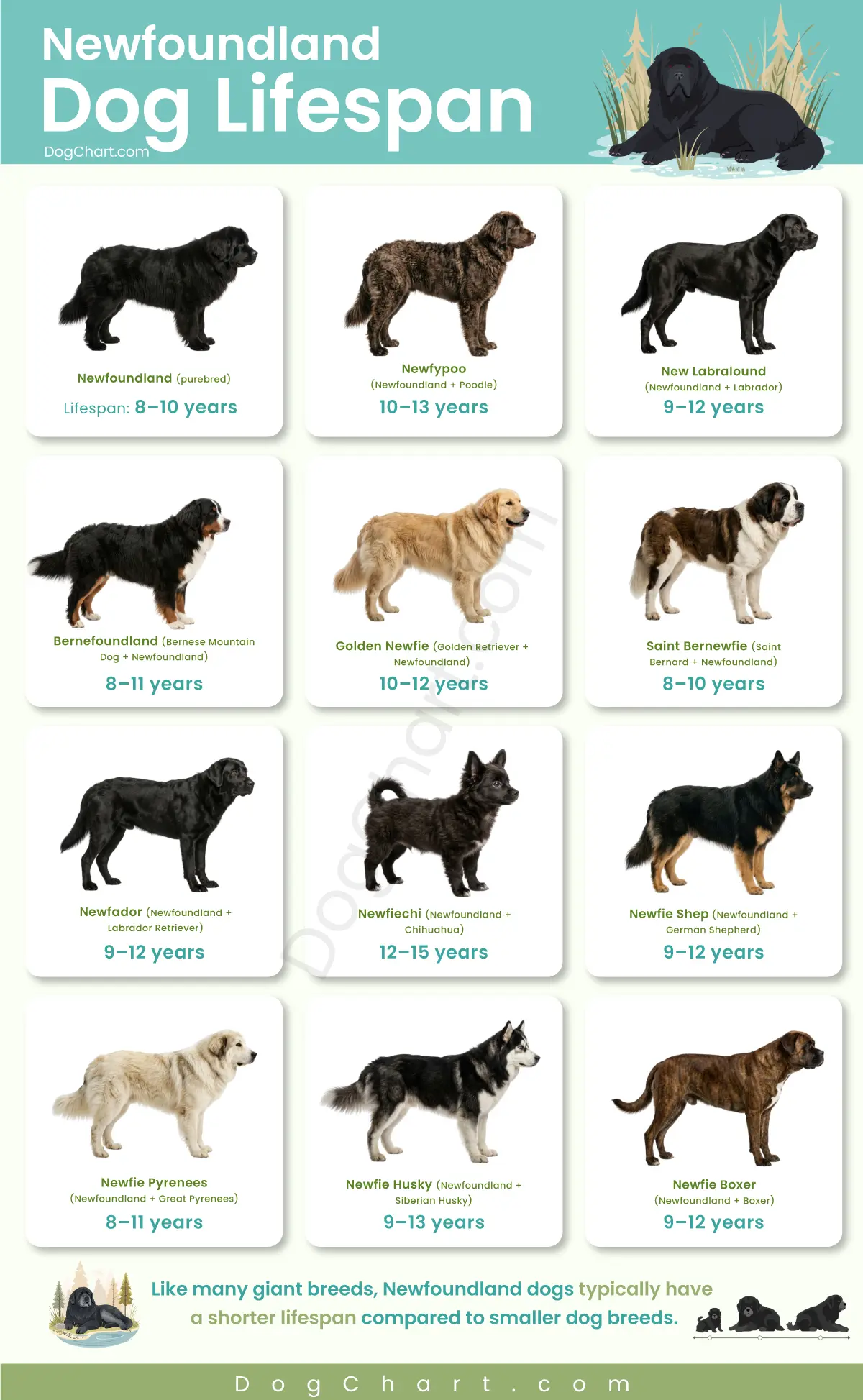
Table of Contents
Average Newfoundland Lifespan
| Category | Lifespan | Notes |
| Average | 8–10 years | Typical for giant breeds |
| Well-cared-for | 10–12 years | With diet, exercise, vet care |
| Shortest recorded | 6–7 years | Usually cancer or heart disease |
| Longest recorded | 15 years | Very rare, exceptional genetics |
Most Newfoundlands live 8–10 years. Some reach 12 with exceptional care. I’ve heard of one lived to 10 with no health issues at all. Another owner reported their dog lived to be 13, which is rare for any large breed.
As large-breed dogs, their size puts strain on the heart, joints, and organs. That’s the trade-off with every giant breed.
Origins and Why Lifespan Matters
Newfoundlands were bred as working dogs for fishermen on the island of Newfoundland, Canada. These dogs for fishermen in Newfoundland hauled nets, pulled boats, and performed water rescue in the freezing Atlantic. The breed originated in Newfoundland and was used as water rescue dogs by fisherman communities.
As rescue dogs and water rescue dogs, they developed partially webbed feet and became powerful swimmers. These working dogs were built for endurance, not longevity.
The Newfoundlands we know as dogs today are companions rather than working breed animals. But their body hasn’t changed much. That large frame still puts stress on the heart.
Common Health Issues That Affect Lifespan
While this is generally a healthy breed, all giant dogs face potential health issues. The Newfoundland dog’s most serious risks are:
| Condition | How Common | Impact |
| Subaortic Stenosis (heart) | Common | Can cause heart failure, often silent |
| Hip Dysplasia | Very Common | Mobility issues, pain, arthritis |
| Bloat (GDV) | Common | Emergency, fatal in hours |
| Cystinuria | Moderate | Kidney/bladder stones |
| Elbow Dysplasia | Common | Lameness, early arthritis |
| Cancer | Moderate | Various types |
Subaortic stenosis can lead to heart failure without warning. Get your dog’s heart checked by a cardiologist. Early detection saves lives.
Hip dysplasia is the most common health issues in the breed. Certain health conditions like this can be screened for before breeding. Ask your breeder for OFA hip scores. Monitoring dog’s health through regular checkups catches problems early.
Traits That Affect Daily Life and Longevity
The Newfoundland temperament is calm and affectionate. They get along well with dogs and cats. These dogs love people and need space to roam.
At up to 150 pounds, their large size means more strain on joints and organs. They drool heavily, especially after eating or drinking. Their thick double coat needs regular attention.
Newfoundland dogs shed a lot. The double coat drops fur year-round. Grooming needs include brushing 2–3 times per week. For full shedding details, For the temperament info, see the Newfoundland temperament page.
How to Help Your Newfoundland Live Longer
Feed a complete and balanced diet. A balanced diet with dog food made for giant breeds is the foundation. The Newfoundland food chart covers portions and brands.
Keep them lean. Extra weight shortens giant breed lifespans faster than almost anything. Track weight using the Newfoundland weight chart.
Annual heart screenings. Your vet should do an echocardiogram, not just a stethoscope check. A vet may recommend yearly screening starting at age two. Veterinarians who specialize in cardiology are ideal.
Moderate newfoundland exercise. Swimming is perfect. It’s low-impact on joints but great for the heart. Take your Newfoundland to water whenever possible. Every newf loves it.
Don’t over-exercise puppyies. A Newfoundland puppy’s bones aren’t done growing until 18–24 months. Avoid stairs, jumping, and long runs for your pup. Your dog will need gentle activity only during this stage.
Watch for warning signs. If your dog appears tired after short walks, coughs, or has a swollen belly, see the vet right away. Ensure your dog gets checked at least twice a year.
Newfoundland dogs do best with routine care, low-impact exercise, and a calm home environment. Newfies thrive on attention and don’t do well left alone for long periods.
Training and Socialization for a Longer Life
Training and socialization might not seem related to lifespan, but they are. A well-socialized dog is less stressed. Less stress means fewer health conditions.
Socialize your Newfoundland early. Expose newfie puppies to different people, dogs, sounds, and environments before 16 weeks. This builds confidence.
Even an old newfie benefits from mental stimulation. Puzzle toys, gentle pup play sessions, and short training refreshers keep the brain sharp. A bored newfie can develop anxiety, which impacts overall health.
Does Color or Size Affect Lifespan?
No. Whether your dog is solid black, brown, gray, or white with black (Landseer), the lifespan is the same. The American Kennel Club recognizes all four colors equally.
Size within the breed can matter slightly. Larger males (150 pounds+) may face more joint stress than smaller females. But the difference is minor compared to diet and heart health. For coat options, the Newfoundland colors guide covers everything.
Newfoundland Mixed Breed Lifespan
Mixing a Newfoundland with another breed can extend lifespan through hybrid vigor. Here’s how common mixes compare:
| Mix | Average Lifespan | Notes |
| Newfypoo (Newfoundland + Poodle) | 10–13 years | Longer lifespan, less shedding, hypoallergenic traits from Poodle |
| New Labralound (Newfoundland + Labrador) | 9–12 years | Active, generally healthier joints |
| Bernefoundland (Bernese Mountain Dog + Newfoundland) | 8–11 years | Both parents are giant breeds; moderate lifespan |
| Golden Newfie (Golden Retriever + Newfoundland) | 10–12 years | Benefits from hybrid vigor |
| Saint Bernewfie (Saint Bernard + Newfoundland) | 8–10 years | Both giant breeds; similar lifespan to purebreds |
| Newfador (Newfoundland + Labrador Retriever) | 9–12 years | Friendly, active, good family dog |
| Newfiechi (Newfoundland + Chihuahua) | 12–15 years | Small size from Chihuahua increases lifespan; rare mix |
| Newfie Shep (Newfoundland + German Shepherd) | 9–12 years | Intelligent, protective, moderately active |
| Newfie Pyrenees (Newfoundland + Great Pyrenees) | 8–11 years | Giant, calm, good guardian traits |
| Newfie Husky (Newfoundland + Siberian Husky) | 9–13 years | Active, intelligent, moderate size increase from Husky |
| Newfie Boxer (Newfoundland + Boxer) | 9–12 years | Energetic, playful, good family temperament |
Mixed breed Newfoundlands generally live 1–3 years longer than purebreds. The Poodle cross has the longest expected lifespan because Poodles are among the healthiest large dog breeds.
As mixed dogs get older, they face fewer inherited conditions because of wider genetic diversity. But they still carry giant-breed risks like hip dysplasia and heart issues. Every pawrent should still budget for regular vet visits.
For how the Newfoundland compares to the Bernese specifically, the Bernese Mountain Dog vs Newfoundland comparison covers both side by side. The dog life expectancy chart puts all breeds in context.
Does Grooming Affect Lifespan?
Indirectly, yes. A matted, ungroomed double coat traps moisture and causes skin infections. Skin infections left untreated can lead to bigger problems.
Brush 2–3 times per week. During seasonal coat blows, daily brushing helps. Keep the coat clean and dry, especially around the ears and paws.
Regular grooming also lets you spot lumps, bumps, and skin changes early. Many newfie owners find health issues during grooming sessions before symptoms appear. The Newfoundland shedding guide covers seasonal coat care.
FAQs
Do Newfoundlands live longer than other giant breeds?
About the same. Great Danes average 7–10 years. Saint Bernards 8–10. The Newfoundland breed falls in the 8–10 range. The Bernese Mountain Dog has it worst due to high cancer rates.
What’s the leading cause of death?
Heart disease, specifically subaortic stenosis. Cancer and bloat are also common causes across many dog breeds this size.
Can I extend my Newfoundland’s lifespan?
Yes. Weight management, heart screenings, proper dog food, and moderate exercise all add years. Some newfies reach 12+ years with diligent care.
At what age is a Newfoundland considered senior?
Around 6–7 years. Giant dog breeds age faster than smaller ones. By age 7, most will slow down noticeably. Your vet should start senior screenings at this point.
Do male or female Newfoundlands live longer?
Females tend to live slightly longer. They’re smaller, which puts less strain on the heart and joints. But the difference is small – about 6–12 months on average.
How often should I take my Newfoundland to the vet?
Twice a year for adults. Newfoundland puppy visits should be monthly during the first year for vaccinations and growth checks. After age 6, your vet may want to see them every 4–6 months. For naming your new puppy, the Newfoundland names guide has 150+ options.