
Are Maltese Dogs Hypoallergenic? What Allergy Sufferers Need to Know
My friend wanted a dog for years. She’s allergic to dogs. Sneezing, itchy eyes, the full package. She decided to get a Maltese after reading that they’re hypoallergenic.
Three years later, zero reactions. Not one.
But no dog is 100% hypoallergenic. That word gets thrown around a lot. What it means is that certain dogs produce fewer allergens than others. This beloved breed is one of them.
If you’re considering a Maltese, this Maltese breed guide explains why they’re a top pick for people with allergies. You’ll learn more about the Maltese coat, shedding levels, and how to reduce allergens at home. For a full overview, the Maltese dog breeds page covers everything.
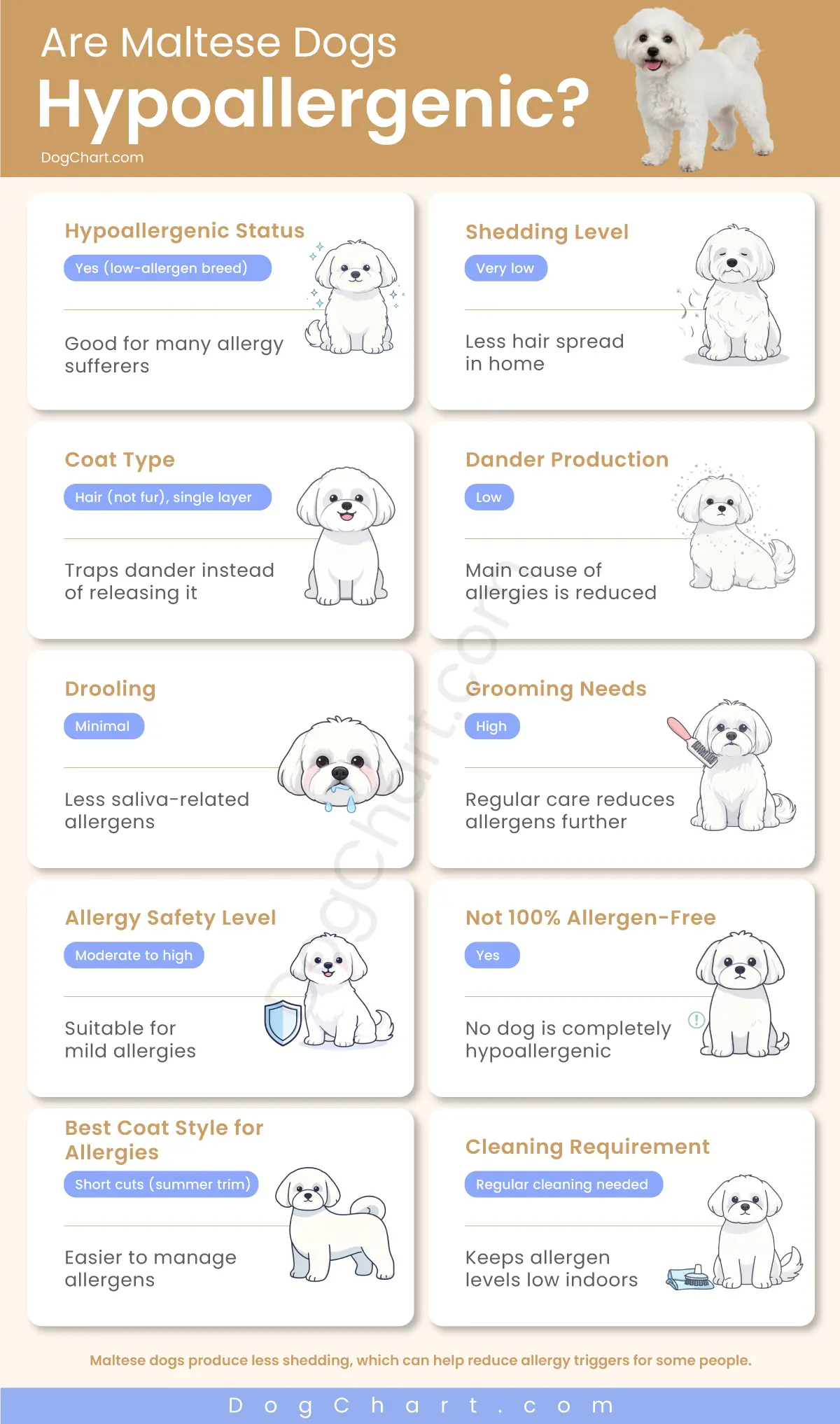
Table of Contents
What Makes a Dog Hypoallergenic?
Most people think dog allergies come from fur. They don’t. The trigger is a protein called Can f 1. It’s one of several proteins found in a dog’s saliva, urine, and skin cells.
When a dog sheds fur, dead skin flakes go with it. These particles float in the air and land on furniture. This triggers an allergic reaction in sensitive people.
Dogs that don’t shed much release less dander into the air. That’s what makes them less likely to trigger symptoms. But “hypoallergenic” doesn’t mean “allergen-free.”
Why This Dog Is Considered Hypoallergenic
The Maltese dog breed has a single-layer coat. Most dogs have a double coat with an undercoat that sheds seasonally. The Maltese’s coat doesn’t have that undercoat.
They don’t shed like other dogs. They shed very little. The hair grows long and falls out slowly, similar to human hair. When it does fall, it stays trapped in the coat.
Less shedding means fewer skin particles in the air. Maltese dogs are known for hypoallergenic coats and a silky coat that’s less likely to cause reactions. This breed is known for being likely to trigger an allergic response far less than most dogs.
A Quick Overview of This Dog
This dog breed originated on the island of Malta in the Mediterranean. They were bred as companion dogs and lap dogs for royalty. Today, they’re one of the most popular toy breeds in the world.
These little dogs are playful and affectionate. They love attention. They’re great family dogs that do well in apartments and small dog spaces.
Maltese dogs also have quirks. They can bark more than expected. They’re prone to separation anxiety and don’t like being left alone for long periods. A dog this size may be small, but they need company. A Maltese may act out if left alone too often.
The Maltese dog temperament page goes deeper into personality.
Comparison with Other Hypoallergenic Dogs
This isn’t the only hypoallergenic breed out there. Here’s how it compares to other small breeds:
| Dog | Coat | Shedding | Size | Best For |
| Maltese | Single, silky | Very low | 4–7 lbs | Apartments, families |
| Poodle | Curly, dense | Very low | 6–9 lbs (toy) | Active owners |
| Bichon Frise | Curly, double | Low | 12–18 lbs | First-time owners |
| Shih Tzu | Long, double | Low | 9–16 lbs | Relaxed homes |
| Yorkshire Terrier | Silky, single | Very low | 4–7 lbs | Small spaces |
| Coton de Tulear | Cotton-like | Very low | 8–15 lbs | Gentle families |
| Havanese | Silky, wavy | Low | 7–13 lbs | Mild climates |
Among smaller dogs, this dog and the Bichon produce the least skin particles. Larger breeds produce more because they have more skin surface. The best hypoallergenic dog breeds page has the full list. The toy dog breeds page covers more options.
How to Reduce Allergens at Home
Even with a low-shedding dog, pet parents can cut triggers further:
Brush 2–3 times per week. Your pup will need regular brushing to remove loose hair and dead skin before it floats into the air. A longer coat needs daily brushing to prevent buildup. Daily brushing to prevent mats also removes loose skin flakes.
Bathe every 2–3 weeks. Regular grooming washes away dander from skin. Keep the white coat clean around their eyes too.
Keep one room dog-free. Your bedroom works best. This gives you a clean zone for sleeping.
Use a HEPA air filter. These trap airborne skin particles. Run one where your dog’s spends the most time.
Book professional grooming every 4–6 weeks. A groomer does a thorough bath that removes more dead skin than a home bath. Professional grooming makes a real difference every few months.
Wash bedding weekly. Dead skin collects on blankets. Hot water removes it.
Dogs with longer coats require regular grooming to prevent mats and tangles. A daily brushing routine keeps mats away and reduces loose flakes that carry allergens. The grooming styles page shows which cuts are easiest.
Diet, Coat Health, and Allergens
A healthy coat sheds less and produces less dry skin. Omega-3 fatty acids from fish oil support skin health.
Tear staining is common. Those reddish marks under the eyes can trap particles. A puppy cut or short trim reduces surface area where dead skin collects.
If reactions persist despite grooming, consult your vet. They can recommend specific shampoos. The food chart covers nutrition that supports coat quality.
Are Puppies Hypoallergenic Too?
Yes. Maltese puppies have the same single-coat structure as adults. They shed very little from day one.
Puppy skin produces more oil as it develops. Some allergy sufferers notice mild reactions during the first few months. These go away as the dog matures.
If you’re testing your sensitivity, spend time with an adult dog first. That gives a more accurate picture.
Who Should and Shouldn’t Get This Dog for Allergies?
This is the right breed if you have mild to moderate allergies and want an affectionate companion. Most allergy sufferers do well with the Maltese breed.
It might not work if you have severe reactions to skin particles even in small amounts. Medications can help, but talk to your doctor first.
The honest advice: spend time with one before committing. Visit a breeder or friend who owns one. A few hours without symptoms means you’ll likely be fine.
Keep in mind this dog is prone to dental issues and patellar luxation (a slipping kneecap). Consider pet insurance for unexpected vet bills. The lifespan page covers health and longevity.
FAQs
Are they 100% hypoallergenic?
No hypoallergenic dog is allergen-free. This dog produces less dead skin than most. Most allergy sufferers tolerate them well. Reactions depend on individual sensitivity.
Do they shed at all?
Very little. Their hair falls out slowly, like human hair. You won’t find clumps on your furniture. Loose hair gets trapped in the coat and comes out during brushing.
Which is better for allergies, this dog or a Poodle?
Both are top picks. One has straight, silky hair. The other has tight curls that trap dead skin close to the body. Both work for dog allergies. See the Maltese-Poodle mix page for a dog that combines both.
Can I react to one low-shedding dog but not another?
Yes. Different dogs produce different protein levels. A breed may trigger reactions in one person but not another. Always spend time with the specific dog before buying.
Does grooming reduce allergens?
Yes. Regular brushing, bathing, and haircuts remove dead skin before it gets airborne. A well-groomed pup produces far fewer triggers than a neglected one.
Are mixes hypoallergenic?
It depends on the other parent. A Maltipoo is usually low-shedding since both parents are. The Maltese-Yorkie mix page and Maltese-Shih Tzu mix page cover these crosses.
What diet helps the coat?
Omega-3 fats from fish oil support coat health and reduce dry skin. Feed a high-quality diet with named protein sources. The dog food chart has general feeding guidelines.
Do they need a lot of grooming?
They need brushing 2–3 times a week and professional grooming every 4–6 weeks. Shorter cuts like the puppy cut need less upkeep. The grooming styles page has pictures and care tips.