
Maltese Dog Food Chart – Feeding Guide by Age and Weight
If you’ve ever lived with a Maltese, you probably know they may be tiny, but they certainly don’t act like it, especially when food is involved! I remember how easy it can be to give in when those little eyes follow you around the kitchen, hoping for another bite.
But with a small breed like the Maltese, those extra bites can add up faster than you’d expect. A simple Maltese dog feeding chart can make portions much easier to manage.
Their needs change with age, weight, activity level, and life stage, so what works for a playful puppy won’t necessarily suit a laid-back senior.
The right portions and a nutritious diet can go a long way toward keeping your little companion happy, energetic, and at a healthy weight.
Maltese Dog Food Calculator
Estimate how many calories and how much food your Maltese needs each day.
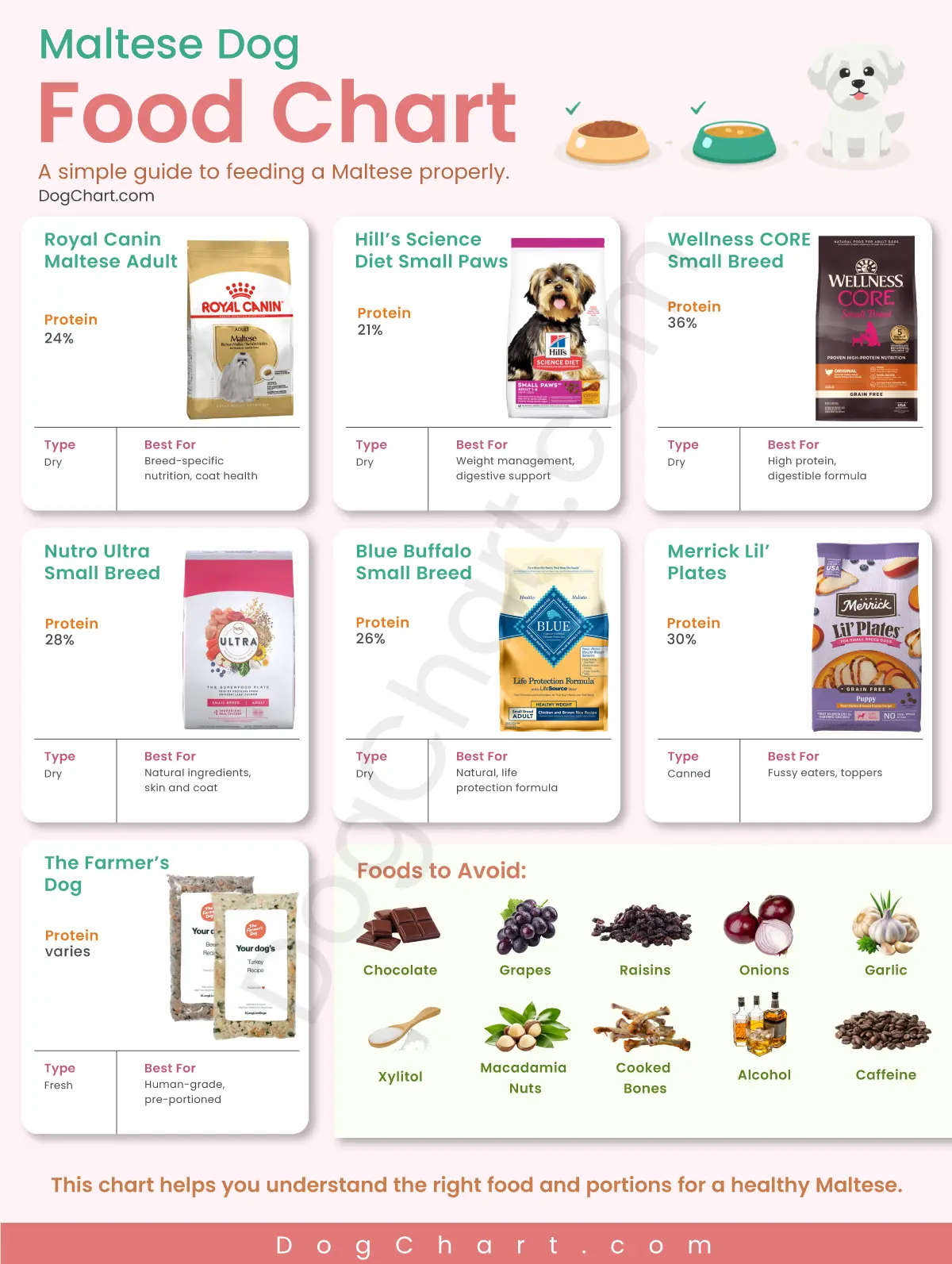
Table of Contents
Maltese Dog Foods Chart
Choosing food for a Maltese isn’t just about picking whatever bag has the cutest puppy on it. These little dogs need a complete and balanced diet that provides enough protein, healthy fats, vitamins, and minerals without unnecessary calories.
A good Maltese dog food recommendation should consider your dog’s age, weight, activity level, and individual needs.
| Life Stage | Meals Per Day | Main Food | General Focus |
| 8–12 weeks | 4 | Puppy food | Growth & development |
| 3–6 months | 3–4 | Puppy food | Growth & energy |
| 6–12 months | 3 | Puppy food | Healthy development |
| 1–7 years | 2 | Adult food | Maintenance |
| 7+ years | 2 | Senior food | Healthy aging |
Maltese Dog Food Calculator
A Maltese dog food calculator can be useful when you’re trying to estimate how much food your dog needs each day. However, there isn’t one magic number that works for every Maltese.
Two dogs of the same weight can have completely different energy requirements depending on their age, activity level, metabolism, and whether they have been spayed or neutered.
| Maltese Weight | Approx. Daily Calories* | Typical Daily Food Range* | Meals |
| 3 lb | 120–150 kcal | About ¼–⅓ cup | 2–4 |
| 5 lb | 170–220 kcal | About ⅓–½ cup | 2–3 |
| 7 lb | 220–280 kcal | About ½–⅔ cup | 2–3 |
| 9 lb | 270–340 kcal | About ½–¾ cup | 2 |
| 10 lb | 290–370 kcal | About ½–¾ cup | 2 |
Maltese Dog Feeding Chart by Age and Weight
Your Maltese’s feeding needs will change as they grow. A tiny puppy may need several small meals throughout the day because their stomachs are small and they are growing quickly.
Once they reach adulthood, most Maltese can transition to two measured meals per day. Weight is important, but it shouldn’t be the only thing you look at.
A Maltese dog feeding chart is best used as a starting point rather than a strict rule
| Age | Weight Range | Meals/Day | Feeding Approach |
| 2–3 months | 1.5–4 lb | 4 | Small puppy portions |
| 4–6 months | 3–6 lb | 3 | Measured puppy meals |
| 7–12 months | 4–8 lb | 2–3 | Gradually reduce frequency |
| 1–7 years | 4–9 lb | 2 | Adult maintenance food |
| 7+ years | 4–9+ lb | 2 | Senior-focused nutrition |
Dog Foods List for Maltese Puppy
Maltese puppies need food specifically formulated for growth rather than simply eating adult dog food in smaller quantities.
Look for a complete and balanced puppy formula with quality animal-based protein and appropriate levels of fat and essential nutrients.
Since Maltese puppies are so small, smaller kibble can make chewing easier. If you’re searching for pictures of Maltese food, look for meals that are balanced, portion-appropriate, and suitable for their size.
| Food Type | Suitable For | Why It Can Help |
| Small-breed puppy kibble | Puppies | Easy to portion and chew |
| Complete puppy wet food | Puppies | Soft and appealing |
| Kibble + wet food | Puppies | Adds variety and moisture |
| Puppy food topper | Occasional use | Can encourage picky eaters |
| Vet-recommended puppy diet | Specific needs | Tailored nutrition |
Dog Foods for Adult Maltese
Once your Maltese reaches adulthood, their diet should shift toward maintaining a healthy weight, strong muscles, and overall wellness.
Adult small-breed formulas are often a convenient option because they are designed around the needs of smaller dogs. Portion control becomes especially important with Maltese dogs because those extra treats from the family can add up quickly.
| Adult Food Type | Best For | Feeding Note |
| Small-breed dry food | Most adults | Easy portion control |
| Small-breed wet food | Dogs preferring soft food | Watch total calories |
| Dry + wet combination | Variety | Reduce portions accordingly |
| Weight-management food | Overweight dogs | Use with veterinary guidance |
| Sensitive-stomach formula | Dogs with dietary sensitivities | Introduce gradually |
Maltese Dog Food for Seniors
As your Maltese gets older, their nutritional needs can change. Senior dogs may become less active, meaning they can gain weight more easily if their portions remain the same.
Some older dogs may also have dental problems that make hard kibble uncomfortable. A senior diet may be helpful depending on your dog’s health, but there’s no need to change food simply because your Maltese has reached a certain birthday.
| Senior Need | Food Choice | What to Consider |
| Lower activity | Senior/maintenance formula | Watch calories |
| Dental sensitivity | Soft or moistened food | Easier chewing |
| Weight gain | Calorie-controlled formula | Portion carefully |
| Sensitive digestion | Digestive-support diet | Introduce slowly |
| Individual medical needs | Veterinary diet | Follow professional advice |
Best Dog Food for Maltese Dogs
There’s no single food that deserves the title of the best dog food for Maltese dogs because every dog is a little different. Instead of choosing based only on marketing claims, look for a food that is complete and balanced for your dog’s life stage and appropriate for their size.
The food should provide quality protein and suitable levels of fat and carbohydrates while delivering the vitamins and minerals your dog needs.
If your Maltese has allergies, digestive problems, dental concerns, or another health issue, your veterinarian may recommend a specific formula.
Most importantly, choose something your dog enjoys eating and that keeps them at a healthy weight. Finding the best food for a Maltese dog is mostly about choosing a nutritious diet that fits their age, activity level, and individual needs.
Best Dry Dog Food for Maltese
Dry food is popular with Maltese owners because it’s convenient, easy to measure, simple to store, and usually less messy than wet food.
For these tiny dogs, I’d pay particular attention to kibble size. A small-breed or toy-breed formula can be easier for a Maltese to pick up and chew. Dry food can also make portion control straightforward, which is helpful for dogs that gain weight easily.
| Dry Food Type | Best For | Main Benefit |
| Toy-breed puppy kibble | Maltese puppies | Small pieces |
| Small-breed adult kibble | Adult Maltese | Convenient daily feeding |
| Senior small-breed kibble | Older Maltese | Senior-focused nutrition |
| Weight-management kibble | Overweight dogs | Controlled calories |
| Sensitive-digestion kibble | Sensitive dogs | Easier dietary management |
Best Wet Dog Food for Maltese
Wet food can be a great option for Maltese dogs that prefer softer textures or have difficulty chewing dry kibble. It also contains a lot of water, which can contribute to daily fluid intake.
Some Maltese are famously selective eaters, and the smell and texture of wet food can make mealtime more tempting. However, wet food can be more calorie-dense than it looks, so don’t judge portions by volume alone.
| Wet Food Type | Best For | Feeding Tip |
| Puppy wet food | Maltese puppies | Feed small portions |
| Adult small-breed food | Adult Maltese | Measure daily amount |
| Senior wet food | Older dogs | Consider softer texture |
| Complete wet food | Dogs eating wet-only | Check nutritional adequacy |
| Wet + dry combination | Variety lovers | Reduce kibble portion |
How Much to Feed a Maltese Dog
How much to feed a Maltese dog depends on their age, weight, activity level, and the calorie content of their food. A healthy adult Maltese will usually do well with two measured meals a day, while puppies need smaller meals more frequently.
Always start with the feeding guide on your dog food and adjust based on their body condition. When comparing options, the best dog food for Maltese dogs should be complete, balanced, and made with their specific nutritional needs in mind.
| Maltese Life Stage | Meals Per Day | General Feeding Approach | Important Note |
| 2–3 months | 4 | Small puppy portions | Frequent meals |
| 4–6 months | 3 | Measured puppy meals | Monitor growth |
| 7–12 months | 2–3 | Gradually reduce meals | Transition carefully |
| 1–7 years | 2 | Measured adult portions | Watch body weight |
| 7+ years | 2 | Senior-appropriate portions | Adjust for activity |
What Human Food Can Maltese Eat?
Yes, your Maltese can enjoy some human foods as occasional treats, as long as they are plain, properly prepared, and given in small amounts.
Cooked chicken, turkey, carrots, green beans, pumpkin, blueberries, and small pieces of apple without the seeds can be suitable choices for many dogs.
These foods should complement their regular diet rather than replace a complete dog food. I’d also avoid feeding anything seasoned with salt, spices, butter, sauces, or excessive oil.
Treats and human foods should generally stay within about 10% of your dog’s daily calorie intake.
Best Dog Food Brands for Maltese
When choosing among the best dog food brands for Maltese, I’d focus less on flashy packaging and more on whether the food is complete and balanced for your dog’s life stage.
Small-breed and toy-breed formulas are particularly convenient because they often have appropriately sized kibble and calorie levels suited to little dogs.
| Brand | Suitable Formula Type | Best For | Key Consideration |
| Royal Canin | Small/toy breed formulas | Breed & size-focused feeding | Small kibble options |
| Hill’s Science Diet | Small & toy breed formulas | Everyday nutrition | Multiple life-stage choices |
| Purina Pro Plan | Small breed formulas | Active small dogs | Variety of recipes |
| Eukanuba | Small breed formulas | Adult maintenance | Protein-focused options |
| Purina ONE | Small breed formulas | Budget-friendly feeding | Check specific recipe |
Royal Canin Maltese Dog Food
Royal Canin is a popular choice among small-dog owners, and the brand offers formulas designed around the nutritional needs of toy and small breeds.
Its Maltese-specific formula, where available in your market, is designed with the breed’s small size and other characteristics in mind.
| Royal Canin Option | Life Stage | Suitable For | Format |
| Maltese Adult | Adult | Maltese dogs | Dry |
| X-Small Puppy | Puppy | Very small-breed puppies | Dry |
| X-Small Adult | Adult | Extra-small breeds | Dry |
| Small Adult | Adult | Small-breed dogs | Dry |
| Veterinary Diets | Specific health needs | Dogs needing dietary support | Dry/Wet* |
Foods to Avoid Feeding Your Maltese Dog
Maltese may be tiny, but they can be just as curious about whatever you’re eating as any larger dog! Some human foods, however, can be dangerous or even life-threatening for dogs.
Never intentionally feed your Maltese chocolate, grapes or raisins, onions, garlic, xylitol (also called birch sugar), alcohol, or caffeinated drinks.
Avoid giving them cooked bones, very fatty foods, heavily salted foods, and anything containing lots of spices or seasoning. Macadamia nuts are also unsafe for dogs.
If your Maltese accidentally eats something potentially toxic, contact your veterinarian or a pet poison service promptly rather than waiting for symptoms to appear.
Dry vs Canned vs Fresh Food: Which One Is Best for Maltese Dogs?
There’s no universal winner when comparing dry, canned, and fresh food for Maltese dogs. Dry food is convenient, easy to measure, and simple to store, while canned food offers a softer texture and higher moisture content.
Fresh diets can provide another option, but they need to be properly formulated to make sure your dog receives all the nutrients they need.
| Food Type | Main Advantage | Potential Downside | Best For |
| Dry | Convenient & easy to portion | Lower moisture | Most households |
| Canned | Soft & moisture-rich | More expensive/storage needs | Picky or dental-sensitive dogs |
| Fresh | Fresh ingredients & variety | Can cost more | Owners wanting fresh options |
| Dry + Canned | Variety & texture | Portions need adjustment | Dogs enjoying mixed feeding |
| Fresh + Dry | Flexible feeding | Requires calorie tracking | Owners wanting variety |
FAQs
Should a mix Maltese be fed more than a Maltese?
Not necessarily; portions depend on weight, age, activity, and calorie needs.
How many times a day should a Maltese eat?
Adult Maltese usually need two meals daily, while puppies need three to four.
Can Maltese eat treats every day?
Yes, but treats should stay within about 10% of their daily calories.
Can Maltese eat only wet food?
Yes, as long as it’s complete, balanced, and properly portioned.
How do I know if my Maltese is overweight?
You should be able to feel their ribs and see a defined waist.